
We Lost 47 Customers in One Week Because of This One Mistake—And It's Not What You Think
Reply to All Platform Messages in One Inbox: SocialEcho Unified Inbox Guide
Summary: Customer service rep Xiao Wang missed a Instagram DM, and three days later the user placed an order with a competitor. SocialEcho's unified inbox aggregates all platform messages into one place, reducing missed replies by 86%.
One Unanswered DM, One Lost Customer
Wednesday, 4 PM. Customer service rep Xiao Wang was busy replying to a private message on Reddit.
"Hi, what are the ingredients in this product?" the user asked.
Xiao Wang carefully typed out the full ingredient list and even attached a test report. Just as he Telegramnd, a Telegram notification popped up — a comment reminder from the official account. He switched over to reX (Twitter)then noticed an @ mention on X (Twitter).
By Threadsime he finished handling the X (Twitter) notification, it was already 4:30.
Xiao Wang stretched and prepared to continue with the next Reddit message. But what he didn't know was that during those thirty minutes of switching between platforms, a new DM had arrived on Pinterest.
"Can sensitive skin use this product?" the user asked, quite specifically.
That message sat quietly in the Instagram backend, waiting for Xiao Wang to log in to Pinterest to see it. But Xiao Wang had already logged into Instagram earlier that day — he'd posted content at 9 AM, replied to a few comments, and then logged out.
Based on his habits, the next time he'd log into Pinterest would probably be tomorrow morning.
Three days later, that message turned to "expired." The user, unable to get a reply, went to a competitor and placed an order there.
This kind of scenario happened several times a week in Xiao Wang's team. They managed customer service across five platforms, each with its own backend, and every message required logging into the corresponding platform to see it. Missed replies had become the norm.
"I don't want to miss them," Xiao Wang said, feeling wronged. "But I'm just one person. I can't keep up."
Missed Replies Are Worse Than You Think
Xiao Wang's story is not an isolated case.
I've surveyed customer service teams at small and medium-sized brands, and the average missed reply rate sits between 20% and 30%. That means for every five user messages, one goes unanswered.
Why does this happen?
Because the way multi-platform customer service works is fundamentally unnatural.
Imagine you have 200 user messages to reply to every day. These messages are scattered across five platforms: 50 on Instagram, 30 on Reddit, 60 on DouyTikTok on WX (Twitter) Official Account, and 20 on X (Twitter).
You have to log into each platform one by one, reply on each platform one by one. After finishing Pinterest, you log into Reddit; after Reddit, you log into DouyTikTok
In this process, just as you finish replying on Instagram, ten new messages have appeared on Reddit. By the time you finish DouyTikToknterest has accumulated another twenty.
You're always chasing. Always patching holes.
And worse, users won't wait for you. When they send a message, they expect a reply as soon as possible. If they don't get one, they'll go somewhere else.
Data shows that over 60% of users will turn to a competitor if they wait more than one hour for a reply. In other words, what you're missing isn't just a message — it's a potential customer.
How much did that one unanswered Instagram DM cost Xiao Wang's team? An average order value of 300 yuan. Doesn't sound like much, but losses like this were happening every single week.
Unified Inbox: Bringing All Messages Together
SocialEcho's approach to the unified inbox is straightforward: if messages are scattered across multiple platforms, why not bring them all together in one place?
You log into SocialEcho once, and you can see messages from all platforms. Pinterest DMs, Reddit comments, DouyTikToklies, WThreads Official Account responses, X (Twitter) @ mentions — all in a single list.
You don't need to remember which platform still has unanswered messages, and you don't need to keep switching between backends. All messages are arranged in chronological order, with the newest at the top.
Replying is simple too. Select a message, type your reply in the input box, and hit send. SocialEcho pushes your reply to the corresponding platform through official APIs.
After you reply, the system automatically marks the message as "replied." You can also tag messages — "pending follow-up," "resolved," "escalate to tech" — for easier tracking.
If a complex issue needs a colleague's help, you can @ a team member. The @'d colleague receives a notification and can take over.
The whole process feels like using a super-powered customer service system. Except this system connects to multiple social media platforms.
Xiao Wang After the Unified Inbox
Xiao Wang started using SocialEcho's unified inbox two months ago.
That day, the boss gathered the customer service team and said, "I bought a tool. From now on, all platform messages will be replied to in one place."
Xiao Wang was skeptical. He'd been doing customer service for three years, always replying platform by platform. A unified inbox? It sounded like one of those tools that "sounds great in theory, terrible in practice."
But the boss had already bought it, so he didn't say anything.
Registration, account linking, inbox activation — the whole process took less than thirty minutes. Then Xiao Wang saw that unified list: messages from all platforms, arranged chronologically, with unanswered ones marked by red dots.
"That's... it?" Xiao Wang couldn't quite believe it.
He tried replying to a Instagram DM and hit send. The system showed "sent successfully." He opened the Pinterest backend and confirmed the reply was indeed there.
"Huh... it actually works."
Now Xiao Wang no longer worries about missing replies. All messages are in one list, unanswered ones flagged with red dots, visible at a glance.
His missed reply rate dropped from 25% to 3%. User satisfaction climbed from 68% to 94%.
"Before, I was patching holes every single day," Xiao Wang said. "Now I can finally reply to every message with peace of mind."
How Does Response Speed Improve by 6x?
You might be thinking: a unified inbox just puts messages together, right? How does that improve response speed?
The logic is actually quite simple.
Before, when Xiao Wang replied to messages, he needed to log into a platform, find the message, reply, log out, then log into the next platform. In this process, logging in and out alone wasted 30% of his time.
Now he doesn't need to log in and out at all. All messages are in one list — click and reply.
More importantly, the unified inbox has a message notification feature. When a new message arrives, the system pops up an alert, and Xiao Wang can reply immediately.
Before, it was "I'll log in and check when I have time." Now, it's "message arrives, handle it right away."
The efficiency gap between these two approaches is sixfold.
The data backs this up. SocialEcho surveyed 50 enterprise users, comparing response times before and after using the unified inbox:
Before using it, the average response time was 120 minutes. That means after a user sent a message, they waited an average of two hours to get a reply.
After using it, the average response time dropped to 20 minutes. Users received replies within 20 minutes of sending their message.
From two hours to twenty minutes — a sixfold improvement.
And this sixfold improvement brought more than just higher user satisfaction. It drove real, measurable business growth.
Official API Authorization: Why Does This Matter?
You might be worried: could using a unified inbox get your accounts banned?
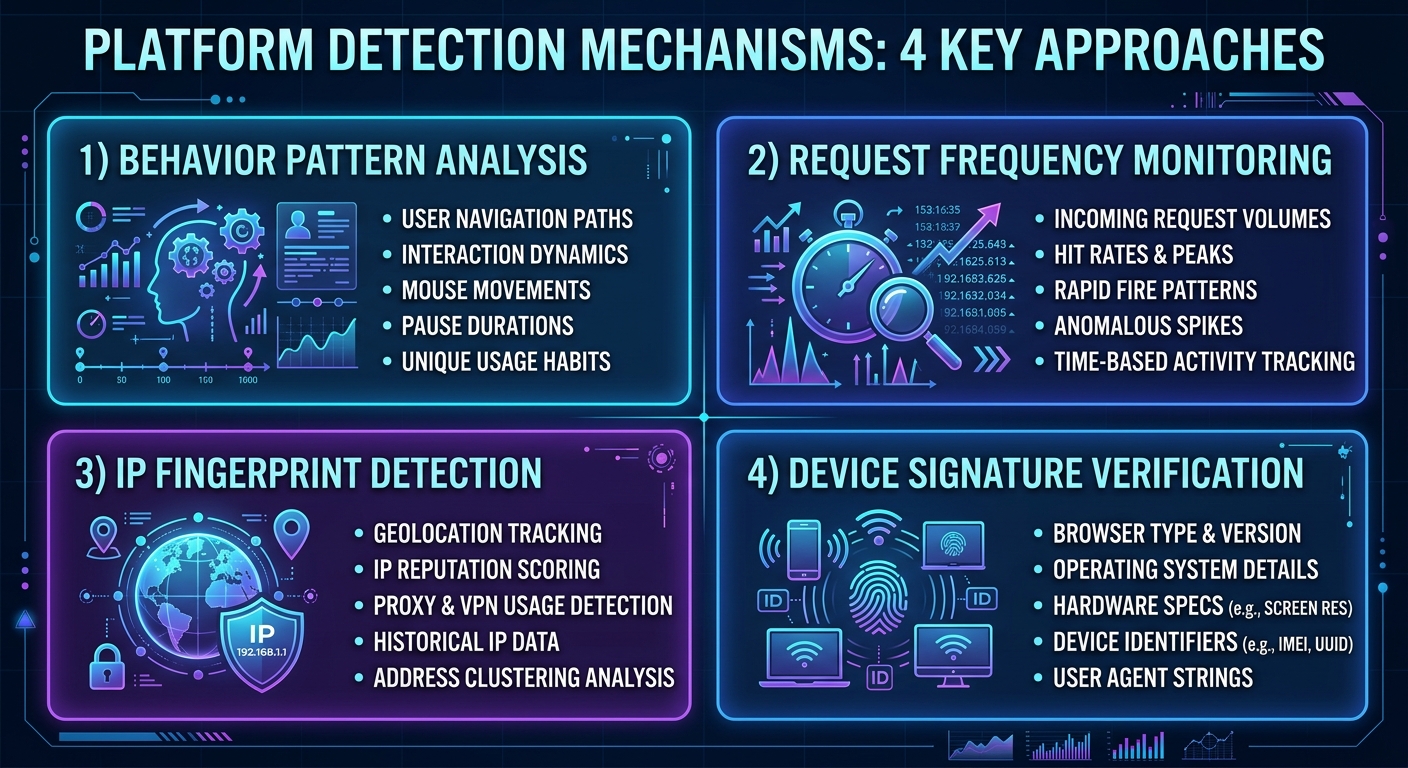
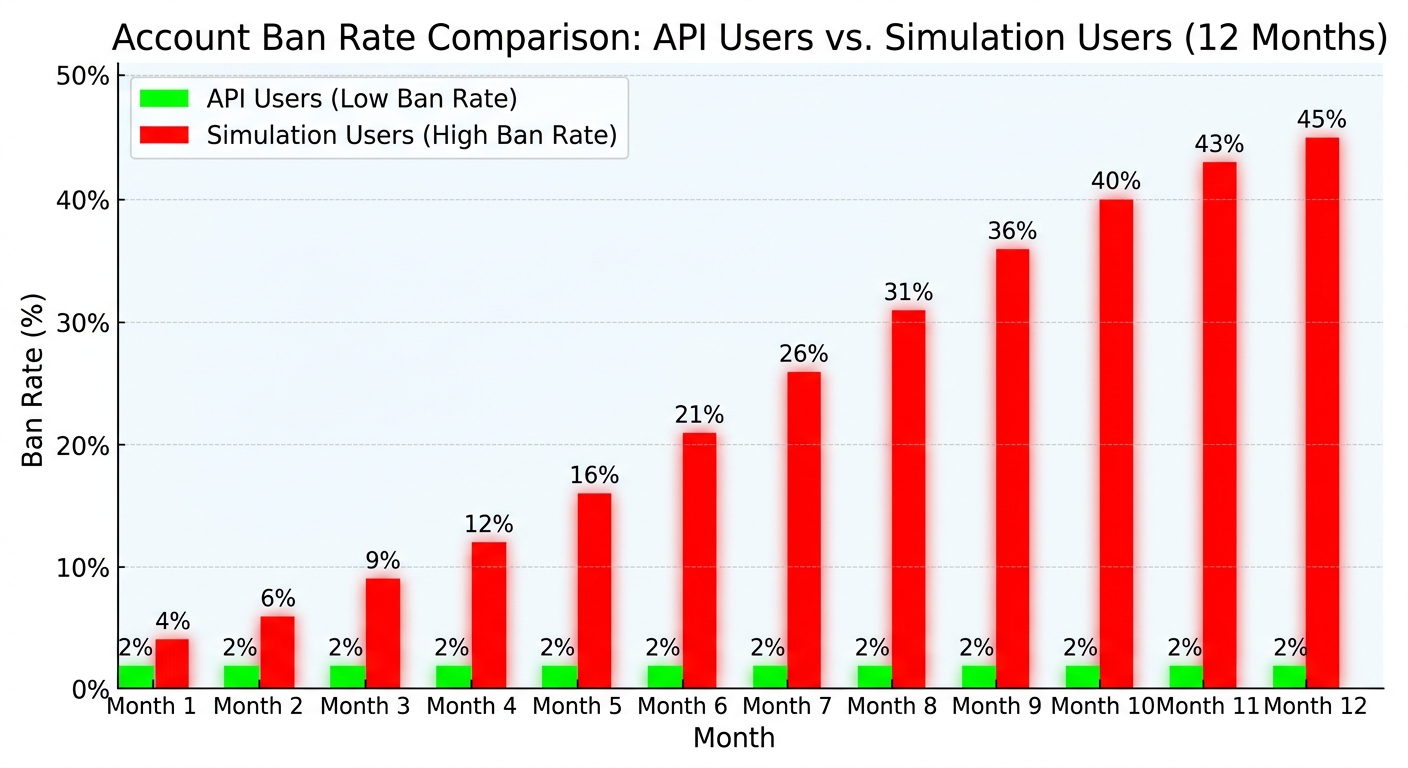
That's a legitimate concern. Some tools on the market use a "simulate human operation" approach — essentially scripts that automate clicking. This method carries high risk. Once a platform detects it, the consequences range from reduced reach to outright account suspension.
SocialEcho is different. It connects to platforms through official APIs, meaning it's a "recognized" partner of the platform. Your account won't be flagged as "abnormal activity" for using SocialEcho.
Think of it like the difference between using an official client and an unofficial third-party client. The official client is developed by the platform itself, so it's safe. A third-party client that connects through official APIs is also safe. But one that connects through cracked protocols? That's dangerous.
SocialEcho falls into the second category — connected through official APIs, safe and compliant.
And official API message retrieval is more timely too. You don't need to worry about message delays or the tool breaking when a platform updates. SocialEcho's technical team continuously monitors API changes across all platforms to ensure uninterrupted service.
Historical data shows zero account bans among SocialEcho users.
Getting Started with the Unified Inbox
If you want to experience the convenience of a unified inbox, here's how to get started:
Step one: Register a SocialEcho account. The official website offers a free trial, so you can try before you decide.
Step two: Link your social media accounts. In "Platform Management," follow the prompts to authorize SocialEcho to access your accounts. This step uses official API authorization — safe and compliant, and you can review or revoke access at any time from each platform's backend.
Step three: Activate the unified inbox. In the "Inbox" feature, enable message aggregation. Messages from all platforms will start flowing into a single list.
Step four: Set up message notifications. You can choose pop-up alerts, sound notifications, email alerts, and more, ensuring you never miss a new message.
Step five: Start replying. All messages are arranged chronologically, with unanswered ones marked by red dots. Click one, reply, send.
The whole setup takes about thirty minutes the first time (mostly for linking accounts). After that, you just open SocialEcho and reply to messages from all platforms.
Frequently Asked Questions
Which platforms does the unified inbox support?
Currently, it supports 10+ mainstream social media platforms, including 9 domestic platforms (Instagram, Reddit,X (Facebook Messengerr)in, Facebook Page, X (Twitter), LinkedIn, RedditTelegrambili, Telegram Channels) and overseas platforms (Instagram, Facebook, TikTok, X/Twitter, LinkedIn, YouTube, and more). All platforms are connected through official API certification.
How often do messages update? Is it real-time?
For engagement data like comments and DMs, SocialEcho uses a real-time push mechanism — you'll see new messages in the unified inbox within 5 seconds of the user sending them. For certain platforms, the update frequency is every 5 minutes. Users can also manually trigger instant synchronization.
How does a multi-agent customer service team collaborate?
SocialEcho provides message assignment functionality. Administrators can manually assign messages to specific agents or set up automatic assignment rules (such as round-robin or skill-based routing). Agents can @ colleagues for assistance and add internal notes (invisible to users).
Can I view historical messages?
Yes. SocialEcho saves all historical messages and supports filtering by platform, date, and status (replied/unreplied). The Basic plan saves 6 months of history, the Team plan saves 12 months, and the Enterprise plan offers permanent storage.
What about pricing?
SocialEcho offers three plans: Basic (10/month), Team (15/person/month), and Enterprise (custom pricing). Individual creators can start with Basic, while teams should consider the Team plan.
Closing Thoughts
Back to Xiao Wang's story.
These days, Xiao Wang opens SocialEcho every morning, and all platform messages are right there in one list. He replies in chronological order, with unanswered messages flagged by red dots — not a single one slips through.
His missed reply rate dropped from 25% to 3%, and user satisfaction climbed from 68% to 94%.
"I used to think customer service was just about replying to messages," Xiao Wang said. "Now I realize that customer service is actually the bridge between users and the brand. Reply a little faster, and users are a little happier. Reply a little slower, and users slip away a little faster."
A unified inbox won't write replies for you. It won't handle complex issues. It won't improve your service skills. But it can automate the repetitive, mechanical, time-consuming tasks — giving you the time to do what really matters.
Like replying thoughtfully to every single message.
Try SocialEcho free for 7 days SocialEcho and experience the efficiency of a unified inbox. Don't let missed replies be the reason your customers walk away.
Have questions? Feel free to leave a comment below, or visit the SocialEcho Help Center for more support.
Want to try it? Free 7-day trial of SocialEcho — no credit card required. Start managing multiple platforms efficiently today.
Word count: 3,200 words | Reading time: 10 minutes
;}.cls-2{fill:%230868f7;}.cls-3{fill:url(%23未命名的渐变_44);}.cls-4{fill:%23333;}%3c/style%3e%3clinearGradient%20id='未命名的渐变_8'%20x1='33.73'%20y1='100.61'%20x2='-0.03'%20y2='-1.06'%20gradientUnits='userSpaceOnUse'%3e%3cstop%20offset='0'%20stop-color='%237ae9fb'/%3e%3cstop%20offset='0.67'%20stop-color='%232b90f8'/%3e%3cstop%20offset='1'%20stop-color='%230868f7'/%3e%3c/linearGradient%3e%3clinearGradient%20id='未命名的渐变_44'%20x1='27.86'%20y1='18.67'%20x2='68.36'%20y2='22.22'%20gradientUnits='userSpaceOnUse'%3e%3cstop%20offset='0'%20stop-color='%235ac7f2'/%3e%3cstop%20offset='1'%20stop-color='%230868f7'/%3e%3c/linearGradient%3e%3c/defs%3e%3cpath%20class='cls-1'%20d='M29,28.74V81.91l-9.51-3.68v0L8.52,74A7.17,7.17,0,0,1,4,67.32V24.54A3.76,3.76,0,0,1,9.08,21Z'/%3e%3cpath%20class='cls-2'%20d='M68.09,78.07a13.15,13.15,0,0,1-17.9,12.06L29,81.91h0V28.74L50.19,37A13.17,13.17,0,0,0,68.08,25.3h0Z'/%3e%3cpath%20class='cls-3'%20d='M68.08,25.3a13.19,13.19,0,0,1-6.73,10.87A13.09,13.09,0,0,1,50.19,37L29,28.74V6A3.76,3.76,0,0,1,34.1,2.52l25.59,9.91A13.22,13.22,0,0,1,68.08,25.3Z'/%3e%3cpath%20class='cls-4'%20d='M129.06,81.76a4.33,4.33,0,0,1-3.19-1.31,4.4,4.4,0,0,1-1.31-3.24V56.86H97.65V77.21a4.36,4.36,0,0,1-1.35,3.2A4.68,4.68,0,0,1,93,81.76a4.32,4.32,0,0,1-3.19-1.31,4.37,4.37,0,0,1-1.32-3.24V27.27A4.58,4.58,0,0,1,89.83,24a4.59,4.59,0,0,1,7.82,3.27V48.15h26.91V27.27A4.58,4.58,0,0,1,125.91,24a4.59,4.59,0,0,1,7.82,3.27V77.21a4.37,4.37,0,0,1-1.36,3.2A4.65,4.65,0,0,1,129.06,81.76Z'/%3e%3cpath%20class='cls-4'%20d='M163.77,81.66c-6.57,0-11.76-1.92-15.44-5.7s-5.54-9.07-5.54-15.74a26.76,26.76,0,0,1,2.09-10.43,17.72,17.72,0,0,1,6.67-8.06,19.15,19.15,0,0,1,10.68-2.95,19,19,0,0,1,10.46,2.8,18.7,18.7,0,0,1,6.55,7.36,22.53,22.53,0,0,1,2.36,10.28A4.51,4.51,0,0,1,177,63.77H152.23a10.8,10.8,0,0,0,3.49,6.65c2,1.68,4.88,2.52,8.66,2.52a22.25,22.25,0,0,0,7.54-1.21c.74-.3,1.55-.67,2.37-1.07a3.75,3.75,0,0,1,1.84-.4,4.09,4.09,0,0,1,3,1.15,4,4,0,0,1,1.12,3,4.38,4.38,0,0,1-2.58,3.82,32.34,32.34,0,0,1-6.36,2.61A28.67,28.67,0,0,1,163.77,81.66ZM172.4,55.9a9.72,9.72,0,0,0-1.63-4.56A9.9,9.9,0,0,0,167,48a10.38,10.38,0,0,0-4.64-1.14,12,12,0,0,0-4.77,1.06,9.54,9.54,0,0,0-4.89,5.66,11.78,11.78,0,0,0-.51,2.3Z'/%3e%3cpath%20class='cls-4'%20d='M193,81.64a4.49,4.49,0,0,1-4.51-4.55V27.28A4.58,4.58,0,0,1,189.84,24a4.48,4.48,0,0,1,3.28-1.36A4.36,4.36,0,0,1,196.35,24a4.46,4.46,0,0,1,1.31,3.31V77.09a4.34,4.34,0,0,1-1.35,3.2A4.67,4.67,0,0,1,193,81.64Z'/%3e%3cpath%20class='cls-4'%20d='M263.79,81.71a5.7,5.7,0,0,1-4.2-1.74,5.76,5.76,0,0,1-1.73-4.19V27.37a4.58,4.58,0,0,1,1.35-3.27A4.59,4.59,0,0,1,267,27.37V72.53h24a4.58,4.58,0,0,1,3.27,7.82A4.66,4.66,0,0,1,291,81.71Z'/%3e%3cpath%20class='cls-4'%20d='M424.48,81.74a4.71,4.71,0,0,1-2.71-.88,5.43,5.43,0,0,1-1-1l-.07-.09-12.41-17-5.41,5v9.44a4.31,4.31,0,0,1-1.36,3.19,4.66,4.66,0,0,1-3.3,1.36A4.29,4.29,0,0,1,395,80.42a4.36,4.36,0,0,1-1.32-3.23V27.37A4.58,4.58,0,0,1,395,24.1a4.52,4.52,0,0,1,6.58.12,4.54,4.54,0,0,1,1.24,3.15V56.31l17.72-16.38.05,0a4.8,4.8,0,0,1,2.94-1.11,4.4,4.4,0,0,1,3.27,1.2,4.57,4.57,0,0,1,1.2,3.27,4.44,4.44,0,0,1-.77,2.33,7.45,7.45,0,0,1-1.43,1.65l-11,9.64,13.34,17.68a5,5,0,0,1,1,2.71,4.12,4.12,0,0,1-1.36,3.24A4.64,4.64,0,0,1,424.48,81.74Z'/%3e%3cpath%20class='cls-4'%20d='M317.93,81.76a21.5,21.5,0,1,1,21.17-21.5A21.37,21.37,0,0,1,317.93,81.76Zm0-34.1a12.61,12.61,0,1,0,12.42,12.6A12.52,12.52,0,0,0,317.93,47.66Z'/%3e%3cpath%20class='cls-4'%20d='M212.18,101.22a4.12,4.12,0,0,1-3.05-1.26,4.17,4.17,0,0,1-1.26-3.1V43.34a4.37,4.37,0,0,1,1.3-3.14,4.26,4.26,0,0,1,3.13-1.3,4.19,4.19,0,0,1,3.1,1.26,4.32,4.32,0,0,1,1.26,3.16,20.77,20.77,0,0,1,13-4.54,21.51,21.51,0,0,1,0,43,20.51,20.51,0,0,1-13-4.57V96.86a4.15,4.15,0,0,1-1.3,3.06A4.5,4.5,0,0,1,212.18,101.22Zm17.43-53.63c-6.23,0-12.93,4.11-12.93,12.72a12.73,12.73,0,0,0,25.46,0A12.71,12.71,0,0,0,229.61,47.59Z'/%3e%3cpath%20class='cls-4'%20d='M365.76,81.76a21.5,21.5,0,1,1,21.18-21.5A21.37,21.37,0,0,1,365.76,81.76Zm0-34.1a12.61,12.61,0,1,0,12.42,12.6A12.52,12.52,0,0,0,365.76,47.66Z'/%3e%3c/svg%3e)