
In 2026, AI Agents will make 30% of customer service tickets disappear—where is the next battleground for social media operations?

introduction
At 8 a.m. on Monday, Sarah, Airbnb’s North American Operations Director, opened the backend and saw a number that shocked her: of the 3,000 customer service tickets issued over the weekend, 900 were handled entirely by the AI Agent without any human intervention.
This isn't test data; it's something that actually happened. In March 2026, Airbnb officially confirmed that their AI Agent was already able to independently handle 30% of customer service tickets, from user inquiries to problem resolution, all without human intervention.
On the same day, Douyin E-commerce released its 2026 white paper, which showed that with the support of AI tools, the marginal cost of creating high-quality content has "approached zero." TikTok expects its GMV to exceed $150 billion in 2026, and the core engine driving this growth is not more manpower, but AI agents.
If customer service can be taken over by AI agents, and if content production costs approach zero, then what is the value of a social media operations team?
This isn't a crisis warning; it's a battle that has already begun. Teams still manually replying to comments, manually monitoring competitors, and manually compiling data are being left behind. Meanwhile, teams that deployed AI agents early on are managing ten times the number of accounts with the same manpower.
- AI Agent is not a tool, but an invisible adversary.
In February 2026, a friend in Shenzhen who runs a cross-border e-commerce business told me, "Our team of five manages 20 TikTok accounts. We spend four hours a day just replying to comments, and we still frequently miss inquiries from potential customers."
I asked him, "Did you use AI to automatically reply?"
He said, "I used it, but the effect was poor. The responses were too mechanical; users could tell it was a bot at a glance."
This is the dilemma of 2025. But in 2026, the rules of the game will change.
Airbnb's AI Agent is not a simple keyword matcher, but an "intelligent agent" capable of understanding user emotions, recognizing true intentions, and even predicting users' next needs. It's not "responding," but "conversing."
Even more alarming is that this capability is rapidly becoming more accessible. According to a report by 36kr, the deployment cost of AI agents in 2026 has decreased by 70% compared to 2024, while accuracy has increased from 85% to over 95%.
what does that mean?
This means your competitors may already be using AI agents to monitor your activity 24/7, automatically analyze your trending content, and even generate three versions of follow-up content while you are posting.
This isn't science fiction; it's reality happening right now.
Second and third layers of battlefield: external, relational, and internal.
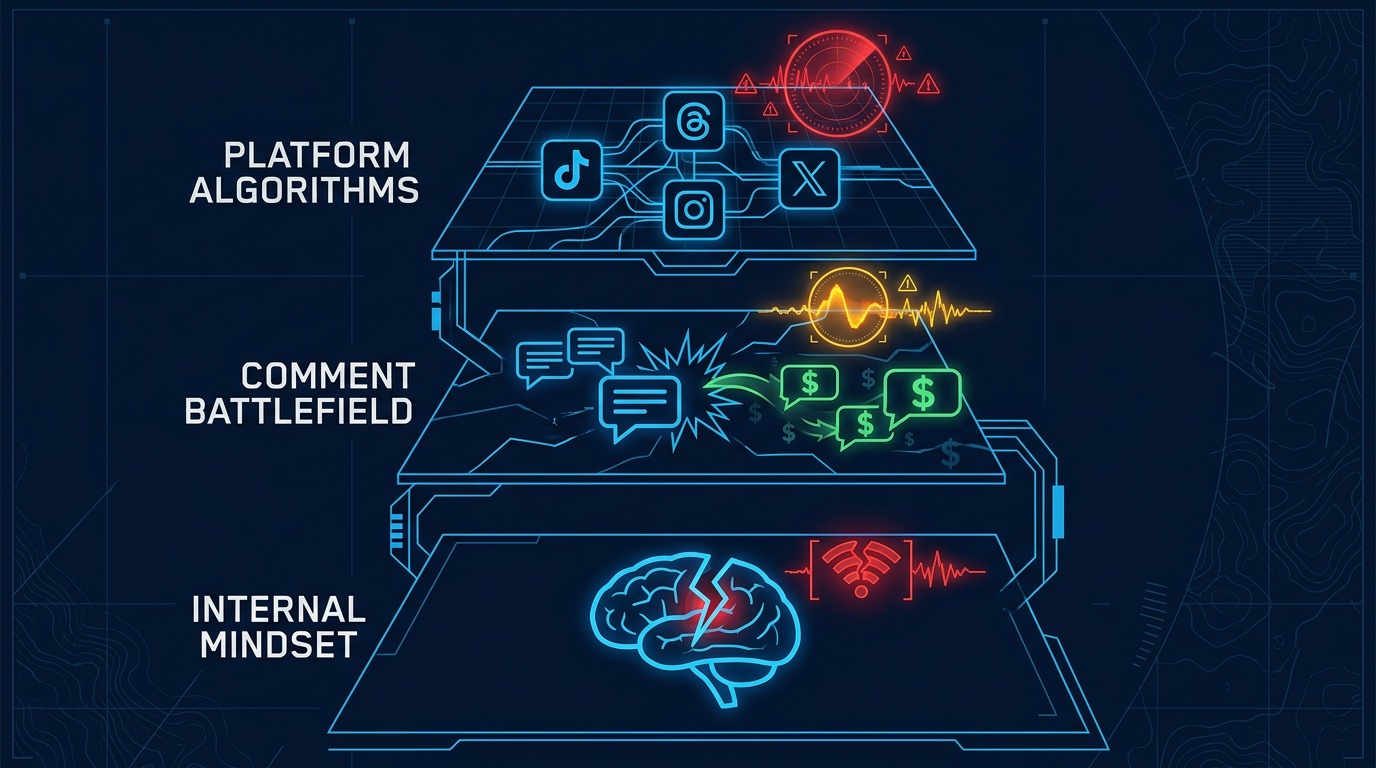
External Battlefield: Platform Rules Accelerate AI Transformation
In 2026, the algorithms of TikTok, Instagram, and Twitter will all be evolving in the same direction: content vectorization .
What is content vectorization? Simply put, it means that platforms no longer just look at your title, tags, and posting time. Instead, they use AI to analyze your video scenes, text emotions, comment interactions, and even your account history to generate a "content vector," which is then precisely matched to the corresponding user groups.
This means that traditional methods like "posting time optimization" and "tag stuffing" are no longer effective. What you need is for AI to understand your content .
But here's the problem: If you're still manually publishing, manually adjusting copy, and manually testing different versions, while your competitors are already using AI Agents to generate 100 content variations in batches and automatically test the optimal version, how do you win?
According to data from Douyin e-commerce, companies that were able to "truly make good use of AI" saw their profits and results increase exponentially in 2026. Meanwhile, teams still using traditional methods are being marginalized by algorithms.
Relationship Battleground: The Comments Section is the New Sales Battleground
In 2025, everyone was still discussing "private domain traffic." In 2026, the battlefield had shifted to the comments section.
Why? Because users no longer believe brands' self-proclaimed claims; they believe the genuine feedback from other users in the comments section.
A real-life example: A beauty brand posted a new product promotion on Instagram and received 300 comments within 24 hours. Of these, 50 were inquiries about the product's ingredients, 30 were asking where to buy it, and 20 were complaints about slow shipping.
If your team can respond to all inquiries within 2 hours, your conversion rate will increase by 40%. But if you wait 24 hours to respond, those users will have already placed orders with your competitors.
The question is: Is your team capable of responding to 300 comments within 2 hours? And also identifying which are genuine inquiries, which are malicious attacks, and which are potential major clients?
This is why TikTok and Instagram comment management will become core capabilities for social media operations in 2026. Teams that can use AI to automatically identify user emotions, categorize comments, and trigger replies are turning comment sections into sales funnels.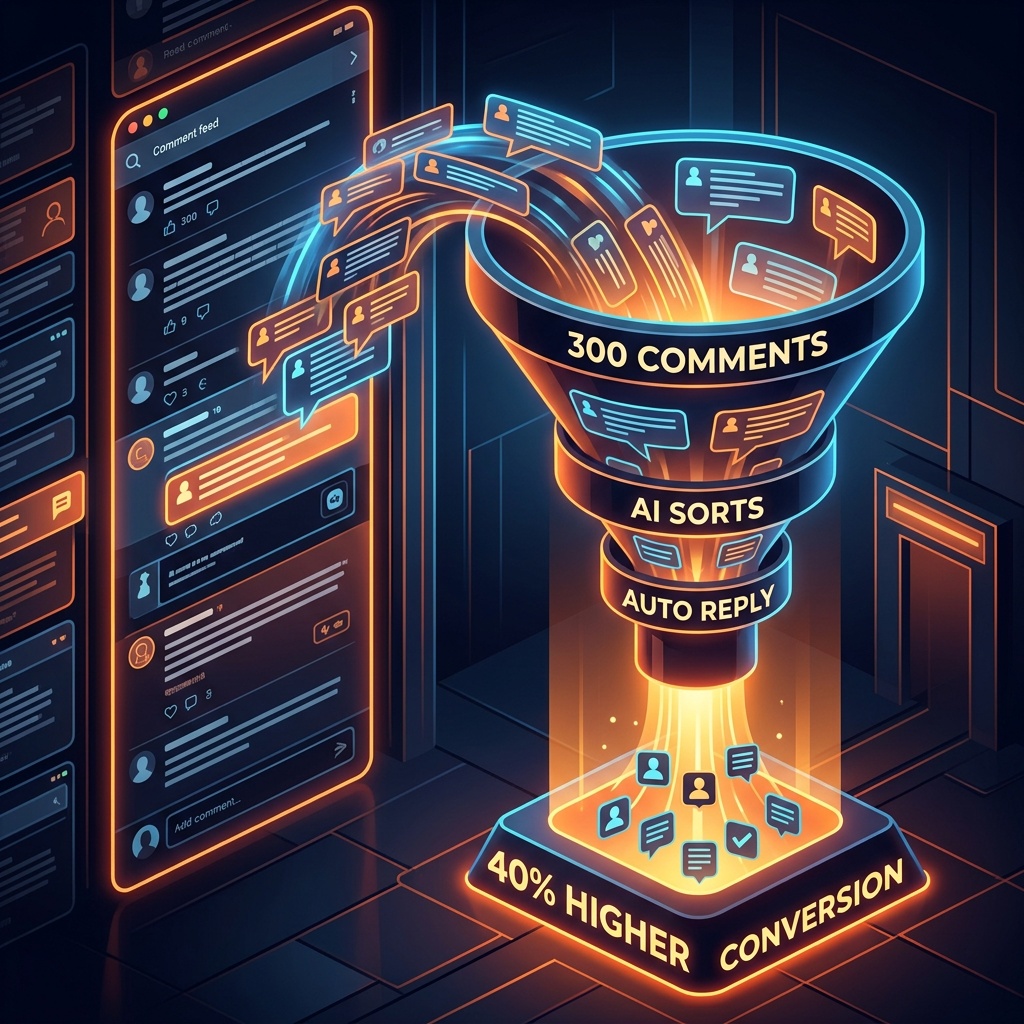
Internal Battlefield: Your Cognitive Misconceptions Are Dragging Down the Team
The biggest enemy is not the competitors, but your own habitual way of thinking.
Myth 1: "We need more manpower"
Wrong. What you need is not more people, but more efficient collaboration.
A team of five managing 20 accounts using traditional methods is exhausted every day. However, by using an AI agent to handle repetitive tasks (comment replies, data aggregation, competitor monitoring), the same five people can manage 50 accounts, and with higher quality.
Myth 2: "AI responses are too mechanical, users don't like them."
That's AI in 2025. In 2026, AI Agents will be able to adjust their tone of voice based on the user's emotions, and even identify whether the user is "inquiring" or "buying," automatically matching different response strategies.
According to SocialEcho data, brands that use AI-powered automated responses have seen an increase in customer satisfaction, because AI's response speed is 10 times faster than that of humans, and it will never neglect customers due to a bad mood.
Myth 3: "Our data is already detailed enough."
Your data is "detailed enough," but can you answer your boss's question in 5 minutes?
"Of the 30 pieces of content we posted last week on TikTok, Instagram, and X, which 5 performed best? Why? What did our competitors post during the same period? Was our engagement rate higher or lower than theirs?"
If you need to spend 2 hours opening the backends of various platforms, exporting to Excel, and manually comparing data, then your data is "dead data".
Teams using multi-platform data analysis tools can generate a visual report in 5 minutes, and can even automatically label it as "the competitor's video released on March 5 had a 30% higher interaction rate than ours because they used the XX hashtag".
III. Breaking the Mold: From "Manual Operation" to "AI Collaborative Operation"
In March 2026, we interviewed 10 of the best-performing brands in social media operations and found that they were all doing the same thing: not replacing people with AI, but making AI the "sixth person" in the team.
Breakthrough point one: Let AI take over repetitive tasks, allowing people to focus on strategic decision-making.
A social media manager for a brand expanding overseas told us, "Our team consists of three people, but we have a 'virtual fourth person'—an AI Agent."
Their workflow is as follows:
- AI is responsible for : automatically capturing competitor activities daily, automatically replying to 90% of regular comments, and automatically generating daily data reports.
- Human responsibility includes : analyzing competitor insights provided by AI, deciding on the content direction for the following week, and processing AI-labeled "high-value users."
Result: A team of 3 people manages 15 accounts across 5 platforms, and still has time to create content every week.
Breakthrough point two: Use data to drive decision-making, rather than relying on intuition.
Traditional social media marketing works like this: "I think this topic will go viral, let's give it a try."
AI-powered collaborative operations work like this: "Based on data from the past 30 days, content of type XX has the highest interaction rate among our target user group, and competitors haven't yet entered this market, so we can take the lead."
This is not "data analysis", but "data insight".
A social media agency used competitor monitoring tools to discover that competitors' content posted at 8 PM on Wednesdays had the highest engagement rate. They immediately adjusted their strategy, posting content at 7:50 PM on Wednesdays, successfully capturing a portion of that traffic.
Breakthrough Point Three: From "Multi-Platform Release" to "Multi-Platform Collaboration"
In 2025, everyone was still discussing "one-click multi-platform publishing". In 2026, the real experts were already working on "multi-platform collaboration".
What is multi-platform collaboration?
For example, when you post a video on TikTok, AI automatically analyzes the time period and user group where the video performs best. Then, AI automatically generates an "Instagram version" (adjusting the aspect ratio and text style) and an "X version" (extracting the core message and generating a thread), and automatically publishes it at the optimal time.
This is not "copy and paste", but "content re-creation".
A content creator used the scheduled posting feature to automatically adapt a viral TikTok video into different versions for five platforms and release them at different times. The result: the lifespan of a single piece of content was extended from 24 hours to 72 hours, and total exposure increased threefold.
Conclusion
In 2026, AI agents will not be a "future trend," but a "current reality."
Airbnb saw a 30% reduction in customer service tickets, yet customer satisfaction actually increased. Similarly, Douyin's e-commerce content production costs approached zero, but the quantity of high-quality content exploded.
What does this tell us?
AI agents are not taking away people's jobs, but rather redefining "what constitutes valuable work".
Those tasks taken over by AI—manually replying to comments, manually compiling data, and manually monitoring competitors—should never have taken up human time in the first place. Humans should be focused on strategic decision-making, creative planning, and user insights.
But the prerequisite is that you must first make the AI your teammate.
If you're still doing social media operations in 2026 using the methods of 2025, you're not competing with your rivals, you're racing against time. And time never waits for anyone.
The question now is not "whether to use an AI agent", but "how long have your competitors been using it?"
Are you ready?
;}.cls-2{fill:%230868f7;}.cls-3{fill:url(%23未命名的渐变_44);}.cls-4{fill:%23333;}%3c/style%3e%3clinearGradient%20id='未命名的渐变_8'%20x1='33.73'%20y1='100.61'%20x2='-0.03'%20y2='-1.06'%20gradientUnits='userSpaceOnUse'%3e%3cstop%20offset='0'%20stop-color='%237ae9fb'/%3e%3cstop%20offset='0.67'%20stop-color='%232b90f8'/%3e%3cstop%20offset='1'%20stop-color='%230868f7'/%3e%3c/linearGradient%3e%3clinearGradient%20id='未命名的渐变_44'%20x1='27.86'%20y1='18.67'%20x2='68.36'%20y2='22.22'%20gradientUnits='userSpaceOnUse'%3e%3cstop%20offset='0'%20stop-color='%235ac7f2'/%3e%3cstop%20offset='1'%20stop-color='%230868f7'/%3e%3c/linearGradient%3e%3c/defs%3e%3cpath%20class='cls-1'%20d='M29,28.74V81.91l-9.51-3.68v0L8.52,74A7.17,7.17,0,0,1,4,67.32V24.54A3.76,3.76,0,0,1,9.08,21Z'/%3e%3cpath%20class='cls-2'%20d='M68.09,78.07a13.15,13.15,0,0,1-17.9,12.06L29,81.91h0V28.74L50.19,37A13.17,13.17,0,0,0,68.08,25.3h0Z'/%3e%3cpath%20class='cls-3'%20d='M68.08,25.3a13.19,13.19,0,0,1-6.73,10.87A13.09,13.09,0,0,1,50.19,37L29,28.74V6A3.76,3.76,0,0,1,34.1,2.52l25.59,9.91A13.22,13.22,0,0,1,68.08,25.3Z'/%3e%3cpath%20class='cls-4'%20d='M129.06,81.76a4.33,4.33,0,0,1-3.19-1.31,4.4,4.4,0,0,1-1.31-3.24V56.86H97.65V77.21a4.36,4.36,0,0,1-1.35,3.2A4.68,4.68,0,0,1,93,81.76a4.32,4.32,0,0,1-3.19-1.31,4.37,4.37,0,0,1-1.32-3.24V27.27A4.58,4.58,0,0,1,89.83,24a4.59,4.59,0,0,1,7.82,3.27V48.15h26.91V27.27A4.58,4.58,0,0,1,125.91,24a4.59,4.59,0,0,1,7.82,3.27V77.21a4.37,4.37,0,0,1-1.36,3.2A4.65,4.65,0,0,1,129.06,81.76Z'/%3e%3cpath%20class='cls-4'%20d='M163.77,81.66c-6.57,0-11.76-1.92-15.44-5.7s-5.54-9.07-5.54-15.74a26.76,26.76,0,0,1,2.09-10.43,17.72,17.72,0,0,1,6.67-8.06,19.15,19.15,0,0,1,10.68-2.95,19,19,0,0,1,10.46,2.8,18.7,18.7,0,0,1,6.55,7.36,22.53,22.53,0,0,1,2.36,10.28A4.51,4.51,0,0,1,177,63.77H152.23a10.8,10.8,0,0,0,3.49,6.65c2,1.68,4.88,2.52,8.66,2.52a22.25,22.25,0,0,0,7.54-1.21c.74-.3,1.55-.67,2.37-1.07a3.75,3.75,0,0,1,1.84-.4,4.09,4.09,0,0,1,3,1.15,4,4,0,0,1,1.12,3,4.38,4.38,0,0,1-2.58,3.82,32.34,32.34,0,0,1-6.36,2.61A28.67,28.67,0,0,1,163.77,81.66ZM172.4,55.9a9.72,9.72,0,0,0-1.63-4.56A9.9,9.9,0,0,0,167,48a10.38,10.38,0,0,0-4.64-1.14,12,12,0,0,0-4.77,1.06,9.54,9.54,0,0,0-4.89,5.66,11.78,11.78,0,0,0-.51,2.3Z'/%3e%3cpath%20class='cls-4'%20d='M193,81.64a4.49,4.49,0,0,1-4.51-4.55V27.28A4.58,4.58,0,0,1,189.84,24a4.48,4.48,0,0,1,3.28-1.36A4.36,4.36,0,0,1,196.35,24a4.46,4.46,0,0,1,1.31,3.31V77.09a4.34,4.34,0,0,1-1.35,3.2A4.67,4.67,0,0,1,193,81.64Z'/%3e%3cpath%20class='cls-4'%20d='M263.79,81.71a5.7,5.7,0,0,1-4.2-1.74,5.76,5.76,0,0,1-1.73-4.19V27.37a4.58,4.58,0,0,1,1.35-3.27A4.59,4.59,0,0,1,267,27.37V72.53h24a4.58,4.58,0,0,1,3.27,7.82A4.66,4.66,0,0,1,291,81.71Z'/%3e%3cpath%20class='cls-4'%20d='M424.48,81.74a4.71,4.71,0,0,1-2.71-.88,5.43,5.43,0,0,1-1-1l-.07-.09-12.41-17-5.41,5v9.44a4.31,4.31,0,0,1-1.36,3.19,4.66,4.66,0,0,1-3.3,1.36A4.29,4.29,0,0,1,395,80.42a4.36,4.36,0,0,1-1.32-3.23V27.37A4.58,4.58,0,0,1,395,24.1a4.52,4.52,0,0,1,6.58.12,4.54,4.54,0,0,1,1.24,3.15V56.31l17.72-16.38.05,0a4.8,4.8,0,0,1,2.94-1.11,4.4,4.4,0,0,1,3.27,1.2,4.57,4.57,0,0,1,1.2,3.27,4.44,4.44,0,0,1-.77,2.33,7.45,7.45,0,0,1-1.43,1.65l-11,9.64,13.34,17.68a5,5,0,0,1,1,2.71,4.12,4.12,0,0,1-1.36,3.24A4.64,4.64,0,0,1,424.48,81.74Z'/%3e%3cpath%20class='cls-4'%20d='M317.93,81.76a21.5,21.5,0,1,1,21.17-21.5A21.37,21.37,0,0,1,317.93,81.76Zm0-34.1a12.61,12.61,0,1,0,12.42,12.6A12.52,12.52,0,0,0,317.93,47.66Z'/%3e%3cpath%20class='cls-4'%20d='M212.18,101.22a4.12,4.12,0,0,1-3.05-1.26,4.17,4.17,0,0,1-1.26-3.1V43.34a4.37,4.37,0,0,1,1.3-3.14,4.26,4.26,0,0,1,3.13-1.3,4.19,4.19,0,0,1,3.1,1.26,4.32,4.32,0,0,1,1.26,3.16,20.77,20.77,0,0,1,13-4.54,21.51,21.51,0,0,1,0,43,20.51,20.51,0,0,1-13-4.57V96.86a4.15,4.15,0,0,1-1.3,3.06A4.5,4.5,0,0,1,212.18,101.22Zm17.43-53.63c-6.23,0-12.93,4.11-12.93,12.72a12.73,12.73,0,0,0,25.46,0A12.71,12.71,0,0,0,229.61,47.59Z'/%3e%3cpath%20class='cls-4'%20d='M365.76,81.76a21.5,21.5,0,1,1,21.18-21.5A21.37,21.37,0,0,1,365.76,81.76Zm0-34.1a12.61,12.61,0,1,0,12.42,12.6A12.52,12.52,0,0,0,365.76,47.66Z'/%3e%3c/svg%3e)