
April Social Media Marketing Calendar: Easter, Coachella, Earth Day - Creative Execution Handbook
introduction
You come across a video of a brand's Easter egg marketing campaign. The content is fun, the interaction is off the charts, and the comments section is full of people asking for the same product. But when you click into the profile, you realize they started their pre-launch campaign three days ago.
And you? You only start thinking about "what holiday is it today?" on the day of the holiday.
That's why you always miss out on the node traffic bonus.
April features three major marketing events: Easter (April 12), Coachella Music Festival (April 10-19), and Earth Day (April 22). For brands expanding overseas, these are natural sources of content and traffic opportunities. However, most brands either miss these opportunities, give them perfunctory treatment, or achieve no results.
In this article, we've broken down the creative direction, key execution points, and scheduling for these three stages in a timeline. After reading this, you can start preparing today.
I. Why April's key marketing events must be planned in advance
Many brands misunderstand "festival marketing" as simply "posting content that is appropriate for the occasion on the day of the holiday." This is the biggest misunderstanding of festival marketing.
The value of holiday marketing lies not in the holiday itself, but in the entire traffic window before and after the holiday.
Take Easter as an example: the core consumer group starts searching for relevant information 2-3 weeks before the holiday. If you only post one message on Easter Day, your target audience may already be paying attention to other brands.
The complete traffic window for node marketing:
- Warm-up period (1-2 weeks before the holiday): Building anticipation and attracting potential customers.
- Peak period (3-5 days before the holiday to the day of the holiday): Content is released in a concentrated burst, guiding consumer decisions.
- Long tail period (1-2 weeks after the holiday): Secondary dissemination, harvesting remaining traffic.
Missing the warm-up period is like entering the stadium 20 minutes into the game.
In addition, content created at specific times is inherently "topic-generating"—users are more willing to discuss and share related content at these times. The platform's algorithm also increases the topic weight of relevant content during specific holidays. This is free traffic support.
II. Easter Marketing: A Complete Implementation Plan from Pre-launch to Long Tail
2.1 The Underlying Logic of Easter Marketing
The core consumption drivers for Easter are the "gift economy" and the "family setting".
Typical Easter behaviors of consumers in North America and Europe include: preparing Easter eggs and gifts for children, purchasing ingredients and decorations for Easter parties, family meals, and taking photos. This presents the perfect opportunity for brands to tap into the family consumption scenario.
Target user profile:
- Mainly women aged 25-45
- Families with children aged 6-12
- Pay attention to the sense of ritual and family atmosphere during festivals
- Active on Instagram, Pinterest, and Facebook
2.2 Creative Directions for Easter Content
Option 1: Easter "Unboxing" Content
Searches for "unboxing" videos of Easter eggs, gifts, and decorations surged ahead of Easter. You can create special Easter unboxing videos of product gift boxes or plan fun content about "what's in an Easter gift box."
Key points: The video should be fast-paced, vibrant in color, and have a sense of surprise from the "reveal".
Option Two: Easter-themed DIY/Tutorials
Easter egg painting, Easter baking, and Easter decoration making—these kinds of content have extremely high search volumes on Pinterest and YouTube. Brands can create their own Easter-themed product tutorials, naturally integrating brand elements.
Key points: The tutorial should be detailed, the steps should be clear, and the finished product should look good. Users are very likely to save these kinds of videos.
Option 3: Pet Easter
Pets + Easter is another popular combination during Easter. If you're in the pet-related product business, this is an area you absolutely can't miss. Cats and dogs dressed up in Easter costumes, pets searching for Easter eggs—this kind of content naturally has viral potential.
2.3 Release of Easter Schedule Recommendations
| time | Content type | Publishing Platform | illustrate |
|---|---|---|---|
| April 5-6 | Pre-launch hype: Countdown/Suspense | Instagram Reels, TikTok | Raising user expectations |
| April 7-8 | Tutorials: Easter Decorations/Baking | Pinterest, YouTube | Establish content authority |
| April 9-10 | Pre-launch: Gift Display | Instagram, Facebook | Guide to bookmark |
| April 11 | Outbreak: Easter Day Content | All platforms | Maximize the festive atmosphere |
| April 12 | On that day: Brand blessings/User-generated content (UGC) | All platforms | Enhance user stickiness |
| April 13-14 | Long Tail: Use Cases/Review | Instagram, TikTok | Secondary transmission |
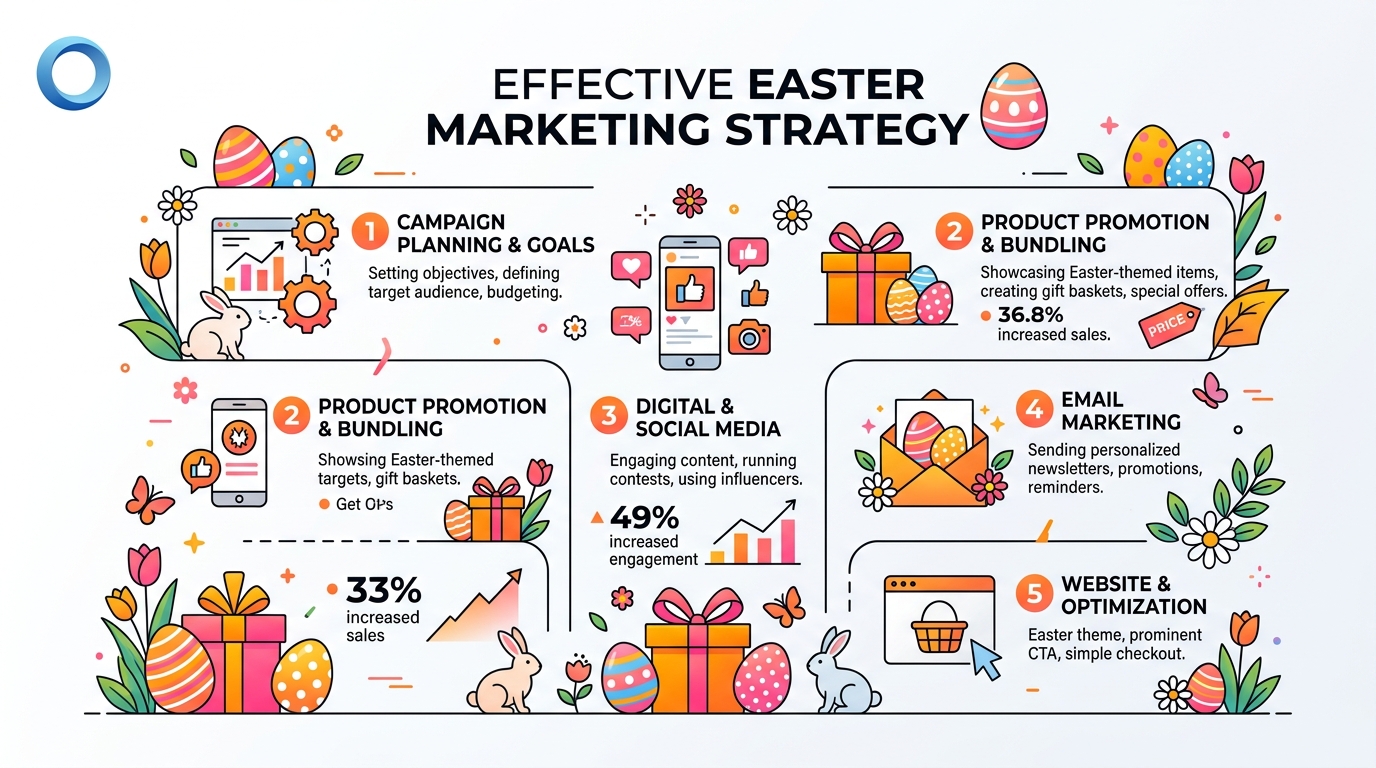
Recommended core tools: Use scheduling tools , Instagram scheduled posts , and TikTok scheduled posts to plan your content in advance. Arrange all the content you can post before the start of the pre-event period, and you only need to post 1-2 real-time posts on the day of the event.
III. Coachella Music Festival: A Sophisticated Way to Capitalize on Popular Trends
3.1 Why Coachella is worth doing
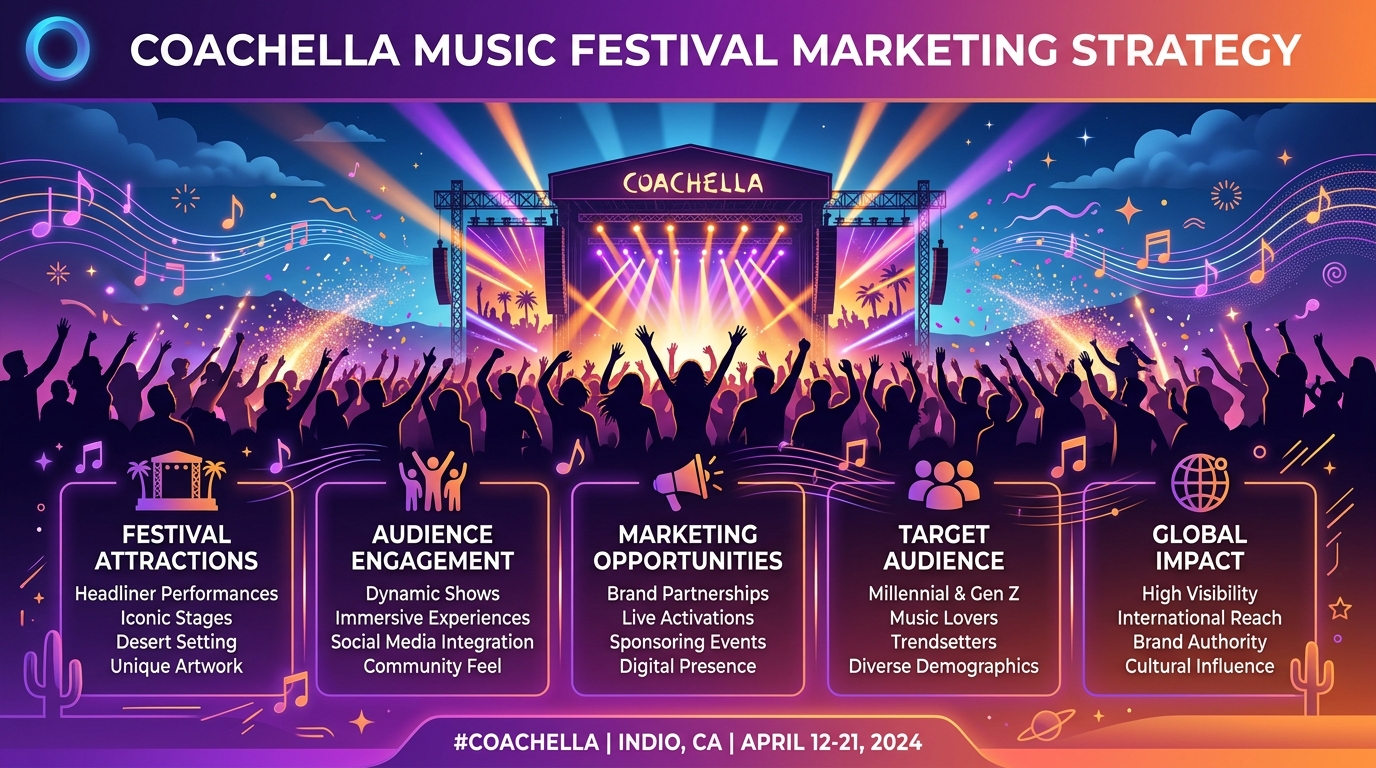
The Coachella Valley Music and Arts Festival is one of the world’s largest and most influential music festivals, held annually in April in California.
Coachella's influence data:
- According to official Coachella data, the hashtag #Coachella2025 on Instagram accumulated over 6 billion views in 2025.
- Instagram stories during Coachella saw 3-5 times more engagement than usual.
- Coachella's primary audience is young people aged 18-34, who are also the core target audience for social media marketing.
If you're targeting a younger user market, Coachella is a must-see traffic opportunity in April.
3.2 Common Misconceptions in Coachella Marketing
Myth 1: Forced association
Coachella is a music festival, but if your brand has absolutely nothing to do with music, fashion, or entertainment, trying to piggyback on Coachella's popularity will only look awkward. Users can tell whether a brand is genuinely participating or just trying to piggyback on its success.
Myth 2: Only taking advantage of the day
The Coachella Music Festival actually lasts about 10 days (pre-festival performances + main events + follow-up coverage). If you only post content on the two days of the official events, you'll miss the entire period of buzz surrounding the event.
Myth 3: Only following celebrity gossip
During Coachella, entertainment content was abundant, and discussions about celebrity outfits and photos were indeed high. However, for non-entertainment brands, instead of chasing celebrity gossip, it's better to approach the Coachella topic from your own perspective.
3.3 Coachella Content Creativity Direction
Option 1: Coachella Style Makeup/Outfit Tutorial
If you're running a beauty or fashion brand, this is the most natural angle to approach the topic. Content like "Coachella-style makeup tutorials" and "Coachella music festival outfit inspiration" saw high search volume in April and can be directly linked to your products.
Option Two: Inspiration for Coachella Scene Design
Home furnishing, decor, and outdoor brands can approach this from the angle of "creating a Coachella atmosphere at home." Who says you can't experience Coachella if you can't attend a music festival? Your home can.
Option 3: Coachella Music/Playlist Recommendations
Spotify, audio brands, and music apps can create Coachella setlists. Content like "Haven't bought tickets yet? Listen to this year's Coachella lineup to whet your appetite" has high emotional value and is frequently saved by users.
3.4 Coachella releases schedule
| time | Content type | illustrate |
|---|---|---|
| April 7-8 | Preview: Lineup Introduction / Ticketing Guide | Topic warm-up |
| April 9 | Preview: Highlights from previous years | Establish emotional connection |
| April 10-12 | Outbreak: Real-time content/Celebrity fashion | Hottest topic |
| April 13 | Continuation: On-site stories/UGC integration | Topic Closing |
| After April 14 | Long Tail: Post-Holiday Reflections After Coachella | Emotional continuation |
IV. Earth Day: The Right Approach to Brand Social Responsibility Marketing
4.1 The Special Characteristics of Earth Day Marketing
Earth Day (April 22) is the most special of all marketing events.
Other holidays are strongly driven by consumerism—Easter for gifts, Christmas for shopping—but Earth Day's core message is environmental protection and sustainable development. If your brand engages in heavy promotions and pressures customers to buy on Earth Day, it goes against the spirit of the holiday and may even alienate consumers.
The core principle of Earth Day marketing: Show action, not just empty slogans.
Users are becoming increasingly sensitive to "greenwashing." If you simply post an empty slogan like "Protect the Earth, starting with me" on Earth Day, users will only think you're jumping on the bandwagon, which will actually damage your brand image.
Truly effective Earth Day marketing is about showing users your concrete actions in environmental protection.
4.2 Creative Directions for Earth Day Content
Direction 1: Brand Environmental Action Report
Let the data speak for itself. What has your brand done regarding environmental protection? How much recyclable material have you used? How much carbon emissions have you reduced? What environmental projects have you supported? — These concrete actions are more convincing than any slogans.
Direction Two: Interpretation of Product Environmental Design
If your product incorporates eco-friendly design elements (biodegradable materials, eco-friendly packaging, energy-saving technologies, etc.), Earth Day is the perfect opportunity to showcase these details. Users want to know what you've actually done, not just hear you say "we're environmentally conscious."
Direction 3: Incentivizing Users' Environmentally Friendly Behavior
Launch a user-participatory environmental campaign—such as the "Earth Day Challenge" or the "7-Day Environmental Plan"—to make users part of the environmental action, rather than just bystanders.
Direction 4: Environmental Education Content
Create content with genuine scientific value—such as "Where do your discarded plastic bottles go?" or "The truth about ocean plastic pollution." Well-made content like this will be widely shared and effectively promote your brand.
4.3 Earth Day Release Schedule
| time | Content type | illustrate |
|---|---|---|
| April 18-19 | Preview: Environmental Knowledge/Data | Establish topic expectations |
| April 21 | Preview: Brand's Environmental Action Announcement | On the day of traffic generation |
| April 22 | On that day: Brand Environmental Report/Commitment | Core content |
| April 23 | Continuation: User Participation/UGC | Topic Closing |
| After April 24 | Long Tail: Updates on Continuous Environmental Actions | Building Trust |
V. Comprehensive Scheduling Management Plan for the Three Major Nodes
April has three key milestones, with a tight schedule and intensive pace. To ensure effective content execution at each milestone, a scientific scheduling management method is essential.
5.1 Prepare a monthly content calendar in advance.
The marketing plan for April should be finalized by the end of March at the latest. Specific details regarding the content theme, publishing platforms, and responsible parties for each week and day should be determined in the initial planning stage at the beginning of the month.
A monthly calendar should include:
- Daily content theme
- Corresponding marketing nodes
- Release platform and time
- Content format (video, images, text and images)
- Person in charge and reviewer
5.2 Establish a node content material library
The core materials for each node (visual templates, copywriting frameworks, hashtags, etc.) should be prepared in advance, rather than being prepared at the last minute.
Easter Resource Library: Easter Egg Visual Templates, Brand Easter Color Schemes, Brand Easter Copywriting Frameworks
Coachella Material Library: Music Festival Style Filters, Brand Coachella Hashtags, List of Popular Music Festival Topics
Earth Day Resource Library: Environmental-themed visuals, green color schemes, and environmental hashtags
5.3 Improve efficiency with tools
The biggest risk of event marketing is being caught off guard and having inconsistent content quality.
Bulk publishing tools allow you to prepare all your content before the holiday and schedule its release. On the day of the holiday, you only need to monitor the data and publish 1-2 pieces of real-time content. This results in much more consistent content quality compared to shooting and publishing on the day itself.
VI. Data Review of Node Marketing
After each marketing campaign concludes, a data review must be conducted.
Must-track metrics:
- Exposure: The increase compared to daily content
- Interaction rate: Likes/Comments/Shares/Favorites
- Conversion rate: If there is product promotion, look at the GMV during the key period.
- User feedback: sentiment in the comments section, positive/negative ratio
- Content Performance: Which content types perform best?
The following questions must be answered in a post-mortem analysis:
- Did this marketing campaign achieve its intended goals?
- Which content types perform best? Why?
- When is the best time to publish content?
- How do users rate the brand's participation in event marketing?
- What aspects of the next marketing campaign could be improved?
FAQ
Q1: With all three nodes crammed into mid-April, how should the content schedule be allocated?
A1: The target users for the three events differ, so differentiated content can be created. Easter focuses on families and gift-giving scenarios; Coachella focuses on younger users and trendy scenarios; Earth Day is a social topic for all people. It's acceptable to release content on different platforms on the same day, focusing on different events, rather than releasing the same theme on all platforms. However, it's recommended to stagger the core pre-event content to avoid user fatigue.
Q2: If a brand has little connection with these three holidays, should it still create content?
A2: It depends on whether your target audience exhibits specific behavioral patterns on these holidays. For example, on Earth Day, even if the brand isn't directly related to environmental protection, you can create content from the perspective of "Earth Day discounts and promotions." If Coachella isn't a music/fashion brand, you can create "entertainment content that capitalizes on the Coachella hype" instead of hard-sell advertising. The key is to find an entry point relevant to your own brand, rather than trying to piggyback on something completely unrelated.
Q3: Do we need to collaborate with influencers for our event marketing content?
A3: Not essential, but the effect will be better if you have the budget. Influencers can help you reach a more precise fan base and increase the credibility of your content. For Easter, find parenting bloggers; for Coachella, find fashion/music bloggers; for Earth Day, find environmental/sustainable living bloggers. Choose bloggers whose content highly matches the theme of the event, rather than those with the most followers.
Q4: What if there are any unexpected situations on the day of the holiday and the content fails to be sent?
A4: This is why you should prepare content in advance and schedule its release, rather than releasing it on the day of the holiday. Even if problems do occur on the day (network failure, equipment issues, etc.), remain calm. Re-posting within 24 hours after the holiday is equally effective; don't think, "The holiday is over, so I don't need to post anymore." Post-holiday long-tail traffic is still considerable.
Q5: How do I determine if the results of a marketing campaign have met expectations?
A5: The goals for holiday marketing should be clearly set before the campaign begins, not after it ends. It's recommended to clarify these goals during the initial planning phase at the beginning of the month: What is the exposure target for this Easter marketing campaign? What is the engagement rate target? Is there a GMV target? Only by setting clear goals can you assess whether they have been achieved after the campaign concludes. It's suggested that the KPIs for holiday marketing be set at 1.5-2 times that of daily content.
Conclusion
These three dates in April represent the most worthwhile marketing opportunities to seize in the first half of the year: Easter, Coachella, and Earth Day—each with its own unique user emotions and usage scenarios.
The key to successful event marketing is not simply posting content on the day of the event, but rather a complete set of traffic operations including advance planning, pre-heating and building momentum, explosive growth and long-tail follow-up.
There's less than a week until Easter on April 12th. If you haven't started preparing yet, this article is your action list. Tomorrow, create a schedule, allocate content topics by milestones, and set a firm deadline.
Remember, key marketing opportunities are for those who are prepared.
Want to manage your content schedule across multiple timeframes in April more efficiently? Try SocialEcho's scheduling management tool , which allows you to publish content to multiple platforms in batches with one click, saving you the hassle of last-minute scrambling.
Free trial: Bulk publishing of SocialEcho
;}.cls-2{fill:%230868f7;}.cls-3{fill:url(%23未命名的渐变_44);}.cls-4{fill:%23333;}%3c/style%3e%3clinearGradient%20id='未命名的渐变_8'%20x1='33.73'%20y1='100.61'%20x2='-0.03'%20y2='-1.06'%20gradientUnits='userSpaceOnUse'%3e%3cstop%20offset='0'%20stop-color='%237ae9fb'/%3e%3cstop%20offset='0.67'%20stop-color='%232b90f8'/%3e%3cstop%20offset='1'%20stop-color='%230868f7'/%3e%3c/linearGradient%3e%3clinearGradient%20id='未命名的渐变_44'%20x1='27.86'%20y1='18.67'%20x2='68.36'%20y2='22.22'%20gradientUnits='userSpaceOnUse'%3e%3cstop%20offset='0'%20stop-color='%235ac7f2'/%3e%3cstop%20offset='1'%20stop-color='%230868f7'/%3e%3c/linearGradient%3e%3c/defs%3e%3cpath%20class='cls-1'%20d='M29,28.74V81.91l-9.51-3.68v0L8.52,74A7.17,7.17,0,0,1,4,67.32V24.54A3.76,3.76,0,0,1,9.08,21Z'/%3e%3cpath%20class='cls-2'%20d='M68.09,78.07a13.15,13.15,0,0,1-17.9,12.06L29,81.91h0V28.74L50.19,37A13.17,13.17,0,0,0,68.08,25.3h0Z'/%3e%3cpath%20class='cls-3'%20d='M68.08,25.3a13.19,13.19,0,0,1-6.73,10.87A13.09,13.09,0,0,1,50.19,37L29,28.74V6A3.76,3.76,0,0,1,34.1,2.52l25.59,9.91A13.22,13.22,0,0,1,68.08,25.3Z'/%3e%3cpath%20class='cls-4'%20d='M129.06,81.76a4.33,4.33,0,0,1-3.19-1.31,4.4,4.4,0,0,1-1.31-3.24V56.86H97.65V77.21a4.36,4.36,0,0,1-1.35,3.2A4.68,4.68,0,0,1,93,81.76a4.32,4.32,0,0,1-3.19-1.31,4.37,4.37,0,0,1-1.32-3.24V27.27A4.58,4.58,0,0,1,89.83,24a4.59,4.59,0,0,1,7.82,3.27V48.15h26.91V27.27A4.58,4.58,0,0,1,125.91,24a4.59,4.59,0,0,1,7.82,3.27V77.21a4.37,4.37,0,0,1-1.36,3.2A4.65,4.65,0,0,1,129.06,81.76Z'/%3e%3cpath%20class='cls-4'%20d='M163.77,81.66c-6.57,0-11.76-1.92-15.44-5.7s-5.54-9.07-5.54-15.74a26.76,26.76,0,0,1,2.09-10.43,17.72,17.72,0,0,1,6.67-8.06,19.15,19.15,0,0,1,10.68-2.95,19,19,0,0,1,10.46,2.8,18.7,18.7,0,0,1,6.55,7.36,22.53,22.53,0,0,1,2.36,10.28A4.51,4.51,0,0,1,177,63.77H152.23a10.8,10.8,0,0,0,3.49,6.65c2,1.68,4.88,2.52,8.66,2.52a22.25,22.25,0,0,0,7.54-1.21c.74-.3,1.55-.67,2.37-1.07a3.75,3.75,0,0,1,1.84-.4,4.09,4.09,0,0,1,3,1.15,4,4,0,0,1,1.12,3,4.38,4.38,0,0,1-2.58,3.82,32.34,32.34,0,0,1-6.36,2.61A28.67,28.67,0,0,1,163.77,81.66ZM172.4,55.9a9.72,9.72,0,0,0-1.63-4.56A9.9,9.9,0,0,0,167,48a10.38,10.38,0,0,0-4.64-1.14,12,12,0,0,0-4.77,1.06,9.54,9.54,0,0,0-4.89,5.66,11.78,11.78,0,0,0-.51,2.3Z'/%3e%3cpath%20class='cls-4'%20d='M193,81.64a4.49,4.49,0,0,1-4.51-4.55V27.28A4.58,4.58,0,0,1,189.84,24a4.48,4.48,0,0,1,3.28-1.36A4.36,4.36,0,0,1,196.35,24a4.46,4.46,0,0,1,1.31,3.31V77.09a4.34,4.34,0,0,1-1.35,3.2A4.67,4.67,0,0,1,193,81.64Z'/%3e%3cpath%20class='cls-4'%20d='M263.79,81.71a5.7,5.7,0,0,1-4.2-1.74,5.76,5.76,0,0,1-1.73-4.19V27.37a4.58,4.58,0,0,1,1.35-3.27A4.59,4.59,0,0,1,267,27.37V72.53h24a4.58,4.58,0,0,1,3.27,7.82A4.66,4.66,0,0,1,291,81.71Z'/%3e%3cpath%20class='cls-4'%20d='M424.48,81.74a4.71,4.71,0,0,1-2.71-.88,5.43,5.43,0,0,1-1-1l-.07-.09-12.41-17-5.41,5v9.44a4.31,4.31,0,0,1-1.36,3.19,4.66,4.66,0,0,1-3.3,1.36A4.29,4.29,0,0,1,395,80.42a4.36,4.36,0,0,1-1.32-3.23V27.37A4.58,4.58,0,0,1,395,24.1a4.52,4.52,0,0,1,6.58.12,4.54,4.54,0,0,1,1.24,3.15V56.31l17.72-16.38.05,0a4.8,4.8,0,0,1,2.94-1.11,4.4,4.4,0,0,1,3.27,1.2,4.57,4.57,0,0,1,1.2,3.27,4.44,4.44,0,0,1-.77,2.33,7.45,7.45,0,0,1-1.43,1.65l-11,9.64,13.34,17.68a5,5,0,0,1,1,2.71,4.12,4.12,0,0,1-1.36,3.24A4.64,4.64,0,0,1,424.48,81.74Z'/%3e%3cpath%20class='cls-4'%20d='M317.93,81.76a21.5,21.5,0,1,1,21.17-21.5A21.37,21.37,0,0,1,317.93,81.76Zm0-34.1a12.61,12.61,0,1,0,12.42,12.6A12.52,12.52,0,0,0,317.93,47.66Z'/%3e%3cpath%20class='cls-4'%20d='M212.18,101.22a4.12,4.12,0,0,1-3.05-1.26,4.17,4.17,0,0,1-1.26-3.1V43.34a4.37,4.37,0,0,1,1.3-3.14,4.26,4.26,0,0,1,3.13-1.3,4.19,4.19,0,0,1,3.1,1.26,4.32,4.32,0,0,1,1.26,3.16,20.77,20.77,0,0,1,13-4.54,21.51,21.51,0,0,1,0,43,20.51,20.51,0,0,1-13-4.57V96.86a4.15,4.15,0,0,1-1.3,3.06A4.5,4.5,0,0,1,212.18,101.22Zm17.43-53.63c-6.23,0-12.93,4.11-12.93,12.72a12.73,12.73,0,0,0,25.46,0A12.71,12.71,0,0,0,229.61,47.59Z'/%3e%3cpath%20class='cls-4'%20d='M365.76,81.76a21.5,21.5,0,1,1,21.18-21.5A21.37,21.37,0,0,1,365.76,81.76Zm0-34.1a12.61,12.61,0,1,0,12.42,12.6A12.52,12.52,0,0,0,365.76,47.66Z'/%3e%3c/svg%3e)