
How to distribute content across platforms? A complete guide to master page adaptation for TikTok/Instagram/Facebook.
Author: Jiang Fan | Focusing on multi-platform content distribution and overseas growth
A social media operations team for a cross-border brand conducted an experiment: they synced the same product post video exactly to TikTok, Instagram Reels, Facebook, and YouTube Shorts, with identical titles, hashtags, and thumbnails. The results were acceptable on TikTok, but the completion rate on Instagram was significantly lower than the account average, and interaction on Facebook was negligible. The team initially thought the content itself wasn't good enough—until they re-edited the same content according to the platform's subtitle ratio and the first three seconds, at which point the data returned to normal.
This is not an isolated case. Many teams simply understand "multi-platform operation" as "posting one piece of content to multiple places," believing that the time saved is an efficiency improvement. However, the recommendation algorithms of social media platforms are essentially judging "whether this content is prepared for this platform." Content that is copied verbatim is often at a disadvantage in key signals such as completion rate, dwell time, and interaction rate. The algorithm will classify it as a low-quality distribution target, and the more it is promoted, the fewer people will be able to access it.
Cross-platform distribution is not "copy and paste," but rather "one master template + platform-specific adaptation." The master template determines the core information and creative concept of the content, while adaptation determines whether the content can be understood, liked by the algorithm, and viewed by users on a specific platform. This article does not conduct a platform comparison review, but rather provides an adaptation manual that can be directly followed: first, it discusses the pitfalls of simply copying content verbatim, then it outlines the workflow from master template to distribution, and finally, it lists "what needs to be changed when publishing the same content to this platform."
Before taking action, let's clarify a few key points:
- The bottleneck in cross-platform distribution is usually not "whether the content is good enough", but "the execution cost of rewriting and scheduling".
- Size, tone, labeling system, and CTA rules are the four types of differences that make it easy to mess up when copying exactly as is.
- The master copy should retain the core information and creative framework. What needs to be rewritten for each platform is the way of expression, not a complete redesign.
- The workload of platform-by-platform adaptation can be standardized through tools and processes, eliminating the need to start from scratch each time.
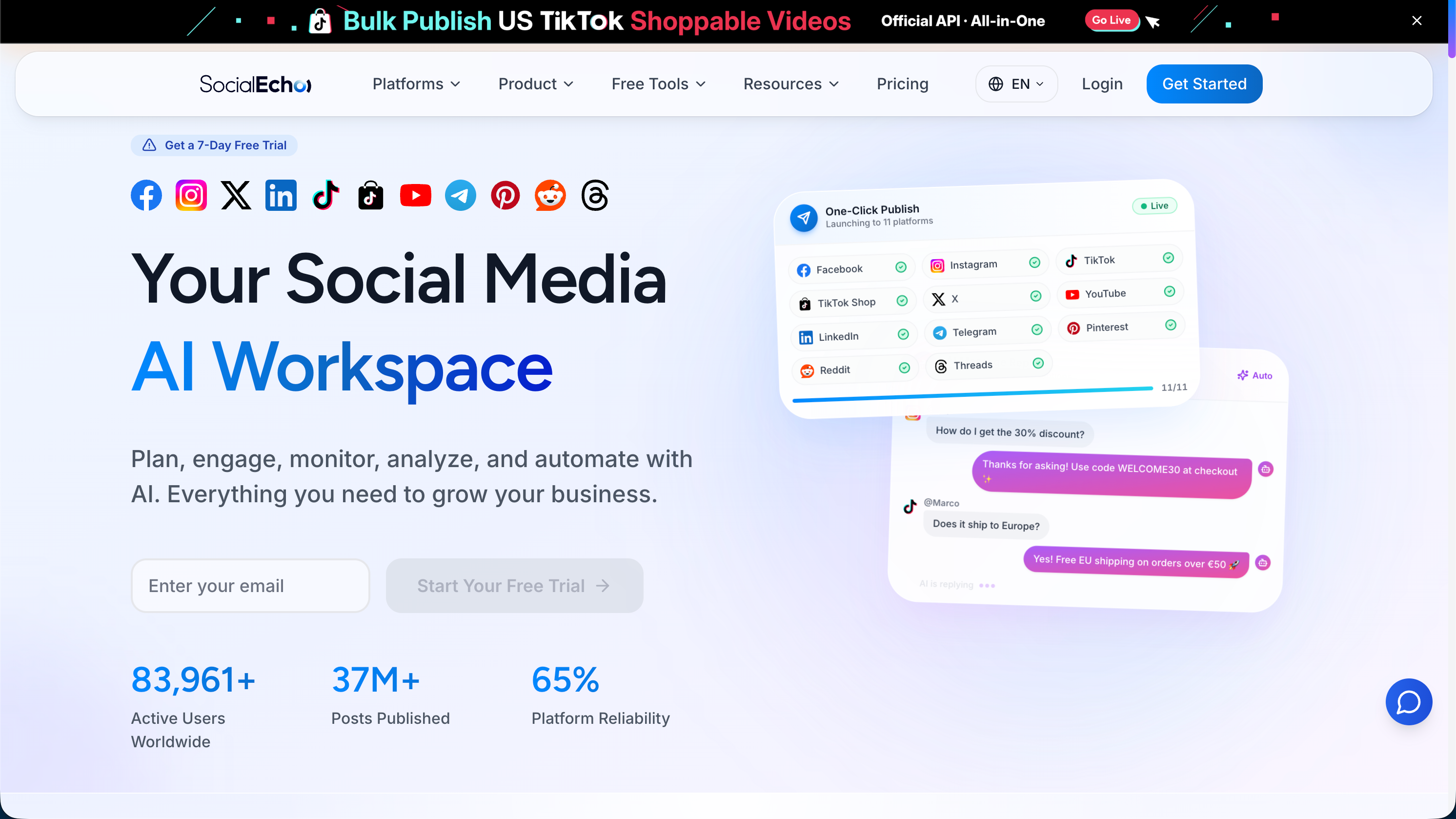
Before we begin, here’s where SocialEcho fits into this guide: it is an AI-powered social media workspace for global teams that can adapt a single master piece of content to the formats, publishing requirements, and content conventions of platforms such as TikTok, Instagram, and Facebook. It also brings content creation, scheduling, publishing, engagement, and analytics into one place. In this guide, we’ll use SocialEcho as a practical example of a cross-platform content distribution tool, while also explaining when an all-in-one platform makes sense and when a specialized single-platform solution may be the better choice.
Four pits that were moved exactly as they were
Simply publishing the same content across all platforms without any modifications will typically cause problems in the following four areas.
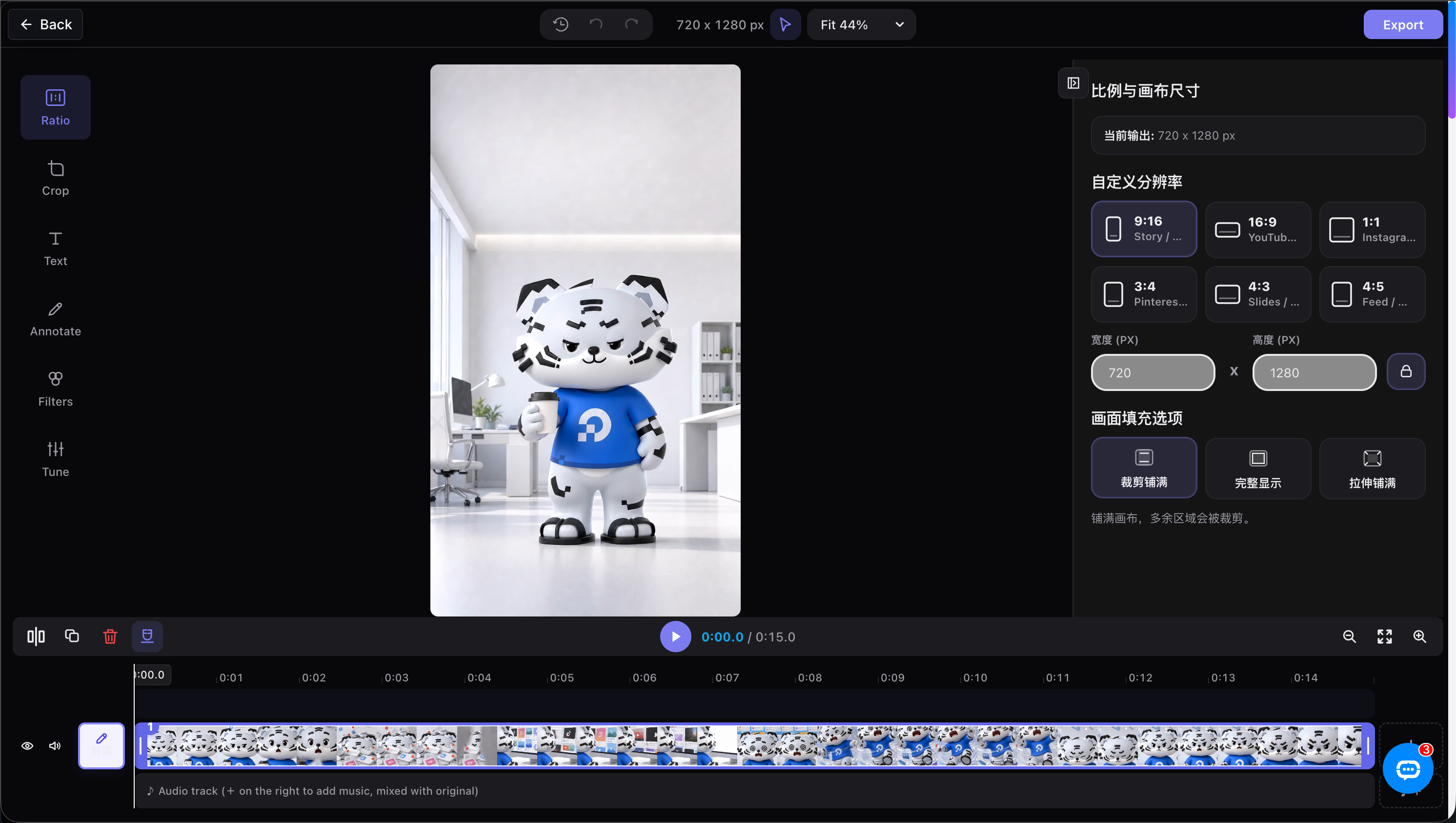
Size and aspect ratio mismatch. TikTok and Instagram Reels prefer a 9:16 vertical format, while LinkedIn and Facebook feeds are more compatible with square or horizontal content. Furthermore, X-shaped video cards display differently in the timeline. Applying a single aspect ratio to all platforms results in either cropping out key information or displaying content too small in the feed for viewers to click on.
Mismatched tone. The same sentence, expressed in a colloquial and rhythmic way on TikTok, can sound good but can sound unprofessional on LinkedIn. Conversely, declarative sentences and industry jargon commonly used on LinkedIn can sound stiff and impersonal in TikTok captions. Tone is not an optional embellishment; it directly affects users' judgment of the credibility and relevance of content.
The tagging system is chaotic. TikTok and Instagram's hashtag logic is similar to a "discovery portal," with the number and relevance of tags influencing recommendations; X's tags are more like topic aggregations, and using too many dilutes their weight; LinkedIn's tags have limited effectiveness, and piling up tags easily appears unprofessional; Threads' tag ecosystem is still evolving, and its usage isn't entirely consistent with Instagram's. Applying the same set of tags directly to all platforms often results in failing to resonate with any of them.
CTAs and backlink rules are inconsistent. Instagram feed posts themselves do not support clickable links; backlinks must be placed in the bio on your profile. TikTok has its own activation conditions for profile links and video-embedded links. LinkedIn and Facebook are relatively lenient towards backlinks within their feeds, but their algorithms may limit the organic reach of backlink posts. X is also constantly adjusting its handling of backlink posts. If CTA wording is not adjusted according to platform rules, at best the link will be misplaced and no one will click, at worst the organic distribution of the entire content will be judged by the platform as "driving content" and restricted.
Beyond these four specific pitfalls, there's a more fundamental issue: the algorithm itself lowers the priority of content that "looks like a repost/remix," especially materials with watermarks from other platforms, obviously mismatched proportions, or subtitles obscuring interface elements. The platform's identification mechanism will mark these as non-native content, thus reducing their recommendation priority. This is why even if the content itself is of decent quality, simply copying the same content can result in consistently low data scores.
The correct approach – a workflow of generating the master template once and rewriting it for each platform.
Instead of agonizing over whether to operate on multiple platforms, it's better to standardize the process. A feasible master version distribution workflow would look something like this:
- First, identify the core information and create a master draft. The master draft isn't a finished product for a particular platform, but rather the "skeleton" of the content: a one-sentence proposition, core visuals/selling points, and expected user actions. The master draft can be a piece of copy, an original video without platform subtitles, or a set of product images. Using SocialEcho's AI creation capabilities to generate a first draft in a single sentence can significantly reduce the drafting time at this stage.
- Re-adjust the tone and information density according to the platform's audience. Determine whether the platform's users are "browsing" or "searching," whether their browsing is more for entertainment or for decision-making purposes, and decide whether the copy should be short and concise or elaborate on logic.
- Adjust the aspect ratio of the footage and the cover/first three seconds. For vertical footage, prioritize placing faces or main subjects within the safe area. For horizontal/square footage, ensure the key information is still visible in the thumbnail view of the feed.
- Rewrite tags and keywords; avoid copying and pasting across platforms. Think of 3-8 tags that are strongly relevant to this content for each platform, instead of using a generic tag library.
- Adjust the placement of CTAs and external links according to platform rules. For platforms that do not support embedded links, change the call to action to "Click the homepage link" or guide users to the comments section. For platforms that support external links, place the link directly to the homepage.
- Unified scheduling and batch publishing. After the master version is rewritten, use SocialEcho for multi-platform batch publishing. Arrange the different versions of content according to the appropriate time slots for each platform at once, avoiding omissions or version errors caused by manually uploading to each platform one by one.
- After publishing, review the data to inform the next round of master version creation. Use SocialEcho data analysis to summarize performance across platforms, determine which rewrite method works better on which platform, and solidify these conclusions for future master version creation.
In this process, the real time-consuming part is the "platform-specific rewriting" in steps 2 to 5, rather than the creation of the original version. This is why teams that simply pile on manpower for multi-platform operations often encounter bottlenecks quickly after the number of accounts increases—not because they lack content, but because they don't have time to revise one piece of content into six adapted versions.
For matrix account teams and agency management services, this bottleneck is even more pronounced. The same master post needs to cover a dozen or even dozens of accounts across multiple platforms, making manual rewriting and scheduling of each post virtually impractical. This is precisely the problem SocialEcho aims to solve: first, it generates the core information of a piece of content; then, AI automatically rewrites it into different versions based on the tone and length habits of each platform; subsequently, these versions are uniformly batch-scheduled for release. This approach transforms the labor-intensive processes of "revision" and "release" into a scalable workflow, rather than manually rewriting each piece of content from scratch. This logic applies to both matrix account management and agency management services handling client accounts; teams in cross-border e-commerce can also integrate the same product's promotional content, rewritten according to platform schedules, into their daily operations.
Platform-by-Platform Compatibility Quick Lookup
Below is a list categorized by platform: "What usually needs to be changed when posting the same content here?" This is not a requirement to copy every single piece of content, but rather a checklist for rewriting.
TikTok
TikTok users scroll quickly, deciding whether to swipe away within the first three seconds. Copy should be short and conversational, directly addressing the message rather than providing background information. Videos should be 9:16 vertically formatted with large, clear subtitles, avoiding the interactive button area at the bottom of the screen. Don't overuse hashtags; 3-5 highly relevant hashtags are more effective than a long string of generic ones. CTAs are better placed in the comments section to guide users or verbally mention "link on homepage," rather than relying on direct clicks in the feed. For specific posting schedules and material requirements, refer to SocialEcho's TikTok section .
Instagram's tone strikes a balance between sophisticated and authentic. Overly marketing-driven posts are easily swiped away, but completely uninspired content fails to grab attention in the feed. Reels should be vertical, and feed posts can use square layouts or multi-image carousels. Cover images should stand alone (as they appear in the homepage's grid). The number of hashtags can be slightly more than on TikTok, but avoid generic hashtags irrelevant to the content. External links cannot be placed directly in the text; CTAs should lead to a bio link or private message, similar to TikTok. Refer to SocialEcho's Instagram section for more specific posting and interaction management guidelines.
A significant portion of Facebook users access content through more "social" channels like groups and following pages. Video captions can be slightly longer than those on TikTok/Instagram, making them suitable for clearly explaining product information or event details. Horizontal and square videos generally display better in the feed than purely vertical ones. Facebook is more accepting of direct external links within the feed than other platforms, but if posted too frequently or with obvious advertising, organic reach may be limited. Hashtags have limited impact on Facebook; there's no need to rigidly apply Instagram's hashtag logic. For more setup details, refer to SocialEcho's Facebook section .
LinkedIn stands out among these platforms for its significant difference in tone. Content needs to be more professional and focused on industry value or experience sharing; purely entertaining or overly conversational writing will easily seem inappropriate. Videos can be square or landscape format, and the text can be longer than on other platforms, suitable for elaborating on logic rather than simply giving conclusions. The number of tags should be limited; around three industry-related tags are sufficient. Overloading tags appears unprofessional. External links are acceptable within the text, but the content itself must first provide value; links are better placed at the end of the text than at the beginning. You can refer to SocialEcho's LinkedIn section for inspiration .
X
Content on SocialEcho has a short lifespan; timeliness and opinion are more important than elaborate production. Copywriting should directly express stances or raise questions to spark discussion. Word limits dictate concise copy; one core message is sufficient, without cramming every detail from the master copy. Use fewer tags—one or two are enough; too many will dilute the topic aggregation effect. The display rules for external links and video cards may change with the platform; it's recommended to check the current display before publishing. For more information, refer to the SocialEcho X section .
Threads
Threads uses a more conversational tone, similar in style to X, but with a more relaxed community atmosphere. Overly marketing-oriented posts are less likely to generate interaction. Posts should be conversational, containing personal opinions or questions, and encourage interaction in the comments section. The hashtag ecosystem is still evolving; there's no need to copy Instagram's hashtag strategy. Less is more. Since Threads and Instagram accounts are linked, the posting frequency can be differentiated to avoid pushing almost identical content to the same followers on both platforms. You can refer to SocialEcho's Threads section for inspiration.
Original Portability vs. Platform-Specific Adaptation Comparison Table
| Dimension | Transport as is | Platform-specific adaptation |
|---|---|---|
| Material ratio | Use a uniform ratio across all platforms | Adjust the vertical/square/horizontal layout according to the platform's information flow habits. |
| copywriting tone | The same copywriting is used on all platforms | Rewrite the text based on the level of colloquialism and length according to the platform audience. |
| Tagging strategy | Copy the same set of tags | Select 3-8 strongly relevant tags for each platform. |
| CTA and backlinks | Uniform placement of external links or uniform guidance to private messages | Place it in the main text/bio/comments section according to platform rules. |
| Cover and opening | Same cover/same opening | Re-edit the first 3 seconds or cover image according to the platform's attention patterns. |
| Algorithm Signal | Easily identified as non-native forwarded content | Content that is closer to the platform's native content will have a more stable recommendation priority. |
| Execution cost | Single operation is fast, but the data is usually low. | The rewriting process is time-consuming, but overall reach and interaction are more stable. |
Frequently Asked Questions
Does cross-platform publishing necessarily require creating separate footage for each platform? It doesn't always have to be remade from scratch, but at least the aspect ratio, subtitle position, and the first few seconds should be adjusted. The master copy can reuse the same batch of original footage; the rewriting work mainly focuses on editing aspect ratios, text, and tags, rather than reshooting.
Will content across multiple platforms be flagged as duplicate content due to high similarity? While different platforms typically don't compare content directly, frequently publishing highly similar content on the same platform can negatively impact organic reach. The core risk actually stems from content containing watermarks from other platforms or being clearly incompatible with the current platform's format; this type of content is more easily identified as non-native reposts.
For small teams with limited manpower, is it reasonable to start with just one or two platforms and then gradually expand? This is a reasonable starting point. First, run the master-to-adaptation process on one or two platforms with high overlap with the target audience, verifying which rewriting method works better, and then consider expanding to more platforms. This approach is usually easier to manage than deploying to all platforms from the outset.
Should tags be reused across platforms? It's not recommended to reuse them directly. Different platforms have different tagging mechanisms and usage habits, and reusing generic tags often has limited effectiveness. Developing a few strongly relevant tags for each platform's content is usually more effective than using a single tag library.
Should the scheduling be planned separately for each platform? It's recommended to plan separately. The peak user activity periods and content decay rates are not entirely consistent across platforms. You can use release frequency planning tools and content calendar templates to clarify the rhythm of each platform before unifying the scheduling, avoiding applying a single timetable to all platforms.
Cross-platform distribution list
- The master copy only contains core information and the creative framework, and is not directly released as the finished product.
- Each platform is checked individually to ensure the proportions, the first three seconds, or the cover image are compatible.
- Rewrite the tone according to the platform's audience; don't use the same copy for everything.
- Select tags individually, and avoid cross-platform copying and pasting.
- The location of CTAs and external links will be adjusted according to the rules of each platform. Platforms that do not support embedded links will use bios or comments instead.
- Schedules should be arranged separately according to the rhythm of each platform, and cross-platform content adaptation tools and batch scheduling functions should be used to reduce execution costs.
- After publishing, review the data from various platforms and summarize the effective rewriting methods as a reference for the next round of master versions. You can combine interactive management and observe the feedback in the comment section as a basis for rewriting.
The effectiveness of cross-platform distribution is affected by account base, content quality, industry attributes, and changes in the recommendation mechanism of each platform at that time. The same adaptation method may perform differently on different accounts. It is recommended to use your own data as the standard and make continuous adjustments rather than applying a fixed formula.
;}.cls-2{fill:%230868f7;}.cls-3{fill:url(%23未命名的渐变_44);}.cls-4{fill:%23333;}%3c/style%3e%3clinearGradient%20id='未命名的渐变_8'%20x1='33.73'%20y1='100.61'%20x2='-0.03'%20y2='-1.06'%20gradientUnits='userSpaceOnUse'%3e%3cstop%20offset='0'%20stop-color='%237ae9fb'/%3e%3cstop%20offset='0.67'%20stop-color='%232b90f8'/%3e%3cstop%20offset='1'%20stop-color='%230868f7'/%3e%3c/linearGradient%3e%3clinearGradient%20id='未命名的渐变_44'%20x1='27.86'%20y1='18.67'%20x2='68.36'%20y2='22.22'%20gradientUnits='userSpaceOnUse'%3e%3cstop%20offset='0'%20stop-color='%235ac7f2'/%3e%3cstop%20offset='1'%20stop-color='%230868f7'/%3e%3c/linearGradient%3e%3c/defs%3e%3cpath%20class='cls-1'%20d='M29,28.74V81.91l-9.51-3.68v0L8.52,74A7.17,7.17,0,0,1,4,67.32V24.54A3.76,3.76,0,0,1,9.08,21Z'/%3e%3cpath%20class='cls-2'%20d='M68.09,78.07a13.15,13.15,0,0,1-17.9,12.06L29,81.91h0V28.74L50.19,37A13.17,13.17,0,0,0,68.08,25.3h0Z'/%3e%3cpath%20class='cls-3'%20d='M68.08,25.3a13.19,13.19,0,0,1-6.73,10.87A13.09,13.09,0,0,1,50.19,37L29,28.74V6A3.76,3.76,0,0,1,34.1,2.52l25.59,9.91A13.22,13.22,0,0,1,68.08,25.3Z'/%3e%3cpath%20class='cls-4'%20d='M129.06,81.76a4.33,4.33,0,0,1-3.19-1.31,4.4,4.4,0,0,1-1.31-3.24V56.86H97.65V77.21a4.36,4.36,0,0,1-1.35,3.2A4.68,4.68,0,0,1,93,81.76a4.32,4.32,0,0,1-3.19-1.31,4.37,4.37,0,0,1-1.32-3.24V27.27A4.58,4.58,0,0,1,89.83,24a4.59,4.59,0,0,1,7.82,3.27V48.15h26.91V27.27A4.58,4.58,0,0,1,125.91,24a4.59,4.59,0,0,1,7.82,3.27V77.21a4.37,4.37,0,0,1-1.36,3.2A4.65,4.65,0,0,1,129.06,81.76Z'/%3e%3cpath%20class='cls-4'%20d='M163.77,81.66c-6.57,0-11.76-1.92-15.44-5.7s-5.54-9.07-5.54-15.74a26.76,26.76,0,0,1,2.09-10.43,17.72,17.72,0,0,1,6.67-8.06,19.15,19.15,0,0,1,10.68-2.95,19,19,0,0,1,10.46,2.8,18.7,18.7,0,0,1,6.55,7.36,22.53,22.53,0,0,1,2.36,10.28A4.51,4.51,0,0,1,177,63.77H152.23a10.8,10.8,0,0,0,3.49,6.65c2,1.68,4.88,2.52,8.66,2.52a22.25,22.25,0,0,0,7.54-1.21c.74-.3,1.55-.67,2.37-1.07a3.75,3.75,0,0,1,1.84-.4,4.09,4.09,0,0,1,3,1.15,4,4,0,0,1,1.12,3,4.38,4.38,0,0,1-2.58,3.82,32.34,32.34,0,0,1-6.36,2.61A28.67,28.67,0,0,1,163.77,81.66ZM172.4,55.9a9.72,9.72,0,0,0-1.63-4.56A9.9,9.9,0,0,0,167,48a10.38,10.38,0,0,0-4.64-1.14,12,12,0,0,0-4.77,1.06,9.54,9.54,0,0,0-4.89,5.66,11.78,11.78,0,0,0-.51,2.3Z'/%3e%3cpath%20class='cls-4'%20d='M193,81.64a4.49,4.49,0,0,1-4.51-4.55V27.28A4.58,4.58,0,0,1,189.84,24a4.48,4.48,0,0,1,3.28-1.36A4.36,4.36,0,0,1,196.35,24a4.46,4.46,0,0,1,1.31,3.31V77.09a4.34,4.34,0,0,1-1.35,3.2A4.67,4.67,0,0,1,193,81.64Z'/%3e%3cpath%20class='cls-4'%20d='M263.79,81.71a5.7,5.7,0,0,1-4.2-1.74,5.76,5.76,0,0,1-1.73-4.19V27.37a4.58,4.58,0,0,1,1.35-3.27A4.59,4.59,0,0,1,267,27.37V72.53h24a4.58,4.58,0,0,1,3.27,7.82A4.66,4.66,0,0,1,291,81.71Z'/%3e%3cpath%20class='cls-4'%20d='M424.48,81.74a4.71,4.71,0,0,1-2.71-.88,5.43,5.43,0,0,1-1-1l-.07-.09-12.41-17-5.41,5v9.44a4.31,4.31,0,0,1-1.36,3.19,4.66,4.66,0,0,1-3.3,1.36A4.29,4.29,0,0,1,395,80.42a4.36,4.36,0,0,1-1.32-3.23V27.37A4.58,4.58,0,0,1,395,24.1a4.52,4.52,0,0,1,6.58.12,4.54,4.54,0,0,1,1.24,3.15V56.31l17.72-16.38.05,0a4.8,4.8,0,0,1,2.94-1.11,4.4,4.4,0,0,1,3.27,1.2,4.57,4.57,0,0,1,1.2,3.27,4.44,4.44,0,0,1-.77,2.33,7.45,7.45,0,0,1-1.43,1.65l-11,9.64,13.34,17.68a5,5,0,0,1,1,2.71,4.12,4.12,0,0,1-1.36,3.24A4.64,4.64,0,0,1,424.48,81.74Z'/%3e%3cpath%20class='cls-4'%20d='M317.93,81.76a21.5,21.5,0,1,1,21.17-21.5A21.37,21.37,0,0,1,317.93,81.76Zm0-34.1a12.61,12.61,0,1,0,12.42,12.6A12.52,12.52,0,0,0,317.93,47.66Z'/%3e%3cpath%20class='cls-4'%20d='M212.18,101.22a4.12,4.12,0,0,1-3.05-1.26,4.17,4.17,0,0,1-1.26-3.1V43.34a4.37,4.37,0,0,1,1.3-3.14,4.26,4.26,0,0,1,3.13-1.3,4.19,4.19,0,0,1,3.1,1.26,4.32,4.32,0,0,1,1.26,3.16,20.77,20.77,0,0,1,13-4.54,21.51,21.51,0,0,1,0,43,20.51,20.51,0,0,1-13-4.57V96.86a4.15,4.15,0,0,1-1.3,3.06A4.5,4.5,0,0,1,212.18,101.22Zm17.43-53.63c-6.23,0-12.93,4.11-12.93,12.72a12.73,12.73,0,0,0,25.46,0A12.71,12.71,0,0,0,229.61,47.59Z'/%3e%3cpath%20class='cls-4'%20d='M365.76,81.76a21.5,21.5,0,1,1,21.18-21.5A21.37,21.37,0,0,1,365.76,81.76Zm0-34.1a12.61,12.61,0,1,0,12.42,12.6A12.52,12.52,0,0,0,365.76,47.66Z'/%3e%3c/svg%3e)