
Facebook Ads vs. Organic Traffic: How Global Brands Can Balance Paid and Free Traffic in 2026
introduction
Your Facebook ad spending is increasing every month, but your ROI is getting lower and lower.
Last year, spending $1,000 might bring in 500 leads; this year, the same $1,000 might only yield 200. You start to wonder: Is there a problem with your ad budget allocation? Or is Facebook's organic reach truly dead?
Meanwhile, you see that your competitors' brand pages hardly run any ads, yet their posts get three times the engagement of yours. You ask them in the comments how they do it, and the answer is always, "Content is king."
You are even more confused.
This article thoroughly explains the relationship between Facebook ads and organic traffic, telling you how brands going global in 2026 should balance paid and free advertising to achieve optimal marketing results.
I. Why Facebook ads cannot exist independently
Let's start with a mistake that many brands make: equating Facebook marketing with Facebook advertising.
Facebook ads can indeed bring you a lot of exposure and conversions in a short period of time, but they have three fatal limitations:
First, stop advertising, and your traffic drops to zero. You get traffic when you advertise, but if you stop, you get nothing. This is why many brands fall into "advertising addiction"—the more they advertise, the more expensive it becomes, and the harder it is to stop.
Second, ad fatigue. After your audience has seen your ads multiple times, they will gradually become desensitized, leading to a decrease in conversion rates and an increase in CPM (cost per thousand impressions). The effectiveness of Facebook ads diminishes over time.
Third, the repurchase rate is low. Most users attracted by advertising are "one-time buyers." They are attracted by your ads and complete a purchase, but they do not establish an emotional connection with the brand, resulting in a much lower repurchase rate than users from organic traffic.
Facebook ads should be an accelerator, not your entire marketing strategy.
II. The Current State of Facebook Organic Traffic
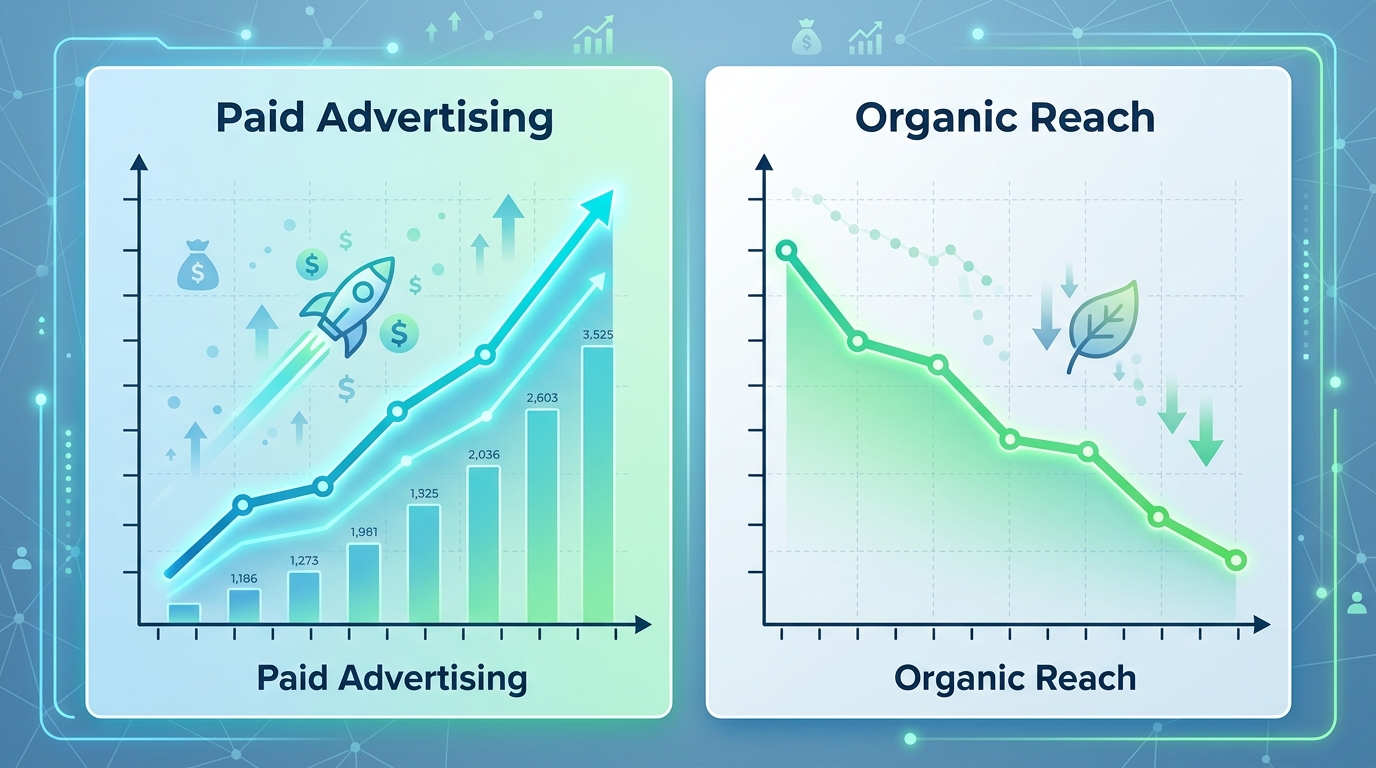 Facebook organic traffic in 2026 will indeed be more difficult to generate than it was a few years ago.
There are several reasons behind this:
Competition among platforms is intensifying. Facebook is experiencing an explosion in both content and advertising volume, and users have limited time and attention spans, requiring algorithms to select from this massive amount of content.
Algorithm adjustments. Facebook has repeatedly adjusted its algorithm, reducing the reach of commercial content and allocating more space to "social interaction." This means that purely commercial content and content with a clear sales intent will naturally have limited reach.
User fatigue. Users are becoming increasingly immune to blatant advertising content, scrolling through ads faster and staying on screen for shorter periods.
But this doesn't mean organic traffic can't be generated. The key is to adjust the content strategy.
III. What did brands that excel in organic traffic do right?
Brands that perform well in terms of organic traffic on Facebook have several things in common:
First, the content isn't for "promotion," but because it's genuinely valuable. It's not about selling products, but about sharing knowledge, solving problems, and entertaining the audience. Users follow it because they find it "informative," not because they're being sold to.
Second, video content accounts for a large proportion. Facebook's algorithm allocates extra traffic to video content, especially Reels and live streams. Brands that create video content naturally achieve significantly better reach than brands that rely solely on text and images.
Third, interaction-driven. Algorithms value user interaction behaviors—comments, sharing, and saving. Well-performing brands proactively design "interaction hooks" to encourage user participation rather than passive observation.
Fourth, consistent and stable updates. Another consideration for the algorithm is the consistency of account activity and content quality. Accounts that publish high-quality content daily will receive higher trust and recommendation weight.
IV. Balancing Paid and Free Options
Having said all that, how exactly should we allocate our budget and energy?
There is no standard answer, because different brands and different stages require different strategies. However, there are a few basic principles:
1. New brand or cold start phase: Increase advertising investment
When a brand first enters the market, it lacks brand awareness and a fan base, resulting in virtually no organic traffic. At this stage, the focus should be on paid advertising to quickly build brand recognition and accumulate the first batch of fans and users.
The goal of advertising should be brand exposure and fan growth, rather than direct sales conversion.
2. Once the brand has established a certain foundation: begin building an organic content system.
Once a brand has a certain fan base (at least 10,000), it begins to build a content system, using organic content to maintain and engage its fans, while continuing to invest in advertising to acquire new users.
At this stage, the role of organic content is to "retain existing fans and acquire new fans," while the role of advertising is to "continuously acquire new users."
3. Established brands: Optimize advertising efficiency and reduce customer acquisition costs.
Once a brand has established a relatively complete fan base, it begins to shift its focus to optimizing advertising efficiency—acquiring more targeted traffic with a smaller advertising budget, while simultaneously enhancing brand loyalty and repurchase rates through organic content.
V. Facebook Content Strategy Recommendations for 2026
5.1 Video content takes priority
By 2026, video content will no longer be a "bonus" on Facebook, but a "must-have".
Suggested content ratio:
- Video content (Reels/Live stream): 50% or more
- Image and text posts: 30%
- Pure advertising content: less than 20%
Use Facebook analytics to track your video content performance and find out what types of videos your audience likes best.
5.2 Reduce sales intent, increase value provision
Facebook's algorithm penalizes content that is clearly intended to sell. Try shifting your focus from "selling products" to "helping users solve problems."
Comparative examples:
❌ Poorly written: "Our new products are now available! Buy now and enjoy a 20% discount!"
✅ Good writing style: "5 common mistakes beginners make in Facebook ad campaigns, and how to avoid them."
The latter doesn't use any sales pitches, but after users see it, they'll think, "This brand is very professional," and they'll naturally think of you next time they have a need.
5.3 Optimize ad delivery using natural interaction data
Content with strong organic traffic represents topics and formats that users are genuinely interested in. Data from this highly interactive content can be used as a reference for ad placement.
If you find that the organic interaction rate of "Product A User Guide" is 3 times that of "Promotional Information", then when placing ads, you should prioritize promoting "tutorial content" rather than direct promotional information.
VI. Improving Efficiency with Tools: Collaborative Management of Paid and Free Tools
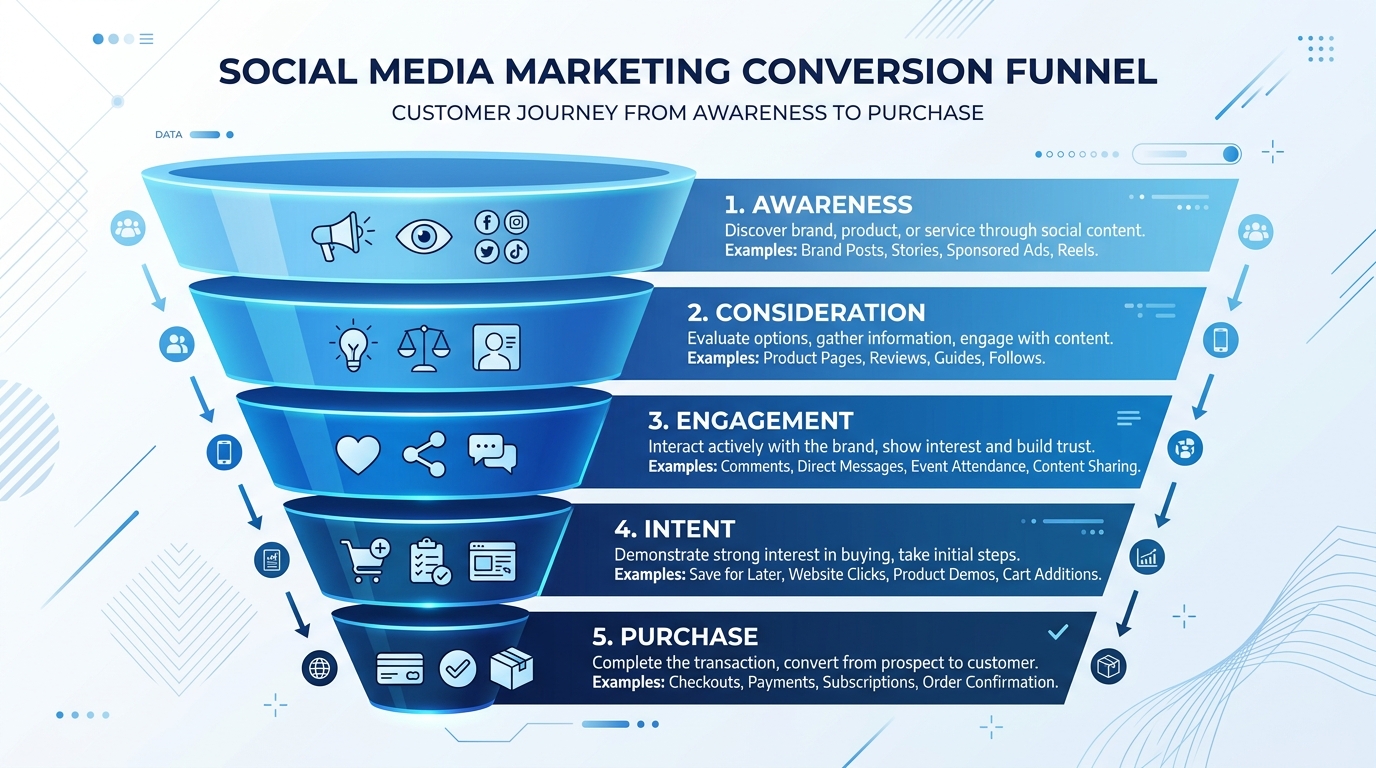 Managing Facebook ads and content requires a systematic set of tools.
Facebook Ads Management can help you:
- Batch creation and management of advertising campaigns
- Tracking the performance of different ad groups
- Automated ad bidding and budget adjustments
Facebook's scheduled postings can help you:
- Plan the release schedule of organic content in advance.
- Publish automatically at the optimal time
- Maintain stability in release frequency
Facebook competitor monitoring can help you:
- Track competitors' advertising strategies and content performance.
- Discover industry trends and changes in user preferences
- Provide a reference for adjusting your own strategy
Paid and free content are not opposing forces, but rather complementary. Organic content provides material and direction for advertising, while advertising brings new users to organic content.
VII. Building a Sustainable Facebook Marketing Flywheel
Truly successful Facebook marketing isn't about how many ads you run today or how many posts you make tomorrow; it's about building a sustainable flywheel.
1. Acquire initial traffic and followers through advertising ↓ 2. Maintain and engage followers with high-quality organic content ↓ 3. Highly interactive content becomes advertising material ↓ 4. More targeted advertising brings in higher-quality users ↓ 5. High-quality users generate UGC and word-of-mouth marketing ↓ 6. UGC and word-of-mouth bring more organic growth ↓ Return to step 1
Once this flywheel starts spinning, your Facebook marketing will become increasingly effortless and effective.
FAQ
Q1: What percentage of the overall marketing budget should be allocated to Facebook advertising?
A1: There's no standard answer to this question; it depends on your brand's stage, industry competition, and marketing goals. Generally speaking: during the cold start phase, 60-80% can be allocated to advertising; during the growth phase, 40-50% is recommended; and during the maturity phase, this can be reduced to 20-30%. The key is to track your advertising ROI. When the ROI starts to decline significantly, it indicates that your reliance on advertising is too high, and you need to increase your investment in organic content.
Q2: How long does it take to see results from organic traffic?
A2: It typically takes 3-6 months of consistent effort to see significant organic traffic growth. Facebook's algorithm needs time to assess your content quality and audience relevance. It's normal not to see noticeable changes in the short term (1-2 months). The important thing is to maintain a consistent posting frequency and content quality.
Q3: How do I determine whether content is "valuable" or "pure advertising"?
A3: Ask yourself this question: If this content were shown to your competitors' followers, would they be willing to watch it and find it useful? If the answer is "yes," then it's valuable content; if the answer is "no, it would only make them feel like they're being sold to," then it's pure advertising. Another criterion: Does your content help users solve problems and meet their needs?
Q4: Does Facebook Reels still offer a traffic advantage?
A4: Compared to the peak in 2023-2024, the traffic advantage of Reels is indeed decreasing, but compared to traditional text and image content, Reels remains one of the most important traffic sources provided by Facebook. The key is to keep up with content quality, as users' tolerance for low-quality Reels is also decreasing. It is recommended to continuously test Reels and observe which types of Reels perform best among your audience.
Q5: How do I measure the overall ROI of Facebook marketing?
A5: Facebook marketing ROI should include: direct advertising revenue + sales contribution from organic traffic + long-term value from increased brand awareness + customer repeat purchases and LTV. Simply looking at advertising ROI can easily lead to the misconception of "ineffective investment." It is recommended to use Facebook data analytics to establish a complete tracking system, incorporating all touchpoints into the analysis.
Conclusion
Facebook ads and organic traffic are not mutually exclusive choices, but rather two legs that need to work together.
Over-reliance on advertising will trap you in a cycle where you only get traffic if you spend money, and no traffic if you don't. Over-reliance on organic growth will lead to bottlenecks with slow growth and limited reach.
The right approach to Facebook marketing in 2026 is to build brand value and a user base through organic content, and accelerate growth and precise reach through paid advertising. Only by combining these two approaches can you achieve more stable and sustainable growth.
Want to manage your Facebook ads and content more efficiently? Try SocialEcho's Facebook ad management features , which allow paid and free ads to work together.
Free trial: 7-day SocialEcho Facebook data analytics
;}.cls-2{fill:%230868f7;}.cls-3{fill:url(%23未命名的渐变_44);}.cls-4{fill:%23333;}%3c/style%3e%3clinearGradient%20id='未命名的渐变_8'%20x1='33.73'%20y1='100.61'%20x2='-0.03'%20y2='-1.06'%20gradientUnits='userSpaceOnUse'%3e%3cstop%20offset='0'%20stop-color='%237ae9fb'/%3e%3cstop%20offset='0.67'%20stop-color='%232b90f8'/%3e%3cstop%20offset='1'%20stop-color='%230868f7'/%3e%3c/linearGradient%3e%3clinearGradient%20id='未命名的渐变_44'%20x1='27.86'%20y1='18.67'%20x2='68.36'%20y2='22.22'%20gradientUnits='userSpaceOnUse'%3e%3cstop%20offset='0'%20stop-color='%235ac7f2'/%3e%3cstop%20offset='1'%20stop-color='%230868f7'/%3e%3c/linearGradient%3e%3c/defs%3e%3cpath%20class='cls-1'%20d='M29,28.74V81.91l-9.51-3.68v0L8.52,74A7.17,7.17,0,0,1,4,67.32V24.54A3.76,3.76,0,0,1,9.08,21Z'/%3e%3cpath%20class='cls-2'%20d='M68.09,78.07a13.15,13.15,0,0,1-17.9,12.06L29,81.91h0V28.74L50.19,37A13.17,13.17,0,0,0,68.08,25.3h0Z'/%3e%3cpath%20class='cls-3'%20d='M68.08,25.3a13.19,13.19,0,0,1-6.73,10.87A13.09,13.09,0,0,1,50.19,37L29,28.74V6A3.76,3.76,0,0,1,34.1,2.52l25.59,9.91A13.22,13.22,0,0,1,68.08,25.3Z'/%3e%3cpath%20class='cls-4'%20d='M129.06,81.76a4.33,4.33,0,0,1-3.19-1.31,4.4,4.4,0,0,1-1.31-3.24V56.86H97.65V77.21a4.36,4.36,0,0,1-1.35,3.2A4.68,4.68,0,0,1,93,81.76a4.32,4.32,0,0,1-3.19-1.31,4.37,4.37,0,0,1-1.32-3.24V27.27A4.58,4.58,0,0,1,89.83,24a4.59,4.59,0,0,1,7.82,3.27V48.15h26.91V27.27A4.58,4.58,0,0,1,125.91,24a4.59,4.59,0,0,1,7.82,3.27V77.21a4.37,4.37,0,0,1-1.36,3.2A4.65,4.65,0,0,1,129.06,81.76Z'/%3e%3cpath%20class='cls-4'%20d='M163.77,81.66c-6.57,0-11.76-1.92-15.44-5.7s-5.54-9.07-5.54-15.74a26.76,26.76,0,0,1,2.09-10.43,17.72,17.72,0,0,1,6.67-8.06,19.15,19.15,0,0,1,10.68-2.95,19,19,0,0,1,10.46,2.8,18.7,18.7,0,0,1,6.55,7.36,22.53,22.53,0,0,1,2.36,10.28A4.51,4.51,0,0,1,177,63.77H152.23a10.8,10.8,0,0,0,3.49,6.65c2,1.68,4.88,2.52,8.66,2.52a22.25,22.25,0,0,0,7.54-1.21c.74-.3,1.55-.67,2.37-1.07a3.75,3.75,0,0,1,1.84-.4,4.09,4.09,0,0,1,3,1.15,4,4,0,0,1,1.12,3,4.38,4.38,0,0,1-2.58,3.82,32.34,32.34,0,0,1-6.36,2.61A28.67,28.67,0,0,1,163.77,81.66ZM172.4,55.9a9.72,9.72,0,0,0-1.63-4.56A9.9,9.9,0,0,0,167,48a10.38,10.38,0,0,0-4.64-1.14,12,12,0,0,0-4.77,1.06,9.54,9.54,0,0,0-4.89,5.66,11.78,11.78,0,0,0-.51,2.3Z'/%3e%3cpath%20class='cls-4'%20d='M193,81.64a4.49,4.49,0,0,1-4.51-4.55V27.28A4.58,4.58,0,0,1,189.84,24a4.48,4.48,0,0,1,3.28-1.36A4.36,4.36,0,0,1,196.35,24a4.46,4.46,0,0,1,1.31,3.31V77.09a4.34,4.34,0,0,1-1.35,3.2A4.67,4.67,0,0,1,193,81.64Z'/%3e%3cpath%20class='cls-4'%20d='M263.79,81.71a5.7,5.7,0,0,1-4.2-1.74,5.76,5.76,0,0,1-1.73-4.19V27.37a4.58,4.58,0,0,1,1.35-3.27A4.59,4.59,0,0,1,267,27.37V72.53h24a4.58,4.58,0,0,1,3.27,7.82A4.66,4.66,0,0,1,291,81.71Z'/%3e%3cpath%20class='cls-4'%20d='M424.48,81.74a4.71,4.71,0,0,1-2.71-.88,5.43,5.43,0,0,1-1-1l-.07-.09-12.41-17-5.41,5v9.44a4.31,4.31,0,0,1-1.36,3.19,4.66,4.66,0,0,1-3.3,1.36A4.29,4.29,0,0,1,395,80.42a4.36,4.36,0,0,1-1.32-3.23V27.37A4.58,4.58,0,0,1,395,24.1a4.52,4.52,0,0,1,6.58.12,4.54,4.54,0,0,1,1.24,3.15V56.31l17.72-16.38.05,0a4.8,4.8,0,0,1,2.94-1.11,4.4,4.4,0,0,1,3.27,1.2,4.57,4.57,0,0,1,1.2,3.27,4.44,4.44,0,0,1-.77,2.33,7.45,7.45,0,0,1-1.43,1.65l-11,9.64,13.34,17.68a5,5,0,0,1,1,2.71,4.12,4.12,0,0,1-1.36,3.24A4.64,4.64,0,0,1,424.48,81.74Z'/%3e%3cpath%20class='cls-4'%20d='M317.93,81.76a21.5,21.5,0,1,1,21.17-21.5A21.37,21.37,0,0,1,317.93,81.76Zm0-34.1a12.61,12.61,0,1,0,12.42,12.6A12.52,12.52,0,0,0,317.93,47.66Z'/%3e%3cpath%20class='cls-4'%20d='M212.18,101.22a4.12,4.12,0,0,1-3.05-1.26,4.17,4.17,0,0,1-1.26-3.1V43.34a4.37,4.37,0,0,1,1.3-3.14,4.26,4.26,0,0,1,3.13-1.3,4.19,4.19,0,0,1,3.1,1.26,4.32,4.32,0,0,1,1.26,3.16,20.77,20.77,0,0,1,13-4.54,21.51,21.51,0,0,1,0,43,20.51,20.51,0,0,1-13-4.57V96.86a4.15,4.15,0,0,1-1.3,3.06A4.5,4.5,0,0,1,212.18,101.22Zm17.43-53.63c-6.23,0-12.93,4.11-12.93,12.72a12.73,12.73,0,0,0,25.46,0A12.71,12.71,0,0,0,229.61,47.59Z'/%3e%3cpath%20class='cls-4'%20d='M365.76,81.76a21.5,21.5,0,1,1,21.18-21.5A21.37,21.37,0,0,1,365.76,81.76Zm0-34.1a12.61,12.61,0,1,0,12.42,12.6A12.52,12.52,0,0,0,365.76,47.66Z'/%3e%3c/svg%3e)