
What to do if Facebook private messages are too messy? When customer service, sales, and operations share a single inbox, the problem isn't about "who replies."
When many teams hear about the chaotic management of Facebook private messages, their first reaction is often, "Is no one replying in time?" But if you really break down the situation, the problem is often not the act of replying itself, but rather who is responsible for the private message after it comes in, how it should be distributed, whether it should be escalated, what stage the conversation was at, and who has the right to decide how to reply next.
Therefore, the reason why Facebook private messages become chaotic is often not because the team is not working hard, but because everyone is using a shared entry point but not a shared set of processing logic. Customer service focuses on complaints, sales focuses on potential customers, and operations focuses on event inquiries. In the end, all messages are piled up in one place, making it seem like "anyone can reply," but in reality, it becomes "no one dares to reply first."
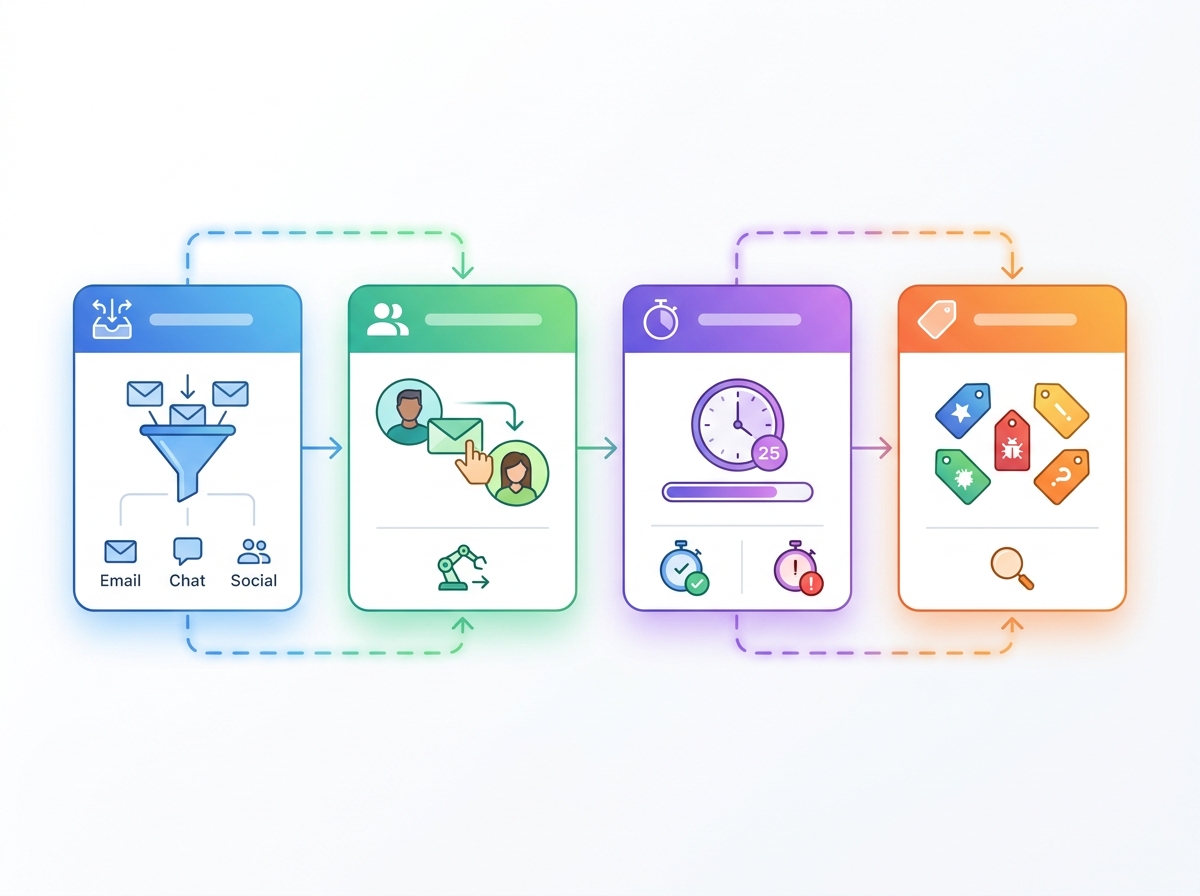
The root cause of chaotic private messaging is usually not the sheer volume of messages, but rather the failure to clearly define the entry point.
The most common mistake with shared inboxes is treating all private messages as the same. The actual content varies greatly: some people are asking about inventory, some want to return items, some are asking for quotes, some are just complaining about the lack of replies in the comments section, and some are returning customers following up on updates.
If these messages aren't categorized immediately upon entering the inbox, team collaboration will inevitably become increasingly chaotic. Customer service will complain that sales doesn't label results, sales will feel that customer service is neglecting high-intent customers, and operations will find that the influx of inquiries after the campaign goes live overwhelms truly urgent issues.
Therefore, the first principle of a shared inbox is not "whoever is online should reply," but rather to triage messages. At a minimum, messages should be divided into three categories: service, sales, and operational activities. Further subdivisions can be made, such as complaints, after-sales progress, price inquiries, store information, activity rules, and cooperation invitations. The significance of this is not formalization, but rather ensuring that each type of message follows a different path.
A true shared inbox emphasizes contextual visibility.
Many teams ostensibly "share" inboxes, but in reality, they still rely on individual memories to handle user inquiries. User A might reply with two sentences today, but when user B receives the call tomorrow, they only see the last sentence and have no idea what was promised beforehand; sales staff see users saying, "I called yesterday," but can't find who handled the call; customer service knows a user complained last week, but operations is completely unaware and continues to push promotional materials.
At this point, the problem is no longer missed replies, but rather a break in the context. The most noticeable confusion for users is not that you reply half an hour late, but that they have to explain everything again every time.
Therefore, Facebook private messaging collaboration must preserve context. User identity, conversation history, current status, whether an upgrade has been made, and whether a revisit is required should all be visible in one place. SocialEcho's Engagement is better suited to solve this problem because it essentially upgrades the "reply action" into "team-based collaborative interaction management."
If you don't yet have a formal system, at least use a basic set of conventions: whoever takes over, marks it; whoever upgrades, explains the reason; whoever promises to follow up, sets a reminder. Otherwise, sharing an inbox will only concentrate chaos on one page and won't automatically make things better.
Customer service, sales, and operations all share a single inbox; the biggest problem is that their goals might not align.
Customer service is concerned with minimizing losses as quickly as possible, sales is concerned with not wasting hot leads, and operations is concerned with ensuring a smooth user experience. All three goals are reasonable, but without prioritization rules, the teams will inevitably struggle with each other.
Here's a common scenario: A user first messages you privately asking about promotional offers, which the operations team interprets as an inquiry; halfway through the conversation, the user starts asking about enterprise purchasing prices, which the sales team wants to address; then, the user mentions a negative experience with a previous order, requiring customer service to intervene. You'll find that a single private message can potentially involve three different roles within 24 hours.
This is why shared inboxes shouldn't just "distribute" messages, but also perform "state migration." The process doesn't end once a message is distributed; it's crucial to know its current status: inquiry, follow-up, pending confirmation, resolved, or awaiting a return visit. This way, when roles change, the next person doesn't start over, but continues the process.
If you want to roughly assess the current workload on your team, you can first browse through SocialEcho Free Tools for a basic self-check. But don't misunderstand, response time is just the surface. What really drags down the experience is usually inconsistent responses, duplicate confirmations, and too much internal processing.
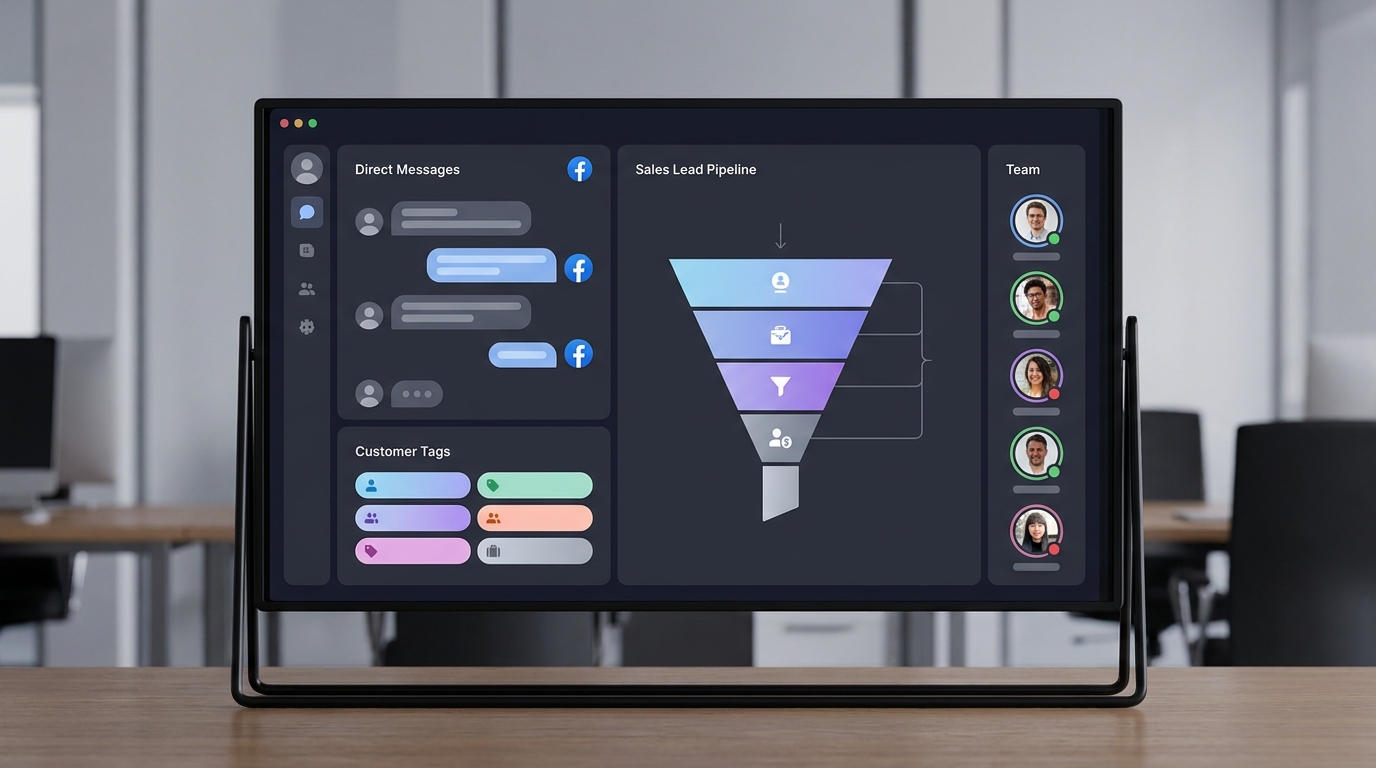
Managing Facebook private messages: Don't think of automation as simply "bots filling in the gaps."
When many people hear about managing private messages, they immediately think of automated replies. Automation is certainly important, but its value lies not only in saving manpower, but also in blocking duplicate messages that do not require human judgment at the entry point.
For example, store opening hours, logistics tracking information, event registration rules, and after-sales material lists are all standardized information, and there's absolutely no need for them to be retyped manually every time. By using AI automation to block this part, the team's shared inbox won't be perpetually filled with low-value, repetitive issues.
However, tasks that truly require human intervention should be quickly assigned to the right people. The ideal scenario isn't for robots to answer everything, but rather for robots to handle standardized questions and send high-value or high-risk questions to human agents more quickly. This way, customer service, sales, and operations teams won't be competing for tasks in the same inbox.
Facebook's private message governance ultimately comes down to the platform itself.
When doing this, many teams underestimate the characteristics of the platform. Facebook users send private messages from different entry points, such as ads, profiles, post interactions, and comment redirects, and the intent behind these messages varies greatly. The same question, "How much?" will be handled completely differently depending on whether it comes from a click on an event ad or a redirect from a customer service comment.
Therefore, private message management cannot be separated from the platform's origin. When designing rules, you should at least consider the page context, activity source, and historical interactions. For a more complete platform perspective, you can refer to pages like Facebook Platform Overview and Facebook Direct Message Management , because they truly help teams put "private messages" back into the user journey, rather than treating all messages as homogenized text.

FAQ
1. Is hiring more people the solution to the problem of receiving too many Facebook private messages?
Not necessarily. Many teams' problems aren't a lack of people, but rather a lack of proper categorization, handover, and status management. Without such mechanisms, hiring more people will only blur the lines of responsibility.
2. What rules should be set up first for a shared inbox?
First, establish three things: message categorization, responsible personnel assignment, and upgrade criteria. Without these three things, subsequent tagging, automation, and reporting will be useless.
3. What if both customer service and sales staff want to receive the same message?
The key is not to compete for it, but to define the state transition. Who receives it first, under what conditions to transfer it, and what information must be left during the transfer—all of these must be clearly written in advance.
4. Will automatic replies feel too impersonal to users?
If an automated response is merely a mechanical block, then of course it will. But if it can first answer standard questions, provide the next steps, and quickly transfer complex questions to a human agent, the experience will actually be smoother.
CTA
If your Facebook DMs are already experiencing issues like duplicate replies, unclear responsibilities, and broken historical context, stop focusing solely on "who missed replying today." First, establish triage, status, and escalation rules for your shared inbox before considering automation and reporting. You can start with basic troubleshooting using SocialEcho Free Tools , then further explore Engagement , AI Automation , and the Facebook platform overview and Facebook Direct Message Management . Transforming DMs from a "personal chat window" into a "team collaboration portal" will truly reduce chaos.
;}.cls-2{fill:%230868f7;}.cls-3{fill:url(%23未命名的渐变_44);}.cls-4{fill:%23333;}%3c/style%3e%3clinearGradient%20id='未命名的渐变_8'%20x1='33.73'%20y1='100.61'%20x2='-0.03'%20y2='-1.06'%20gradientUnits='userSpaceOnUse'%3e%3cstop%20offset='0'%20stop-color='%237ae9fb'/%3e%3cstop%20offset='0.67'%20stop-color='%232b90f8'/%3e%3cstop%20offset='1'%20stop-color='%230868f7'/%3e%3c/linearGradient%3e%3clinearGradient%20id='未命名的渐变_44'%20x1='27.86'%20y1='18.67'%20x2='68.36'%20y2='22.22'%20gradientUnits='userSpaceOnUse'%3e%3cstop%20offset='0'%20stop-color='%235ac7f2'/%3e%3cstop%20offset='1'%20stop-color='%230868f7'/%3e%3c/linearGradient%3e%3c/defs%3e%3cpath%20class='cls-1'%20d='M29,28.74V81.91l-9.51-3.68v0L8.52,74A7.17,7.17,0,0,1,4,67.32V24.54A3.76,3.76,0,0,1,9.08,21Z'/%3e%3cpath%20class='cls-2'%20d='M68.09,78.07a13.15,13.15,0,0,1-17.9,12.06L29,81.91h0V28.74L50.19,37A13.17,13.17,0,0,0,68.08,25.3h0Z'/%3e%3cpath%20class='cls-3'%20d='M68.08,25.3a13.19,13.19,0,0,1-6.73,10.87A13.09,13.09,0,0,1,50.19,37L29,28.74V6A3.76,3.76,0,0,1,34.1,2.52l25.59,9.91A13.22,13.22,0,0,1,68.08,25.3Z'/%3e%3cpath%20class='cls-4'%20d='M129.06,81.76a4.33,4.33,0,0,1-3.19-1.31,4.4,4.4,0,0,1-1.31-3.24V56.86H97.65V77.21a4.36,4.36,0,0,1-1.35,3.2A4.68,4.68,0,0,1,93,81.76a4.32,4.32,0,0,1-3.19-1.31,4.37,4.37,0,0,1-1.32-3.24V27.27A4.58,4.58,0,0,1,89.83,24a4.59,4.59,0,0,1,7.82,3.27V48.15h26.91V27.27A4.58,4.58,0,0,1,125.91,24a4.59,4.59,0,0,1,7.82,3.27V77.21a4.37,4.37,0,0,1-1.36,3.2A4.65,4.65,0,0,1,129.06,81.76Z'/%3e%3cpath%20class='cls-4'%20d='M163.77,81.66c-6.57,0-11.76-1.92-15.44-5.7s-5.54-9.07-5.54-15.74a26.76,26.76,0,0,1,2.09-10.43,17.72,17.72,0,0,1,6.67-8.06,19.15,19.15,0,0,1,10.68-2.95,19,19,0,0,1,10.46,2.8,18.7,18.7,0,0,1,6.55,7.36,22.53,22.53,0,0,1,2.36,10.28A4.51,4.51,0,0,1,177,63.77H152.23a10.8,10.8,0,0,0,3.49,6.65c2,1.68,4.88,2.52,8.66,2.52a22.25,22.25,0,0,0,7.54-1.21c.74-.3,1.55-.67,2.37-1.07a3.75,3.75,0,0,1,1.84-.4,4.09,4.09,0,0,1,3,1.15,4,4,0,0,1,1.12,3,4.38,4.38,0,0,1-2.58,3.82,32.34,32.34,0,0,1-6.36,2.61A28.67,28.67,0,0,1,163.77,81.66ZM172.4,55.9a9.72,9.72,0,0,0-1.63-4.56A9.9,9.9,0,0,0,167,48a10.38,10.38,0,0,0-4.64-1.14,12,12,0,0,0-4.77,1.06,9.54,9.54,0,0,0-4.89,5.66,11.78,11.78,0,0,0-.51,2.3Z'/%3e%3cpath%20class='cls-4'%20d='M193,81.64a4.49,4.49,0,0,1-4.51-4.55V27.28A4.58,4.58,0,0,1,189.84,24a4.48,4.48,0,0,1,3.28-1.36A4.36,4.36,0,0,1,196.35,24a4.46,4.46,0,0,1,1.31,3.31V77.09a4.34,4.34,0,0,1-1.35,3.2A4.67,4.67,0,0,1,193,81.64Z'/%3e%3cpath%20class='cls-4'%20d='M263.79,81.71a5.7,5.7,0,0,1-4.2-1.74,5.76,5.76,0,0,1-1.73-4.19V27.37a4.58,4.58,0,0,1,1.35-3.27A4.59,4.59,0,0,1,267,27.37V72.53h24a4.58,4.58,0,0,1,3.27,7.82A4.66,4.66,0,0,1,291,81.71Z'/%3e%3cpath%20class='cls-4'%20d='M424.48,81.74a4.71,4.71,0,0,1-2.71-.88,5.43,5.43,0,0,1-1-1l-.07-.09-12.41-17-5.41,5v9.44a4.31,4.31,0,0,1-1.36,3.19,4.66,4.66,0,0,1-3.3,1.36A4.29,4.29,0,0,1,395,80.42a4.36,4.36,0,0,1-1.32-3.23V27.37A4.58,4.58,0,0,1,395,24.1a4.52,4.52,0,0,1,6.58.12,4.54,4.54,0,0,1,1.24,3.15V56.31l17.72-16.38.05,0a4.8,4.8,0,0,1,2.94-1.11,4.4,4.4,0,0,1,3.27,1.2,4.57,4.57,0,0,1,1.2,3.27,4.44,4.44,0,0,1-.77,2.33,7.45,7.45,0,0,1-1.43,1.65l-11,9.64,13.34,17.68a5,5,0,0,1,1,2.71,4.12,4.12,0,0,1-1.36,3.24A4.64,4.64,0,0,1,424.48,81.74Z'/%3e%3cpath%20class='cls-4'%20d='M317.93,81.76a21.5,21.5,0,1,1,21.17-21.5A21.37,21.37,0,0,1,317.93,81.76Zm0-34.1a12.61,12.61,0,1,0,12.42,12.6A12.52,12.52,0,0,0,317.93,47.66Z'/%3e%3cpath%20class='cls-4'%20d='M212.18,101.22a4.12,4.12,0,0,1-3.05-1.26,4.17,4.17,0,0,1-1.26-3.1V43.34a4.37,4.37,0,0,1,1.3-3.14,4.26,4.26,0,0,1,3.13-1.3,4.19,4.19,0,0,1,3.1,1.26,4.32,4.32,0,0,1,1.26,3.16,20.77,20.77,0,0,1,13-4.54,21.51,21.51,0,0,1,0,43,20.51,20.51,0,0,1-13-4.57V96.86a4.15,4.15,0,0,1-1.3,3.06A4.5,4.5,0,0,1,212.18,101.22Zm17.43-53.63c-6.23,0-12.93,4.11-12.93,12.72a12.73,12.73,0,0,0,25.46,0A12.71,12.71,0,0,0,229.61,47.59Z'/%3e%3cpath%20class='cls-4'%20d='M365.76,81.76a21.5,21.5,0,1,1,21.18-21.5A21.37,21.37,0,0,1,365.76,81.76Zm0-34.1a12.61,12.61,0,1,0,12.42,12.6A12.52,12.52,0,0,0,365.76,47.66Z'/%3e%3c/svg%3e)