
After Instagram shut down Flipside, the challenges of private domain operations for brands and how to break through on multiple platforms.
Introduction
On the morning of February 24, Lisa opened Instagram to post a teaser for a new product, only to find that the Flipside feature had disappeared.
This "private space" that she had meticulously maintained for six months—containing over 200 core fans, three weekly product beta test live streams, and "behind-the-scenes footage" that wasn't suitable for public release—was taken back by the platform overnight.
She hurriedly opened the official announcement: "Flipside was shut down on February 24th. The private sharing feature has been integrated into Stories and Notes." Just one sentence, no migration plan, no data export, and not even prior notice.
Lisa is not an isolated case. According to Social Media Today, over 3 million brand accounts globally use Flipside for private domain operations, with 78% of these accounts using it as a core user maintenance tool. Now, these brands face the same question: when platform rules change drastically, do your private domain assets still belong to you?
The deeper crisis lies in the fact that Instagram's "feature integration" is merely a microcosm of the major reshuffling of social media platforms in 2026. TikTok adjusted its algorithm weighting in January, Twitter launched a new paid subscription mechanism in February, and YouTube announced changes to creator revenue sharing in March. The speed at which platform rules are changing has far exceeded the adaptability of brand operation teams.
When you put all your eggs in one basket, the owner of that basket can change the rules at any time. This is not an exaggeration, but a reality that every social media operator will have to face in 2026.
I. The Power Shift Behind Changes in Platform Rules
Instagram's closure of Flipside, ostensibly a "feature integration," is actually a redefinition of user behavior by the platform.
Meta's official statement is: "We want to simplify the user experience and make private sharing more intuitive." But in layman's terms, it means: the platform doesn't want you to build your own private traffic pool on its turf.
The logic behind this is simple: Flipside allows brands to create "closed spaces" where the platform cannot fully control user interaction data and content consumption behavior. Stories and Notes, on the other hand, are different—every click, every pause, and every interaction is recorded, analyzed, and used for ad placement by algorithms.
You think you're doing private domain operations, but the platform thinks you're stealing its data.
This shift in power is not an isolated incident. In 2025, TikTok shut down some features of its "private accounts"; in 2024, Twitter limited the size of its direct messaging groups; and in 2023, YouTube adjusted its distribution logic for member-only content. Each adjustment weakens brands' direct control over users and strengthens the platform's centralized power.
What's even more brutal is that platform rules change without any discernible pattern. You can't predict what feature will be the next one to be shut down, nor can you predict whether the next algorithm adjustment will halve your content's exposure.
A beauty brand operations director with 500,000 followers on Instagram told me that her team spent six months building a 2,000-person "super user group" on Flipside. This group publishes exclusive content weekly on Flipside, collects product feedback, and even directly drives sales. The conversion rate of this group is eight times that of a public account, and the average order value is three times higher.
But now, that group is gone. She tried to redirect users to Stories, but Stories' 24-hour disappearance mechanism prevented content from building a lasting impact; she tried Notes, but Notes' 140-character limit prevented in-depth content from being developed. The "alternatives" that platforms offer are never as good as the system you build yourself.
This is the first layer of dilemma for social media operations in 2026: every minute and every dollar you invest on the platform may be wiped out by a single "feature optimization" of the platform.
II. The Three Pitfalls of Multi-Platform Operation
Faced with the uncertainty of a single platform, many brands have chosen a "multi-platform strategy"—opening accounts on Instagram, TikTok, X, YouTube, Facebook, LinkedIn, and every other platform they can.
However, operating on multiple platforms is not a simple matter of "copying and pasting," but rather a triple battle of energy, resources, and knowledge.
Trap 1: Time Black Hole
A typical social media operations team's daily workflow is as follows:
- At 9 a.m., I opened the backends of seven platforms and checked the data from last night one by one.
- At 9:30 AM, I started replying to comments—50 on Instagram, 80 on TikTok, 30 on X, and 20 on YouTube.
- 11 AM, preparing for today's content release—each platform has different formats, sizes, and copy.
- At 2 PM, we discovered that a competitor had posted a viral video on TikTok, so we quickly adjusted our content strategy.
- At 4 PM, the boss asked, "Why has the engagement on our X account decreased?" I started checking data and writing reports.
- At 8 PM, I noticed a negative comment on Instagram and quickly dealt with it.
- It's 10 PM, time to finally leave work—but my phone is still vibrating because TikTok comments are still flooding in.
This isn't operations; this is firefighting. And it's a fire that can never be put out.
According to a 2026 Hootsuite survey, an operations team managing more than five social media platforms spends an average of 2.5 hours a day on "platform switching"—not creating content, not analyzing data, but switching back and forth between different platforms, logging in, logging out, and logging back in.
You think you're making a multi-platform strategy, but actually you're putting out fires on multiple platforms.
Trap Two: Content Homogenization Trap
Many brands' "multi-platform strategy" simply involves copying and pasting the same content onto all platforms.
The problem is that each platform has different user expectations, content preferences, and algorithm logic.
Instagram users appreciate polished photos and short videos, TikTok users prefer fast-paced 15-second content, X users enjoy insightful text, YouTube users appreciate in-depth long videos, and LinkedIn users appreciate professional industry insights.
If you post the same content on all platforms, the result is: not sophisticated enough on Instagram, not fast enough on TikTok, not sharp enough on X, not deep enough on YouTube, and not professional enough on LinkedIn. You try to do it on every platform, but you do it poorly on every platform.
A brand selling cross-border e-commerce posted a product introduction video on Instagram, which garnered 5,000 views and 200 likes. They then posted the same video on TikTok, which only received 300 views and 10 likes. Why? Because Instagram videos are meticulously edited to be one minute long, while TikTok users tend to swipe away within the first three seconds.
You think you're doing multi-platform distribution, but you're actually committing suicide on multiple platforms.
Trap 3: Data Silos
Even more critically, the data on each platform is isolated.
Instagram tells you that yesterday's post received 10,000 views, 500 likes, and 50 comments. TikTok tells you that yesterday's video received 20,000 views, 1,000 likes, and 100 comments. X tells you that yesterday's tweet received 5,000 impressions, 200 retweets, and 30 replies.
However, these data points are not correlated. You don't know: Which users are following you on multiple platforms simultaneously? Which content performs most differently across different platforms? Which platform has the highest user conversion rate? Which platform's users are most likely to churn?
When your boss asks, "How are our social media campaigns performing?" all you can do is produce a bunch of scattered data and say, "Instagram engagement is good, TikTok views are high, and X's retweets are decent."
But what can these data combined tell us? Nothing. Because they are isolated, fragmented, and unable to form a complete insight.
An agency that manages 10 social media accounts told me that they spend 8 hours a week manually compiling data from each platform into Excel spreadsheets, and then another 4 hours writing analysis reports. These 12 hours could have been used to create content, optimize strategies, and serve clients.
You think you're doing data analysis, but you're actually just moving data around.
III. The AI-Embezzled SaaS Era: The Survival Crisis of Social Media Tools
Just as brand operators are struggling with multi-platform management, an even bigger transformation is taking place: AI is devouring traditional SaaS.
On March 1, 2026, TechCrunch reported a case study: a founder replaced his entire customer service team with Claude Code. Netlify's CEO stated that employees used AI to build internal tools, replacing the SaaS products they were previously using. Salesforce—a leading global CRM provider—saw its stock price fall by 40% over the past year.
What does this mean? It means that the traditional "Software as a Service" model is being replaced by "AI as a Service".
In the past, you needed a social media management tool that offered posting, monitoring, and analytics features, and you paid a monthly subscription. But now, you can use AI to generate content directly, automatically reply to comments, and analyze data in real time—and at a lower cost, with higher efficiency and greater customization.
But here's a paradox: AI can replace tools, but it can't replace platform integration.
You can use AI to generate a perfect Instagram caption, but you still need to log into the Instagram backend, post it manually, and manually check if it was posted successfully. You can use AI to analyze TikTok data, but you still need to export the data from the TikTok backend first and then feed it to the AI.
AI has solved the question of "what to do," but not the question of "how to do it. " The core of "how to do it" lies in the ability to interface with the platform.
This is why, in an era where AI is devouring SaaS, the truly valuable social media tools are not those with the most features, but those with the deepest integration.
A tool that can directly call the official APIs of Instagram, TikTok, X, and YouTube allows you to: post to multiple platforms with one click without repeatedly logging in; synchronize comments from all platforms in real time for unified replies; and automatically aggregate data from multiple platforms to generate comparison reports.
This is not "feature stacking," but "infrastructure." Just as you wouldn't stop needing electricity just because you have AI, you wouldn't stop needing tools to interface with the platform just because you have AI.
AI is the brain, and tools are the hands and feet. Without hands and feet, no matter how intelligent the brain is, it cannot act.
IV. From "Firefighting" to "System": The Correct Approach to Multi-Platform Management
So, how can we establish a truly effective multi-platform management system in 2026, a year marked by rapidly changing platform rules and the proliferation of AI tools?
The answer is not "work harder", but "be more systematic".
Step 1: Establish a unified content publishing hub
The traditional multi-platform deployment process is as follows:
- Prepare content (text, images, videos) locally.
- Log in to Instagram and post.
- Log in to TikTok, adjust the format, and post.
- Log in to X, edit the text, and publish.
- Log in to YouTube, upload a video, fill in the title and description, and publish.
- Log in to Facebook and post it again.
- Log in to LinkedIn and post it again.
- Check if the publication was successful on each platform.
- The Instagram image size was incorrect; I re-uploaded it.
- The TikTok video was found to be compressed and needs to be reprocessed.
- X's copy exceeded the word limit; it needs to be edited.
- Two hours have passed, and it's finally finished.
This isn't a release, this is torture.
The process for using the unified release tool is as follows:
- Prepare content in a unified backend.
- Choose the platform to post to (Instagram, TikTok, X, YouTube, Facebook, LinkedIn, Telegram).
- The system automatically adjusts the content size and text length according to the format requirements of each platform.
- Set the publication time (you can choose "Publish Now" or "Scheduled Publication")
- Click "Publish"
- The system automatically calls the official APIs of each platform to complete the release.
- Do it in 5 minutes
It saves not only time, but also energy and reduces the error rate.
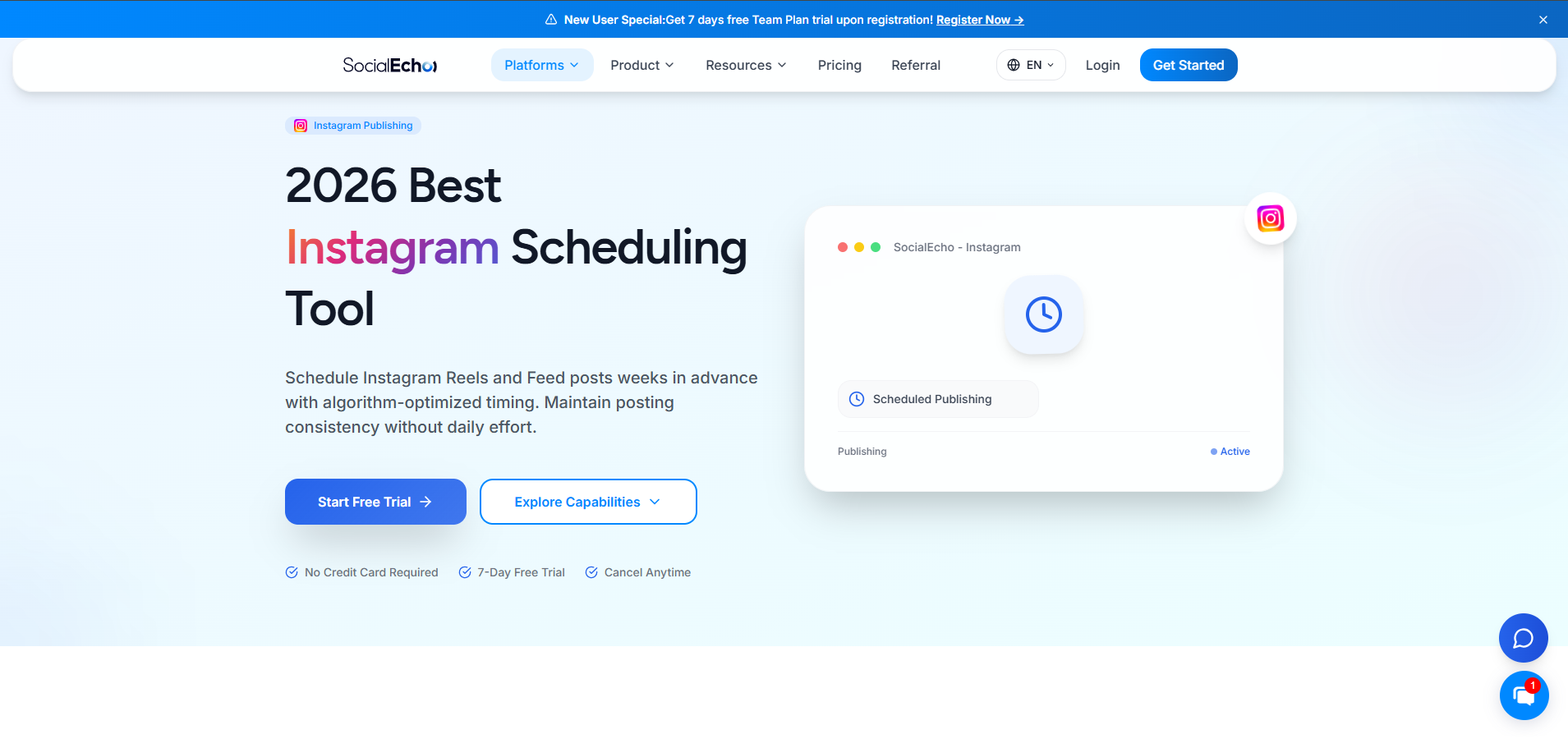
More importantly, the unified publishing tool allows you to: publish in batches on a scheduled basis. You can prepare all the content for the entire week on Monday morning, set the publishing time, and then the system will automatically publish it at the optimal time.
A content creator managing 15 social media accounts told me that he only needs to spend 2 hours a week preparing content, dedicating the rest of his time to the scheduled posting function . His content production efficiency is 5 times that of manual posting, and each piece of content reaches users at the optimal time.
Step 2: Establish a unified comment management center
The second biggest pain point in multi-platform operation is comment management.
When you have accounts on seven platforms, you'll receive hundreds of comments every day. If you log in to each platform one by one to reply, it's not only inefficient, but you're also prone to missing replies—and missing a potential customer's inquiry could mean losing an order.
A cross-border e-commerce brand posted a product video on TikTok and received 500 comments. Fifty of these were inquiries about product price and purchase links, but the operations team, busy with other platforms, didn't see these comments until 24 hours later. By the time they responded, the users had already placed orders with competitors.
In the social media age, a 24-hour delay means 100% loss.
The process for using a unified comment management tool is as follows:
- The system automatically aggregates comments from all platforms and displays them in a unified backend.
- AI automatically identifies the sentiment (positive/negative) and intent (inquiry/purchase/feedback) of comments.
- For high-priority comments (such as purchase inquiries), the system automatically marks them and sends notifications.
- You can reply directly from the unified backend, and the system will automatically synchronize it to the corresponding platform.
- For frequently asked questions, you can set up automatic reply templates and let AI automatically reply.
This is not "laziness," but "working smartly."
A social media agency told me that after they used a unified comment management tool, their comment response time decreased from an average of 4 hours to 15 minutes, customer satisfaction increased by 40%, and order conversion rate increased by 25%.
The faster you respond, the less users you lose.
Step 3: Establish a unified data analysis center
The third major pain point in multi-platform operation is data analysis.
When you have accounts on multiple platforms, the data on each platform is isolated. You need to log into the backend of each platform one by one, export the data, manually organize it into an Excel spreadsheet, and then perform analysis.
This process is not only time-consuming but also error-prone. More importantly, isolated data cannot form a complete insight.
The process for using a unified data analytics tool is as follows:
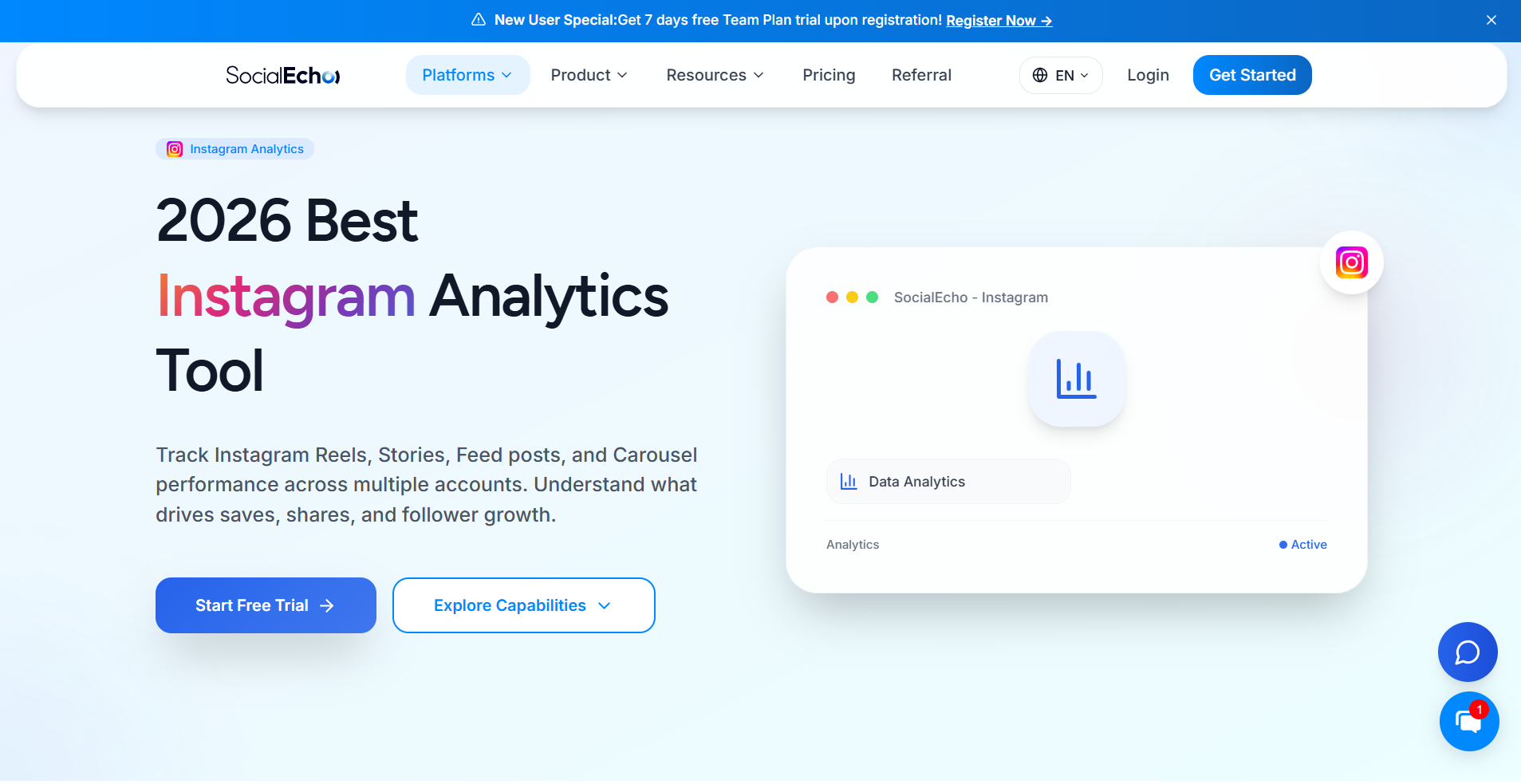
- The system automatically aggregates data from all platforms (number of followers, amount of content, exposure, interaction, comments, likes, shares, and favorites).
- Data is broken down to daily levels, and supports viewing 180 days of historical data.
- The system automatically generates comparison charts to show the performance differences between different platforms.
- The system automatically generates a "Most Popular Content Ranking" to help you find the patterns of viral content.
- The system supports one-click export of Excel reports, making it convenient to report to your boss.
This is not "data manipulation", but "data insight".
A brand operations director told me that after they started using a unified data analytics tool, their weekly data analysis time was reduced from 12 hours to 1 hour, and they were able to discover many insights that they had previously overlooked.
For example, they found that Instagram had the highest user conversion rate, but TikTok had the fastest user growth rate; X had the most active users, but YouTube had the most loyal users. Based on these insights, they adjusted their content strategy: focusing on conversion content on Instagram, growth content on TikTok, interactive content on X, and in-depth content on YouTube.
The result? Three months later, their overall ROI improved by 60%.
Step 4: Establish a competitor monitoring system
The fourth major pain point in multi-platform operation is competitor monitoring.
You not only need to manage your own account, but also constantly monitor your competitors' activities—what content are they posting? What's the user feedback? Are they creating any viral hits? Are there any negative rumors circulating?
However, if you manually monitor competitors, you need to log in to each platform, search for competitor accounts, view their content, and record data. This process is not only time-consuming but also prone to omissions.
The process for using competitor monitoring tools is as follows:
- Add competitor accounts to the monitoring list
- The system automatically scrapes competitors' content, data, and user reviews.
- The system automatically generates comparison charts showing the gap between you and your competitors.
- When competitors release viral content, the system automatically sends a notification.
- The system automatically issues a warning when competitors generate negative public opinion.
This is not "spying," but "strategic intelligence."
A beauty brand discovered through competitor monitoring tools that a competitor had posted a "makeup removal challenge" video on TikTok, which garnered 1 million views within 24 hours. They immediately followed suit, posting their own "makeup removal challenge" video and emphasizing in the caption that their product "removes makeup more cleanly and gently."
The result? Their video garnered 800,000 views and brought in 2,000 new followers and 500 product inquiries.
You don't need to be faster than your competitors, but you do need to be smarter.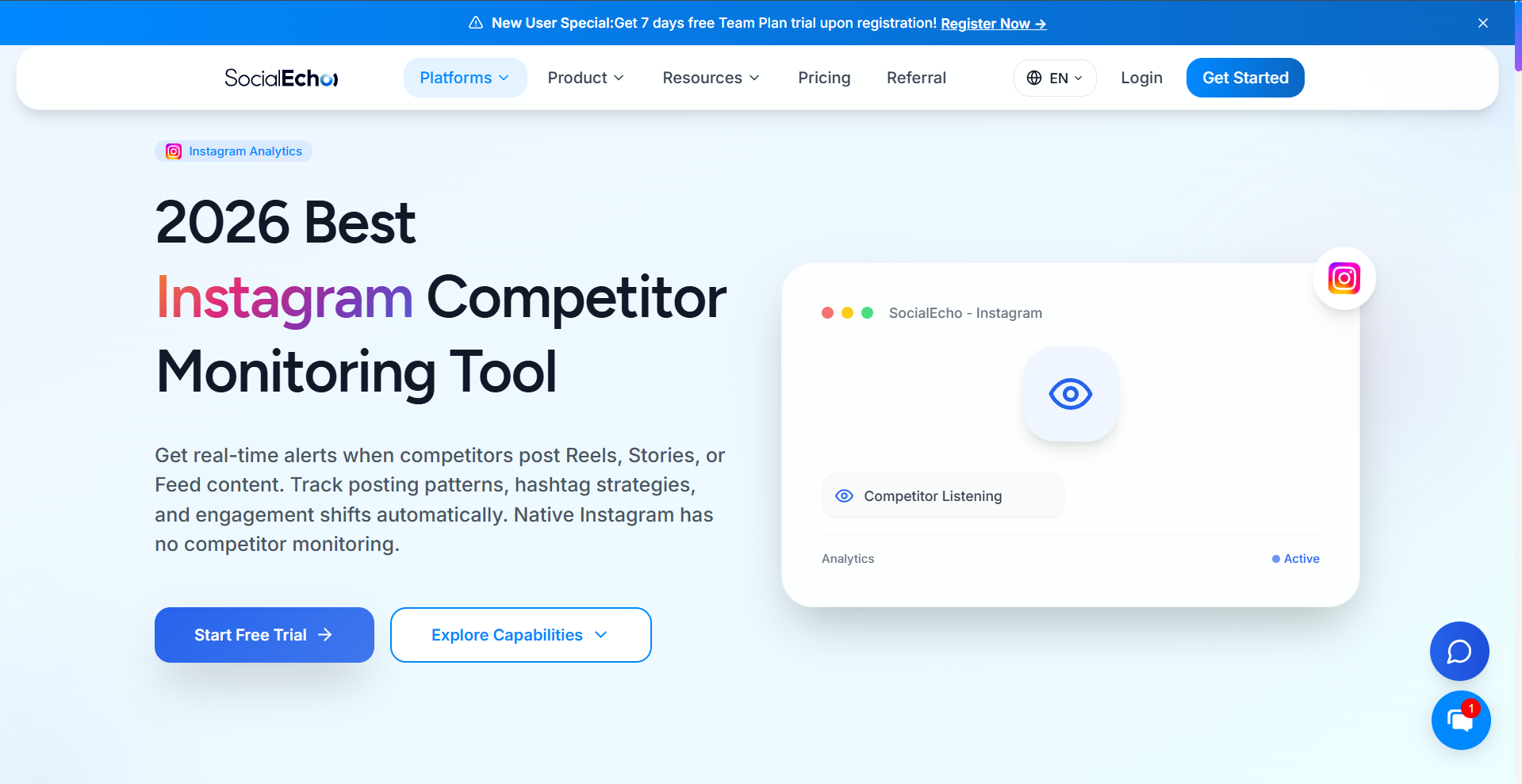
V. Core Competencies for Social Media Operations in 2026: Systematic Thinking
Returning to the question posed at the beginning of the article: When platform rules change drastically, do your private domain assets still belong to you?
The answer is: if you put all your assets on a single platform, they don't belong to you. But if you build a multi-platform system, then they belong to you.
Instagram's shutdown of Flipside is just one example of the power struggle within the platform. In the future, more features will be shut down, more rules will be adjusted, and more algorithms will be changed.
You can't stop the platform from changing, but you can build your own system.
The core of this system is not "opening accounts on every platform", but rather: unified publishing, unified management, unified analysis, and unified monitoring.
When you have this system, platform changes are no longer a disaster, but an opportunity. Instagram shuts down Flipside? No problem, your users are still on TikTok, X, and YouTube. TikTok adjusts its algorithm? No problem, your content is still on Instagram, Facebook, and LinkedIn.
You no longer rely on a single platform, but own the entire ecosystem.
More importantly, this system allows you to shift from "firefighting" to "strategic thinking." You no longer need to spend 8 hours a day switching between platforms, replying to comments, and organizing data. Instead, you can focus your time on what truly matters—creating content, optimizing strategies, and serving users.
A creator managing 20 social media accounts told me that after using a unified management tool, his daily work hours were reduced from 12 hours to 4 hours, but his content production efficiency increased by 3 times and his fan growth rate increased by 5 times.
He said, "I'm finally no longer a slave to social media operations, but the master of them."
Conclusion
March 3, 2026, a week after Instagram shut down Flipside.
Brands that have placed all their assets on Flipside are experiencing a crisis of "private domain assets going to zero." Meanwhile, brands that have already established multi-platform systems are simply calmly adjusting their content distribution strategies.
That's where the difference lies.
Platforms may change, rules may change, algorithms may change. But one thing will never change: users will always need good content, and brands will always need good tools.
While you're still anxious about "what to do now that Instagram has shut down Flipside," savvy operators are already thinking: what's the next feature to be shut down? How can I plan ahead?
This is not a sense of crisis, but rather a systems thinking approach.
Now, ask yourself three questions:
- If your most relied-upon platform shuts down a core function tomorrow, will your operations system collapse?
- If your competitor releases a viral product on a certain platform, can you respond within 24 hours?
- If your boss asks you, "What is the ROI of our social media operations?", can you give an answer within 5 minutes?
If the answer is "no," then what you need is not more effort, but a more systematic approach.
In 2026, the core competency of social media operations will not be "knowing how to use tools," but "knowing how to build systems."
The first step in building a system is to stop putting out fires and start thinking.
;}.cls-2{fill:%230868f7;}.cls-3{fill:url(%23未命名的渐变_44);}.cls-4{fill:%23333;}%3c/style%3e%3clinearGradient%20id='未命名的渐变_8'%20x1='33.73'%20y1='100.61'%20x2='-0.03'%20y2='-1.06'%20gradientUnits='userSpaceOnUse'%3e%3cstop%20offset='0'%20stop-color='%237ae9fb'/%3e%3cstop%20offset='0.67'%20stop-color='%232b90f8'/%3e%3cstop%20offset='1'%20stop-color='%230868f7'/%3e%3c/linearGradient%3e%3clinearGradient%20id='未命名的渐变_44'%20x1='27.86'%20y1='18.67'%20x2='68.36'%20y2='22.22'%20gradientUnits='userSpaceOnUse'%3e%3cstop%20offset='0'%20stop-color='%235ac7f2'/%3e%3cstop%20offset='1'%20stop-color='%230868f7'/%3e%3c/linearGradient%3e%3c/defs%3e%3cpath%20class='cls-1'%20d='M29,28.74V81.91l-9.51-3.68v0L8.52,74A7.17,7.17,0,0,1,4,67.32V24.54A3.76,3.76,0,0,1,9.08,21Z'/%3e%3cpath%20class='cls-2'%20d='M68.09,78.07a13.15,13.15,0,0,1-17.9,12.06L29,81.91h0V28.74L50.19,37A13.17,13.17,0,0,0,68.08,25.3h0Z'/%3e%3cpath%20class='cls-3'%20d='M68.08,25.3a13.19,13.19,0,0,1-6.73,10.87A13.09,13.09,0,0,1,50.19,37L29,28.74V6A3.76,3.76,0,0,1,34.1,2.52l25.59,9.91A13.22,13.22,0,0,1,68.08,25.3Z'/%3e%3cpath%20class='cls-4'%20d='M129.06,81.76a4.33,4.33,0,0,1-3.19-1.31,4.4,4.4,0,0,1-1.31-3.24V56.86H97.65V77.21a4.36,4.36,0,0,1-1.35,3.2A4.68,4.68,0,0,1,93,81.76a4.32,4.32,0,0,1-3.19-1.31,4.37,4.37,0,0,1-1.32-3.24V27.27A4.58,4.58,0,0,1,89.83,24a4.59,4.59,0,0,1,7.82,3.27V48.15h26.91V27.27A4.58,4.58,0,0,1,125.91,24a4.59,4.59,0,0,1,7.82,3.27V77.21a4.37,4.37,0,0,1-1.36,3.2A4.65,4.65,0,0,1,129.06,81.76Z'/%3e%3cpath%20class='cls-4'%20d='M163.77,81.66c-6.57,0-11.76-1.92-15.44-5.7s-5.54-9.07-5.54-15.74a26.76,26.76,0,0,1,2.09-10.43,17.72,17.72,0,0,1,6.67-8.06,19.15,19.15,0,0,1,10.68-2.95,19,19,0,0,1,10.46,2.8,18.7,18.7,0,0,1,6.55,7.36,22.53,22.53,0,0,1,2.36,10.28A4.51,4.51,0,0,1,177,63.77H152.23a10.8,10.8,0,0,0,3.49,6.65c2,1.68,4.88,2.52,8.66,2.52a22.25,22.25,0,0,0,7.54-1.21c.74-.3,1.55-.67,2.37-1.07a3.75,3.75,0,0,1,1.84-.4,4.09,4.09,0,0,1,3,1.15,4,4,0,0,1,1.12,3,4.38,4.38,0,0,1-2.58,3.82,32.34,32.34,0,0,1-6.36,2.61A28.67,28.67,0,0,1,163.77,81.66ZM172.4,55.9a9.72,9.72,0,0,0-1.63-4.56A9.9,9.9,0,0,0,167,48a10.38,10.38,0,0,0-4.64-1.14,12,12,0,0,0-4.77,1.06,9.54,9.54,0,0,0-4.89,5.66,11.78,11.78,0,0,0-.51,2.3Z'/%3e%3cpath%20class='cls-4'%20d='M193,81.64a4.49,4.49,0,0,1-4.51-4.55V27.28A4.58,4.58,0,0,1,189.84,24a4.48,4.48,0,0,1,3.28-1.36A4.36,4.36,0,0,1,196.35,24a4.46,4.46,0,0,1,1.31,3.31V77.09a4.34,4.34,0,0,1-1.35,3.2A4.67,4.67,0,0,1,193,81.64Z'/%3e%3cpath%20class='cls-4'%20d='M263.79,81.71a5.7,5.7,0,0,1-4.2-1.74,5.76,5.76,0,0,1-1.73-4.19V27.37a4.58,4.58,0,0,1,1.35-3.27A4.59,4.59,0,0,1,267,27.37V72.53h24a4.58,4.58,0,0,1,3.27,7.82A4.66,4.66,0,0,1,291,81.71Z'/%3e%3cpath%20class='cls-4'%20d='M424.48,81.74a4.71,4.71,0,0,1-2.71-.88,5.43,5.43,0,0,1-1-1l-.07-.09-12.41-17-5.41,5v9.44a4.31,4.31,0,0,1-1.36,3.19,4.66,4.66,0,0,1-3.3,1.36A4.29,4.29,0,0,1,395,80.42a4.36,4.36,0,0,1-1.32-3.23V27.37A4.58,4.58,0,0,1,395,24.1a4.52,4.52,0,0,1,6.58.12,4.54,4.54,0,0,1,1.24,3.15V56.31l17.72-16.38.05,0a4.8,4.8,0,0,1,2.94-1.11,4.4,4.4,0,0,1,3.27,1.2,4.57,4.57,0,0,1,1.2,3.27,4.44,4.44,0,0,1-.77,2.33,7.45,7.45,0,0,1-1.43,1.65l-11,9.64,13.34,17.68a5,5,0,0,1,1,2.71,4.12,4.12,0,0,1-1.36,3.24A4.64,4.64,0,0,1,424.48,81.74Z'/%3e%3cpath%20class='cls-4'%20d='M317.93,81.76a21.5,21.5,0,1,1,21.17-21.5A21.37,21.37,0,0,1,317.93,81.76Zm0-34.1a12.61,12.61,0,1,0,12.42,12.6A12.52,12.52,0,0,0,317.93,47.66Z'/%3e%3cpath%20class='cls-4'%20d='M212.18,101.22a4.12,4.12,0,0,1-3.05-1.26,4.17,4.17,0,0,1-1.26-3.1V43.34a4.37,4.37,0,0,1,1.3-3.14,4.26,4.26,0,0,1,3.13-1.3,4.19,4.19,0,0,1,3.1,1.26,4.32,4.32,0,0,1,1.26,3.16,20.77,20.77,0,0,1,13-4.54,21.51,21.51,0,0,1,0,43,20.51,20.51,0,0,1-13-4.57V96.86a4.15,4.15,0,0,1-1.3,3.06A4.5,4.5,0,0,1,212.18,101.22Zm17.43-53.63c-6.23,0-12.93,4.11-12.93,12.72a12.73,12.73,0,0,0,25.46,0A12.71,12.71,0,0,0,229.61,47.59Z'/%3e%3cpath%20class='cls-4'%20d='M365.76,81.76a21.5,21.5,0,1,1,21.18-21.5A21.37,21.37,0,0,1,365.76,81.76Zm0-34.1a12.61,12.61,0,1,0,12.42,12.6A12.52,12.52,0,0,0,365.76,47.66Z'/%3e%3c/svg%3e)