
Overseas Social Media Operations Complete Guide 2026: Building an Efficient Operations System from Scratch
Overseas Social Media Operations Complete Guide 2026: Building an Efficient Operations System from Scratch
SocialEcho, an intelligent agent for managing overseas social media, is a tool designed to solve this problem. Zhang Ming is the operations manager of a SaaS startup. Last year, when the company decided to expand overseas, he was assigned to be in charge of overseas social media operations.
With no experience, no team, and no budget, he was constantly on the go—logging into various platforms to post at 8 a.m., replying to comments in the afternoon, and doing data analysis in the evening. He worked seven days a week without a break, but the results were mediocre: slow follower growth and low engagement.
The boss asked, "How's the overseas social media operation going?" He didn't know how to answer.
This is a true reflection of how many startups operate overseas social media.
This article discusses how SocialEcho, an intelligent agent for managing overseas social media, can help you complete the entire process of overseas social media operations more efficiently, using a systematic approach rather than relying on luck.
I. Why systematic operation is more important than luck
Many startups approach overseas social media operations by registering a few accounts, posting whenever they remember, and forgetting about it when they get busy. There's no planning, no process, and no data analysis.
This "luck-based" approach has several fatal flaws:
First, the effect is unsustainable. You might post something today and get interaction, then post something tomorrow and get no response, and you don't know why. Without a stable output, users don't know when to check back.
Second, it's extremely inefficient. There's no process; every release starts from scratch—thinking about content, writing copy, adding images, scheduling—wasting a lot of time.
Third, it cannot be replicated or scaled up. Successful experiences cannot be retained, and lessons learned from failures cannot be avoided. When expanding a team, there are no standard processes that can be replicated.
The core of systematic operation is to streamline, standardize, and digitize operational processes. This lets you know what to do, how to do it, and how well you're doing it.
The essence of overseas social media operations is to establish a sustainable and optimized operating system, rather than being overwhelmed with tasks every day.
II. First Step: Define Goals and Positioning

Before we begin operations, let's answer three questions:
First question: What is your goal?
Brand exposure? Lead generation? Direct sales conversion? Customer operations?
Different goals require completely different strategies. Brand exposure aims for high coverage and interaction, sales conversion aims for high click-through rate and ROI, and customer operations aim for private domain accumulation and repeat purchases.
The second question: Who are your target users?
Age, gender, occupation, interests, spending power—the more specific, the better. Your content is for these specific people, not for everyone.
The third question: What is your brand's tone/image?
Professional and rigorous? Relaxed and lively? High-end and luxurious? Young and trendy? The tone determines the language style, visual design, and interactive methods of the content.
Third, the second step: Choosing a suitable platform
There are many overseas social media platforms, but you don't need to use them all. When choosing a platform, consider three factors:
Which platform are your target users on?
B2B brands target users on LinkedIn, B2C brands target users on Instagram and TikTok, and tech brands target users on X and YouTube.
Your team's content production capabilities.
If your video team is strong, create YouTube and TikTok; if your text and image team is strong, create Instagram and Pinterest; if you can do everything, create a matrix.
How many platforms can your budget support?
Each platform requires time and budget for maintenance; more is not necessarily better. Focusing on 2-3 platforms and perfecting them is better than doing 5-6 platforms half-heartedly.
Reference for choosing mainstream overseas platforms:
| platform | User scale | Best content type | Suitable brand types |
|---|---|---|---|
| 3 billion | Videos, images, and events | B2C/B2B | |
| 2 billion | Images and short videos | B2C, Lifestyle | |
| X/Twitter | 500 million | Text, Real-time Hot Topics | B2B, Technology |
| Youtube | 2.5 billion | Long video | B2B, Education |
| TikTok | 1.5 billion | short videos | B2C, young users |
| 900 million | Professional content | B2B, Professional Services |
Step 3: Building an Account Matrix
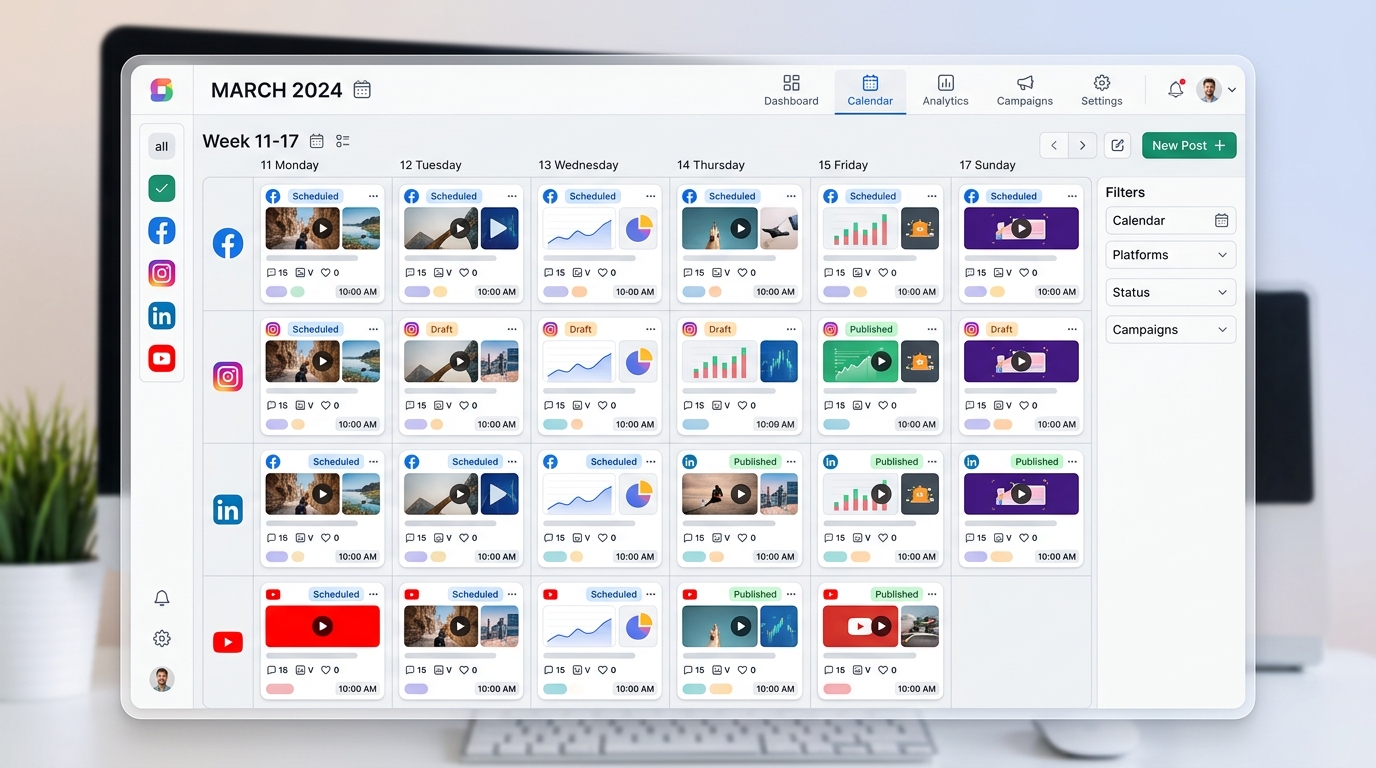
After selecting a platform, I started building an account matrix.
A brand account is fundamental. You should have a brand account on all platforms, using a consistent brand name, profile picture, and bio so users can recognize you at a glance.
Expand according to business needs. Brands with multiple product lines can set up accounts by product line, those with different regional markets can set up accounts by region, and founders who are willing to appear on camera can set up personal IP accounts.
Account setup should be professional. Use a consistent brand name, clear and uniform profile pictures, highlight value and contact information in the bio, and showcase your best work in the pinned post.
Fifth, the fourth step: Establishing a content system
Content is the core of social media operations. Without good content, even the best platform is useless.
5.1 Content Pyramid
A good content system should include three types of content:
Brand content (10%) directly introduces the brand, products, and services. The sales intent should be clear, but not excessive.
Valuable content (60%): Content that is valuable to users—industry insights, practical tips, and solutions. The core of the content system.
Interactive content (30%) – Content that encourages user participation – questions, polls, and topic discussions. This increases engagement rates.
5.2 Content Calendar
Plan your content in advance, don't come up with ideas on the fly. Create a 4-week content calendar:
Weekly fixed content types: Monday - Industry Insights, Wednesday - Product Tutorials, Friday - User Stories.
Leave 20% of flexible space for temporary hotspots; don't overschedule your calendar.
5.3 Key Points of Content Creation
The opening is crucial. Users scroll through their feeds very quickly; if you can't grab their attention in the first 3 seconds, all your content is wasted.
The structure should be clear. Use subheadings to divide the content into sections, allowing users to see the overall framework at a glance.
The ending should include a CTA. Tell the user what you want them to do—comment, share, click the link.
VI. Step 5: Multi-platform release
With the content ready, how can I efficiently publish it to multiple platforms?
6.1 Scheduled Release
Each platform has different optimal posting times. Facebook's prime time is 9-11 AM, while Instagram's is 12-1 PM and 5-7 PM.
Social media management platforms can help you automatically publish content at the best time, eliminating the need to manually calculate the timing for each platform.
6.2 Format Adaptation
Different platforms have different requirements for content format:
Instagram photos should be in 1:1 or 4:5 aspect ratio, X text should be limited to 280 characters, and YouTube videos should ideally be 1-3 minutes long.
Good management tools automatically adjust the format to ensure that the content presents the best effect on every platform.
6.3 Batch Release
Prepare a batch of content in advance and set the release time in bulk. Prepare content for the holiday period before the holiday so you don't have to worry about publishing content during the holiday.
VII. Step Six: Data Analysis and Optimization
Release is just the beginning; analysis and optimization are the keys to improvement.
7.1 Core Indicators
Key metrics to track each week:
Coverage: How many people saw your content. A decrease in coverage may indicate a drop in account authority.
Engagement rate: A combined metric of likes, comments, and shares. A high engagement rate indicates that the content is engaging for users.
Click-through rate (CTR): The percentage of users who click on a link. A high CTR indicates that the CTA is effective.
Fan growth: Net increase in fans. Rapid growth indicates that the content is attractive to the target audience.
7.2 Data-Driven Optimization
Continuous optimization based on data feedback:
What kind of content performs well? Analyze the common characteristics of high-performing content and create more of that type of content.
When is the best time to publish? Identify the time periods when your target users are most active and adjust your publishing time accordingly.
Which platform is most effective? Compare data from different platforms and concentrate resources on the most efficient ones.
Step 7: Team Collaboration
As operational tasks increase, collaboration among multiple people becomes necessary.
8.1 Role Division
Content Creator: Responsible for creating content. Requirements include creativity, understanding of platform features, and basic design skills.
Operations Execution: Responsible for content creation, comment processing, and data analysis. Requires meticulousness and familiarity with platform rules.
Team Administrator: Responsible for overall planning, strategy development, and performance management. Requires business acumen and data analysis skills.
8.2 Collaboration Process
Daily: Operations execution, checking the release results, processing user comments, and reporting data.
Weekly: The team holds a meeting to review the data from the previous week and adjust the plan for this week.
Monthly: Administrators analyze monthly data and formulate strategies for the following month.
8.3 Tool Support
Good multi-platform operation tools can help you:
Unified management of accounts across multiple platforms, batch content publishing, and centralized processing of comments and data reports.
Conclusion
Operating overseas social media is neither a simple nor a complicated task.
The core is to establish a system: define goals → select a platform → set up accounts → establish a content system → publish efficiently → data-driven → team collaboration.
By operating in a systematic way, you don't need to be busy every day; you only need to continuously optimize.
Want to learn more about practical methods for managing social media agents overseas using SocialEcho? You can read our complete guide to overseas social media operations .
Free Trial: 7-Day Full-Featured Experience of SocialEcho
FAQ
Q1: Which platforms should startups start with?
A: I recommend starting with 2-3 platforms. For most brands, Facebook + Instagram are essential. Choose the third platform based on your target audience—LinkedIn for B2B, TikTok or Instagram Reels for younger users. Don't try to manage five or six platforms at once; you'll scatter your energy and fail to do anything well.
Q2: How far in advance should the content calendar be planned?
A: I recommend planning 1-2 weeks in advance. Too short a time will lead to last-minute cramming, while too long a time will lack flexibility. Set aside one day each week to plan the content for the following week, while reserving 20% space for unexpected hot topics.
Q3: How do I determine if a content strategy is effective?
A: The core metrics are engagement rate and follower growth. High engagement rate and rapid follower growth indicate an effective strategy. If the data remains sluggish, analyze whether the problem lies with the content direction, release timing, or platform selection, and make targeted adjustments.
Q4: Can a small team (1-2 people) do overseas social media operations?
A: Yes, it's possible. Use social media management tools to improve efficiency, dedicating 2-3 hours daily to focusing on 2-3 platforms. The key is to maintain consistent output; don't work sporadically.
Q5: How to handle negative comments?
A: The principle is to respond quickly, apologize sincerely, and resolve the issue privately. Avoid arguing in public comment sections, as this will escalate the conflict. First, give a public reply to express your stance, then communicate the specific issues via private message, striving to turn the complaining user into a satisfied user.
Word count: Approximately 3500 words
;}.cls-2{fill:%230868f7;}.cls-3{fill:url(%23未命名的渐变_44);}.cls-4{fill:%23333;}%3c/style%3e%3clinearGradient%20id='未命名的渐变_8'%20x1='33.73'%20y1='100.61'%20x2='-0.03'%20y2='-1.06'%20gradientUnits='userSpaceOnUse'%3e%3cstop%20offset='0'%20stop-color='%237ae9fb'/%3e%3cstop%20offset='0.67'%20stop-color='%232b90f8'/%3e%3cstop%20offset='1'%20stop-color='%230868f7'/%3e%3c/linearGradient%3e%3clinearGradient%20id='未命名的渐变_44'%20x1='27.86'%20y1='18.67'%20x2='68.36'%20y2='22.22'%20gradientUnits='userSpaceOnUse'%3e%3cstop%20offset='0'%20stop-color='%235ac7f2'/%3e%3cstop%20offset='1'%20stop-color='%230868f7'/%3e%3c/linearGradient%3e%3c/defs%3e%3cpath%20class='cls-1'%20d='M29,28.74V81.91l-9.51-3.68v0L8.52,74A7.17,7.17,0,0,1,4,67.32V24.54A3.76,3.76,0,0,1,9.08,21Z'/%3e%3cpath%20class='cls-2'%20d='M68.09,78.07a13.15,13.15,0,0,1-17.9,12.06L29,81.91h0V28.74L50.19,37A13.17,13.17,0,0,0,68.08,25.3h0Z'/%3e%3cpath%20class='cls-3'%20d='M68.08,25.3a13.19,13.19,0,0,1-6.73,10.87A13.09,13.09,0,0,1,50.19,37L29,28.74V6A3.76,3.76,0,0,1,34.1,2.52l25.59,9.91A13.22,13.22,0,0,1,68.08,25.3Z'/%3e%3cpath%20class='cls-4'%20d='M129.06,81.76a4.33,4.33,0,0,1-3.19-1.31,4.4,4.4,0,0,1-1.31-3.24V56.86H97.65V77.21a4.36,4.36,0,0,1-1.35,3.2A4.68,4.68,0,0,1,93,81.76a4.32,4.32,0,0,1-3.19-1.31,4.37,4.37,0,0,1-1.32-3.24V27.27A4.58,4.58,0,0,1,89.83,24a4.59,4.59,0,0,1,7.82,3.27V48.15h26.91V27.27A4.58,4.58,0,0,1,125.91,24a4.59,4.59,0,0,1,7.82,3.27V77.21a4.37,4.37,0,0,1-1.36,3.2A4.65,4.65,0,0,1,129.06,81.76Z'/%3e%3cpath%20class='cls-4'%20d='M163.77,81.66c-6.57,0-11.76-1.92-15.44-5.7s-5.54-9.07-5.54-15.74a26.76,26.76,0,0,1,2.09-10.43,17.72,17.72,0,0,1,6.67-8.06,19.15,19.15,0,0,1,10.68-2.95,19,19,0,0,1,10.46,2.8,18.7,18.7,0,0,1,6.55,7.36,22.53,22.53,0,0,1,2.36,10.28A4.51,4.51,0,0,1,177,63.77H152.23a10.8,10.8,0,0,0,3.49,6.65c2,1.68,4.88,2.52,8.66,2.52a22.25,22.25,0,0,0,7.54-1.21c.74-.3,1.55-.67,2.37-1.07a3.75,3.75,0,0,1,1.84-.4,4.09,4.09,0,0,1,3,1.15,4,4,0,0,1,1.12,3,4.38,4.38,0,0,1-2.58,3.82,32.34,32.34,0,0,1-6.36,2.61A28.67,28.67,0,0,1,163.77,81.66ZM172.4,55.9a9.72,9.72,0,0,0-1.63-4.56A9.9,9.9,0,0,0,167,48a10.38,10.38,0,0,0-4.64-1.14,12,12,0,0,0-4.77,1.06,9.54,9.54,0,0,0-4.89,5.66,11.78,11.78,0,0,0-.51,2.3Z'/%3e%3cpath%20class='cls-4'%20d='M193,81.64a4.49,4.49,0,0,1-4.51-4.55V27.28A4.58,4.58,0,0,1,189.84,24a4.48,4.48,0,0,1,3.28-1.36A4.36,4.36,0,0,1,196.35,24a4.46,4.46,0,0,1,1.31,3.31V77.09a4.34,4.34,0,0,1-1.35,3.2A4.67,4.67,0,0,1,193,81.64Z'/%3e%3cpath%20class='cls-4'%20d='M263.79,81.71a5.7,5.7,0,0,1-4.2-1.74,5.76,5.76,0,0,1-1.73-4.19V27.37a4.58,4.58,0,0,1,1.35-3.27A4.59,4.59,0,0,1,267,27.37V72.53h24a4.58,4.58,0,0,1,3.27,7.82A4.66,4.66,0,0,1,291,81.71Z'/%3e%3cpath%20class='cls-4'%20d='M424.48,81.74a4.71,4.71,0,0,1-2.71-.88,5.43,5.43,0,0,1-1-1l-.07-.09-12.41-17-5.41,5v9.44a4.31,4.31,0,0,1-1.36,3.19,4.66,4.66,0,0,1-3.3,1.36A4.29,4.29,0,0,1,395,80.42a4.36,4.36,0,0,1-1.32-3.23V27.37A4.58,4.58,0,0,1,395,24.1a4.52,4.52,0,0,1,6.58.12,4.54,4.54,0,0,1,1.24,3.15V56.31l17.72-16.38.05,0a4.8,4.8,0,0,1,2.94-1.11,4.4,4.4,0,0,1,3.27,1.2,4.57,4.57,0,0,1,1.2,3.27,4.44,4.44,0,0,1-.77,2.33,7.45,7.45,0,0,1-1.43,1.65l-11,9.64,13.34,17.68a5,5,0,0,1,1,2.71,4.12,4.12,0,0,1-1.36,3.24A4.64,4.64,0,0,1,424.48,81.74Z'/%3e%3cpath%20class='cls-4'%20d='M317.93,81.76a21.5,21.5,0,1,1,21.17-21.5A21.37,21.37,0,0,1,317.93,81.76Zm0-34.1a12.61,12.61,0,1,0,12.42,12.6A12.52,12.52,0,0,0,317.93,47.66Z'/%3e%3cpath%20class='cls-4'%20d='M212.18,101.22a4.12,4.12,0,0,1-3.05-1.26,4.17,4.17,0,0,1-1.26-3.1V43.34a4.37,4.37,0,0,1,1.3-3.14,4.26,4.26,0,0,1,3.13-1.3,4.19,4.19,0,0,1,3.1,1.26,4.32,4.32,0,0,1,1.26,3.16,20.77,20.77,0,0,1,13-4.54,21.51,21.51,0,0,1,0,43,20.51,20.51,0,0,1-13-4.57V96.86a4.15,4.15,0,0,1-1.3,3.06A4.5,4.5,0,0,1,212.18,101.22Zm17.43-53.63c-6.23,0-12.93,4.11-12.93,12.72a12.73,12.73,0,0,0,25.46,0A12.71,12.71,0,0,0,229.61,47.59Z'/%3e%3cpath%20class='cls-4'%20d='M365.76,81.76a21.5,21.5,0,1,1,21.18-21.5A21.37,21.37,0,0,1,365.76,81.76Zm0-34.1a12.61,12.61,0,1,0,12.42,12.6A12.52,12.52,0,0,0,365.76,47.66Z'/%3e%3c/svg%3e)