
Pinterest Operations for Overseas Brands: A Severely Underrated Search Traffic Source
Pinterest Operations for Overseas Brands: A Severely Underrated Search Traffic Source
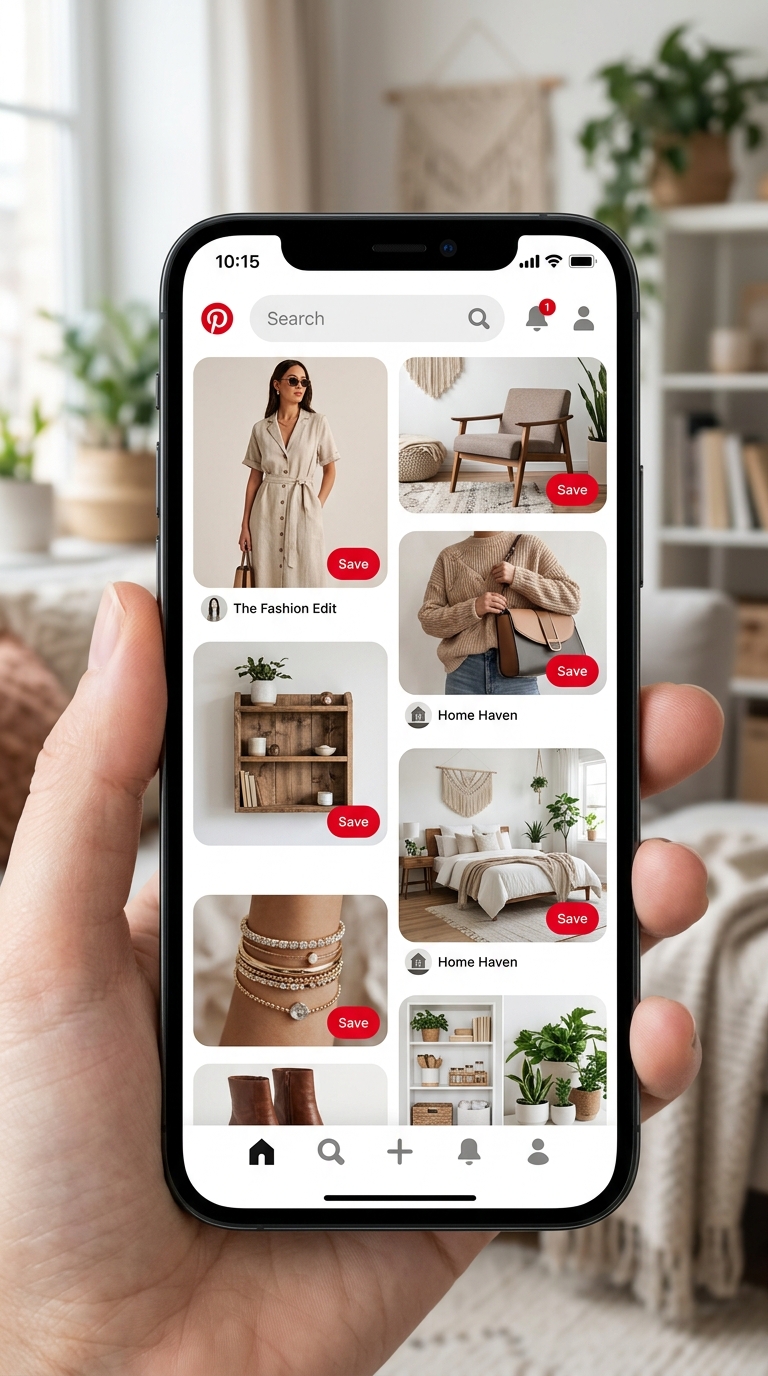
Lin Xin sent the traffic analysis report to her boss and waited for his response. One figure in the report seemed a bit strange: their home furnishing brand's official website was receiving more organic traffic from Pinterest each month than from Instagram—while the Instagram account had 40,000 followers, the Pinterest account only had 800 followers.
The boss's first reaction was: "Pinterest? Isn't that where girls share pictures?"
That's exactly the problem.
Most Chinese brands going global almost completely ignore Pinterest, considering it a niche image community without the explosive traffic of TikTok or the influencer ecosystem of Instagram, and believing that "Chinese users don't use Pinterest."
All three observations are correct, but they all point to the wrong conclusion.
Pinterest is not social media; it's a search engine.
This is the first key shift in understanding Pinterest.
Facebook, Instagram, and TikTok are content distribution platforms where users passively receive content pushed by algorithms, and the lifespan of this content is typically only 24-72 hours.
Pinterest is a visual search engine where users actively input their needs to find content, and a pin can continue to generate traffic for 12-18 months after it is published.
Pinterest user behavior characteristics :
- 68% of users come to Pinterest to "discover new products or brands".
- Pinterest users have twice the purchase intent of those on other social media platforms.
- 55% of Pinterest users use the platform exclusively for pre-purchase research.
What does this mean for brands going global? Users who come to Pinterest are there with a shopping intention—they are looking for inspiration, comparing options, and preparing to buy, not just browsing content to kill time.
Pinterest's actual user base
Many people's impression of Pinterest is that it's a "niche platform," but the data tells a different story:
- Monthly active users : 553 million (2024 data, up 11% year-on-year)
- User profile : 76% are female, but male users are growing the fastest (male users have increased by 50% in the past 3 years).
- Key markets : USA, UK, Canada, Australia, Germany (which happens to be the core target markets for most brands going global)
- Age distribution : The 18-34 age group accounts for the largest proportion (approximately 42%), but users aged 35-54 have stronger purchasing power.
For brands expanding into North America and Europe, Pinterest is an efficient channel to directly reach their target audience.
Which product categories are best suited for Pinterest when expanding overseas?
Not all categories are equally suitable for Pinterest. The following categories have the highest search volume and conversion rates on Pinterest:
Highly recommended :
- Home decor, furniture, and home textiles (extremely high search volume, long user purchase decision cycle, perfect for Pinterest's long tail traffic).
- Women's apparel, accessories, and jewelry (visually driven categories)
- Makeup and skincare (tutorials and ingredient information are extremely popular)
- Food and baking (recipe content has a strong desire to be saved and shared)
- Wedding and holiday planning (highly planned consumption scenarios)
- Handicrafts and DIY materials (strong community atmosphere)
Limited effectiveness :
- B2B products
- Software/SaaS
- Fast-moving consumer goods (daily necessities, etc.)
Pinterest SEO: A Must-Have Skill for Brands Going Global
Pinterest's content distribution logic is most similar to Google SEO, rather than the algorithmic recommendations of Instagram or TikTok.
Keyword placement in four positions :
- Account Profile : Include core keywords in your account name and bio, such as "Modern Bedroom Furniture | Minimalist Home Decor".
- Board Title : Avoid using names like "My Collection." Instead, use keyword-based board titles such as "Minimalist Living Room Ideas."
- Pin Title : The title of each pin has the highest SEO weight and must contain the target keyword.
- Pin Description : A description of 150-500 words, naturally including 3-5 relevant keywords and long-tail keywords.
Keyword research methodology : Enter your core keywords into the Pinterest search box, and the system will display related long-tail search suggestions. These are the words that real users are searching for, and their value far exceeds that of any third-party keyword tool.
High conversion standards in pin design
Technical Specifications :
- Size: Primarily vertical images, recommended aspect ratio 2:3 (e.g., 1000×1500px)
- Format: JPG or PNG, primarily still images, but video pins (15-60 seconds) are also acceptable.
Design principles for high-conversion pin charts :
- Text overlay : Clear title text is overlaid on the image, allowing users to understand the content's value without clicking. Pins with text overlays have a 40% higher save rate than plain images.
- Brand consistency : Unifying color schemes, fonts, and logo placement to create a recognizable visual language.
- Vertical composition : Vertical images occupy a larger visual area in the Pinterest feed, giving them a clear advantage in terms of exposure.
- People present : Pins featuring real people (use case images) typically have higher engagement rates than pure product images.
A true content matrix structure
Taking home furnishing brands as an example, it is recommended to release 15-20 pins per week, distributed according to the following ratio:
| Content type | percentage | Purpose |
|---|---|---|
| Product Showcase (Scene Images) | 30% | Direct product exposure and purchase guidance |
| Lifestyle content (inspiration) | 35% | Build brand associations and increase audience engagement |
| Tutorials/Knowledge | 20% | Enhance account authority and increase account retention. |
| Collaboration Content/UGC | 15% | Enhance community spirit and trust |
Key principle : Although tutorial and knowledge-based content does not directly sell products, it has the highest retention rate and will continuously bring in traffic.
Integration strategy with other platforms
Integration with Instagram : Product images posted on Instagram can be directly reused as Pinterest pins. The two platforms are linked, forming a closed-loop traffic system.
Integrate with your independent website : All Pinterest content should link to the corresponding product page on your independent website, and a "Save to Pinterest" button should be added to the independent website page. Use Pinterest data analytics to track which content generates the most traffic to your independent website and optimize your content strategy accordingly.
Linking with blog content : If your independent website has a blog, create 3-5 different pin designs for each blog post, covering different keyword angles. This is the most effortless way to reuse content.
Data Tracking: Focus on These Key Pinterest Metrics
- Impressions : The number of times content is seen, reflecting reach.
- Saves : The number of times a user saves to the canvas; a signal of high-value interaction.
- Outbound Clicks : The number of times users click on a link and are redirected to the independent website, directly reflecting the value of traffic.
- Save Rate : Number of saved items / Number of impressions, reflecting content quality.
For brands going global, retention rate and click-through rate are more important than impression count .
Data analytics tools can be used to compare Pinterest data with data from other platforms, helping the team to conduct a comprehensive evaluation of content effectiveness.
A path to creating a Pinterest account from scratch.
Weeks 0-2: Basic Account Setup
- Create a business account (free)
- Complete your account description, including core keywords.
- Create 5-8 themed artboards, each with a keyword description.
Weeks 3-8: Content Accumulation Period
- Publish 5-10 pins per day (you can use a scheduled publishing tool to schedule them in batches to avoid manual publishing every day).
- Maintain content diversity (products + inspiration + tutorials)
- Focus on optimizing keywords and Pin descriptions.
Weeks 9-16: Period of Traffic Growth
- Use data to identify the best-performing content types and increase the production of such content.
- Try Rich Pins – connect independent website product data and synchronize prices and inventory in real time.
FAQ
Q1: How long does it take to see results on a Pinterest account?
It typically takes 3-6 months to see significant growth in search traffic. Pinterest's SEO results aren't immediate, but once established, they compound. Many brands see no noticeable data in the first two months, then experience a sudden surge in traffic in the fourth or fifth month. Consistency is key.
Q2: Do I need to create content specifically for Pinterest, or can I reuse existing content?
While content can be reused extensively, it cannot be directly copied. Instagram's square images need to be cropped into vertical format; TikTok videos need keyframes extracted and redesigned; blog posts need core information extracted to create infographics. Pinterest content is unique in that it must have clear text headings overlaid, which requires additional processing.
Q3: Do Chinese brands have an advantage or a disadvantage on Pinterest?
Chinese brands have a unique advantage on Pinterest: price competitiveness. Many users come to Pinterest for inspiration and then compare prices. As long as the product quality is good and the visual presentation is effective, "value for money" is a convincing differentiator.
Q4: What tools would you recommend for publishing?
SocialEcho supports one-click publishing to 7+ platforms, including Pinterest, and allows for batch scheduling of posts, eliminating the need for daily manual operations. Basic plans start at 12.5/month, Team plans start at 18.75/month, with a 20% discount for annual payments. Pinterest data analytics are also supported, allowing users to view and compare data from multiple channels on a single platform.
Q5: Is it worthwhile to run Pinterest ads?
For accounts that already have a certain amount of organic traffic, Pinterest ads typically have a higher ROI than Facebook ads, mainly because users have a higher purchase intent. It's recommended to run organic content for three months to identify the best-performing pins, and then turn those pins into ads; this has a higher success rate than creating entirely new ad creatives.
Q6: How to handle the issue of written language?
If your target audience is English-speaking users, all text content (Pin titles, descriptions, board names) should be in authentic English. Pinterest search is based on textual keywords, so Chinese content will not appear in English search results. If you are targeting multiple language markets, it is recommended to create separate Pinterest accounts for each language market.
Are you evaluating the priority of your overseas platform strategy? Data analytics can help you compare traffic and interaction data across multiple platforms to identify the channels where increased investment is most worthwhile.
;}.cls-2{fill:%230868f7;}.cls-3{fill:url(%23未命名的渐变_44);}.cls-4{fill:%23333;}%3c/style%3e%3clinearGradient%20id='未命名的渐变_8'%20x1='33.73'%20y1='100.61'%20x2='-0.03'%20y2='-1.06'%20gradientUnits='userSpaceOnUse'%3e%3cstop%20offset='0'%20stop-color='%237ae9fb'/%3e%3cstop%20offset='0.67'%20stop-color='%232b90f8'/%3e%3cstop%20offset='1'%20stop-color='%230868f7'/%3e%3c/linearGradient%3e%3clinearGradient%20id='未命名的渐变_44'%20x1='27.86'%20y1='18.67'%20x2='68.36'%20y2='22.22'%20gradientUnits='userSpaceOnUse'%3e%3cstop%20offset='0'%20stop-color='%235ac7f2'/%3e%3cstop%20offset='1'%20stop-color='%230868f7'/%3e%3c/linearGradient%3e%3c/defs%3e%3cpath%20class='cls-1'%20d='M29,28.74V81.91l-9.51-3.68v0L8.52,74A7.17,7.17,0,0,1,4,67.32V24.54A3.76,3.76,0,0,1,9.08,21Z'/%3e%3cpath%20class='cls-2'%20d='M68.09,78.07a13.15,13.15,0,0,1-17.9,12.06L29,81.91h0V28.74L50.19,37A13.17,13.17,0,0,0,68.08,25.3h0Z'/%3e%3cpath%20class='cls-3'%20d='M68.08,25.3a13.19,13.19,0,0,1-6.73,10.87A13.09,13.09,0,0,1,50.19,37L29,28.74V6A3.76,3.76,0,0,1,34.1,2.52l25.59,9.91A13.22,13.22,0,0,1,68.08,25.3Z'/%3e%3cpath%20class='cls-4'%20d='M129.06,81.76a4.33,4.33,0,0,1-3.19-1.31,4.4,4.4,0,0,1-1.31-3.24V56.86H97.65V77.21a4.36,4.36,0,0,1-1.35,3.2A4.68,4.68,0,0,1,93,81.76a4.32,4.32,0,0,1-3.19-1.31,4.37,4.37,0,0,1-1.32-3.24V27.27A4.58,4.58,0,0,1,89.83,24a4.59,4.59,0,0,1,7.82,3.27V48.15h26.91V27.27A4.58,4.58,0,0,1,125.91,24a4.59,4.59,0,0,1,7.82,3.27V77.21a4.37,4.37,0,0,1-1.36,3.2A4.65,4.65,0,0,1,129.06,81.76Z'/%3e%3cpath%20class='cls-4'%20d='M163.77,81.66c-6.57,0-11.76-1.92-15.44-5.7s-5.54-9.07-5.54-15.74a26.76,26.76,0,0,1,2.09-10.43,17.72,17.72,0,0,1,6.67-8.06,19.15,19.15,0,0,1,10.68-2.95,19,19,0,0,1,10.46,2.8,18.7,18.7,0,0,1,6.55,7.36,22.53,22.53,0,0,1,2.36,10.28A4.51,4.51,0,0,1,177,63.77H152.23a10.8,10.8,0,0,0,3.49,6.65c2,1.68,4.88,2.52,8.66,2.52a22.25,22.25,0,0,0,7.54-1.21c.74-.3,1.55-.67,2.37-1.07a3.75,3.75,0,0,1,1.84-.4,4.09,4.09,0,0,1,3,1.15,4,4,0,0,1,1.12,3,4.38,4.38,0,0,1-2.58,3.82,32.34,32.34,0,0,1-6.36,2.61A28.67,28.67,0,0,1,163.77,81.66ZM172.4,55.9a9.72,9.72,0,0,0-1.63-4.56A9.9,9.9,0,0,0,167,48a10.38,10.38,0,0,0-4.64-1.14,12,12,0,0,0-4.77,1.06,9.54,9.54,0,0,0-4.89,5.66,11.78,11.78,0,0,0-.51,2.3Z'/%3e%3cpath%20class='cls-4'%20d='M193,81.64a4.49,4.49,0,0,1-4.51-4.55V27.28A4.58,4.58,0,0,1,189.84,24a4.48,4.48,0,0,1,3.28-1.36A4.36,4.36,0,0,1,196.35,24a4.46,4.46,0,0,1,1.31,3.31V77.09a4.34,4.34,0,0,1-1.35,3.2A4.67,4.67,0,0,1,193,81.64Z'/%3e%3cpath%20class='cls-4'%20d='M263.79,81.71a5.7,5.7,0,0,1-4.2-1.74,5.76,5.76,0,0,1-1.73-4.19V27.37a4.58,4.58,0,0,1,1.35-3.27A4.59,4.59,0,0,1,267,27.37V72.53h24a4.58,4.58,0,0,1,3.27,7.82A4.66,4.66,0,0,1,291,81.71Z'/%3e%3cpath%20class='cls-4'%20d='M424.48,81.74a4.71,4.71,0,0,1-2.71-.88,5.43,5.43,0,0,1-1-1l-.07-.09-12.41-17-5.41,5v9.44a4.31,4.31,0,0,1-1.36,3.19,4.66,4.66,0,0,1-3.3,1.36A4.29,4.29,0,0,1,395,80.42a4.36,4.36,0,0,1-1.32-3.23V27.37A4.58,4.58,0,0,1,395,24.1a4.52,4.52,0,0,1,6.58.12,4.54,4.54,0,0,1,1.24,3.15V56.31l17.72-16.38.05,0a4.8,4.8,0,0,1,2.94-1.11,4.4,4.4,0,0,1,3.27,1.2,4.57,4.57,0,0,1,1.2,3.27,4.44,4.44,0,0,1-.77,2.33,7.45,7.45,0,0,1-1.43,1.65l-11,9.64,13.34,17.68a5,5,0,0,1,1,2.71,4.12,4.12,0,0,1-1.36,3.24A4.64,4.64,0,0,1,424.48,81.74Z'/%3e%3cpath%20class='cls-4'%20d='M317.93,81.76a21.5,21.5,0,1,1,21.17-21.5A21.37,21.37,0,0,1,317.93,81.76Zm0-34.1a12.61,12.61,0,1,0,12.42,12.6A12.52,12.52,0,0,0,317.93,47.66Z'/%3e%3cpath%20class='cls-4'%20d='M212.18,101.22a4.12,4.12,0,0,1-3.05-1.26,4.17,4.17,0,0,1-1.26-3.1V43.34a4.37,4.37,0,0,1,1.3-3.14,4.26,4.26,0,0,1,3.13-1.3,4.19,4.19,0,0,1,3.1,1.26,4.32,4.32,0,0,1,1.26,3.16,20.77,20.77,0,0,1,13-4.54,21.51,21.51,0,0,1,0,43,20.51,20.51,0,0,1-13-4.57V96.86a4.15,4.15,0,0,1-1.3,3.06A4.5,4.5,0,0,1,212.18,101.22Zm17.43-53.63c-6.23,0-12.93,4.11-12.93,12.72a12.73,12.73,0,0,0,25.46,0A12.71,12.71,0,0,0,229.61,47.59Z'/%3e%3cpath%20class='cls-4'%20d='M365.76,81.76a21.5,21.5,0,1,1,21.18-21.5A21.37,21.37,0,0,1,365.76,81.76Zm0-34.1a12.61,12.61,0,1,0,12.42,12.6A12.52,12.52,0,0,0,365.76,47.66Z'/%3e%3c/svg%3e)