
A Complete Guide to Social Media Algorithm Ranking Signals: In-Depth Analysis of Content Ranking Logic on 10 Major Platforms in 2026
Have you ever asked yourself this existential question?
"I spent two days filming this video, why does it only have 200 views?"
"The same content went viral for others, but failed for me. Who exactly is the algorithm targeting?"
The painful truth is: algorithms never target anyone; they only favor content from those who "understand the rules."
By 2026, the algorithms of various platforms will have evolved to the point where they can accurately identify content quality, user intent, and interaction value. The era of creating viral content by sheer luck is over.
This article will provide an in-depth analysis of the algorithm ranking signals of six major platforms: TikTok, Instagram, Facebook, LinkedIn, Twitter, and YouTube, helping operators truly understand the algorithms, optimize strategies, and improve content performance.
##1. Why is understanding algorithms crucial for operations?
1.1 Algorithms determine the fate of content
Today, how many users see your content on a platform is determined more than 90% by the algorithm , not by the number of your followers.
Taking TikTok as an example, a new account with zero followers can potentially reach millions of users due to a single video's excellent algorithmic performance. Conversely, a popular influencer with millions of followers can be suppressed by the algorithm to the point of being virtually invisible if their content engagement is poor.
This is the "decentralization" effect of algorithms— they reward content quality rather than the number of fans .
1.2 Three Major Evolutionary Directions of Algorithms in 2026
According to Hootsuite's 2026 Social Media Algorithm Report, platform algorithms are evolving profoundly in three directions:
- Intent recognition: The algorithm can distinguish whether a user is "browsing casually" or "actively searching" and assign different weights accordingly.
- Behavioral prediction: Determines whether content is worth recommending based on users' historical behavior, rather than relying solely on current data.
- Value ranking: Prioritize pushing content that has real value to users, rather than content that simply stirs up emotions.
2. TikTok Algorithm: Why are no people watching your videos?
2.1 Completion Rate: The First Signal from TikTok's Algorithm
On TikTok, the watch time rate is the primary weighted metric for the algorithm to judge content quality , even taking precedence over likes and comments.
A 15-second video being watched in its entirety carries more weight than a 3-minute video being watched for 30 seconds.
Practical tips for improving completion rate:
- There must be a strong hook within the first 3 seconds; the user should not have a reason to swipe away.
- The video should be fast-paced, presenting the core information in the first 5 seconds.
- Make good use of the "suspense structure"—leave unfinished plots at the end of the video to encourage users to replay it.
- Longer video length isn't always better; 30-60 seconds is often the "golden range" for highest completion rates.
2.2 Priority Ranking of Interaction Signals
The interaction signals considered by TikTok's algorithm, sorted from highest to lowest weight, are as follows:
- Completion rate / Repeat playback rate (highest)
- Comment content and sentiment (the algorithm analyzes the content of the comments themselves, not just the quantity)
- Share rate (users actively sharing with friends indicates the content is valuable).
- Retention rate (if a content is saved to favorites, it indicates that the content has long-term reference value).
- Likes
2.3 TikTok's Decentralized Nature
TikTok's algorithm has a feature that is extremely user-friendly for beginners: a tiered push mechanism based on traffic pools .
After a new video is released, it will first be pushed to a small audience pool of 200-500 people. Based on the interaction data of this group (completion rate, likes, comments, etc.), it will be decided whether to enter the next level audience pool (1000-5000 people), and so on.
This means that every video has an equal chance; the algorithm only looks at the performance of this one video and not at the historical data of your account.
3. Instagram Algorithm: Weighting Differences Between Reels vs. Images & Posts vs. Stories
3.1 Algorithm weights for different content formats
Instagram is currently the platform with the most diverse content formats—Reels (short videos), Feed Posts, Stories, Live, and Carousels—each with its own independent algorithmic logic.
Key Insight: Instagram will continue to provide the strongest traffic support for Reels in 2026, but the algorithmic penalties for "text-only" posts will also be more pronounced—if you only post text and images and don't run ads, your reach is steadily declining.
3.2 Impact of Account Relationships
A notable feature of the Instagram algorithm is that it places a very high weight on account relationships .
If you frequently interact with a particular account (likes, comments, direct messages), the algorithm will tend to include your content in that user's recommendations. Similarly, their content will appear more frequently in your news feed.
4. Facebook Algorithm: Why are your posts reaching fewer and fewer people?
4.1 The principle of "family and friends first"
The core principle of Facebook's algorithm is to prioritize showing content from users' "family and friends" rather than content from public pages.
This means that if your Facebook page doesn't have a strong connection with users, your posts will almost never appear in their News Feed.
4.2 Meaningful Interaction vs. Passive Consumption
Facebook's algorithm distinguishes between two types of interactions:
- Meaningful Interactions: Comments, private messages, sharing — High
- Passive Consumption: Likes, quick browsing— low cost
5. LinkedIn Algorithm: Recommendation Logic for Professional Content
5.1 Weighting of Professional Interactions
LinkedIn's algorithm gives higher weight to interactions from "professionals with LinkedIn verification".
5.2 LinkedIn's Preferred Content Types
- Industry insights and data sharing
- Career growth and experience review
- Original long article (800 words or more)
- Short video (LinkedIn Video)
6. X / Twitter Algorithm: Timeline vs. Recommended Forks
6.1 Time Sensitivity of Recommendation Algorithms
One of the most distinctive features of the X algorithm is that early interactions have extremely high weights .
The amount of interaction (replies, retweets, likes, bookmarks) in the first 30-60 minutes after a tweet is published has a decisive impact on the algorithm's subsequent recommendation volume.
6.2 Special Weights for References and Forwarding
The X algorithm gives significantly higher weight to quote tweets than to regular tweets because quote tweets often come with comments, indicating that the content has triggered users' desire to express themselves.
7. YouTube Algorithm: Why are your videos recommended?
7.1 Viewing time and retention rate
The core metrics of YouTube's algorithm are average view duration and retention rate .
If a video is viewed by 1000 people, the average retention rate is 50%. If the weight is greater than 10% of the views, the video is scrolled away.
7.2 Impact of Click-Through Rate (CTR)
In addition to retention rate, YouTube's algorithm also considers thumbnail click-through rate (CTR) . CTR and retention rate together determine the number of times a video is recommended—clicks without retention are not enough, and retention without clicks is also not enough.
8. Cross-platform universality principle: Three things algorithms truly like
8.1 Content Features That Algorithms Truly Prefer
- High completion rate/high engagement: This indicates that users genuinely enjoyed the content.
- Proactive interaction (comments, sharing): Proactive behavior reflects a user's genuine interest.
- Save/Bookmark: This indicates that the content has long-term reference value.
- Few negative feedbacks: Negative signals will directly suppress the number of recommendations.
8.2 Content Strategy Recommendations for 2026
- The first 3 seconds determine life or death: Regardless of the platform, the first 3 seconds decide whether a user continues.
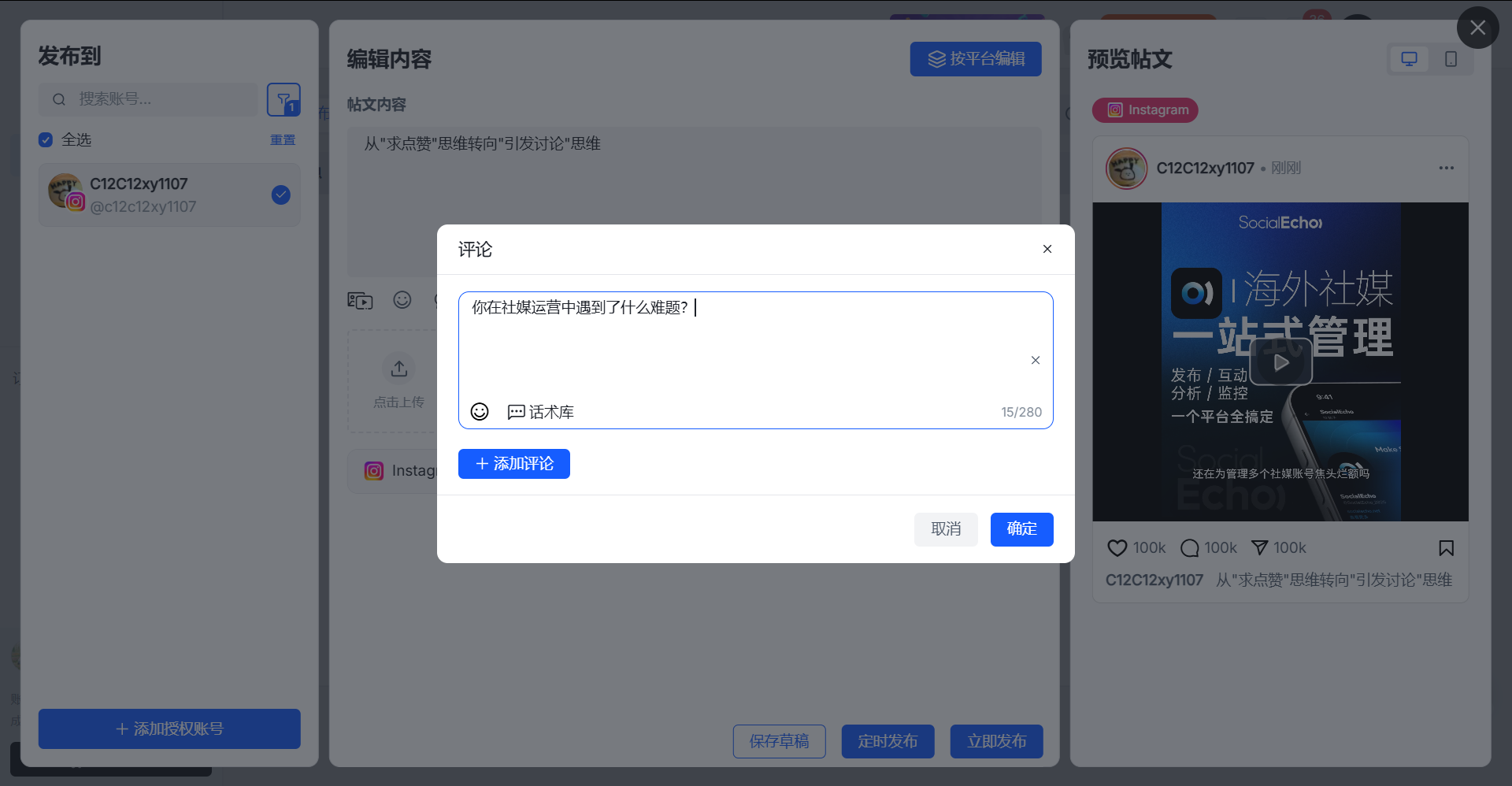
- Encouraging proactive interaction: Shifting from a "like-seeking" mindset to a "discussion-initiating" mindset, SocialEcho supports one-click posting of comments along with content , sending interactive content and videos simultaneously to help you ignite the comment section.
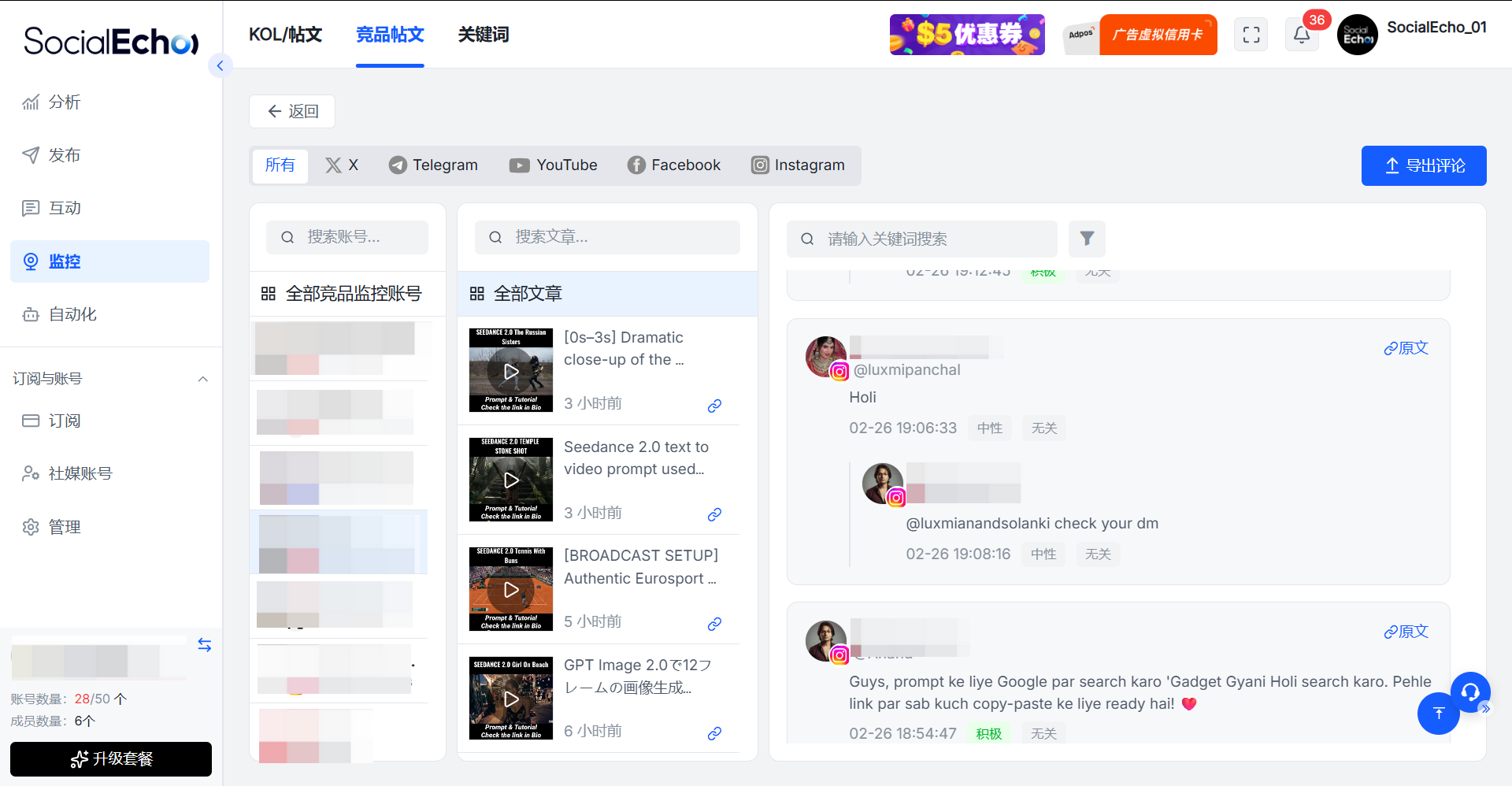
- Build an account network: Proactively comment and interact with accounts in the same field. We recommend SocialEcho's monitoring and commenting features to follow multiple accounts in the same field, get their latest updates, and use TikTok comment management tools to promptly reply to users. Establish a mature account network in one stop.
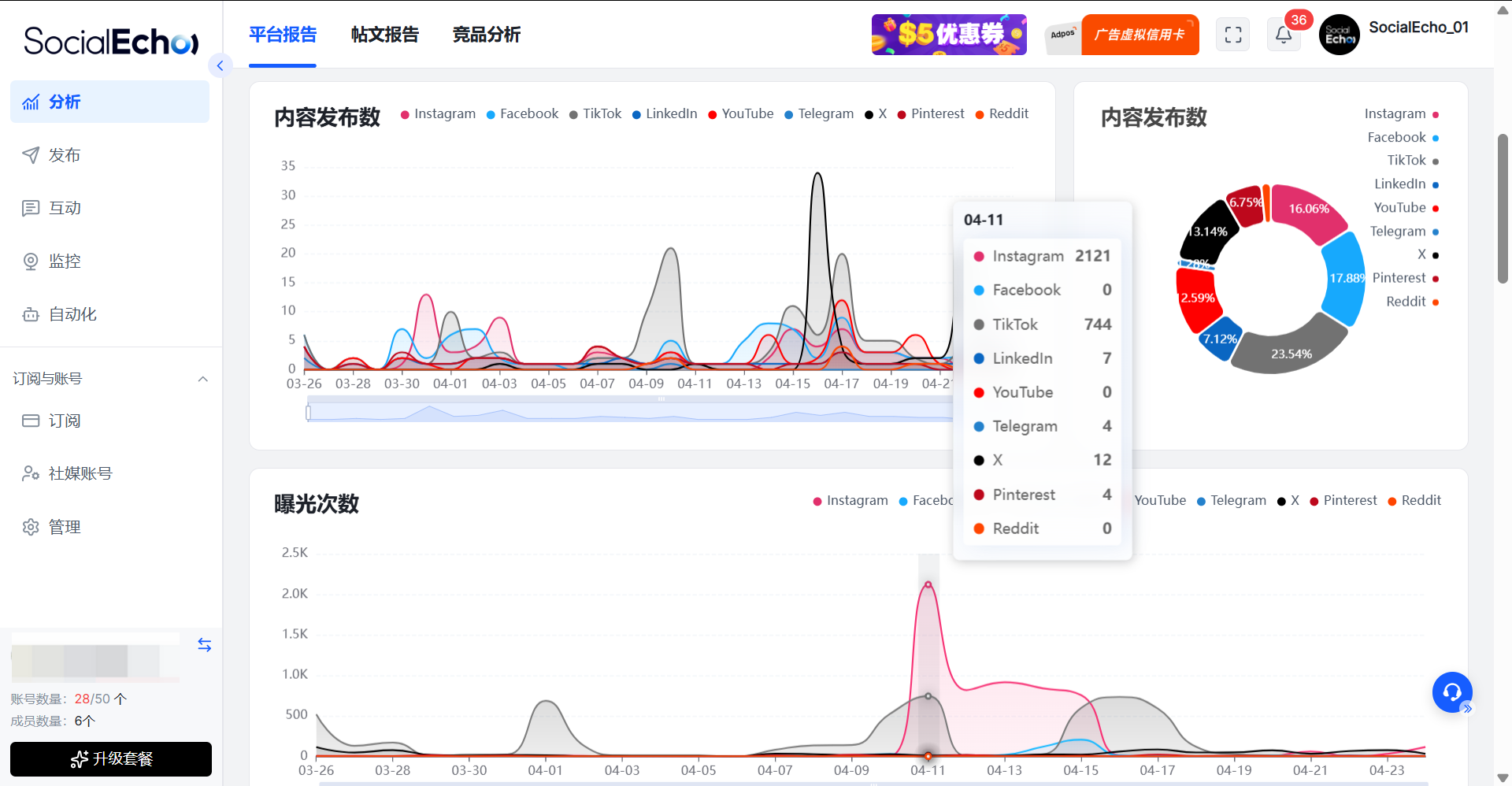
- Regularly review data: Backend data from various platforms acts as a "voting box" for the algorithm. Use Facebook's data analytics tools to analyze content performance over the past 30 days. Which content received high exposure? Which content generated good engagement? Which time periods yielded the best results?
- Multi-platform adaptation: The same content adapts to different platform styles. SocialEcho's AI creation function supports generating different copy based on the tone and format requirements of different platforms, achieving differentiated adaptation.
9. Conclusion
Social media algorithms in 2026 will be smarter, more complex, but also fairer. Understanding algorithms isn't about "cheating the system," but about better serving your audience. When your content truly creates value for users, algorithms will become your amplifier, not your obstacle.
Try our social media management platform for 7 days free. Manage content across multiple platforms in one place and monitor the impact of algorithm changes on your content in real time, ensuring that every piece of your content receives the exposure it deserves.
10. FAQ
Q1: The algorithm changes every year. Should I keep up with the latest changes?
It's advisable not to blindly follow changes. Instead of chasing every algorithm update, focus on creating highly interactive and valuable content.
Q2: How long after posting on a platform can I see the initial feedback from the algorithm?
TikTok: within 30 minutes; Instagram: 1-2 hours; YouTube: 24-48 hours; LinkedIn: 1-2 days.
Q3: Will buying likes or followers be penalized by the algorithm?
Definitely. All platforms have anti-cheating mechanisms, and abnormal interaction data will trigger algorithmic review. Once identified, the consequences range from content ranking reduction to account suspension.
Q4: Which content format does the algorithm prefer?
Overall, all platforms are supporting short video platforms (Reels, TikTok, Shorts), and the traffic dividend is still present.
Q5: Does account weight affect new content recommendations?
Yes, but the weight is lower than you might imagine. Emerging platforms have largely achieved decentralization.
Q6: How can I monitor whether my content matches the algorithm's preferences?
Key monitoring indicators include: completion rate, replay rate, sharing rate, save rate, and interaction rate.
;}.cls-2{fill:%230868f7;}.cls-3{fill:url(%23未命名的渐变_44);}.cls-4{fill:%23333;}%3c/style%3e%3clinearGradient%20id='未命名的渐变_8'%20x1='33.73'%20y1='100.61'%20x2='-0.03'%20y2='-1.06'%20gradientUnits='userSpaceOnUse'%3e%3cstop%20offset='0'%20stop-color='%237ae9fb'/%3e%3cstop%20offset='0.67'%20stop-color='%232b90f8'/%3e%3cstop%20offset='1'%20stop-color='%230868f7'/%3e%3c/linearGradient%3e%3clinearGradient%20id='未命名的渐变_44'%20x1='27.86'%20y1='18.67'%20x2='68.36'%20y2='22.22'%20gradientUnits='userSpaceOnUse'%3e%3cstop%20offset='0'%20stop-color='%235ac7f2'/%3e%3cstop%20offset='1'%20stop-color='%230868f7'/%3e%3c/linearGradient%3e%3c/defs%3e%3cpath%20class='cls-1'%20d='M29,28.74V81.91l-9.51-3.68v0L8.52,74A7.17,7.17,0,0,1,4,67.32V24.54A3.76,3.76,0,0,1,9.08,21Z'/%3e%3cpath%20class='cls-2'%20d='M68.09,78.07a13.15,13.15,0,0,1-17.9,12.06L29,81.91h0V28.74L50.19,37A13.17,13.17,0,0,0,68.08,25.3h0Z'/%3e%3cpath%20class='cls-3'%20d='M68.08,25.3a13.19,13.19,0,0,1-6.73,10.87A13.09,13.09,0,0,1,50.19,37L29,28.74V6A3.76,3.76,0,0,1,34.1,2.52l25.59,9.91A13.22,13.22,0,0,1,68.08,25.3Z'/%3e%3cpath%20class='cls-4'%20d='M129.06,81.76a4.33,4.33,0,0,1-3.19-1.31,4.4,4.4,0,0,1-1.31-3.24V56.86H97.65V77.21a4.36,4.36,0,0,1-1.35,3.2A4.68,4.68,0,0,1,93,81.76a4.32,4.32,0,0,1-3.19-1.31,4.37,4.37,0,0,1-1.32-3.24V27.27A4.58,4.58,0,0,1,89.83,24a4.59,4.59,0,0,1,7.82,3.27V48.15h26.91V27.27A4.58,4.58,0,0,1,125.91,24a4.59,4.59,0,0,1,7.82,3.27V77.21a4.37,4.37,0,0,1-1.36,3.2A4.65,4.65,0,0,1,129.06,81.76Z'/%3e%3cpath%20class='cls-4'%20d='M163.77,81.66c-6.57,0-11.76-1.92-15.44-5.7s-5.54-9.07-5.54-15.74a26.76,26.76,0,0,1,2.09-10.43,17.72,17.72,0,0,1,6.67-8.06,19.15,19.15,0,0,1,10.68-2.95,19,19,0,0,1,10.46,2.8,18.7,18.7,0,0,1,6.55,7.36,22.53,22.53,0,0,1,2.36,10.28A4.51,4.51,0,0,1,177,63.77H152.23a10.8,10.8,0,0,0,3.49,6.65c2,1.68,4.88,2.52,8.66,2.52a22.25,22.25,0,0,0,7.54-1.21c.74-.3,1.55-.67,2.37-1.07a3.75,3.75,0,0,1,1.84-.4,4.09,4.09,0,0,1,3,1.15,4,4,0,0,1,1.12,3,4.38,4.38,0,0,1-2.58,3.82,32.34,32.34,0,0,1-6.36,2.61A28.67,28.67,0,0,1,163.77,81.66ZM172.4,55.9a9.72,9.72,0,0,0-1.63-4.56A9.9,9.9,0,0,0,167,48a10.38,10.38,0,0,0-4.64-1.14,12,12,0,0,0-4.77,1.06,9.54,9.54,0,0,0-4.89,5.66,11.78,11.78,0,0,0-.51,2.3Z'/%3e%3cpath%20class='cls-4'%20d='M193,81.64a4.49,4.49,0,0,1-4.51-4.55V27.28A4.58,4.58,0,0,1,189.84,24a4.48,4.48,0,0,1,3.28-1.36A4.36,4.36,0,0,1,196.35,24a4.46,4.46,0,0,1,1.31,3.31V77.09a4.34,4.34,0,0,1-1.35,3.2A4.67,4.67,0,0,1,193,81.64Z'/%3e%3cpath%20class='cls-4'%20d='M263.79,81.71a5.7,5.7,0,0,1-4.2-1.74,5.76,5.76,0,0,1-1.73-4.19V27.37a4.58,4.58,0,0,1,1.35-3.27A4.59,4.59,0,0,1,267,27.37V72.53h24a4.58,4.58,0,0,1,3.27,7.82A4.66,4.66,0,0,1,291,81.71Z'/%3e%3cpath%20class='cls-4'%20d='M424.48,81.74a4.71,4.71,0,0,1-2.71-.88,5.43,5.43,0,0,1-1-1l-.07-.09-12.41-17-5.41,5v9.44a4.31,4.31,0,0,1-1.36,3.19,4.66,4.66,0,0,1-3.3,1.36A4.29,4.29,0,0,1,395,80.42a4.36,4.36,0,0,1-1.32-3.23V27.37A4.58,4.58,0,0,1,395,24.1a4.52,4.52,0,0,1,6.58.12,4.54,4.54,0,0,1,1.24,3.15V56.31l17.72-16.38.05,0a4.8,4.8,0,0,1,2.94-1.11,4.4,4.4,0,0,1,3.27,1.2,4.57,4.57,0,0,1,1.2,3.27,4.44,4.44,0,0,1-.77,2.33,7.45,7.45,0,0,1-1.43,1.65l-11,9.64,13.34,17.68a5,5,0,0,1,1,2.71,4.12,4.12,0,0,1-1.36,3.24A4.64,4.64,0,0,1,424.48,81.74Z'/%3e%3cpath%20class='cls-4'%20d='M317.93,81.76a21.5,21.5,0,1,1,21.17-21.5A21.37,21.37,0,0,1,317.93,81.76Zm0-34.1a12.61,12.61,0,1,0,12.42,12.6A12.52,12.52,0,0,0,317.93,47.66Z'/%3e%3cpath%20class='cls-4'%20d='M212.18,101.22a4.12,4.12,0,0,1-3.05-1.26,4.17,4.17,0,0,1-1.26-3.1V43.34a4.37,4.37,0,0,1,1.3-3.14,4.26,4.26,0,0,1,3.13-1.3,4.19,4.19,0,0,1,3.1,1.26,4.32,4.32,0,0,1,1.26,3.16,20.77,20.77,0,0,1,13-4.54,21.51,21.51,0,0,1,0,43,20.51,20.51,0,0,1-13-4.57V96.86a4.15,4.15,0,0,1-1.3,3.06A4.5,4.5,0,0,1,212.18,101.22Zm17.43-53.63c-6.23,0-12.93,4.11-12.93,12.72a12.73,12.73,0,0,0,25.46,0A12.71,12.71,0,0,0,229.61,47.59Z'/%3e%3cpath%20class='cls-4'%20d='M365.76,81.76a21.5,21.5,0,1,1,21.18-21.5A21.37,21.37,0,0,1,365.76,81.76Zm0-34.1a12.61,12.61,0,1,0,12.42,12.6A12.52,12.52,0,0,0,365.76,47.66Z'/%3e%3c/svg%3e)