
Complete SOP for Social Media Comment Management: How to Turn Every Comment into a Sales Opportunity
introduction
There are three comments in your comment section:
First question: "Is this product really good?"
Second comment: "I bought it, and it hasn't arrived after 5 days. Bad review!"
Article 3: "Which is better, this one or brand X?"
How did you handle it?
A. Simply reply with "Thanks for your support". B. Only reply to the first comment and questions, ignoring negative comments. C. Carefully analyze the value of each comment and develop different reply strategies.
Most brands choose A or B. The truly successful brands choose C.
The comments section is the most direct point of contact between brands and users on social media. Every comment, whether it's a praise, an inquiry, or a complaint, is an opportunity to build a relationship.
In this article, we will explain the complete Standard Operating Procedure (SOP) for comment management.
I. Why is comment management so important?
Many brands have a misconception about the comments section: that it's the "customer service" department's job and the marketing team doesn't need to worry about it.
This understanding has two problems:
First, the review section is an extension of the brand image. Before deciding whether to buy from a brand, users will browse its review section. If your review section is full of negative reviews that are ignored or official replies that are perfunctory, users will simply close the page and leave.
Secondly, the comment section acts as a content amplifier. A brilliant comment reply can give your brand additional exposure. Some users specifically follow comment section interactions, treating interesting replies as "entertainment content."
Third, the comments section is a crucial point for sales conversion. Before making a purchase decision, users trust what other users say more than what the brand itself says. If there are many genuine positive discussions in the comments section, users are more willing to buy.
II. Comment Classification and Processing Priority
Not all comments should be handled the same way. You need to establish a categorization system to assign different processing priorities to different types of comments.
2.1 Comment Categories
Category 1: Sales Consultant
These kinds of comments are directly related to the purchase decision. Users ask about price, features, and how to use the product—they are on the verge of making a purchase decision.
Typical characteristics:
- How much is this?
- How does this compare to XX?
- Do you support delivery to XX?
- Where can I buy it?
Processing Priority: Highest. These are the most valuable comments; every single one should be responded to carefully, with the goal of converting them into actual sales.
Category Two: Brand Interaction
These kinds of comments don't directly ask to buy; instead, they express opinions about the brand, participate in brand-related discussions, or try to "get closer" to the brand.
Typical characteristics:
- "I support you!"
- "Finally, this brand has joined!"
- "I'm a long-time fan of yours."
Processing Priority: High. These comments express user approval of the brand; ignoring them will disappoint users. A good response can deepen user brand loyalty.
Category 3: Problem/Complaint Type
These kinds of comments are users expressing dissatisfaction—it could be a complaint about the product, a grievance about the service, or dissatisfaction with the brand.
Typical characteristics:
- "I've waited 5 days and it still hasn't arrived."
- "Product does not match description"
- "The customer service attitude is terrible."
Priority: Highest. If left unaddressed, negative sentiment will spread in the comments section; if handled well, complaining users may become the brand's most loyal fans.
Category 4: Casual Chatting
These kinds of comments are not directly related to purchasing decisions or brands; they may just be casual remarks from users.
Typical characteristics:
- "Hahaha, that's hilarious!"
- "What an amazing combination!"
- "This photo is terrible."
Processing priority: low to medium. You can reply selectively; if a reply adds interest, you can interact occasionally.
Category 5: Malicious Attack Type
The purpose of these comments is not communication, but attack—they could be paid trolls from competitors, haters, or just plain trolls.
Typical characteristics:
- Unwarranted insults and personal attacks
- This is clearly a malicious smear campaign.
- Negative evaluations that are completely inconsistent with the facts
Priority of handling: depends on the severity. If it's just ordinary trolling, it can be ignored; if it involves a serious brand crisis, it needs to be reported and dealt with immediately.
2.2 Processing Time Standards
| Comment type | First response time | Processing strategy |
|---|---|---|
| Sales Consulting | Within 30 minutes | Fast, professional, conversion-oriented |
| Problem Complaint Type | Within 1 hour | Sincere apology and resolution |
| Brand Interactive | Within 4 hours | Sincere thanks and enhanced relationship |
| Ordinary casual conversation | Within 24 hours | Selective response |
| malicious attack type | Depending on the situation | Ignore or report |
III. Conversion Techniques for Sales Consultation Reviews
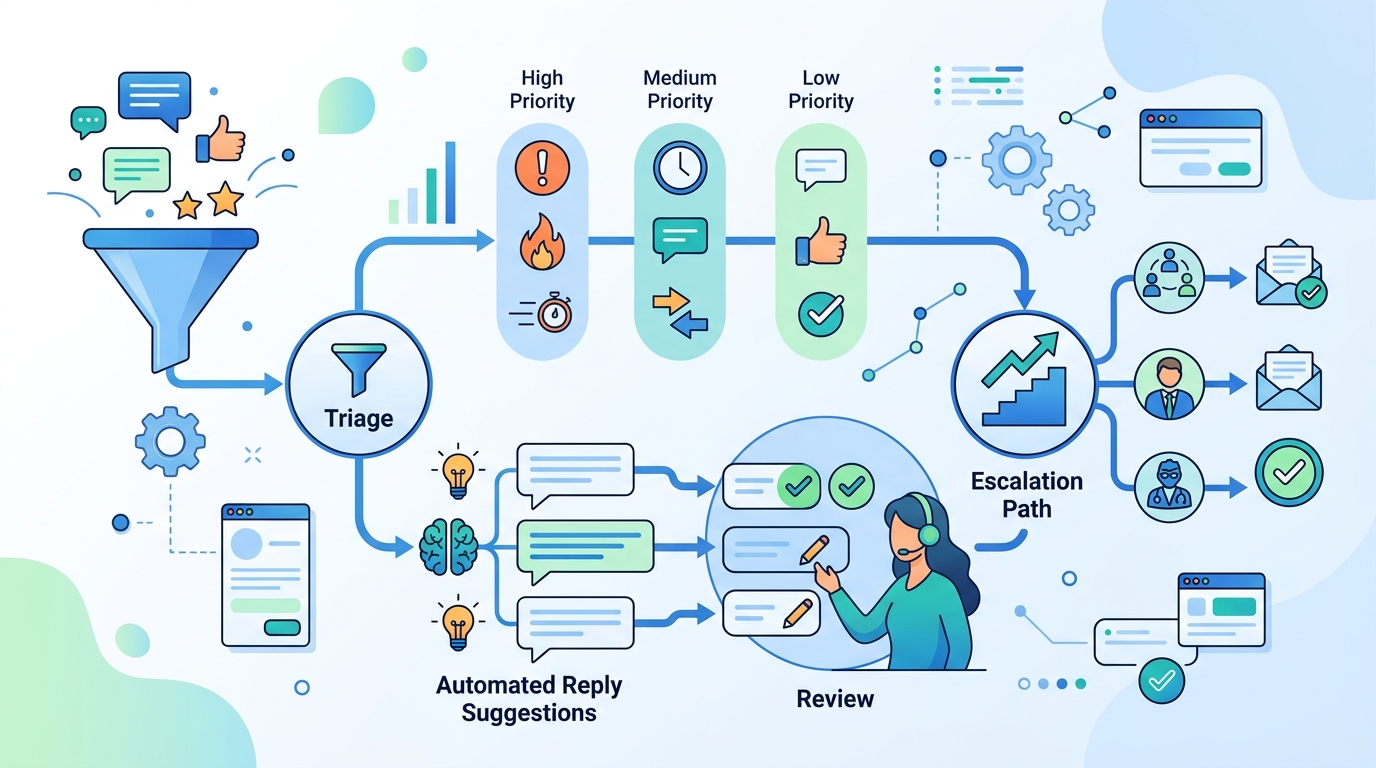 Sales-related inquiries are the core battleground of comment management. Behind every inquiry-based comment lies a potential buyer.
3.1 Response speed
Speed is paramount. On social media, users are accustomed to instant responses. If you ask a question in the comments and the brand doesn't reply for 10 minutes, you've probably already left the page.
Ideal response time: within 30 minutes.
This means you need to:
- Set up comment notifications to receive alerts immediately.
- There are dedicated personnel responsible for monitoring comments.
- Prepare response templates for frequently asked questions.
Use comment management tools to set up keyword-triggered notifications to ensure no sales inquiries are missed.
3.2 Response Script
There are several principles to keep in mind when replying to sales-related comments:
Principle 1: Answer the question first, then guide the action.
Instead of simply saying "Thank you for your inquiry, welcome to purchase," directly answer the user's questions and then naturally guide them to the next step.
❌ A poor response: "Hello, thank you for your inquiry~"
✅ Okay, reply: "Hello! This product supports nationwide delivery, with a default delivery time of 3-5 days. You can also click the link to check the specific delivery time."
Principle Two: Provide clear next steps
Every response to a sales inquiry should include a clear CTA (call to action).
❌ A poor response: "Hello, is there anything else you'd like to know?"
✅ Okay, reply: "Hello! If you have any questions, you can click the link to contact our customer service. Also, there are exclusive offers during the new product launch period; mentioning 'comments' when placing your order will get you an extra gift."
Principle Three: Maintain a conversational tone; avoid being too "official".
Replies in the comments section don't need to be as formal as official documents. You can express yourself in a more conversational and warm way.
❌ A poor response: "Thank you for your inquiry. We will provide you with the best service."
✅ Good reply: "Thank you for your question! This is indeed our best-selling product. If you're unsure, you can check out other users' reviews first."
IV. The Correct Way to Handle Complaints and Comments
A well-handled complaint can turn an angry user into a loyal brand fan. A poorly handled one can escalate into a public relations crisis.
4.1 Gold Handling Principles
Principle 1: Apologize sincerely, do not make excuses.
When users complain, they don't need you to explain why there was a problem. What they need is for you to acknowledge the problem and solve it.
❌ A poor response: "We are very sorry for the inconvenience. Our product quality is strictly controlled, and this problem may have occurred during transportation."
✅ Okay, a positive response: "We are very sorry for the inconvenience! We understand how frustrating it is to wait so long. Please send us your order number via private message, and we will process it immediately."
Principle Two: Shift the conversation to private messages
The comments section is not the place to handle complex issues. Express your apology and sincerity in resolving the problem in a public reply, then move the conversation to private messages to continue communicating the details.
Principle Three: Solve the problem and provide compensation.
If it is indeed a brand issue, in addition to an apology, actual compensation should be provided—such as a refund, exchange, or coupons. Don't let users feel that "it's pointless to say anything."
4.2 Scripts for handling typical complaint scenarios
Scenario 1: Logistics Issues
❌ A poor response: "We apologize for the logistics delay. Delivery times are unpredictable during the pandemic; please understand."
✅ Optimal reply: "We're very sorry your package hasn't arrived yet! This shouldn't happen. Please send us your order number via private message, and we'll prioritize processing it from our warehouse and send you a coupon as compensation."
Scenario 2: Product quality issues
❌ A poor response: "Our products are all tested for quality. If you have any questions, please contact customer service."
✅ Optimal response: "We are very sorry that the product you received has a problem! We completely understand your dissatisfaction. Please send us your order number and a description of the product problem via private message, and we will arrange a return or exchange and cover all costs."
V. Advanced Techniques for Managing Comment Sections
5.1 Reuse of Comment Section Content
The comments section is often filled with users sharing their experiences and creative combinations—all of which are valuable UGC content.
You can do this:
- Collect genuine user reviews and showcase them on other channels.
- Take screenshots of interesting comments and interactions, and create content for secondary dissemination.
- Displaying user reviews on the product details page increases credibility.
Use data analytics tools to track interaction data in the comment section, identify highly interactive comments, and reuse them.
5.2 Design the interactive comment section
Comment sections are not just for "passive replies," but can also be actively "designed."
Tip 1: Question-based posts
Post a thread with a question, inviting users to discuss it in the comments section. For example, "In what scenarios do you think this product is best suited?" Such posts naturally attract a lot of comments, and those comments are likely to contain potential sales opportunities.
Tip 2: Pin the comment section
Pin the most insightful comments to the top so new visitors immediately see a positive image of the brand. You can also use these pinned comments as a "FAQ" section to answer the most frequently asked questions.
Tip 3: Comment and Win Prizes
Launch a "Share Your Purchase in the Comments Section and Win Prizes" campaign to encourage users to share their buying experiences. This not only increases interaction but also helps the brand accumulate genuine product reviews.
5.3 Comment Section Data Tracking
The operation of the comment section also requires data support.
Metrics to be tracked:
- Number of comments (daily/weekly/monthly)
- Comment type distribution (inquiry/complaint/interaction/other)
- Average response time
- Conversion rate (sales generated from reviews)
- User satisfaction after handling negative comments
VI. Use tools to improve comment management efficiency
Managing comment sections across multiple platforms manually is simply not efficient.
Comment management tools can help you:
- Unified management of comments across multiple platforms (Instagram, TikTok, Facebook, YouTube, etc.)
- Set up automatic notifications for keywords.
- Preset reply templates for frequently asked questions
- Use AI to help filter high-value comments
AI-powered comment replies can help you:
- Use AI to automatically answer frequently asked questions.
- Set up automatic reply rules to save manual time.
- Comments that AI cannot process will be automatically transferred to human reviewers.
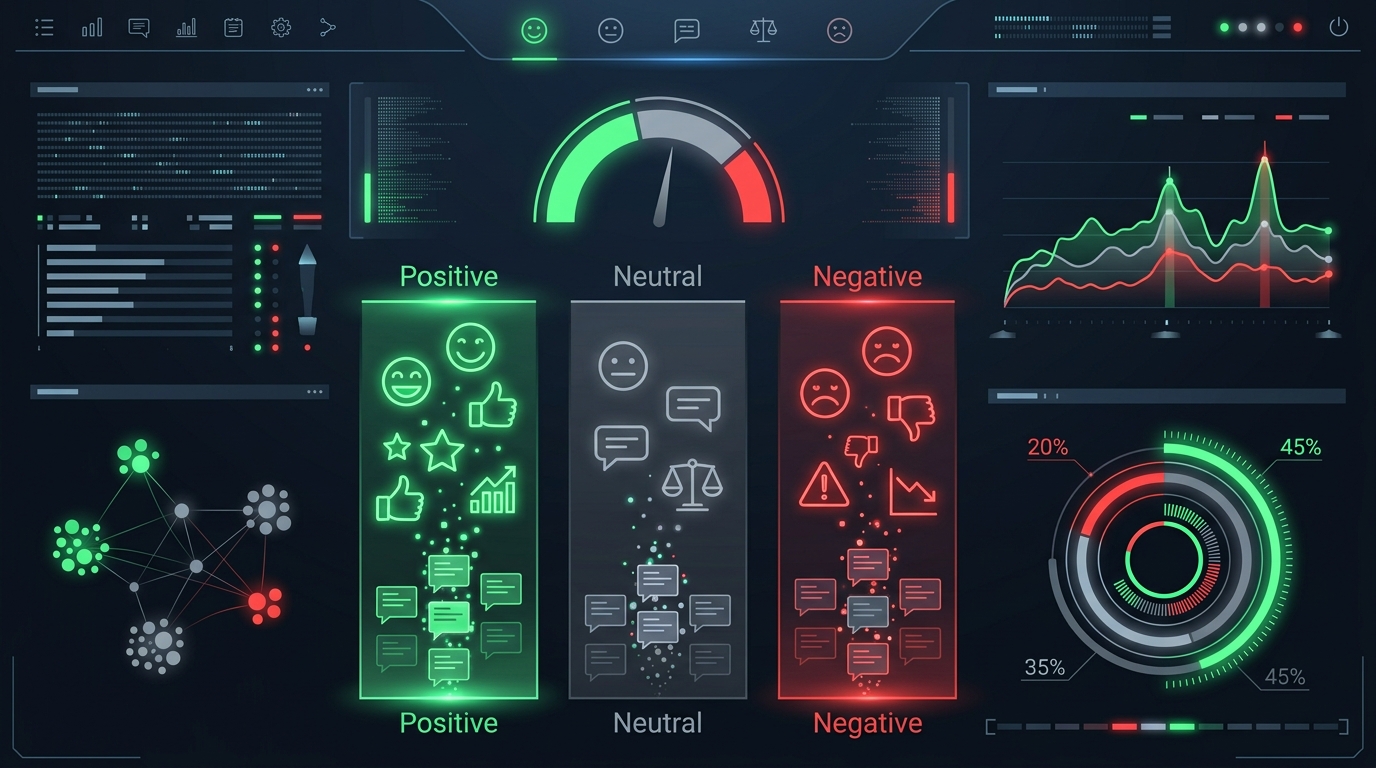
Sentiment analysis tools can help you:
- Automatically identify the sentiment of comments (positive/neutral/negative).
- Set up negative comment warnings
- Analyze the overall sentiment trend in the comment section
VII. Common Mistakes in Comment Management
Mistake 1: Only replying to "good" comments
Many brands only reply to positive reviews in their comment sections, ignoring comments that raise questions or criticisms.
This might make new users who see the comments section think: This brand only listens to praise and ignores all problems.
The correct approach: Every comment deserves a reply, including criticism. Replies to critical comments are especially important; handled well, they can turn an enemy into a friend.
Mistake 2: The reply was too official and empty.
"Thank you for your support, we will continue to work hard!" This kind of reply seems "correct," but it's worthless. Users won't feel valued because of this kind of reply.
Correct approach: Provide specific and valuable responses based on the comments.
Mistake 3: Arguing with users in the comments section
When users give negative comments or criticisms, some brands respond in a very defensive manner, even arguing with users in the comments section.
This is always wrong. No matter how outrageous a user's statement is, never refute it in public.
The correct approach: Reply sincerely, acknowledge the problem, and move the conversation to a private message.
FAQ
Q1: What should I do if I can't reply to all the comments every day?
A1: First, use comment management tools to set up keyword filters to prioritize comments that truly require immediate attention (sales inquiries, complaints). Second, use AI to automatically respond to common questions. Third, assess whether additional staff is needed. Comment quality is more important than quantity—it's better to carefully reply to 10 valuable comments than to superficially reply to 100 meaningless ones.
Q2: How do I deal with malicious comments?
A2: Handle according to the situation. If it's just a regular troll saying something unpleasant, you can ignore it and not reply—the more you reply, the more aggressive they'll become. If it involves spreading rumors, personal attacks, or a serious brand crisis, report it immediately and prepare a public relations response. Under no circumstances should you engage in a public argument with an attacker.
Q3: How to get users to give positive reviews voluntarily?
A3: Positive reviews aren't something you beg for, they're something you "earn." When your product is truly good and your service is genuinely excellent, users will naturally be willing to leave positive reviews. However, you can: 1) proactively invite users to leave reviews after their purchase; 2) design "share your purchase and get a reward" activities to encourage users to share; 3) include a thank-you card and review invitation in the packaging. Note: Never "buy" positive reviews or fake reviews; this is illegal and will be punished by the platform.
Q4: What if someone in the comments section says the product is bad, but it's actually because they used it incorrectly?
A4: First, determine: Is this a genuine user problem or improper use? If it's a defect in the product itself, acknowledge and improve it. If it's due to user misuse, politely point out the problem and provide guidance on the correct usage. Don't directly say, "You're using it wrong"—use a more tactful approach: "It seems there might be a small problem with how you're using it. Let me explain the correct usage method in detail..."
Q5: How to evaluate the effectiveness of comment section management?
A5: Track several key metrics: 1) Comment engagement rate (number of comments/exposure); 2) Sales conversion rate (GMV generated from the comment section); 3) User satisfaction after handling negative comments; 4) Average response time in the comment section. It is recommended to conduct comment data analysis weekly and promptly optimize any issues identified.
Conclusion
The comments section is not an "accessory" to a brand, but one of the most important battlegrounds for a brand on social media.
Every comment is an opportunity—a sales opportunity, a relationship-building opportunity, and a word-of-mouth opportunity. A brand that manages its comment section well will find that the comment section becomes a "free salesperson" for the brand.
Establish a systematic comment management SOP, assign different processing strategies to different types of comments, and use tools to improve efficiency—by doing these things, your comment section will transform from a "burden" into an "asset."
Want to manage comments more efficiently and turn every comment into a sales opportunity? Try SocialEcho's comment management tool , which features AI-assisted filtering, automated replies, and unified management.
Free trial: 7-day trial of SocialEcho comment management tool
Word count: Approximately 3600 words
;}.cls-2{fill:%230868f7;}.cls-3{fill:url(%23未命名的渐变_44);}.cls-4{fill:%23333;}%3c/style%3e%3clinearGradient%20id='未命名的渐变_8'%20x1='33.73'%20y1='100.61'%20x2='-0.03'%20y2='-1.06'%20gradientUnits='userSpaceOnUse'%3e%3cstop%20offset='0'%20stop-color='%237ae9fb'/%3e%3cstop%20offset='0.67'%20stop-color='%232b90f8'/%3e%3cstop%20offset='1'%20stop-color='%230868f7'/%3e%3c/linearGradient%3e%3clinearGradient%20id='未命名的渐变_44'%20x1='27.86'%20y1='18.67'%20x2='68.36'%20y2='22.22'%20gradientUnits='userSpaceOnUse'%3e%3cstop%20offset='0'%20stop-color='%235ac7f2'/%3e%3cstop%20offset='1'%20stop-color='%230868f7'/%3e%3c/linearGradient%3e%3c/defs%3e%3cpath%20class='cls-1'%20d='M29,28.74V81.91l-9.51-3.68v0L8.52,74A7.17,7.17,0,0,1,4,67.32V24.54A3.76,3.76,0,0,1,9.08,21Z'/%3e%3cpath%20class='cls-2'%20d='M68.09,78.07a13.15,13.15,0,0,1-17.9,12.06L29,81.91h0V28.74L50.19,37A13.17,13.17,0,0,0,68.08,25.3h0Z'/%3e%3cpath%20class='cls-3'%20d='M68.08,25.3a13.19,13.19,0,0,1-6.73,10.87A13.09,13.09,0,0,1,50.19,37L29,28.74V6A3.76,3.76,0,0,1,34.1,2.52l25.59,9.91A13.22,13.22,0,0,1,68.08,25.3Z'/%3e%3cpath%20class='cls-4'%20d='M129.06,81.76a4.33,4.33,0,0,1-3.19-1.31,4.4,4.4,0,0,1-1.31-3.24V56.86H97.65V77.21a4.36,4.36,0,0,1-1.35,3.2A4.68,4.68,0,0,1,93,81.76a4.32,4.32,0,0,1-3.19-1.31,4.37,4.37,0,0,1-1.32-3.24V27.27A4.58,4.58,0,0,1,89.83,24a4.59,4.59,0,0,1,7.82,3.27V48.15h26.91V27.27A4.58,4.58,0,0,1,125.91,24a4.59,4.59,0,0,1,7.82,3.27V77.21a4.37,4.37,0,0,1-1.36,3.2A4.65,4.65,0,0,1,129.06,81.76Z'/%3e%3cpath%20class='cls-4'%20d='M163.77,81.66c-6.57,0-11.76-1.92-15.44-5.7s-5.54-9.07-5.54-15.74a26.76,26.76,0,0,1,2.09-10.43,17.72,17.72,0,0,1,6.67-8.06,19.15,19.15,0,0,1,10.68-2.95,19,19,0,0,1,10.46,2.8,18.7,18.7,0,0,1,6.55,7.36,22.53,22.53,0,0,1,2.36,10.28A4.51,4.51,0,0,1,177,63.77H152.23a10.8,10.8,0,0,0,3.49,6.65c2,1.68,4.88,2.52,8.66,2.52a22.25,22.25,0,0,0,7.54-1.21c.74-.3,1.55-.67,2.37-1.07a3.75,3.75,0,0,1,1.84-.4,4.09,4.09,0,0,1,3,1.15,4,4,0,0,1,1.12,3,4.38,4.38,0,0,1-2.58,3.82,32.34,32.34,0,0,1-6.36,2.61A28.67,28.67,0,0,1,163.77,81.66ZM172.4,55.9a9.72,9.72,0,0,0-1.63-4.56A9.9,9.9,0,0,0,167,48a10.38,10.38,0,0,0-4.64-1.14,12,12,0,0,0-4.77,1.06,9.54,9.54,0,0,0-4.89,5.66,11.78,11.78,0,0,0-.51,2.3Z'/%3e%3cpath%20class='cls-4'%20d='M193,81.64a4.49,4.49,0,0,1-4.51-4.55V27.28A4.58,4.58,0,0,1,189.84,24a4.48,4.48,0,0,1,3.28-1.36A4.36,4.36,0,0,1,196.35,24a4.46,4.46,0,0,1,1.31,3.31V77.09a4.34,4.34,0,0,1-1.35,3.2A4.67,4.67,0,0,1,193,81.64Z'/%3e%3cpath%20class='cls-4'%20d='M263.79,81.71a5.7,5.7,0,0,1-4.2-1.74,5.76,5.76,0,0,1-1.73-4.19V27.37a4.58,4.58,0,0,1,1.35-3.27A4.59,4.59,0,0,1,267,27.37V72.53h24a4.58,4.58,0,0,1,3.27,7.82A4.66,4.66,0,0,1,291,81.71Z'/%3e%3cpath%20class='cls-4'%20d='M424.48,81.74a4.71,4.71,0,0,1-2.71-.88,5.43,5.43,0,0,1-1-1l-.07-.09-12.41-17-5.41,5v9.44a4.31,4.31,0,0,1-1.36,3.19,4.66,4.66,0,0,1-3.3,1.36A4.29,4.29,0,0,1,395,80.42a4.36,4.36,0,0,1-1.32-3.23V27.37A4.58,4.58,0,0,1,395,24.1a4.52,4.52,0,0,1,6.58.12,4.54,4.54,0,0,1,1.24,3.15V56.31l17.72-16.38.05,0a4.8,4.8,0,0,1,2.94-1.11,4.4,4.4,0,0,1,3.27,1.2,4.57,4.57,0,0,1,1.2,3.27,4.44,4.44,0,0,1-.77,2.33,7.45,7.45,0,0,1-1.43,1.65l-11,9.64,13.34,17.68a5,5,0,0,1,1,2.71,4.12,4.12,0,0,1-1.36,3.24A4.64,4.64,0,0,1,424.48,81.74Z'/%3e%3cpath%20class='cls-4'%20d='M317.93,81.76a21.5,21.5,0,1,1,21.17-21.5A21.37,21.37,0,0,1,317.93,81.76Zm0-34.1a12.61,12.61,0,1,0,12.42,12.6A12.52,12.52,0,0,0,317.93,47.66Z'/%3e%3cpath%20class='cls-4'%20d='M212.18,101.22a4.12,4.12,0,0,1-3.05-1.26,4.17,4.17,0,0,1-1.26-3.1V43.34a4.37,4.37,0,0,1,1.3-3.14,4.26,4.26,0,0,1,3.13-1.3,4.19,4.19,0,0,1,3.1,1.26,4.32,4.32,0,0,1,1.26,3.16,20.77,20.77,0,0,1,13-4.54,21.51,21.51,0,0,1,0,43,20.51,20.51,0,0,1-13-4.57V96.86a4.15,4.15,0,0,1-1.3,3.06A4.5,4.5,0,0,1,212.18,101.22Zm17.43-53.63c-6.23,0-12.93,4.11-12.93,12.72a12.73,12.73,0,0,0,25.46,0A12.71,12.71,0,0,0,229.61,47.59Z'/%3e%3cpath%20class='cls-4'%20d='M365.76,81.76a21.5,21.5,0,1,1,21.18-21.5A21.37,21.37,0,0,1,365.76,81.76Zm0-34.1a12.61,12.61,0,1,0,12.42,12.6A12.52,12.52,0,0,0,365.76,47.66Z'/%3e%3c/svg%3e)