
Telegram Data Analytics and ROI Tracking: Driving Marketing Decisions with Data
introduction
Zhao Lin, the digital marketing director, has 80,000 subscribers on her Telegram channel, posts five times a week, and her engagement rate seems quite high. But when her boss asked her, "What has been your return on investment on Telegram over the past six months?" she was speechless for a moment.
Followers are growing, content is being posted, but where is the conversion chain? How many people are being directed from Telegram to their private domains? How much revenue is ultimately generated?
This isn't a problem unique to Zhao Lin. In the field of social media marketing, there are very few marketing teams that can truly perform quantitative analysis and ROI tracking. Telegram, in particular, has relatively limited native data analysis capabilities.
This article will help you build a complete Telegram data analysis system, addressing: How to track data across the entire journey from impressions to conversions? How to calculate the true ROI of marketing campaigns? How to continuously improve marketing effectiveness through data-driven optimization?
- Why is Telegram data analysis so important?
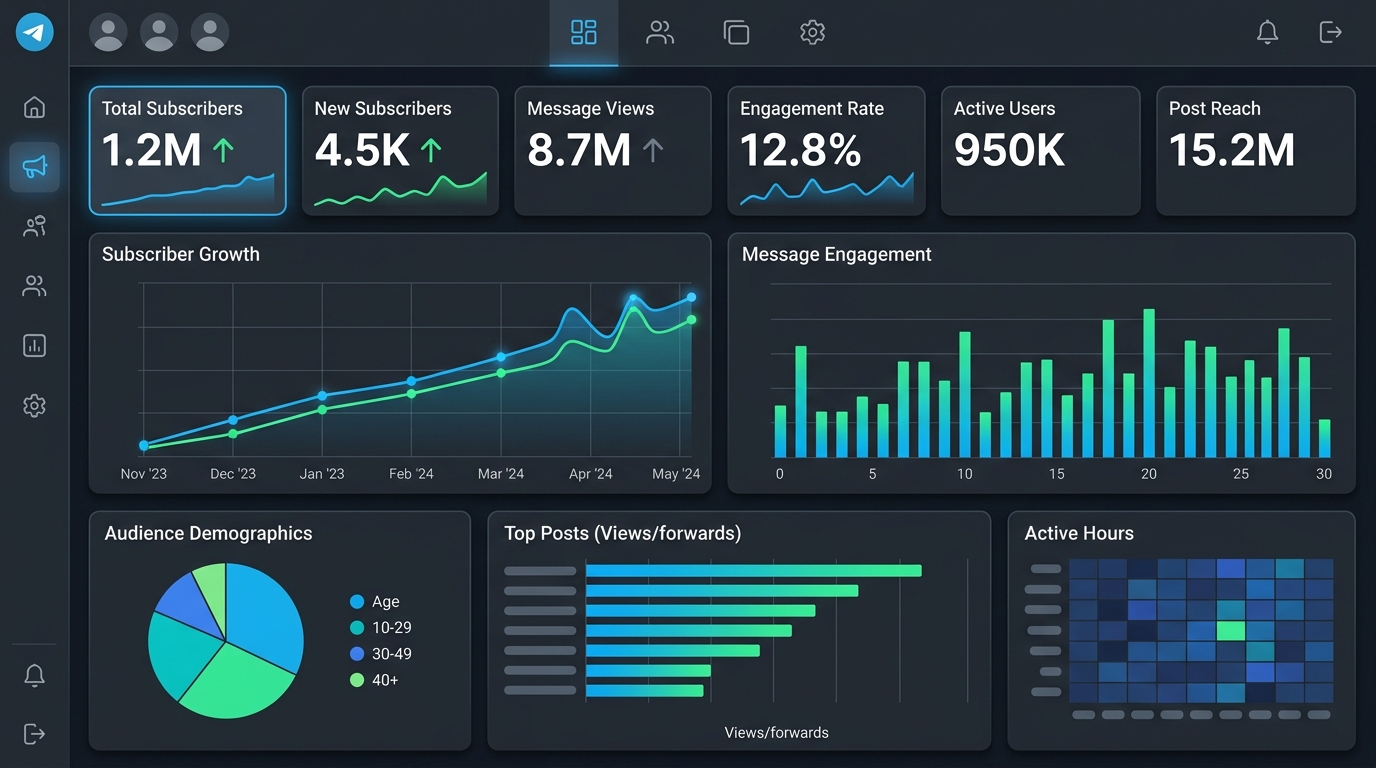
From emotional decision-making to data-driven decision-making
In the early stages of Telegram marketing, many operators relied on "gut feeling" to make decisions. This kind of emotional decision-making may have been effective in the early stages, but its limitations become increasingly apparent as the account grows.
Data-driven approaches mean replacing subjective judgments with objective data. With a complete data system, you can answer questions like: Which types of content have the best dissemination effect? How much do interaction rates differ across different time periods?
For example, if a Telegram channel with 50,000 subscribers increases its open rate from 35% to 45% through data analysis, it means reaching an additional 5,000 users per week; increasing its WeChat conversion rate from 2% to 3% could mean acquiring hundreds more potential customers per month.
What problems can data analysis solve?
Effectiveness evaluation : Clearly understand the actual effect of a marketing campaign—how many people were reached, how much interaction was generated, and how many conversions were achieved.
Problem Diagnosis : When a certain indicator shows abnormal fluctuations, data can help quickly pinpoint the root cause of the problem.
Decision optimization : Based on historical data, predict future trends, optimize content strategies, and allocate marketing budgets.
Limitations of Telegram's built-in data analytics
Telegram's native data analytics capabilities are quite limited:
The data dimensions are limited . The official documentation does not provide advanced features such as fan profiling, content performance comparison, or time-series analysis.
Conversion tracking is difficult . The platform doesn't natively offer conversion tracking capabilities, making it impossible to track the conversion chain from Telegram to private domains.
Data retention is limited . The backend typically only displays recent data, making it difficult to trace historical data.
Because of these limitations, professional Telegram data analysis often requires the use of third-party tools. SocialEcho's Telegram data analysis features offer a more comprehensive data perspective.
II. Key Indicator System

It is recommended to construct an indicator system at three levels: exposure indicators, interaction indicators, and conversion indicators .
Exposure metrics
Reach : How many unique accounts saw the content.
Views : The total number of times the content has been viewed.
Forwards : Forwarding is the core mechanism of social communication on Telegram. The forwarding rate (forwards/reads) can assess the efficiency of content dissemination.
Interaction metrics
Click-through rate (CTR) : Click-through rate = number of clicks / number of impressions, is a core indicator for measuring the effectiveness of traffic generation.
Reply Rate : Reply Rate = Number of Replies / Number of Users Who Viewed the Content. A high reply rate usually means that the content has sparked discussion.
Save Rate : Saving content indicates that users believe it has long-term value. Knowledge-based and educational content typically has a higher save rate.
Conversion metrics
WeChat Add Rate : WeChat Add Rate = Number of people successfully added to WeChat / Number of reads.
Website Conversion Rate : Website Conversion Rate = Number of people who completed a conversion / Number of people who clicked the link.
ROI (Return on Investment) : ROI = (Revenue from marketing - Marketing costs) / Marketing costs × 100%.
SocialEcho's social media management platform supports multi-platform data integration.
III. Data Acquisition Tools
Telegram's native statistics function
Administrators can view data such as subscriber count changes, message read counts, and interaction overviews over the past 24 hours, 7 days, and 30 days. These native features are suitable for quickly viewing basic data, but are far from sufficient for in-depth analysis.
Third-party data analysis platform
With SocialEcho's Telegram data analytics features , you can gain: multi-dimensional content performance analysis; follower growth trend tracking; in-depth analysis of interaction data; and competitor data benchmarking.
You can also export Telegram data to Excel for custom analysis; and create dashboards using Tableau and Power BI.
Building your own data system
Link tracking system . Generates a unique tracking code for each external link, recording information such as the time, source, and content ID of each click. Commonly used with UTM parameters in conjunction with Google Analytics.
CRM data integration . Integrate Telegram lead data into your CRM system to track the entire funnel from customer acquisition to conversion. SocialEcho also supports data integration with common CRM systems.
IV. ROI Calculation Method

Marketing funnel model
The core of ROI calculation is to establish a complete marketing funnel: exposure → reach → interaction → conversion → revenue .
There is drop-off between each level. The funnel conversion rate = number of users in the next level / number of users in the current level. By analyzing the conversion rate of each level, we can pinpoint the stage with the greatest drop-off and optimize accordingly.
Conversion rate calculation at each stage
Open Rate = Number of Reads / Number of Subscribers. The industry average is typically between 30% and 50%. A rate below 30% may indicate insufficient content appeal or inappropriate release timing.
Click-through rate (CTR) = Number of clicks / Number of views. The average CTR for e-commerce content is around 1%-3%.
WeChat conversion rate = Number of successful WeChat contacts / Number of clicks. It is recommended to compress the WeChat contact process to the fewest possible steps.
Paid conversion rate = Number of paying customers / Number of customers who added the product on WeChat. This depends on factors such as product attractiveness and sales follow-up capabilities.
ROI Formula and Practical Applications
ROI = (Marketing Revenue - Marketing Costs) / Marketing Costs × 100%
Data from a certain e-commerce brand for one month:
- Marketing cost: 20,000 yuan
- Subscribers: 100,000; Open rate: 40%, meaning 40,000 reads.
- A 2% click-through rate means 800 people click.
- With a 30% conversion rate, that means 240 people successfully added the WeChat account.
- A paid conversion rate of 10% means 24 people will complete a purchase.
- Average order value: 500 yuan; Marketing revenue: 12,000 yuan.
ROI = (12,000 - 20,000) / 20,000 × 100% = -40%
In this case, the ROI was negative. However, the value of many marketing campaigns is long-term. It is recommended to focus on both Customer Lifetime Value (LTV) and Customer Acquisition Cost (CAC), rather than just the immediate return of a single campaign.
V. Data-driven optimization
A/B Testing and Content Optimization
One of the core methods of data-driven optimization is A/B testing. By comparing the performance of different versions of content, the optimal solution can be found.
Variables that can be tested include: title (to observe which has a higher open rate); publication time (to observe the difference in interaction rate); content format (to compare text, images, and short videos); CTA ("Click the link to get materials" vs "Limited-time free | Click to get").
User segmentation and targeted push notifications
Behavior-based segmentation : Highly active users (pushed with in-depth content), inactive users (pushed with wake-up content), and new subscribers (pushed with welcome and guidance content).
Segmentation based on demand : those who prefer knowledge-based content, those who need product information, and those who pay attention to promotional activities.
Segmentation based on conversion stage : potential customers (pushing educational content), interested customers (pushing product introductions), and paying customers (pushing repeat purchase incentives).
SocialEcho offers competitor analysis and fan profiling features.
Competitive benchmarking and strategy iteration
Competitive monitoring . Regularly review competitors' Telegram channels to analyze content strategies, posting frequency, and engagement. SocialEcho's Telegram competitor monitoring feature can automatically track competitor activities.
Benchmarking . Compare key metrics with industry averages. If the open rate is lower than the industry average, analyze the reasons and optimize the content.
Strategy iteration . Based on data analysis results, regularly (ideally monthly) review the effectiveness of the marketing strategy.
Use Telegram's KOL monitoring feature to track the content performance of top creators in the industry and gain inspiration.
📝 Conclusion
Telegram marketing data analytics is a core competency that every serious marketer must master. The key to transformation lies in establishing a systematic data awareness, a scientific indicator system, and a methodology for continuous optimization.
When you can clearly answer the question, "How much return has my Telegram marketing investment brought?", you've already surpassed most marketers. Stop making decisions based on gut feeling; let the data tell you the truth.
The good news is, you don't need to build an entire data analytics system from scratch. SocialEcho provides a one-stop Telegram marketing data analytics solution to help you achieve truly data-driven operations.
Try it free for 7 days: Start now
❓ FAQ
Q1: What are the main differences between Telegram's native statistics and third-party analytics tools?
Telegram's native statistics only provide basic view counts and interaction data, and historical data retention is limited. Third-party analytics tools such as SocialEcho can provide richer data dimensions, including content comparison analysis, time-period analysis, trend tracking, competitor benchmarking, etc., and also support custom metrics and data export.
Q2: How to track conversion data from Telegram to private domain (WeChat)?
Tracking conversions from Telegram to private domains requires using links with tracking parameters: A unique tracking link is generated for each lead generation content, redirecting users when clicked. The tracking system records the source, content ID, and time of each click, then matches this information with WeChat's "Add to WeChat" data. Using UTM parameters in conjunction with Google Analytics is recommended.
Q3: How should the ROI of Telegram marketing be calculated reasonably?
The core of ROI calculation is clearly defining marketing costs and marketing revenue. Marketing costs include labor costs, content production costs, and paid promotion costs. Marketing revenue needs to be differentiated between direct revenue (traceable and attributable) and indirect revenue (brand exposure, user asset accumulation, etc.). It is recommended to pay attention to both short-term ROI and long-term LTV/CAC ratio.
Q4: What data should we analyze when fan growth stagnates?
Stagnant follower growth is typically associated with factors such as declining content appeal, changes in posting frequency, increased external competition, and platform algorithm adjustments. It is recommended to check: whether recent content open rates and engagement rates have decreased; whether there have been changes in posting frequency and timing; competitor growth; and whether any content has violated regulations leading to account restrictions.
Q5: Should we continue publishing content that doesn't perform well in terms of data?
Whether to continue posting content with poor data depends on the specific circumstances. First, analyze the reasons for the poor data: is it a content quality issue, an audience matching issue, or a posting timing issue? Second, consider whether this type of content aligns with the account's positioning and long-term content strategy. If it's crucial to the account's positioning, you can continue but optimize the expression; if it's purely a data experiment to test effectiveness, you can adjust the strategy based on the results. The key is to use data to guide decision-making, not to be dictated to it.
;}.cls-2{fill:%230868f7;}.cls-3{fill:url(%23未命名的渐变_44);}.cls-4{fill:%23333;}%3c/style%3e%3clinearGradient%20id='未命名的渐变_8'%20x1='33.73'%20y1='100.61'%20x2='-0.03'%20y2='-1.06'%20gradientUnits='userSpaceOnUse'%3e%3cstop%20offset='0'%20stop-color='%237ae9fb'/%3e%3cstop%20offset='0.67'%20stop-color='%232b90f8'/%3e%3cstop%20offset='1'%20stop-color='%230868f7'/%3e%3c/linearGradient%3e%3clinearGradient%20id='未命名的渐变_44'%20x1='27.86'%20y1='18.67'%20x2='68.36'%20y2='22.22'%20gradientUnits='userSpaceOnUse'%3e%3cstop%20offset='0'%20stop-color='%235ac7f2'/%3e%3cstop%20offset='1'%20stop-color='%230868f7'/%3e%3c/linearGradient%3e%3c/defs%3e%3cpath%20class='cls-1'%20d='M29,28.74V81.91l-9.51-3.68v0L8.52,74A7.17,7.17,0,0,1,4,67.32V24.54A3.76,3.76,0,0,1,9.08,21Z'/%3e%3cpath%20class='cls-2'%20d='M68.09,78.07a13.15,13.15,0,0,1-17.9,12.06L29,81.91h0V28.74L50.19,37A13.17,13.17,0,0,0,68.08,25.3h0Z'/%3e%3cpath%20class='cls-3'%20d='M68.08,25.3a13.19,13.19,0,0,1-6.73,10.87A13.09,13.09,0,0,1,50.19,37L29,28.74V6A3.76,3.76,0,0,1,34.1,2.52l25.59,9.91A13.22,13.22,0,0,1,68.08,25.3Z'/%3e%3cpath%20class='cls-4'%20d='M129.06,81.76a4.33,4.33,0,0,1-3.19-1.31,4.4,4.4,0,0,1-1.31-3.24V56.86H97.65V77.21a4.36,4.36,0,0,1-1.35,3.2A4.68,4.68,0,0,1,93,81.76a4.32,4.32,0,0,1-3.19-1.31,4.37,4.37,0,0,1-1.32-3.24V27.27A4.58,4.58,0,0,1,89.83,24a4.59,4.59,0,0,1,7.82,3.27V48.15h26.91V27.27A4.58,4.58,0,0,1,125.91,24a4.59,4.59,0,0,1,7.82,3.27V77.21a4.37,4.37,0,0,1-1.36,3.2A4.65,4.65,0,0,1,129.06,81.76Z'/%3e%3cpath%20class='cls-4'%20d='M163.77,81.66c-6.57,0-11.76-1.92-15.44-5.7s-5.54-9.07-5.54-15.74a26.76,26.76,0,0,1,2.09-10.43,17.72,17.72,0,0,1,6.67-8.06,19.15,19.15,0,0,1,10.68-2.95,19,19,0,0,1,10.46,2.8,18.7,18.7,0,0,1,6.55,7.36,22.53,22.53,0,0,1,2.36,10.28A4.51,4.51,0,0,1,177,63.77H152.23a10.8,10.8,0,0,0,3.49,6.65c2,1.68,4.88,2.52,8.66,2.52a22.25,22.25,0,0,0,7.54-1.21c.74-.3,1.55-.67,2.37-1.07a3.75,3.75,0,0,1,1.84-.4,4.09,4.09,0,0,1,3,1.15,4,4,0,0,1,1.12,3,4.38,4.38,0,0,1-2.58,3.82,32.34,32.34,0,0,1-6.36,2.61A28.67,28.67,0,0,1,163.77,81.66ZM172.4,55.9a9.72,9.72,0,0,0-1.63-4.56A9.9,9.9,0,0,0,167,48a10.38,10.38,0,0,0-4.64-1.14,12,12,0,0,0-4.77,1.06,9.54,9.54,0,0,0-4.89,5.66,11.78,11.78,0,0,0-.51,2.3Z'/%3e%3cpath%20class='cls-4'%20d='M193,81.64a4.49,4.49,0,0,1-4.51-4.55V27.28A4.58,4.58,0,0,1,189.84,24a4.48,4.48,0,0,1,3.28-1.36A4.36,4.36,0,0,1,196.35,24a4.46,4.46,0,0,1,1.31,3.31V77.09a4.34,4.34,0,0,1-1.35,3.2A4.67,4.67,0,0,1,193,81.64Z'/%3e%3cpath%20class='cls-4'%20d='M263.79,81.71a5.7,5.7,0,0,1-4.2-1.74,5.76,5.76,0,0,1-1.73-4.19V27.37a4.58,4.58,0,0,1,1.35-3.27A4.59,4.59,0,0,1,267,27.37V72.53h24a4.58,4.58,0,0,1,3.27,7.82A4.66,4.66,0,0,1,291,81.71Z'/%3e%3cpath%20class='cls-4'%20d='M424.48,81.74a4.71,4.71,0,0,1-2.71-.88,5.43,5.43,0,0,1-1-1l-.07-.09-12.41-17-5.41,5v9.44a4.31,4.31,0,0,1-1.36,3.19,4.66,4.66,0,0,1-3.3,1.36A4.29,4.29,0,0,1,395,80.42a4.36,4.36,0,0,1-1.32-3.23V27.37A4.58,4.58,0,0,1,395,24.1a4.52,4.52,0,0,1,6.58.12,4.54,4.54,0,0,1,1.24,3.15V56.31l17.72-16.38.05,0a4.8,4.8,0,0,1,2.94-1.11,4.4,4.4,0,0,1,3.27,1.2,4.57,4.57,0,0,1,1.2,3.27,4.44,4.44,0,0,1-.77,2.33,7.45,7.45,0,0,1-1.43,1.65l-11,9.64,13.34,17.68a5,5,0,0,1,1,2.71,4.12,4.12,0,0,1-1.36,3.24A4.64,4.64,0,0,1,424.48,81.74Z'/%3e%3cpath%20class='cls-4'%20d='M317.93,81.76a21.5,21.5,0,1,1,21.17-21.5A21.37,21.37,0,0,1,317.93,81.76Zm0-34.1a12.61,12.61,0,1,0,12.42,12.6A12.52,12.52,0,0,0,317.93,47.66Z'/%3e%3cpath%20class='cls-4'%20d='M212.18,101.22a4.12,4.12,0,0,1-3.05-1.26,4.17,4.17,0,0,1-1.26-3.1V43.34a4.37,4.37,0,0,1,1.3-3.14,4.26,4.26,0,0,1,3.13-1.3,4.19,4.19,0,0,1,3.1,1.26,4.32,4.32,0,0,1,1.26,3.16,20.77,20.77,0,0,1,13-4.54,21.51,21.51,0,0,1,0,43,20.51,20.51,0,0,1-13-4.57V96.86a4.15,4.15,0,0,1-1.3,3.06A4.5,4.5,0,0,1,212.18,101.22Zm17.43-53.63c-6.23,0-12.93,4.11-12.93,12.72a12.73,12.73,0,0,0,25.46,0A12.71,12.71,0,0,0,229.61,47.59Z'/%3e%3cpath%20class='cls-4'%20d='M365.76,81.76a21.5,21.5,0,1,1,21.18-21.5A21.37,21.37,0,0,1,365.76,81.76Zm0-34.1a12.61,12.61,0,1,0,12.42,12.6A12.52,12.52,0,0,0,365.76,47.66Z'/%3e%3c/svg%3e)