
Telegram Community Management in Practice: 5 Core Strategies for Highly Active Communities
introduction
Late at night, Chen Chen stared blankly at the data in the Telegram group's backend. The Web3 project community, with 50,000 members, had fewer than 800 active users daily, and the message interaction rate had plummeted to below 1.5%.
This is the eighth month that Chen Chen has been running this Telegram community. The community was very enthusiastic when it was first established, but as time went by, the enthusiasm gradually faded.
"I tried sending red envelopes and organizing events, but the effects were short-lived," Chen Chen said. "Later I realized that Telegram community operations require a systematic strategy and continuous execution."
I. Community Positioning
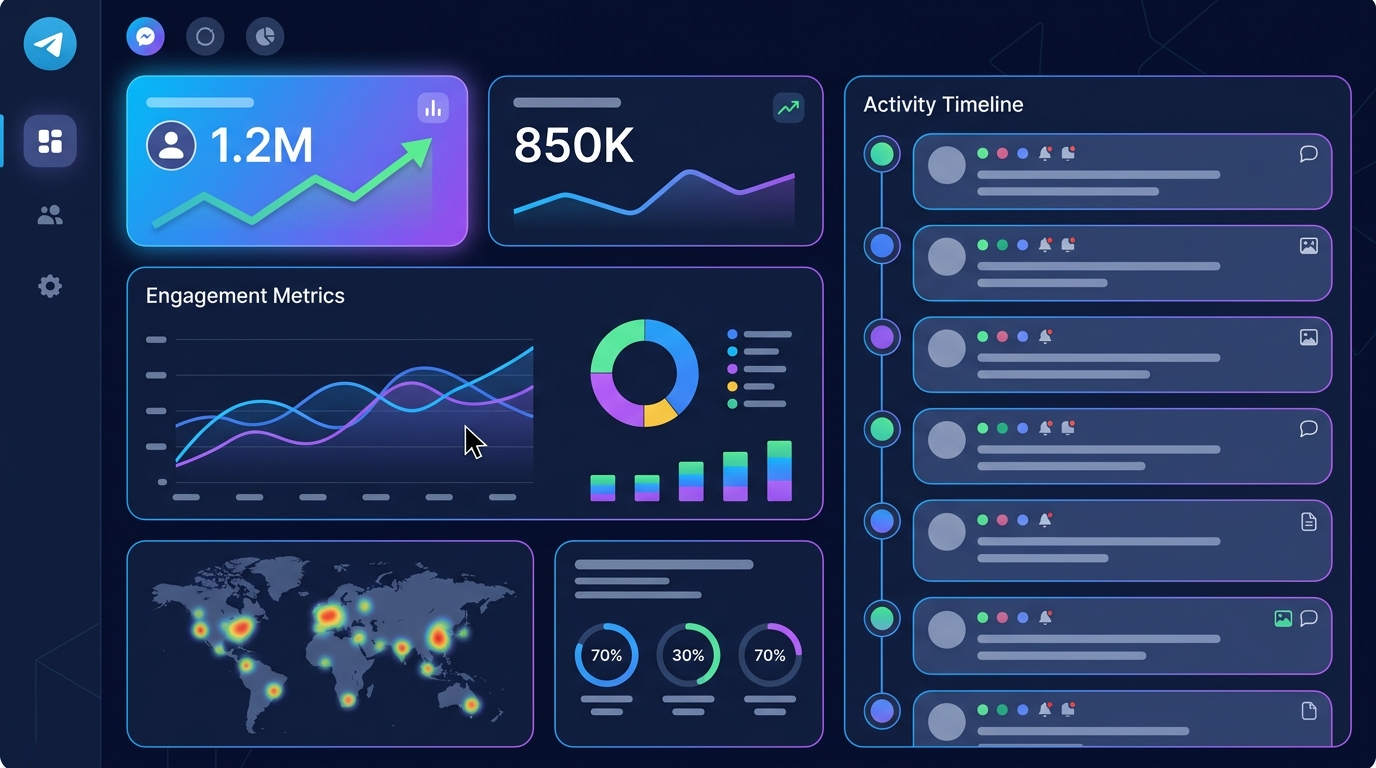
Many Telegram communities went down the wrong path from the very beginning—they had only a vague goal when they were created, without figuring out what unique value they wanted to provide.
A clear community mission should include three elements: who the community serves, what value it provides, and how it differs from other similar Telegram communities.
Chen Chen's Web3 project community's mission is "to enable ordinary investors to participate in blockchain projects safely and transparently," and its vision is "to become the most trusted investor community in the Web3 field."
Chen Chen's team divides its members into four categories: learning users (approximately 40%), investor users (approximately 35%), construction users (approximately 15%, who are the backbone of the community), and observer users.
Most Web3 Telegram communities are either "purely information distribution" or "purely discussion." Chen Chen's community is positioned as a hybrid of "deep learning + practical exchange," providing both professional research reports and encouraging members to share practical experience.
To systematically analyze competitors' Telegram community strategies, you can refer to the SocialEcho competitive analysis tool .
II. Content Planning

The key to a highly active Telegram community is a "predictable rhythm".
The content rhythm of the Telegram community designed by Chen Chen's team:
- Every morning at 8:00 AM, the robot automatically pushes out a "Daily Market Brief".
- Every evening at 8 PM is the community's "Q&A time".
- Every Wednesday at 8 PM, a fixed AMA event time.
- Every Saturday is "Community Open Day".
"AMA Star" is a signature section of the Telegram community, where the "Best Questioner" and "Most Valuable Answer" are selected after each AMA. This section encourages members to participate in the discussion.
"Newbie Village" is a column specifically designed for beginners. Every Friday at 3 pm, volunteers explain the basics of blockchain. Many members have reported that this column has helped them develop a sense of belonging to the Telegram community.
The "Weekend Debate" is a special monthly event where members debate a controversial topic.
Chen Chen summarized three UGC incentive principles: lower the barrier to participation, provide visible rewards, and create an atmosphere where people feel needed.
To manage the pace of community content operations more efficiently, you can learn about the SocialEcho social media management platform .
III. User Segmentation
Telegram community members are not a monolithic group; different groups have different needs.
The first 7 days after a new member joins the Telegram community are a critical window for deciding whether they stay.
The onboarding process designed by Chen Chen's team is as follows: The robot automatically sends a welcome message and tags the user as a "newcomer"; 24 hours later, the user is invited to introduce themselves via private message; completing a simple task earns the "rising star" title; on days 3-5, the user is asked about their needs via private message and helpful content is recommended.
In the Telegram community, 20% of core users contribute 80% of the value.
Chen Chen's team adopts a "special care" strategy for core users: inviting them to join the "core user group" (a private group of no more than 100 people); regularly holding "core user exclusive AMAs"; and granting them the status of "community ambassadors".
KOLs need to find members who truly identify with the community's values and are willing to commit long-term. A volunteer system allows ordinary members to participate in community management, with tasks including assisting in reviewing new member applications, maintaining order within the group, and answering questions from new members.
For operators who need to monitor the activities of key opinion leaders in their communities, the SocialEcho KOL monitoring tool can track KOLs' posts and influence in real time.
IV. Event Operation
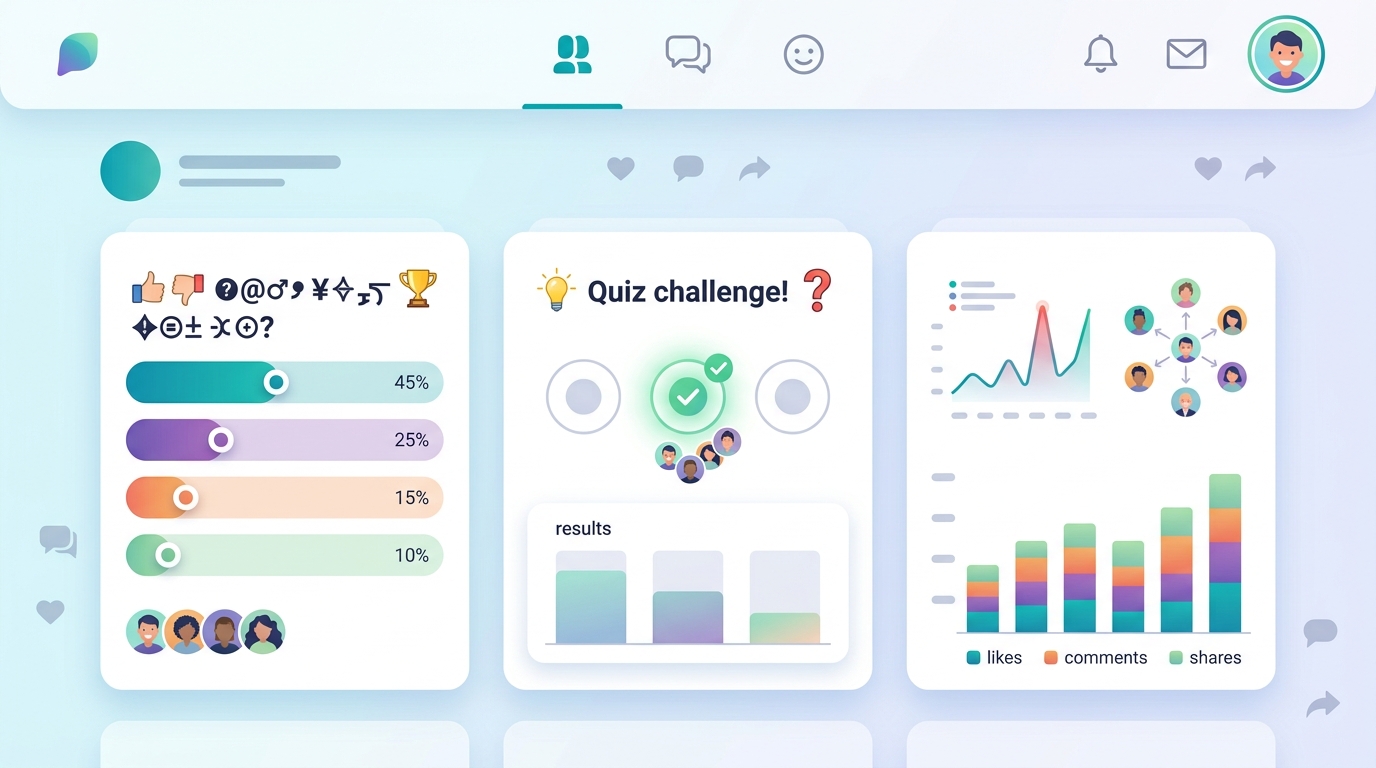
Like content, events are a key driver of activity in the Telegram community. A successful event strategy requires a combination of "fixed rhythm + flexible innovation".
Fixed rhythms refer to activities held at fixed times each week or month, forming expectations and habits among members. Chen Chen's Telegram community's weekly Wednesday AMA, weekly Friday beginner's workshop, and monthly debate have become iconic events within the Telegram community.
The key to event planning is "low barrier to entry and strong sense of accomplishment." Chen Chen's Telegram community's "Daily Market Prediction" event—which releases a multiple-choice question every day at 5 pm—attracts more than 1,000 participants daily.
Through data analysis, Chen Chen's team discovered that the optimal duration for an AMA (Ask Me Anything) event is 45-60 minutes; the most active time for members is between 8 PM and 10 PM; and competitive events have a 30% higher interaction rate than purely sharing events.
V. Tool Empowerment
Community management is a systematic project. Relying solely on manual operation is time-consuming, labor-intensive, and prone to errors. Making good use of tools is key to improving the efficiency of Telegram community management.
Telegram's community management bots are indispensable tools for operations. Combot offers features such as welcome messages, automatic replies, and anti-spam; ChatAssistantBot supports more flexible custom rules.
Chen Chen's team used a solution of "multiple robots working together": one is responsible for welcoming new members and basic management, one is responsible for content push, and one is dedicated to data statistics.
Scenarios worth automating: highly repetitive tasks (group welcome, rule reminders, content push), and risk control (sensitive word filtering, suspicious account identification).
Scenarios unsuitable for automation: Scenarios requiring judgment (mediation of member disputes, content quality assessment) and scenarios for building relationships (communication with core users, organization of offline activities).
Chen Chen's experience is that good automation can improve the efficiency of Telegram community operations by 3-5 times; however, excessive automation can make the community lose its warmth.
📝 Conclusion
After more than a year of systematic operation, Chen Chen's Telegram community has maintained a stable daily active user base of over 3,000, with the message interaction rate increasing from 1.5% to 8%, and more than 500 core users.
"The biggest change is that I'm no longer fighting alone," Chen Chen said. "Through this systematic operational strategy, I've cultivated core users, volunteers, and even KOLs, who have become the backbone of the Telegram community."
Telegram community management is never something that can be accomplished overnight. It requires a clear positioning, continuous content output, precise user segmentation, systematic event planning, and the right tools to assist you.
If you're struggling with managing your Telegram community, consider starting with one of the five strategies shared in this article.
Try SocialEcho free for 7 days: Start your free trial
❓ FAQ
Q1: What are the early signs of declining activity in the Telegram community?
A1: Common early warning signs include: a continuous decline in message volume while the total number of members remains stable; a decrease in the frequency of posts by core active members; an increase in long periods of silence in the group; a decrease in the frequency of members privately messaging the operator to inquire; and a gradual decline in activity participation. It is recommended to establish a daily data monitoring mechanism, and immediately analyze the reasons and adjust the Telegram community operation strategy once these signs are detected.
Q2: How to balance the openness of the Telegram community with preventing spam?
A2: We suggest adopting a "review before release" mechanism—new members' posts should be reviewed before being displayed in the group, and full access should only be granted after the review is passed. We should also set entry requirements (such as answering questions or verifying email addresses) and clearly state the rules in the group announcement. For violations, a tiered approach of "warning → muting → kicking out" should be used, which is both civilized and effective.
Q3: How to balance Telegram's community monetization with user experience?
A3: Commercialization must be based on continuously providing value. We recommend the "80/20 rule"—80% of the content should be purely valuable, while 20% can be moderately commercialized. Advertising and promotional content must be clearly labeled to avoid misleading team members. Any commercialization activity should be internally evaluated by the team to ensure it does not harm the interests of team members.
Q4: How should we handle negative public opinion in online communities?
A4: First, respond quickly instead of playing dead. Immediately understand the source and cause of negative feedback, and determine whether it's legitimate criticism or malicious attack. For legitimate criticism, acknowledge the problem and explain the improvement plan; for malicious attacks, collect evidence and resolve the issue through legal channels if necessary. Simultaneously, maintain appropriate transparency regarding the progress within the group, demonstrating the team's responsible attitude to other members.
Q5: How to evaluate the return on investment of community operations?
A5: The evaluation of community ROI needs to be combined with business objectives. If the goal is user growth, focus on customer acquisition cost and retention rate; if the goal is brand building, focus on brand mentions and the proportion of positive emotions; if the goal is sales conversion, focus on the conversion path from community to purchase and the contribution of average order value. It is recommended to establish a "community value funnel" model, tracking each layer from exposure → interest → engagement → conversion.
;}.cls-2{fill:%230868f7;}.cls-3{fill:url(%23未命名的渐变_44);}.cls-4{fill:%23333;}%3c/style%3e%3clinearGradient%20id='未命名的渐变_8'%20x1='33.73'%20y1='100.61'%20x2='-0.03'%20y2='-1.06'%20gradientUnits='userSpaceOnUse'%3e%3cstop%20offset='0'%20stop-color='%237ae9fb'/%3e%3cstop%20offset='0.67'%20stop-color='%232b90f8'/%3e%3cstop%20offset='1'%20stop-color='%230868f7'/%3e%3c/linearGradient%3e%3clinearGradient%20id='未命名的渐变_44'%20x1='27.86'%20y1='18.67'%20x2='68.36'%20y2='22.22'%20gradientUnits='userSpaceOnUse'%3e%3cstop%20offset='0'%20stop-color='%235ac7f2'/%3e%3cstop%20offset='1'%20stop-color='%230868f7'/%3e%3c/linearGradient%3e%3c/defs%3e%3cpath%20class='cls-1'%20d='M29,28.74V81.91l-9.51-3.68v0L8.52,74A7.17,7.17,0,0,1,4,67.32V24.54A3.76,3.76,0,0,1,9.08,21Z'/%3e%3cpath%20class='cls-2'%20d='M68.09,78.07a13.15,13.15,0,0,1-17.9,12.06L29,81.91h0V28.74L50.19,37A13.17,13.17,0,0,0,68.08,25.3h0Z'/%3e%3cpath%20class='cls-3'%20d='M68.08,25.3a13.19,13.19,0,0,1-6.73,10.87A13.09,13.09,0,0,1,50.19,37L29,28.74V6A3.76,3.76,0,0,1,34.1,2.52l25.59,9.91A13.22,13.22,0,0,1,68.08,25.3Z'/%3e%3cpath%20class='cls-4'%20d='M129.06,81.76a4.33,4.33,0,0,1-3.19-1.31,4.4,4.4,0,0,1-1.31-3.24V56.86H97.65V77.21a4.36,4.36,0,0,1-1.35,3.2A4.68,4.68,0,0,1,93,81.76a4.32,4.32,0,0,1-3.19-1.31,4.37,4.37,0,0,1-1.32-3.24V27.27A4.58,4.58,0,0,1,89.83,24a4.59,4.59,0,0,1,7.82,3.27V48.15h26.91V27.27A4.58,4.58,0,0,1,125.91,24a4.59,4.59,0,0,1,7.82,3.27V77.21a4.37,4.37,0,0,1-1.36,3.2A4.65,4.65,0,0,1,129.06,81.76Z'/%3e%3cpath%20class='cls-4'%20d='M163.77,81.66c-6.57,0-11.76-1.92-15.44-5.7s-5.54-9.07-5.54-15.74a26.76,26.76,0,0,1,2.09-10.43,17.72,17.72,0,0,1,6.67-8.06,19.15,19.15,0,0,1,10.68-2.95,19,19,0,0,1,10.46,2.8,18.7,18.7,0,0,1,6.55,7.36,22.53,22.53,0,0,1,2.36,10.28A4.51,4.51,0,0,1,177,63.77H152.23a10.8,10.8,0,0,0,3.49,6.65c2,1.68,4.88,2.52,8.66,2.52a22.25,22.25,0,0,0,7.54-1.21c.74-.3,1.55-.67,2.37-1.07a3.75,3.75,0,0,1,1.84-.4,4.09,4.09,0,0,1,3,1.15,4,4,0,0,1,1.12,3,4.38,4.38,0,0,1-2.58,3.82,32.34,32.34,0,0,1-6.36,2.61A28.67,28.67,0,0,1,163.77,81.66ZM172.4,55.9a9.72,9.72,0,0,0-1.63-4.56A9.9,9.9,0,0,0,167,48a10.38,10.38,0,0,0-4.64-1.14,12,12,0,0,0-4.77,1.06,9.54,9.54,0,0,0-4.89,5.66,11.78,11.78,0,0,0-.51,2.3Z'/%3e%3cpath%20class='cls-4'%20d='M193,81.64a4.49,4.49,0,0,1-4.51-4.55V27.28A4.58,4.58,0,0,1,189.84,24a4.48,4.48,0,0,1,3.28-1.36A4.36,4.36,0,0,1,196.35,24a4.46,4.46,0,0,1,1.31,3.31V77.09a4.34,4.34,0,0,1-1.35,3.2A4.67,4.67,0,0,1,193,81.64Z'/%3e%3cpath%20class='cls-4'%20d='M263.79,81.71a5.7,5.7,0,0,1-4.2-1.74,5.76,5.76,0,0,1-1.73-4.19V27.37a4.58,4.58,0,0,1,1.35-3.27A4.59,4.59,0,0,1,267,27.37V72.53h24a4.58,4.58,0,0,1,3.27,7.82A4.66,4.66,0,0,1,291,81.71Z'/%3e%3cpath%20class='cls-4'%20d='M424.48,81.74a4.71,4.71,0,0,1-2.71-.88,5.43,5.43,0,0,1-1-1l-.07-.09-12.41-17-5.41,5v9.44a4.31,4.31,0,0,1-1.36,3.19,4.66,4.66,0,0,1-3.3,1.36A4.29,4.29,0,0,1,395,80.42a4.36,4.36,0,0,1-1.32-3.23V27.37A4.58,4.58,0,0,1,395,24.1a4.52,4.52,0,0,1,6.58.12,4.54,4.54,0,0,1,1.24,3.15V56.31l17.72-16.38.05,0a4.8,4.8,0,0,1,2.94-1.11,4.4,4.4,0,0,1,3.27,1.2,4.57,4.57,0,0,1,1.2,3.27,4.44,4.44,0,0,1-.77,2.33,7.45,7.45,0,0,1-1.43,1.65l-11,9.64,13.34,17.68a5,5,0,0,1,1,2.71,4.12,4.12,0,0,1-1.36,3.24A4.64,4.64,0,0,1,424.48,81.74Z'/%3e%3cpath%20class='cls-4'%20d='M317.93,81.76a21.5,21.5,0,1,1,21.17-21.5A21.37,21.37,0,0,1,317.93,81.76Zm0-34.1a12.61,12.61,0,1,0,12.42,12.6A12.52,12.52,0,0,0,317.93,47.66Z'/%3e%3cpath%20class='cls-4'%20d='M212.18,101.22a4.12,4.12,0,0,1-3.05-1.26,4.17,4.17,0,0,1-1.26-3.1V43.34a4.37,4.37,0,0,1,1.3-3.14,4.26,4.26,0,0,1,3.13-1.3,4.19,4.19,0,0,1,3.1,1.26,4.32,4.32,0,0,1,1.26,3.16,20.77,20.77,0,0,1,13-4.54,21.51,21.51,0,0,1,0,43,20.51,20.51,0,0,1-13-4.57V96.86a4.15,4.15,0,0,1-1.3,3.06A4.5,4.5,0,0,1,212.18,101.22Zm17.43-53.63c-6.23,0-12.93,4.11-12.93,12.72a12.73,12.73,0,0,0,25.46,0A12.71,12.71,0,0,0,229.61,47.59Z'/%3e%3cpath%20class='cls-4'%20d='M365.76,81.76a21.5,21.5,0,1,1,21.18-21.5A21.37,21.37,0,0,1,365.76,81.76Zm0-34.1a12.61,12.61,0,1,0,12.42,12.6A12.52,12.52,0,0,0,365.76,47.66Z'/%3e%3c/svg%3e)