
TikTok Shop Mexico launches direct shipping between the US and Mexico
introduction
Your Amazon store has recently seen a decline in orders, and profit margins have been severely squeezed by price wars. In the TK (Taobao Killer) player group, everyone is discussing a new product category with monthly sales in the millions, but by the time you enter the market, the golden age is long over.
You start to wonder: Where is the next growth market?
Southeast Asia has become a red ocean, tariffs and compliance in the European market are headaches, and the US market is fiercely competitive. Latin America, especially Mexico, is poised to enter a new period of opportunity.
In April 2026, TikTok Shop Mexico officially announced the launch of its direct shipping service between the US and Mexico. What does this mean? It means that the fastest channel connecting the US supply chain and Mexican consumers has been opened. For Chinese sellers and brands looking to enter the Latin American market, this is a window of opportunity they cannot afford to miss.
In this article, we will break down the opportunities, challenges, and execution strategies for TikTok Shop in Mexico.
I. Why Now is the Right Time to Enter the TikTok Shop Mexico Market
Before discussing strategies, let's first explain why now.
TikTok Shop's expansion in Latin America is not a trial, but a strategic investment. Mexico is TikTok's largest market in Latin America—Mexican users spend one of the most time on TikTok globally, and TikTok's penetration rate in Mexico is growing much faster than other social media platforms.
The direct cross-border shipping between the US and Mexico, launched in April, has solved the two most critical issues for cross-border e-commerce: timeliness and cost.
Traditional cross-border shipping to Mexico involves shipping from China, with delivery times often ranging from 15 to 30 days, resulting in high waiting costs for consumers and high return rates. In contrast, direct shipping between the US and Mexico allows merchants to store goods in US warehouses beforehand, and then ship directly from the US to Mexico once an order is placed, reducing delivery time to 3-7 days.
This means that Mexican consumers can enjoy the same "next-day delivery" shopping experience as Americans, while Chinese merchants can leverage the cost structure of local US warehouses to gain price competitiveness.
What are the patterns of platform boom periods?
In the early stages, platforms in every emerging market typically offer merchants traffic support and policy incentives. TikTok Shop Mexico is currently in its expansion phase, and the platform needs more merchants and SKUs to enrich its ecosystem. This means lower commission rates, higher traffic allocation, and more lenient entry requirements.
Once the market matures, traffic costs will rise, entry barriers will increase, and the competitive landscape will solidify. If you want to enter the market then, the cost will be 2-3 times higher than it is now.
The window of opportunity to enter the market now may only be 12-18 months.
II. Consumer Profile of TikTok Shop in Mexico
When entering any market, the first thing to do is to figure out who your users are.
Key characteristics of Mexican e-commerce consumers:
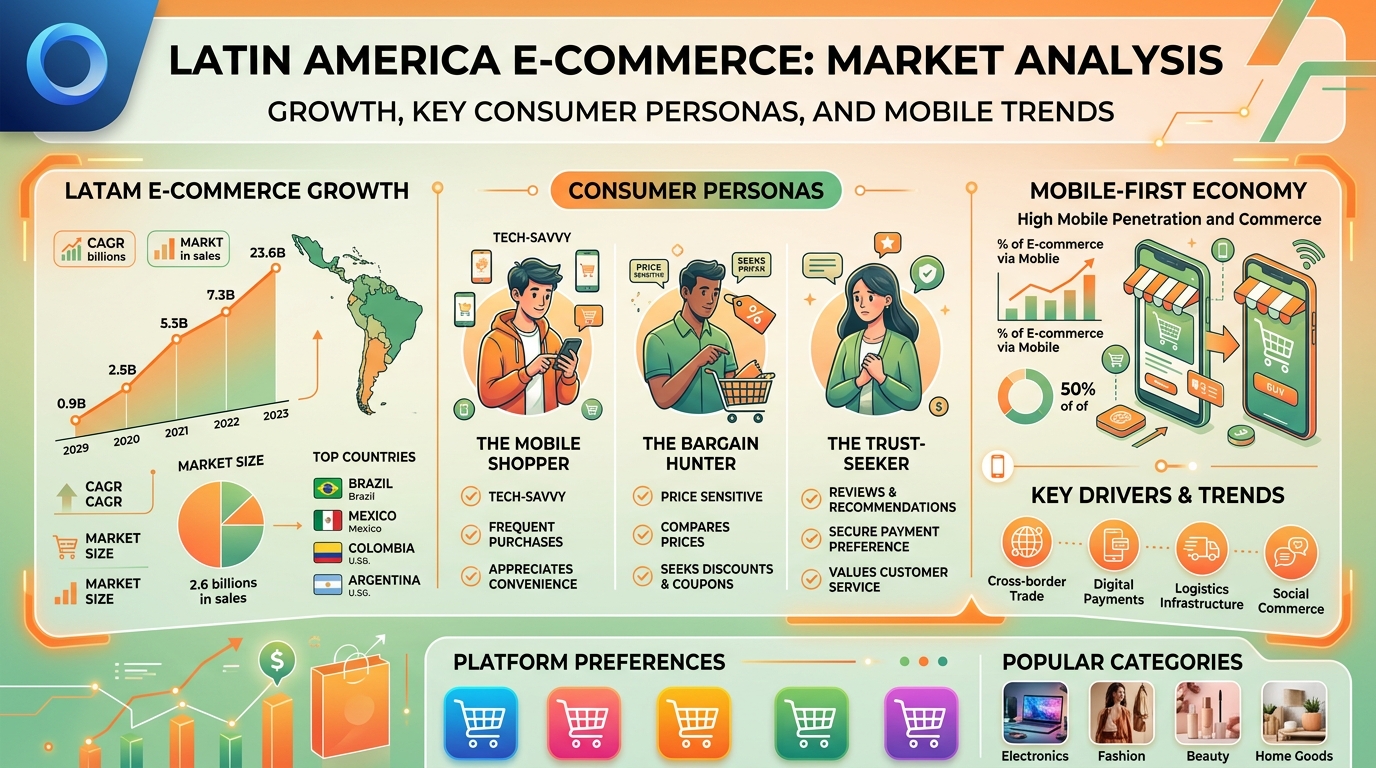
Price-sensitive but willing to pay for convenience. Mexican consumers are very price-sensitive and price comparison is common. However, they are also willing to pay for faster delivery—there is a premium for the convenience of "buy today, receive tomorrow".
Mobile is king. In Mexico, smartphone penetration exceeds 75% of internet users, and many shop directly on their phones without a computer. Social media (especially TikTok) has a significant impact on purchasing decisions.
Brand loyalty is relatively low, and reviews are highly valued. Mexican consumers read numerous reviews and make comparisons before purchasing, and they are more receptive to new brands, but building trust is necessary.
The social sharing effect is strong. Mexico has a typical family-based culture, where recommendations from friends and family have a significant impact on purchasing decisions. Group buying and referral bonuses are very effective viral marketing strategies in Mexico.
Mexico has a young population. The median age of Mexico is around 30, with the 18-35 age group being the main consumers. This group is highly dependent on TikTok and has a high acceptance of new brands and platforms.
III. Product Selection Strategy: Which product categories sell well in Mexico?
Product selection is the soul of cross-border e-commerce. What product categories have a chance on TikTok Shop Mexico?
3.1 Analysis of High-Potential Product Categories
Beauty and skincare: Latin America's beauty market is growing faster than any other country in the world.
Mexico is one of the world's largest beauty markets, and it's growing rapidly. Chinese makeup brands are becoming increasingly competitive in Mexico—offering better value for money, faster product updates, and shades more suited to Latin American consumers. Among skincare products, hydrating and moisturizing products, as well as sunscreens, are in high demand in Mexico.
Fashion Apparel: Driven by Young Consumers
Women aged 18-35 are the core consumer group, with dresses, yoga wear, and casual wear being popular categories. It's important to note that Mexican consumers have unique preferences regarding sizing and style, requiring localization efforts.
Consumer electronics: accessories and peripherals
Mobile phone accessories, earphones, chargers, and smart wearable devices are major import categories for Mexico. Competition is fierce, but demand is stable. Product selection should focus on cost-effectiveness and differentiation.
Home Furnishings: Driven by Urbanization
Mexico's urbanization process is driving increased demand for home furnishings. Kitchen gadgets, storage products, and decorative items are popular categories. One advantage of this category is its relatively low return rate.
3.2 Product Selection Pitfall Avoidance Guide
Do not sell products that require complex installation or after-sales service. Cross-border after-sales costs are extremely high, and any product that requires on-site installation or has complex after-sales requirements is not suitable.
Don't sell standardized products where competition is already fierce. 3C accessories such as data cables and power banks are already highly competitive, and it's difficult to stand out without a differentiated advantage.
Do not overlook certification requirements. Mexico has mandatory certification requirements for certain product categories (such as NOM certification). Before selecting products, you must confirm whether the product requires certification, as well as the certification cycle and cost.
IV. Logistics Model Selection: Direct Cross-Border Shipping between the US and Mexico vs. Local Warehousing in Mexico
TikTok Shop Mexico currently supports two logistics models: direct shipping between the US and Mexico, and local warehousing in Mexico.
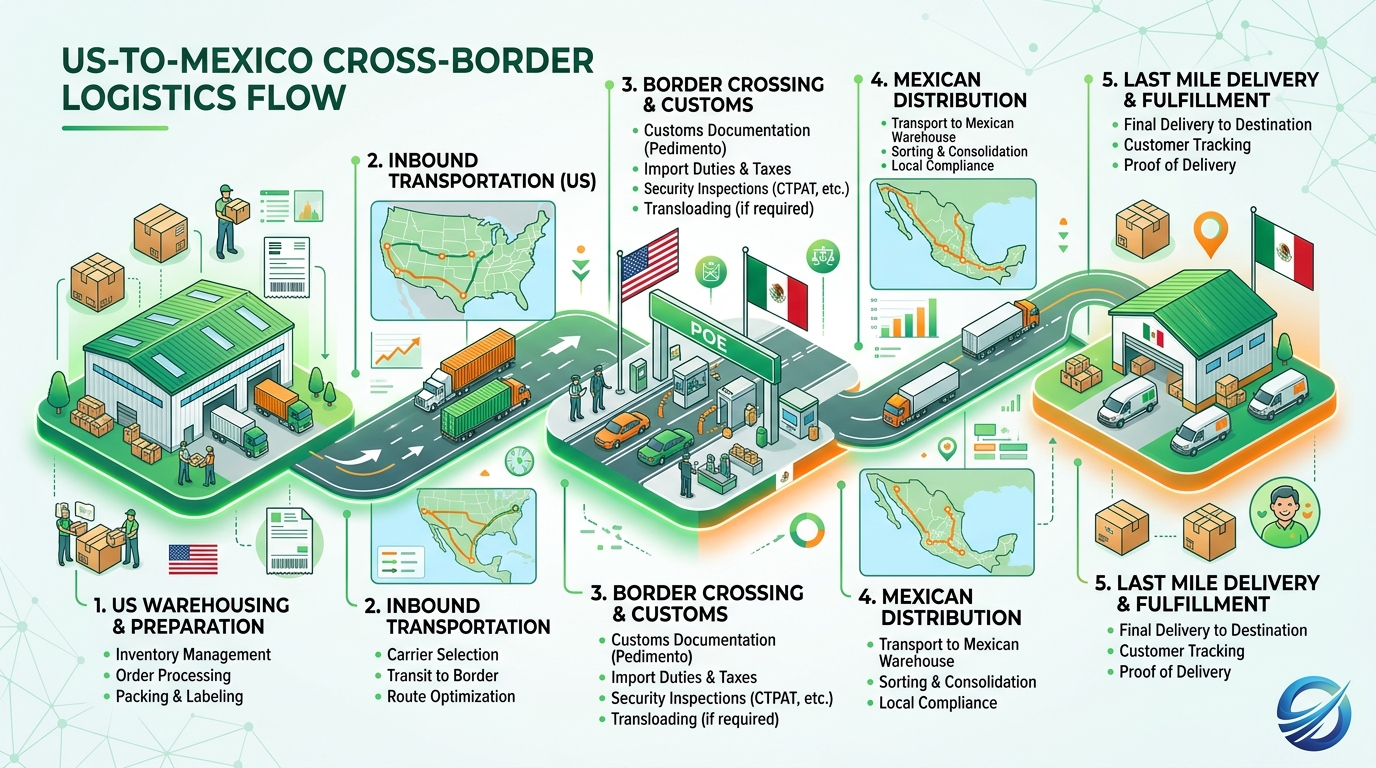
US-Mexico cross-border direct shipping (US FTZ warehouse model):
Goods are first stored in a partner warehouse in the United States (which could be an FTZ free trade zone). Once an order is placed, the goods are cleared through customs in the United States and exported to Mexico. The advantages of this model are: leveraging the maturity and cost advantages of the US supply chain, fast delivery (3-7 days), and suitability for businesses in the product testing phase.
Disadvantages: Requires US warehouse costs, Mexican import tariffs need to be factored in, and return processing is relatively complicated.
Mexico local warehouse:
Goods are stored directly in a local warehouse in Mexico and then shipped from Mexico. The advantages of this model are: fastest delivery time (1-3 days), convenient return processing, and access to more platform promotions.
Disadvantages: Higher warehouse and labor costs in Mexico, greater inventory risk, suitable for proven best-selling products.
For most merchants just starting out in the Mexican market, it is recommended to first use cross-border direct shipping between the US and Mexico to test products and find best-selling items before considering local warehousing.
V. TikTok Shop Mexico Operation Strategy
5.1 Content marketing is a core competitive advantage.
The core logic of TikTok Shop is content-driven e-commerce. Selling goods on TikTok Shop isn't about opening a store and waiting for customers; it's about actively creating content to drive traffic and conversions. Using bulk posting on Instagram and TikTok can significantly improve content publishing efficiency.
TikTok Shop Mexico's content strategy:
Short video marketing is the main battleground. Product unboxing, usage tutorials, comparison reviews, and scene demonstrations—these short video contents are the primary way Mexican users receive product information. Videos need to be short (15-60 seconds), fast-paced, and visually impactful.
Influencer marketing needs to be localized. Collaborating with local Mexican influencers is far more effective than simply translating English content. Local influencers understand the aesthetics and expression styles of local consumers better, resulting in more authentic and persuasive content.
Live-streaming e-commerce is on the rise. Mexican consumers are rapidly becoming more receptive to live-streaming shopping, especially for categories like beauty and apparel, where the real-time interaction and demonstrations in live streams have a strong conversion rate.
5.2 Account Matrix Strategy
Running a TikTok Shop shouldn't rely on just one account. A matrix approach is recommended:
1-2 official brand accounts: create brand content, accumulate fan assets, and build brand awareness.
Multiple sales-driven accounts: different product lines, different content styles, quickly test content directions, and find the most efficient conversion path.
If you operate multiple TikTok Shop accounts simultaneously, multi-account management tools can help you manage content postings and data analysis in a unified manner, avoiding the risk of account association.
5.3 Pricing Strategy
Several factors need to be considered when pricing in the Mexican market: the risk of Mexican peso exchange rate fluctuations, import tariffs (approximately 20% of which need to be absorbed), platform commissions, logistics costs, and the competitive landscape.
We recommend a "market follower" strategy: first, research the price range of similar products, set a competitive price, focus on volume sales to build reputation, and then gradually optimize profits. Use TikTok data analytics to track the effectiveness of the pricing strategy and YouTube data analytics to generate sales reports.
VI. Payment and Collection: Unique Challenges in the Mexican Market
Crossing the border into Mexico presents an easily overlooked challenge: payments.
In Mexico, the mainstream payment method is local payment , not credit cards. OXXO Pay (similar to cash payment at convenience stores) and SPEI (Mexican local transfer) are the most common payment methods. Many Mexican consumers do not have credit cards or do not trust international e-commerce platforms.
TikTok Shop Mexico has integrated local payment channels. You need to understand the payment cycle, transaction fees (possibly 1-3%), and exchange rate settlement methods for each payment method.
The payment cycle is slightly longer than in the US market . Under normal circumstances, the payment cycle for TikTok Shop in Mexico is 7-14 days, so you need to plan your cash flow carefully.
VII. Risks and Countermeasures
Every new market carries risks, and Mexico is no exception.
Exchange rate risk: The Mexican peso fluctuates significantly against the US dollar. It is recommended to implement an exchange rate hedging mechanism or to include a safety margin in pricing.
Policy Risks: Mexico's trade policies are subject to change, and tariff rates may fluctuate. It is recommended to closely monitor official Mexican policy developments and prepare contingency plans in advance.
Return Risk: Mexican consumers have a higher return rate than those in the US market, and cross-border returns are extremely costly. It is recommended to consider return rates as a key factor when selecting products, and to optimize product descriptions to reduce returns due to discrepancies between expectations and reality.
Intellectual Property Risks: Mexico is strengthening its enforcement of intellectual property protection. It is crucial to ensure that product selection and packaging do not infringe on the trademarks or patents of others.
FAQ
Q1: What qualifications are needed to open a TikTok Shop in Mexico?
A1: The eligibility requirements for joining TikTok Shop in Mexico are basically the same as in the US, requiring a business license (or sole proprietorship), proof of legal representative's identity, bank account information, and tax registration certificate. Specific eligibility requirements may be subject to change depending on platform policies; it is recommended to contact a TikTok Shop official account manager directly for the latest eligibility list. Additionally, some product categories require Mexican NOM certification (such as electronics, children's products, and food), which needs to be prepared in advance.
Q2: What is the approximate return rate in the Mexican market? How is it controlled?
A2: The average return rate for cross-border e-commerce in Mexico is approximately 8-15%, slightly higher than in the US market. The main reasons for returns are: incorrect size, discrepancies between the product and its description, and damage during shipping. Methods to control returns include: accurate and detailed product descriptions with comparative size data; reinforced packaging to prevent damage; using trackable logistics; and clearly stating the return policy and process on the product details page. If using direct cross-border shipping between the US and Mexico, return processing can be more complex; it is recommended to confirm the return processing plan and costs with the logistics provider.
Q3: How are tariffs calculated for direct shipments between the US and Mexico?
A3: Mexico levies tariffs on goods imported from the United States, with a standard rate of approximately 20% (the rate varies depending on the HS code). In addition, there is value-added tax (IVA, 16%) and possible other taxes. Tariffs are usually borne by the buyer, but some sellers choose a "tax-inclusive" model (including tariffs in the product price) to improve conversion rates. It is recommended to calculate all costs in detail when setting prices, including: product cost + US warehouse rent + US to Mexico shipping costs + tariffs + VAT + platform commission + expected profit, and choose the pricing strategy that is most advantageous to you.
Q4: What are the advantages of TikTok Shop Mexico compared to Shopee and Lazada Latin America?
A4: TikTok Shop's core advantage lies in its efficient traffic acquisition. A significant portion of the time TikTok users spend on the platform is in "shopping discovery" mode—users initially come for entertainment but are then influenced by product recommendations and place an order. Shopee/Lazada, on the other hand, are traditional shelf-based e-commerce platforms where users have a specific shopping purpose. The customer acquisition costs and conversion logic of the two models differ. For merchants already possessing TikTok content operation capabilities, TikTok Shop Mexico offers lower traffic costs and a higher content reuse rate.
Q5: Can I do business in the Mexican market if I don't understand Spanish?
A5: It's possible, but with limitations. Recommendation: Product listings and customer service scripts should at least have a Spanish version. Machine translation quality is currently not good enough; thorough localization in Spanish significantly improves conversion rates. If the budget allows, it's recommended to hire 1-2 local Mexican operations staff or partner with a local Mexican MCN agency. Their understanding of local culture, user psychology, and content style far surpasses that of outsiders.
Conclusion
TikTok Shop Mexico is a cross-border e-commerce opportunity that cannot be ignored in 2026.
Cross-border direct shipping between the US and Mexico has opened up a fast track between the US supply chain and Mexican consumers. The TikTok platform is still enjoying a period of traffic dividends, and the Mexican consumer market is growing rapidly—multiple factors combined mean that the window of opportunity is now open.
But the window of opportunity won't stay open forever. In the early stages of every new market, it belongs to those who enter first. By the time you enter a mature market, your competitors are already seasoned players who have learned from their mistakes and tested the waters, while you are just a newcomer.
The cost and difficulty of entering the market now are the lowest in the next 12-18 months.
Want to learn more about operating a TikTok Shop in Mexico? Check out SocialEcho's TikTok Shop multi-account management feature to help you manage multiple shops and accounts more efficiently.
Start your 7-day free trial now → https://www.socialecho.net/platforms/tiktok/scheduling
Use SocialEcho's TikTok multi-account management , data analytics , and cross-platform distribution features to operate both the US and Mexico regions simultaneously.
Word count: Approximately 3500 words
;}.cls-2{fill:%230868f7;}.cls-3{fill:url(%23未命名的渐变_44);}.cls-4{fill:%23333;}%3c/style%3e%3clinearGradient%20id='未命名的渐变_8'%20x1='33.73'%20y1='100.61'%20x2='-0.03'%20y2='-1.06'%20gradientUnits='userSpaceOnUse'%3e%3cstop%20offset='0'%20stop-color='%237ae9fb'/%3e%3cstop%20offset='0.67'%20stop-color='%232b90f8'/%3e%3cstop%20offset='1'%20stop-color='%230868f7'/%3e%3c/linearGradient%3e%3clinearGradient%20id='未命名的渐变_44'%20x1='27.86'%20y1='18.67'%20x2='68.36'%20y2='22.22'%20gradientUnits='userSpaceOnUse'%3e%3cstop%20offset='0'%20stop-color='%235ac7f2'/%3e%3cstop%20offset='1'%20stop-color='%230868f7'/%3e%3c/linearGradient%3e%3c/defs%3e%3cpath%20class='cls-1'%20d='M29,28.74V81.91l-9.51-3.68v0L8.52,74A7.17,7.17,0,0,1,4,67.32V24.54A3.76,3.76,0,0,1,9.08,21Z'/%3e%3cpath%20class='cls-2'%20d='M68.09,78.07a13.15,13.15,0,0,1-17.9,12.06L29,81.91h0V28.74L50.19,37A13.17,13.17,0,0,0,68.08,25.3h0Z'/%3e%3cpath%20class='cls-3'%20d='M68.08,25.3a13.19,13.19,0,0,1-6.73,10.87A13.09,13.09,0,0,1,50.19,37L29,28.74V6A3.76,3.76,0,0,1,34.1,2.52l25.59,9.91A13.22,13.22,0,0,1,68.08,25.3Z'/%3e%3cpath%20class='cls-4'%20d='M129.06,81.76a4.33,4.33,0,0,1-3.19-1.31,4.4,4.4,0,0,1-1.31-3.24V56.86H97.65V77.21a4.36,4.36,0,0,1-1.35,3.2A4.68,4.68,0,0,1,93,81.76a4.32,4.32,0,0,1-3.19-1.31,4.37,4.37,0,0,1-1.32-3.24V27.27A4.58,4.58,0,0,1,89.83,24a4.59,4.59,0,0,1,7.82,3.27V48.15h26.91V27.27A4.58,4.58,0,0,1,125.91,24a4.59,4.59,0,0,1,7.82,3.27V77.21a4.37,4.37,0,0,1-1.36,3.2A4.65,4.65,0,0,1,129.06,81.76Z'/%3e%3cpath%20class='cls-4'%20d='M163.77,81.66c-6.57,0-11.76-1.92-15.44-5.7s-5.54-9.07-5.54-15.74a26.76,26.76,0,0,1,2.09-10.43,17.72,17.72,0,0,1,6.67-8.06,19.15,19.15,0,0,1,10.68-2.95,19,19,0,0,1,10.46,2.8,18.7,18.7,0,0,1,6.55,7.36,22.53,22.53,0,0,1,2.36,10.28A4.51,4.51,0,0,1,177,63.77H152.23a10.8,10.8,0,0,0,3.49,6.65c2,1.68,4.88,2.52,8.66,2.52a22.25,22.25,0,0,0,7.54-1.21c.74-.3,1.55-.67,2.37-1.07a3.75,3.75,0,0,1,1.84-.4,4.09,4.09,0,0,1,3,1.15,4,4,0,0,1,1.12,3,4.38,4.38,0,0,1-2.58,3.82,32.34,32.34,0,0,1-6.36,2.61A28.67,28.67,0,0,1,163.77,81.66ZM172.4,55.9a9.72,9.72,0,0,0-1.63-4.56A9.9,9.9,0,0,0,167,48a10.38,10.38,0,0,0-4.64-1.14,12,12,0,0,0-4.77,1.06,9.54,9.54,0,0,0-4.89,5.66,11.78,11.78,0,0,0-.51,2.3Z'/%3e%3cpath%20class='cls-4'%20d='M193,81.64a4.49,4.49,0,0,1-4.51-4.55V27.28A4.58,4.58,0,0,1,189.84,24a4.48,4.48,0,0,1,3.28-1.36A4.36,4.36,0,0,1,196.35,24a4.46,4.46,0,0,1,1.31,3.31V77.09a4.34,4.34,0,0,1-1.35,3.2A4.67,4.67,0,0,1,193,81.64Z'/%3e%3cpath%20class='cls-4'%20d='M263.79,81.71a5.7,5.7,0,0,1-4.2-1.74,5.76,5.76,0,0,1-1.73-4.19V27.37a4.58,4.58,0,0,1,1.35-3.27A4.59,4.59,0,0,1,267,27.37V72.53h24a4.58,4.58,0,0,1,3.27,7.82A4.66,4.66,0,0,1,291,81.71Z'/%3e%3cpath%20class='cls-4'%20d='M424.48,81.74a4.71,4.71,0,0,1-2.71-.88,5.43,5.43,0,0,1-1-1l-.07-.09-12.41-17-5.41,5v9.44a4.31,4.31,0,0,1-1.36,3.19,4.66,4.66,0,0,1-3.3,1.36A4.29,4.29,0,0,1,395,80.42a4.36,4.36,0,0,1-1.32-3.23V27.37A4.58,4.58,0,0,1,395,24.1a4.52,4.52,0,0,1,6.58.12,4.54,4.54,0,0,1,1.24,3.15V56.31l17.72-16.38.05,0a4.8,4.8,0,0,1,2.94-1.11,4.4,4.4,0,0,1,3.27,1.2,4.57,4.57,0,0,1,1.2,3.27,4.44,4.44,0,0,1-.77,2.33,7.45,7.45,0,0,1-1.43,1.65l-11,9.64,13.34,17.68a5,5,0,0,1,1,2.71,4.12,4.12,0,0,1-1.36,3.24A4.64,4.64,0,0,1,424.48,81.74Z'/%3e%3cpath%20class='cls-4'%20d='M317.93,81.76a21.5,21.5,0,1,1,21.17-21.5A21.37,21.37,0,0,1,317.93,81.76Zm0-34.1a12.61,12.61,0,1,0,12.42,12.6A12.52,12.52,0,0,0,317.93,47.66Z'/%3e%3cpath%20class='cls-4'%20d='M212.18,101.22a4.12,4.12,0,0,1-3.05-1.26,4.17,4.17,0,0,1-1.26-3.1V43.34a4.37,4.37,0,0,1,1.3-3.14,4.26,4.26,0,0,1,3.13-1.3,4.19,4.19,0,0,1,3.1,1.26,4.32,4.32,0,0,1,1.26,3.16,20.77,20.77,0,0,1,13-4.54,21.51,21.51,0,0,1,0,43,20.51,20.51,0,0,1-13-4.57V96.86a4.15,4.15,0,0,1-1.3,3.06A4.5,4.5,0,0,1,212.18,101.22Zm17.43-53.63c-6.23,0-12.93,4.11-12.93,12.72a12.73,12.73,0,0,0,25.46,0A12.71,12.71,0,0,0,229.61,47.59Z'/%3e%3cpath%20class='cls-4'%20d='M365.76,81.76a21.5,21.5,0,1,1,21.18-21.5A21.37,21.37,0,0,1,365.76,81.76Zm0-34.1a12.61,12.61,0,1,0,12.42,12.6A12.52,12.52,0,0,0,365.76,47.66Z'/%3e%3c/svg%3e)