
Why Knowing Competitor Viral Content 3 Days Late is a Problem
Competitor's Viral Post Broke 3 Days Ago—Why Didn't You Catch It?

That Monday Morning When Your Competitor Went Viral Again
Monday morning. You open your phone and see your competitor's post—100K likes, comments full of "want this" and "where to buy". You click into their profile and realize: this post was published 3 days ago.
Three days. You're 3 days late.
Your boss walks over and asks: "This competitor post went viral again. What's your take? Why didn't we catch it?"
You're speechless. You didn't even know when they posted it.
This isn't your fault. It's the dilemma 99% of出海 brands face—your competitors are in the shadows, you're in the spotlight. By the time you notice, the window of opportunity has closed.
Why You're Always One Step Behind
Information asymmetry is the deadliest competitive disadvantage.
When did your competitor post? What content went viral? What are users asking in the comments? When did they adjust pricing? These are questions you might not know until the next day—or even the day after.
Meanwhile, your competitors have already done their data research, user feedback analysis, and content planning before they even post. It's not luck—it's systematic competitor monitoring that gives them a 3-day head start.
What do those 3 days mean?
They mean your competitors have 3 days to monopolize traffic, harvest leads, and build reputation. By the time you react, the market has already been carved up.
Three Key Dimensions of Competitor Monitoring
First: Content Monitoring—What They Posted and When
Many brands only check their competitor's profile after a post goes viral. But effective competitor monitoring is systematic—you need to know your competitor's posting patterns, content themes, and engagement metrics.
On TikTok, a competitor's posting frequency directly impacts traffic distribution. If an account suddenly shifts from 2 posts per week to 1 post per day, it means they've entered traffic-grabbing mode. You need to know this change immediately.
Instagram Reels posting timing is equally critical. Accounts that post during peak user activity hours see 40% higher initial traffic than other time slots.
Instagram Analytics lets you track competitor posting rhythms and content performance, while TikTok Scheduling helps you optimize your own posting timing.
Second: Engagement Monitoring—What Users Are Asking and Wanting
The comment section is a gold mine. What questions are users asking in your competitor's comments? What are they complaining about? What are they praising?
These questions are your content material. User complaints about competitors are your differentiation opportunities. User questions to competitors are your content direction.
A beauty brand discovered that 3 out of 10 comments on their competitor's posts asked "Can sensitive skin use this?" They immediately realized the competitor had a gap in the sensitive skin niche. Three days later, they launched a product for sensitive skin—sales broke 10K on day one.
If you don't see these comments, you won't know this market gap exists.
Third: Sentiment Monitoring—Are They in Crisis? How's Your Reputation?
When your competitor has a problem, it's your opportunity. Users complaining or posting negative feedback in their competitor's comments—this is your chance to win over their customers.
But you need to know when sentiment is发酵 ing in real-time.
A restaurant brand posted "We commit to food safety" content within 2 hours after their competitor was exposed for food safety issues. They gained 3K new followers that day. Other competitors responded a full day later.
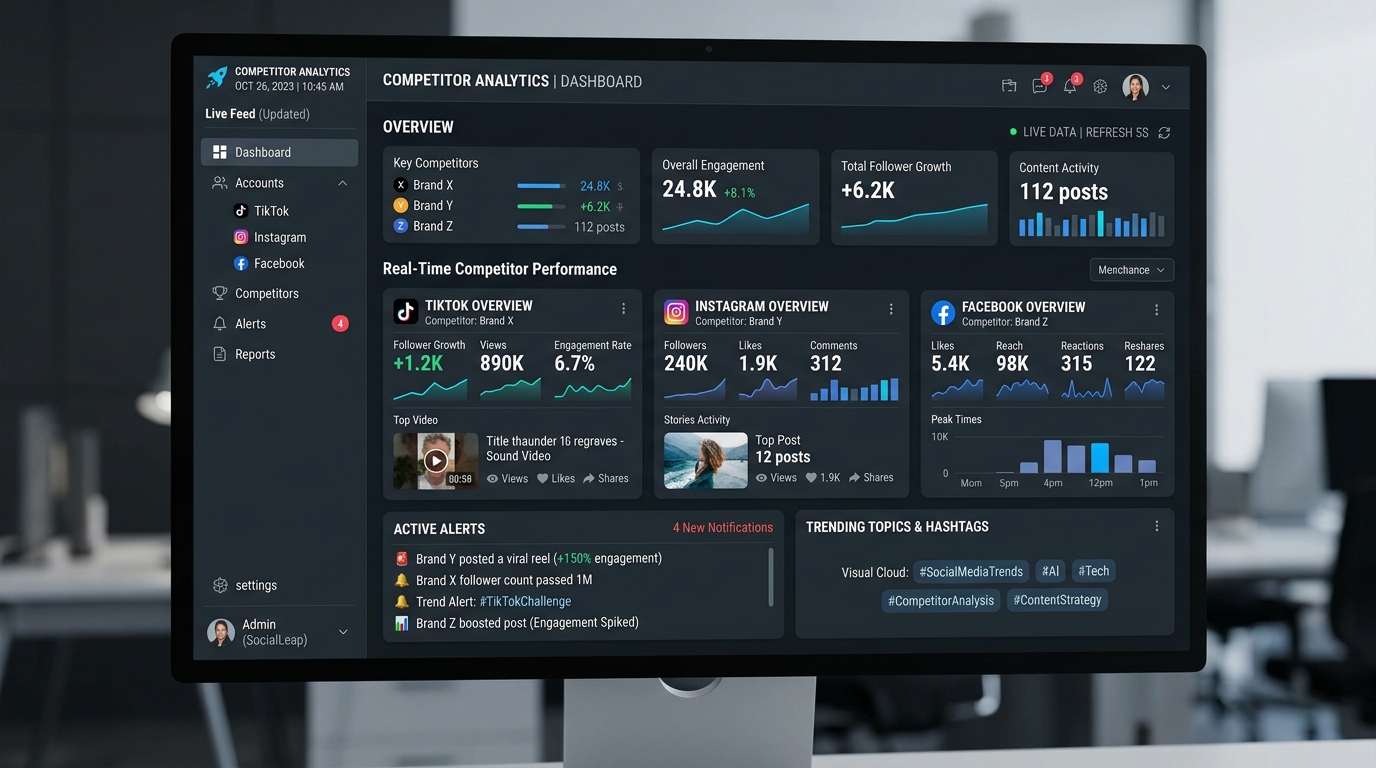
Competitor Monitoring helps you track competitor sentiment dynamics in real-time, catching crises and opportunities as they happen.
How to Choose a Competitor Monitoring Tool?
Key capabilities to look for:
1. Real-time Monitoring
Many tools have 24-48 hour data delays. By the time you see the data, the window has closed. Choose tools that offer real-time or near-real-time monitoring.
2. Multi-platform Coverage
Your competitors might be operating across TikTok, Instagram, and Facebook simultaneously. If you can only monitor one platform, you'll miss critical information from others.
3. Smart Alerts
Manually refreshing competitor profiles isn't realistic. Choose tools with smart alerts—when competitor engagement spikes, posting frequency changes, or negative sentiment emerges, the system notifies you automatically.
SocialEcho's competitor monitoring covers TikTok, Instagram, Facebook, X, and more, with real-time data tracking and smart alerts. You'll be notified within 30 minutes of a competitor post.
Your Next Steps
Today:
List your top 3 competitors. Follow their TikTok and Instagram accounts, observe their posting patterns and recent viral content.
This Week:
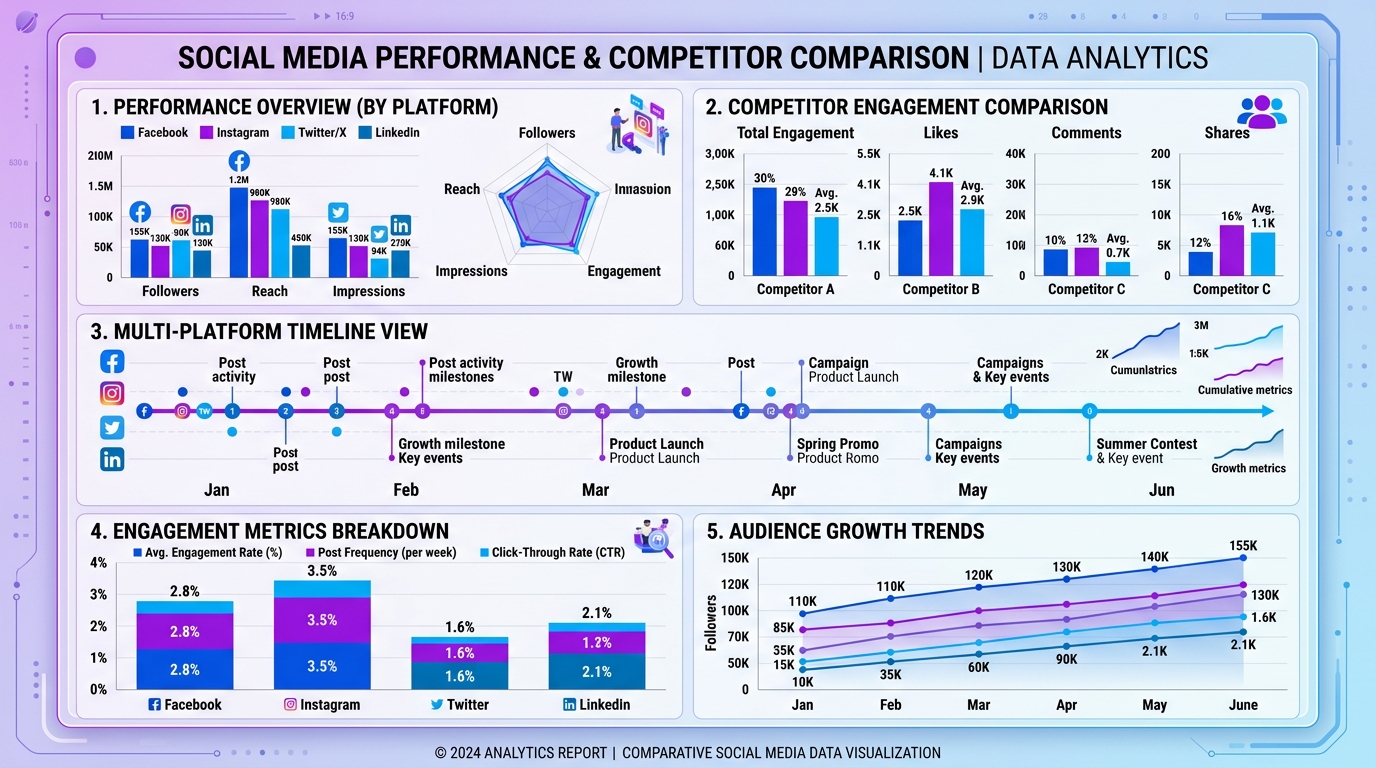
Build a competitor monitoring dashboard. Record competitor posting times, content themes, engagement metrics, and comment section feedback—create a systematic competitor intelligence library.
This Month:
Establish a competitor alert mechanism. When competitors show abnormal data fluctuations (viral posts, sentiment crises), you'll be notified immediately and can respond quickly.
FAQ
Q1: Does competitor monitoring involve privacy issues?
A: Competitor monitoring tracks publicly visible information—publicly posted content, user questions in comments. It's fully legal and compliant.
Q2: How many competitors should I monitor?
A: We recommend focusing on 3-5 core competitors. Too many will分散 your attention; too few and you might miss important information.
Q3: Is competitor monitoring valuable for SMB brands?
A: Absolutely. SMB brands have limited resources and need to stay close to competitor dynamics, using faster response speeds to make up for brand awareness gaps.
Q4: What's the relationship between competitor monitoring and data dashboards?
A: Competitor monitoring is the data source; data dashboards are the visualization tool. Use Analytics to organize competitor data into dashboards for clearer insights.
Q5: How do I find content ideas from competitor monitoring?
A: Focus on user questions and complaints in competitor comments—these are unmet needs, your content idea gold mine.
Start your free trial of SocialEcho and experience competitor monitoring today →
👉 https://www.socialecho.net
;}.cls-2{fill:%230868f7;}.cls-3{fill:url(%23未命名的渐变_44);}.cls-4{fill:%23333;}%3c/style%3e%3clinearGradient%20id='未命名的渐变_8'%20x1='33.73'%20y1='100.61'%20x2='-0.03'%20y2='-1.06'%20gradientUnits='userSpaceOnUse'%3e%3cstop%20offset='0'%20stop-color='%237ae9fb'/%3e%3cstop%20offset='0.67'%20stop-color='%232b90f8'/%3e%3cstop%20offset='1'%20stop-color='%230868f7'/%3e%3c/linearGradient%3e%3clinearGradient%20id='未命名的渐变_44'%20x1='27.86'%20y1='18.67'%20x2='68.36'%20y2='22.22'%20gradientUnits='userSpaceOnUse'%3e%3cstop%20offset='0'%20stop-color='%235ac7f2'/%3e%3cstop%20offset='1'%20stop-color='%230868f7'/%3e%3c/linearGradient%3e%3c/defs%3e%3cpath%20class='cls-1'%20d='M29,28.74V81.91l-9.51-3.68v0L8.52,74A7.17,7.17,0,0,1,4,67.32V24.54A3.76,3.76,0,0,1,9.08,21Z'/%3e%3cpath%20class='cls-2'%20d='M68.09,78.07a13.15,13.15,0,0,1-17.9,12.06L29,81.91h0V28.74L50.19,37A13.17,13.17,0,0,0,68.08,25.3h0Z'/%3e%3cpath%20class='cls-3'%20d='M68.08,25.3a13.19,13.19,0,0,1-6.73,10.87A13.09,13.09,0,0,1,50.19,37L29,28.74V6A3.76,3.76,0,0,1,34.1,2.52l25.59,9.91A13.22,13.22,0,0,1,68.08,25.3Z'/%3e%3cpath%20class='cls-4'%20d='M129.06,81.76a4.33,4.33,0,0,1-3.19-1.31,4.4,4.4,0,0,1-1.31-3.24V56.86H97.65V77.21a4.36,4.36,0,0,1-1.35,3.2A4.68,4.68,0,0,1,93,81.76a4.32,4.32,0,0,1-3.19-1.31,4.37,4.37,0,0,1-1.32-3.24V27.27A4.58,4.58,0,0,1,89.83,24a4.59,4.59,0,0,1,7.82,3.27V48.15h26.91V27.27A4.58,4.58,0,0,1,125.91,24a4.59,4.59,0,0,1,7.82,3.27V77.21a4.37,4.37,0,0,1-1.36,3.2A4.65,4.65,0,0,1,129.06,81.76Z'/%3e%3cpath%20class='cls-4'%20d='M163.77,81.66c-6.57,0-11.76-1.92-15.44-5.7s-5.54-9.07-5.54-15.74a26.76,26.76,0,0,1,2.09-10.43,17.72,17.72,0,0,1,6.67-8.06,19.15,19.15,0,0,1,10.68-2.95,19,19,0,0,1,10.46,2.8,18.7,18.7,0,0,1,6.55,7.36,22.53,22.53,0,0,1,2.36,10.28A4.51,4.51,0,0,1,177,63.77H152.23a10.8,10.8,0,0,0,3.49,6.65c2,1.68,4.88,2.52,8.66,2.52a22.25,22.25,0,0,0,7.54-1.21c.74-.3,1.55-.67,2.37-1.07a3.75,3.75,0,0,1,1.84-.4,4.09,4.09,0,0,1,3,1.15,4,4,0,0,1,1.12,3,4.38,4.38,0,0,1-2.58,3.82,32.34,32.34,0,0,1-6.36,2.61A28.67,28.67,0,0,1,163.77,81.66ZM172.4,55.9a9.72,9.72,0,0,0-1.63-4.56A9.9,9.9,0,0,0,167,48a10.38,10.38,0,0,0-4.64-1.14,12,12,0,0,0-4.77,1.06,9.54,9.54,0,0,0-4.89,5.66,11.78,11.78,0,0,0-.51,2.3Z'/%3e%3cpath%20class='cls-4'%20d='M193,81.64a4.49,4.49,0,0,1-4.51-4.55V27.28A4.58,4.58,0,0,1,189.84,24a4.48,4.48,0,0,1,3.28-1.36A4.36,4.36,0,0,1,196.35,24a4.46,4.46,0,0,1,1.31,3.31V77.09a4.34,4.34,0,0,1-1.35,3.2A4.67,4.67,0,0,1,193,81.64Z'/%3e%3cpath%20class='cls-4'%20d='M263.79,81.71a5.7,5.7,0,0,1-4.2-1.74,5.76,5.76,0,0,1-1.73-4.19V27.37a4.58,4.58,0,0,1,1.35-3.27A4.59,4.59,0,0,1,267,27.37V72.53h24a4.58,4.58,0,0,1,3.27,7.82A4.66,4.66,0,0,1,291,81.71Z'/%3e%3cpath%20class='cls-4'%20d='M424.48,81.74a4.71,4.71,0,0,1-2.71-.88,5.43,5.43,0,0,1-1-1l-.07-.09-12.41-17-5.41,5v9.44a4.31,4.31,0,0,1-1.36,3.19,4.66,4.66,0,0,1-3.3,1.36A4.29,4.29,0,0,1,395,80.42a4.36,4.36,0,0,1-1.32-3.23V27.37A4.58,4.58,0,0,1,395,24.1a4.52,4.52,0,0,1,6.58.12,4.54,4.54,0,0,1,1.24,3.15V56.31l17.72-16.38.05,0a4.8,4.8,0,0,1,2.94-1.11,4.4,4.4,0,0,1,3.27,1.2,4.57,4.57,0,0,1,1.2,3.27,4.44,4.44,0,0,1-.77,2.33,7.45,7.45,0,0,1-1.43,1.65l-11,9.64,13.34,17.68a5,5,0,0,1,1,2.71,4.12,4.12,0,0,1-1.36,3.24A4.64,4.64,0,0,1,424.48,81.74Z'/%3e%3cpath%20class='cls-4'%20d='M317.93,81.76a21.5,21.5,0,1,1,21.17-21.5A21.37,21.37,0,0,1,317.93,81.76Zm0-34.1a12.61,12.61,0,1,0,12.42,12.6A12.52,12.52,0,0,0,317.93,47.66Z'/%3e%3cpath%20class='cls-4'%20d='M212.18,101.22a4.12,4.12,0,0,1-3.05-1.26,4.17,4.17,0,0,1-1.26-3.1V43.34a4.37,4.37,0,0,1,1.3-3.14,4.26,4.26,0,0,1,3.13-1.3,4.19,4.19,0,0,1,3.1,1.26,4.32,4.32,0,0,1,1.26,3.16,20.77,20.77,0,0,1,13-4.54,21.51,21.51,0,0,1,0,43,20.51,20.51,0,0,1-13-4.57V96.86a4.15,4.15,0,0,1-1.3,3.06A4.5,4.5,0,0,1,212.18,101.22Zm17.43-53.63c-6.23,0-12.93,4.11-12.93,12.72a12.73,12.73,0,0,0,25.46,0A12.71,12.71,0,0,0,229.61,47.59Z'/%3e%3cpath%20class='cls-4'%20d='M365.76,81.76a21.5,21.5,0,1,1,21.18-21.5A21.37,21.37,0,0,1,365.76,81.76Zm0-34.1a12.61,12.61,0,1,0,12.42,12.6A12.52,12.52,0,0,0,365.76,47.66Z'/%3e%3c/svg%3e)