
How can a small e-commerce team automate content creation across multiple platforms? Here's an actionable workflow for a 3-person team. You're welcome!
On Monday morning at 9 a.m., Zhou Lin, the operations manager of an independent pet supplies website, opened the schedule and found that only 11 of the 18 posts planned for the previous week had been published. Two fewer carousel images were on Instagram, three fewer short videos on TikTok, and two fewer promotional posts on Facebook. It wasn't that the team wasn't working hard; rather, the three people were simultaneously responsible for topic selection, filming, editing, publishing, replying to comments, and creating weekly reports, and the workflow had been overwhelmed by the sheer number of platforms.
For small e-commerce brands automating content creation on Instagram, TikTok, and Facebook, the core isn't about letting AI randomly generate a bunch of copy, but rather about establishing a stable process for "content sourcing, platform rewriting, scheduled posting, comment handling, and data analysis." For teams focusing on overseas growth, they can first refer to SocialEcho's e-commerce industry solutions to streamline channels, accounts, and conversion goals, then delegate repetitive tasks to the tools. This allows the team time to research product selling points, user feedback, and conversion paths.
This article uses the real operational process of a small e-commerce brand to break down an automation solution that can be implemented by a team of 3 people: how to break down a core piece of content into content for multiple platforms, how to use SocialEcho for batch scheduled publishing, how to use AI to automate the processing of comments, and finally how to use data to determine what to publish next week.

To sum it up: Automation is not about "more execution," but about reducing breakpoints.
Small e-commerce brands should automate not creative judgment, but five highly repetitive steps: material archiving, platform rewriting, scheduled publishing, comment distribution, and data aggregation.
If it takes 10 minutes to post one piece of content on each platform, then it would take 30 minutes across Instagram, TikTok, and Facebook. Six pieces of content per day would take 3 hours; assuming a 5-day week, that's 15 hours. For a 3-person team, these 15 hours should ideally be used for analyzing trending topics, optimizing product pages, and following up on purchase inquiries.
SocialEcho's content publishing capabilities are suitable for addressing this issue first. It supports one-click distribution to multiple platforms and accounts, supports text, images, videos, links, emojis, and other formats, and also supports scheduled and batch scheduled publishing. If your team is still evaluating tools, you can refer to this social media publishing software selection guide to determine if it suits your workflow. The product knowledge base shows that SocialEcho content publishing can save 90% of publishing time, supports 24/7 scheduled publishing, and improves publishing efficiency by 5x.
Step 1: Build a content pool first; don't start from scratch every day to come up with topics.
The first step in content automation is to solidify the source of topics. Small e-commerce brands often come up with topics on an ad-hoc basis every day, easily resulting in low-information-density content such as "New Arrivals," "Limited-Time Discounts," and "Welcome to Buy." A more stable approach is to build a content pool weekly, use AI content creation to generate candidate angles, and then have operations staff select versions that truly align with the product's selling points.
A small e-commerce brand can divide its content into four categories: product display, user feedback, scenario-based product seeding, and promotional conversion.
Product showcases are suitable for TikTok short videos, such as unboxing videos, before-and-after comparisons, and 30-second tutorials. User feedback is suitable for Instagram carousels and Reels, turning genuine reviews into visual content. Promotional conversions are suitable for Facebook, supplemented with pricing, links, shipping information, and after-sales service details. Contextual seeding can be reused across platforms, but the opening, cover image, and action prompts need to be adjusted separately.
It's recommended to prepare 7 core content items each week: 2 product feature demonstrations, 2 user reviews, 1 promotional activity, 1 FAQ, and 1 scenario comparison. This quantity won't be too heavy, yet it will cover the four stages of awareness, interest, comparison, and conversion.
If the team already has existing content, they can prioritize finding material from the most interactive content of the past 30 days, rather than starting from scratch. This approach is more stable than blindly chasing trending topics and is more in line with the reality of limited resources for a small team.
Step 2: Split one piece of content into three platform versions
Small e-commerce brands shouldn't create content from scratch for Instagram, TikTok, and Facebook separately. A more efficient approach is to first identify a core theme and then adapt it for each platform.
Taking "Pet Water Fountain Filter Replacement Tutorial" as an example:
- TikTok version: 15-30 second short videos, the first three seconds showing a before-and-after comparison of the filter getting dirty;
- Instagram version: Reels+ carousel, enhancing save rates with clear steps and lifestyle images;
- Facebook version: Illustrated instructions + purchase link, supplementing applicable models, promotional information, and frequently asked questions.
By splitting the same content into three versions, the team doesn't need to shoot it three times. The operations team only needs to modify the title, cover image, caption rhythm, and action prompts. For example, the opening of TikTok needs to be stronger, the visuals of Instagram need to be cleaner, and the information on Facebook needs to be more complete. If you want to reduce manual rewriting, you can use cross-platform content rewriting tools as a draft checker to avoid publishing a single draft to all platforms.
SocialEcho's TikTok-style scheduled and multi-platform publishing capabilities allow for centralized management of these versions. It supports differentiated publishing based on different platform algorithm preferences and user habits, avoiding the indiscriminate copying of the same text across all platforms.
Step 3: Replace manual reminders with batch scheduling.
Many small teams don't lack the ability to publish content; their problem lies in inconsistent publishing. They miss posts during busy periods, events are rescheduled at the last minute, or there's no one on duty on weekends, disrupting the content delivery schedule. The first issue to address with automated publishing is stability.
It's recommended that small e-commerce brands dedicate half a day each week to scheduling: first, confirm 7 core content items, then rewrite them into 3 platform versions, and finally schedule them all for the next 7 days. This way, the team doesn't need to log in to the backend at specific times every day, nor does it need to rely on group messages to remind who should post. In practice, you can first refer to the help documentation for bulk posting to check the materials, accounts, posting times, and platform restrictions in advance.
SocialEcho's content publishing feature supports batch scheduled publishing and unified backend management of content distribution across multiple accounts and platforms. For small teams, this is far more reliable than simply publishing something whenever they feel like it.
If the team has historical data, they can also use Instagram data analytics to observe the performance of different posting times; before scheduling, they can also use optimal posting time tools to do a preliminary screening. For example, comparing the midday and evening time slots for 14 consecutive days can usually give a preliminary indication of which time slot their audience is more likely to engage.
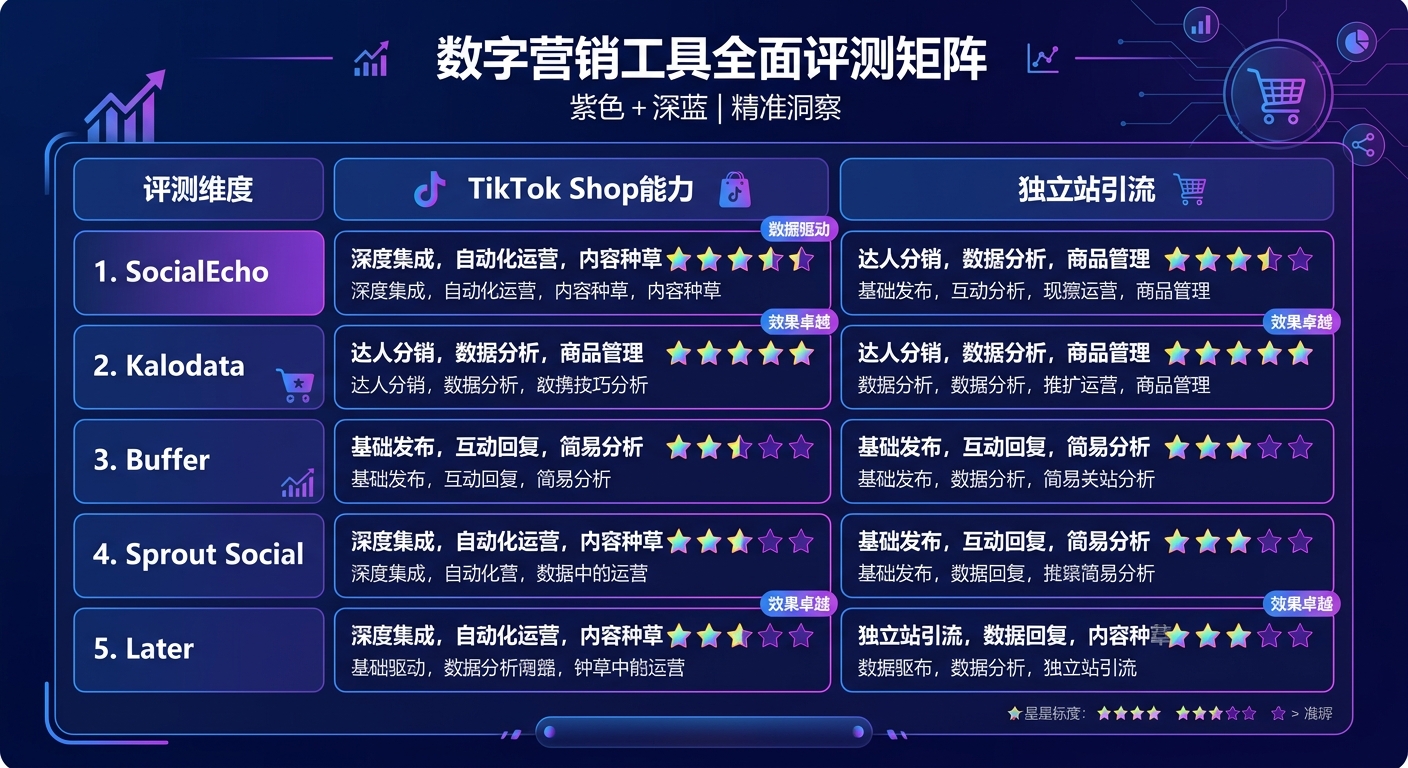
Step 4: The comment section also needs to be automated, otherwise conversions will be missed.
For small e-commerce brands, the comments section is not "interaction data," but sales leads. If a user asks "how much," "where to buy," "which model is suitable," or "how long will it take to ship," and you only reply after 12 hours, the purchase intention may have already disappeared.
SocialEcho's interaction management feature supports automatically aggregating user comments from multiple platforms for unified management, and uses AI to identify user emotions and intentions, such as positive reviews, complaints, inquiries, and purchase requests. Teams can also combine AI-powered auto-response tools with the interaction management product page to pre-design response boundaries. The product knowledge base shows that interaction management can save over 80% of labor costs, achieve over 95% accuracy in emotion recognition, and improve interaction efficiency by 3x.
Small e-commerce brands can first set up 4 types of review rules:
- Purchase inquiries: If you encounter questions like "How much?", "Link?", or "Where to buy?", the system will automatically provide a purchase link.
- Product issues: If you encounter issues related to "model," "size," or "compatibility," please reply to the FAQ or request assistance from a human.
- After-sales risks: If issues arise such as "not received", "refund", or "broken", mark them as high priority and transfer them to a human operator;
- Regular interaction: When praise, emojis, or simple feedback are received, the system will automatically express gratitude and encourage users to follow.
This isn't about replacing customer service with robots, but rather about first streamlining high-frequency, low-risk issues. Truly complex after-sales problems, complaints, and sensitive comments should still be handled manually. Before configuring, refer to how the AI comment assistant works to determine which questions can be answered automatically and which must be transferred to a human.
Step 5: Conduct a weekly review, not just checking if the post was sent.
After automating publishing, teams shouldn't just check "how many posts were published," but also "which types of content were effective." Small e-commerce brands should review at least five metrics weekly: exposure, interaction, comments, favorites, and purchase inquiries.
SocialEcho's data analytics features support real-time aggregation of data from multiple platforms and accounts, including follower count, content volume, impressions, interactions, comments, likes, shares, and favorites. It supports viewing 180 days of historical data, with data automatically updated hourly, and also supports Excel export. For establishing a long-term review mechanism, users can simultaneously view the data analytics product page and the social media data analytics tool selection guide .
A simple way to review content is to select the three best-performing pieces each week and analyze their opening, visuals, comments section issues, and conversion guidance; then select the three worst-performing pieces and determine whether the problem lies in the topic selection, the timing of publication, or an inadequate platform version.
If this action is done for four consecutive weeks, the small team will build its own content asset library instead of constantly releasing content based on intuition.
7-Day Execution Template for Small E-commerce Brands
If you don't have an automated process yet, you can run the template below for 7 days.
Day 1: Organize product selling points, user reviews, and competitor content to identify 7 core topics.
Day 2: Break down each topic into three versions: TikTok, Instagram, and Facebook.
Day 3: Prepare images, short videos, links, subtitles, and cover materials.
Day 4: Use SocialEcho to batch schedule content for the next 7 days, and use the content calendar template to check if the platform, format, and release time are covered.
Day 5: Set up comment categories and frequently asked question reply templates.
Day 6: Check the comments section and separate purchase inquiries and after-sales issues.
Day 7: Export the data and review the 3 best-performing and 3 worst-performing items.
This process is not complicated, but it solves the most critical problems: content no longer needs to be thought up on the spot, publishing no longer needs to be manually reminded, comments no longer need to be manually refreshed, and data no longer needs to be pieced together from screenshots.
EEAT Perspective: Why Small Teams Are Better Fit for "Controlled Automation"
From an experience perspective, the biggest risk for small e-commerce brands is not a lack of content, but rather a loss of control over it. Product promises, discount rules, after-sales service statements, and brand tone all require human oversight. Therefore, the most suitable solution for small teams is not fully automated outsourcing, but rather controllable automation.
From a professional perspective, Instagram, TikTok, and Facebook have different content mechanisms. TikTok emphasizes the first three seconds and the end of the video, Instagram emphasizes visual retention, and Facebook emphasizes captions and comment interaction. Automated tools must support differentiated posting, rather than simply mass posting; more sophisticated teams can also use AI automation to link content rewriting, comment distribution, and review reminders into rules.
From a credibility perspective, this article only uses features and data that have been confirmed in the SocialEcho product knowledge base, such as 90% reduction in release time, 24/7 scheduled release, 180 days of historical data, and 95%+ emotion recognition accuracy, without exaggerating non-existent capabilities.
Frequently Asked Questions (FAQ)
Q1: Can small e-commerce brands fully automate social media content creation?
Full automation is not recommended. AI can assist with topic selection, rewriting, scheduling, and comment categorization, but product selling points, pricing, event rules, and after-sales commitments still require human confirmation.
Q2: Can one piece of content be posted on Instagram, TikTok, and Facebook simultaneously?
It's possible, but copying completely is not recommended. A better approach is to use the same core material and rewrite the opening, cover, subtitles, and action prompts according to platform differences.
Q3: For small teams, which stage should automation begin to yield the best results?
Start with scheduled bulk posting and comment categorization. These two steps have high redundancy, clear rules, and controllable risks, making them the easiest way to save time.
Q4: Which social media platforms does SocialEcho support for posting?
SocialEcho content publishing supports platforms such as Facebook, Instagram, X, LinkedIn, Telegram, YouTube, TikTok, and Pinterest, making it suitable for multi-platform operation.
Q5: Will automatic replies affect the user experience?
If the rules are too simplistic, it will negatively impact the user experience. It's recommended to only handle high-frequency, low-risk questions such as purchase links, size instructions, and shipping information with automated responses, while handling complaints and refunds with human agents.
Q6: How often should small e-commerce brands schedule their content?
It is recommended to schedule the content weekly. Small teams can prepare 7 core pieces of content each week, and then break them down into versions for multiple platforms.
Q7: How do I determine if content automation is effective?
Observe whether posting time has decreased, missed posts have decreased, comment responses are faster, weekly reports are easier to generate, and whether high-performing content can be reused continuously. When a more systematic evaluation of the interaction process is needed, you can refer to the social media interaction tool selection guide .
Q8: What indicators should be looked at when reviewing data?
At a minimum, look at impressions, engagement, comments, saves, and purchase inquiries. Relying solely on view counts can easily lead to misjudging the content's conversion value.
Summarize
For small e-commerce brands automating social media content, the real challenge is to address process bottlenecks, not simply increase the quantity of content. The most stable approach is to first establish a 7-day content pool, then break down a core piece of content into multiple platform versions, use batch scheduled publishing to maintain a consistent pace, use AI to categorize comments, and use data analysis to determine the content direction for the following week.
SocialEcho is suitable for small teams because it puts content publishing, interaction management, data analysis, and AI automation on a single workbench. Teams can reduce the number of backend switches and copy-pasting operations, allowing them to focus more on product, users, and conversions.
;}.cls-2{fill:%230868f7;}.cls-3{fill:url(%23未命名的渐变_44);}.cls-4{fill:%23333;}%3c/style%3e%3clinearGradient%20id='未命名的渐变_8'%20x1='33.73'%20y1='100.61'%20x2='-0.03'%20y2='-1.06'%20gradientUnits='userSpaceOnUse'%3e%3cstop%20offset='0'%20stop-color='%237ae9fb'/%3e%3cstop%20offset='0.67'%20stop-color='%232b90f8'/%3e%3cstop%20offset='1'%20stop-color='%230868f7'/%3e%3c/linearGradient%3e%3clinearGradient%20id='未命名的渐变_44'%20x1='27.86'%20y1='18.67'%20x2='68.36'%20y2='22.22'%20gradientUnits='userSpaceOnUse'%3e%3cstop%20offset='0'%20stop-color='%235ac7f2'/%3e%3cstop%20offset='1'%20stop-color='%230868f7'/%3e%3c/linearGradient%3e%3c/defs%3e%3cpath%20class='cls-1'%20d='M29,28.74V81.91l-9.51-3.68v0L8.52,74A7.17,7.17,0,0,1,4,67.32V24.54A3.76,3.76,0,0,1,9.08,21Z'/%3e%3cpath%20class='cls-2'%20d='M68.09,78.07a13.15,13.15,0,0,1-17.9,12.06L29,81.91h0V28.74L50.19,37A13.17,13.17,0,0,0,68.08,25.3h0Z'/%3e%3cpath%20class='cls-3'%20d='M68.08,25.3a13.19,13.19,0,0,1-6.73,10.87A13.09,13.09,0,0,1,50.19,37L29,28.74V6A3.76,3.76,0,0,1,34.1,2.52l25.59,9.91A13.22,13.22,0,0,1,68.08,25.3Z'/%3e%3cpath%20class='cls-4'%20d='M129.06,81.76a4.33,4.33,0,0,1-3.19-1.31,4.4,4.4,0,0,1-1.31-3.24V56.86H97.65V77.21a4.36,4.36,0,0,1-1.35,3.2A4.68,4.68,0,0,1,93,81.76a4.32,4.32,0,0,1-3.19-1.31,4.37,4.37,0,0,1-1.32-3.24V27.27A4.58,4.58,0,0,1,89.83,24a4.59,4.59,0,0,1,7.82,3.27V48.15h26.91V27.27A4.58,4.58,0,0,1,125.91,24a4.59,4.59,0,0,1,7.82,3.27V77.21a4.37,4.37,0,0,1-1.36,3.2A4.65,4.65,0,0,1,129.06,81.76Z'/%3e%3cpath%20class='cls-4'%20d='M163.77,81.66c-6.57,0-11.76-1.92-15.44-5.7s-5.54-9.07-5.54-15.74a26.76,26.76,0,0,1,2.09-10.43,17.72,17.72,0,0,1,6.67-8.06,19.15,19.15,0,0,1,10.68-2.95,19,19,0,0,1,10.46,2.8,18.7,18.7,0,0,1,6.55,7.36,22.53,22.53,0,0,1,2.36,10.28A4.51,4.51,0,0,1,177,63.77H152.23a10.8,10.8,0,0,0,3.49,6.65c2,1.68,4.88,2.52,8.66,2.52a22.25,22.25,0,0,0,7.54-1.21c.74-.3,1.55-.67,2.37-1.07a3.75,3.75,0,0,1,1.84-.4,4.09,4.09,0,0,1,3,1.15,4,4,0,0,1,1.12,3,4.38,4.38,0,0,1-2.58,3.82,32.34,32.34,0,0,1-6.36,2.61A28.67,28.67,0,0,1,163.77,81.66ZM172.4,55.9a9.72,9.72,0,0,0-1.63-4.56A9.9,9.9,0,0,0,167,48a10.38,10.38,0,0,0-4.64-1.14,12,12,0,0,0-4.77,1.06,9.54,9.54,0,0,0-4.89,5.66,11.78,11.78,0,0,0-.51,2.3Z'/%3e%3cpath%20class='cls-4'%20d='M193,81.64a4.49,4.49,0,0,1-4.51-4.55V27.28A4.58,4.58,0,0,1,189.84,24a4.48,4.48,0,0,1,3.28-1.36A4.36,4.36,0,0,1,196.35,24a4.46,4.46,0,0,1,1.31,3.31V77.09a4.34,4.34,0,0,1-1.35,3.2A4.67,4.67,0,0,1,193,81.64Z'/%3e%3cpath%20class='cls-4'%20d='M263.79,81.71a5.7,5.7,0,0,1-4.2-1.74,5.76,5.76,0,0,1-1.73-4.19V27.37a4.58,4.58,0,0,1,1.35-3.27A4.59,4.59,0,0,1,267,27.37V72.53h24a4.58,4.58,0,0,1,3.27,7.82A4.66,4.66,0,0,1,291,81.71Z'/%3e%3cpath%20class='cls-4'%20d='M424.48,81.74a4.71,4.71,0,0,1-2.71-.88,5.43,5.43,0,0,1-1-1l-.07-.09-12.41-17-5.41,5v9.44a4.31,4.31,0,0,1-1.36,3.19,4.66,4.66,0,0,1-3.3,1.36A4.29,4.29,0,0,1,395,80.42a4.36,4.36,0,0,1-1.32-3.23V27.37A4.58,4.58,0,0,1,395,24.1a4.52,4.52,0,0,1,6.58.12,4.54,4.54,0,0,1,1.24,3.15V56.31l17.72-16.38.05,0a4.8,4.8,0,0,1,2.94-1.11,4.4,4.4,0,0,1,3.27,1.2,4.57,4.57,0,0,1,1.2,3.27,4.44,4.44,0,0,1-.77,2.33,7.45,7.45,0,0,1-1.43,1.65l-11,9.64,13.34,17.68a5,5,0,0,1,1,2.71,4.12,4.12,0,0,1-1.36,3.24A4.64,4.64,0,0,1,424.48,81.74Z'/%3e%3cpath%20class='cls-4'%20d='M317.93,81.76a21.5,21.5,0,1,1,21.17-21.5A21.37,21.37,0,0,1,317.93,81.76Zm0-34.1a12.61,12.61,0,1,0,12.42,12.6A12.52,12.52,0,0,0,317.93,47.66Z'/%3e%3cpath%20class='cls-4'%20d='M212.18,101.22a4.12,4.12,0,0,1-3.05-1.26,4.17,4.17,0,0,1-1.26-3.1V43.34a4.37,4.37,0,0,1,1.3-3.14,4.26,4.26,0,0,1,3.13-1.3,4.19,4.19,0,0,1,3.1,1.26,4.32,4.32,0,0,1,1.26,3.16,20.77,20.77,0,0,1,13-4.54,21.51,21.51,0,0,1,0,43,20.51,20.51,0,0,1-13-4.57V96.86a4.15,4.15,0,0,1-1.3,3.06A4.5,4.5,0,0,1,212.18,101.22Zm17.43-53.63c-6.23,0-12.93,4.11-12.93,12.72a12.73,12.73,0,0,0,25.46,0A12.71,12.71,0,0,0,229.61,47.59Z'/%3e%3cpath%20class='cls-4'%20d='M365.76,81.76a21.5,21.5,0,1,1,21.18-21.5A21.37,21.37,0,0,1,365.76,81.76Zm0-34.1a12.61,12.61,0,1,0,12.42,12.6A12.52,12.52,0,0,0,365.76,47.66Z'/%3e%3c/svg%3e)