
How I managed 5 platform accounts by myself and cut 3 hours of repetitive work every day.
How I managed 5 platform accounts by myself and cut 3 hours of repetitive work every day.

It's midnight. You've just finished editing today's TikTok video, opened Instagram to post pictures, and found 23 unanswered comments on Xiaohongshu, someone asking about prices in the comments section of your YouTube community post, and your Telegram channel followers urging you to release the next episode. You're alone, on five platforms, and each one is waiting for you.
This is not an extreme case; this is the daily life of a one-person creator in 2026.
One person supports multiple platforms, where did all the time go?
In a video released in March 2026, Dan Koe said something that many people screenshotted and shared: "The core competitiveness of a one-person company is not how hard you work, but how much repetitive work you delegate to the system."
This statement hits a nerve with many creators. But the problem is, most people know they need to "systematize," but they don't know what's really eating up their time.
Anyone who has experience managing multiple platforms knows that the real time drain isn't content creation, but rather those seemingly "quick" but ultimately deadly fragmented tasks:
Logging in and switching accounts takes 2 minutes each time, 10 times a day, 20 minutes gone. Reformatting the same content and posting it to different platforms takes 15 minutes each time, 3 times a day, 45 minutes gone. Scrolling through the comment sections of 5 platforms, finding the replies that need to be given, and typing them out one by one, 1 hour gone. Taking screenshots of data from 5 platforms and piecing them together into a weekly report chart, 2 hours gone every week.
In total, a creator who diligently manages 5 platforms spends 2 to 3 hours a day on these things. Those 2 to 3 hours could have been used to shoot a video, write an article, or even take a nap.
In 2026, this problem will become even more severe.
The number of platforms is increasing, but creators' time is not.
In 2025, TikTok continued to expand its user base in Southeast Asia and Europe, YouTube Shorts saw a significant increase in traffic weighting, and Instagram Reels' algorithm placed increasingly higher demands on posting frequency. Meanwhile, LinkedIn became more content-distribution-friendly for individual creators, and Telegram channels became private domains for many creators in various vertical fields.
The result is that you can no longer rely on just one platform. Relying on one platform means putting all your traffic eggs in one basket; if the platform's algorithm changes, your income will fluctuate wildly.
However, operating five platforms simultaneously and relying solely on manpower is unsustainable. A person's energy has its limits. When you spend most of your time on "copying and managing," the actual quality of your content declines. This decline in quality, in turn, requires you to spend even more time fixing the data. It's a vicious cycle.
The real problem isn't that you're not working hard enough, but that you're using the work methods of 2020 to deal with the platform ecosystem of 2026.
Why can't "effort" solve this problem?
The more platforms you have, the more exponentially your management costs increase, not linearly.
Expanding from one platform to two roughly doubles the workload. Expanding from two to five doesn't just increase the workload by 2.5 times, but by 4 to 5 times. This is because each additional platform adds not only a new publishing channel, but also a new set of comments to manage, a new set of data to analyze, and a new set of algorithms to study.
Many creators start to feel overwhelmed when they start operating on their third platform, not because they don't have enough content, but because the management costs have exceeded their time budget.
The comments section is the most easily overlooked conversion entry point.
You post a video, and someone comments asking "Where can I buy this?" You don't see it until three hours later, and that person has already bought a competitor's product. This isn't hypothetical; it happens every day.
The golden window for responding to comments is within 30 minutes. Replying within 30 minutes will give the algorithm a higher engagement weight, and users are more likely to be converted. However, if you are monitoring the comment sections of 5 platforms simultaneously, responding within 30 minutes is almost an impossible task.
Data fragmentation prevents you from making the right decisions.
Do you know which of your posts performed best last week? Do you know the differences in interaction habits between your TikTok and Instagram followers? Do you know what your competitors posted last week and how well it went?
If you need an hour to sift through data to answer these questions, your content decisions are outdated. Outdated decisions mean you're using yesterday's data to create today's content, while your competitors are already adjusting their strategies with real-time data.
The unexpected solution: not "manage harder," but "let the system manage for you."
Many people associate "systematization" with "hiring people". But by 2026, hiring people will no longer be the only option.
The real solution is to automate all operations that don't require your personal judgment, and dedicate your time to tasks that only you can handle—creativity and strategy.
Specifically, there are three things that can be systematized immediately:
First item: Content publishing
You don't need to log in to each platform and manually post every time. One-click multi-platform posting lets you write your content in one backend, set the posting time, and automatically distribute it to 7 platforms including TikTok, Instagram, YouTube, LinkedIn, and Telegram. More importantly, it supports differentiated adjustments for different platforms—the same content can have hashtags added for Instagram, captions added for TikTok, and tone adjusted for LinkedIn, all in one operation.
This step saves you not only publishing time, but also the fragmented time spent on "switching platforms, logging in again, and adjusting formats." In actual use, it can improve publishing efficiency by more than 5 times.
Second item: Comment management
You don't need to go through the reviews on 5 platforms one by one. The interaction management system automatically aggregates all the reviews from all platforms into one inbox. AI will help you identify which are purchase intentions, which are complaints, and which are ordinary interactions, allowing you to prioritize the most important ones.
For frequently asked questions (such as "How to buy?" or "Are there any discounts?"), you can set up an auto-response template so the system can respond automatically within 30 minutes, ensuring you don't miss any potential customers. This step can save you over 80% of your comment management time.
The third item: Data reporting
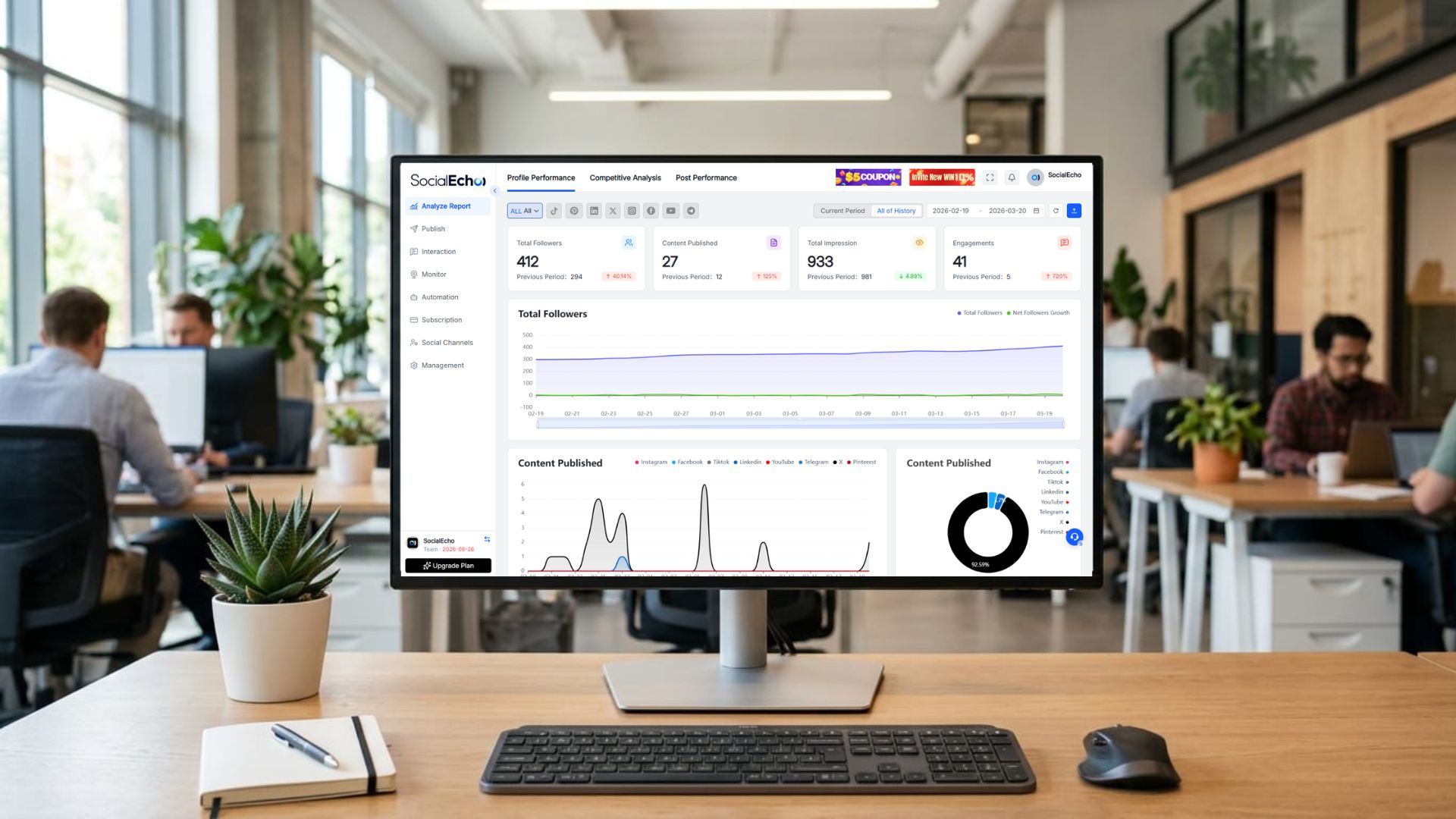
No more weekly screenshots and report compilations! Data analytics automatically aggregates data from eight platforms, including follower growth, content exposure, engagement rates, and most popular content rankings, all in one interface. It supports exporting to Excel, and you can access 180 days of historical data anytime.
You can also add your competitors' accounts for automatic monitoring. Just take a look every day to know what they are doing and how effective they are.
A real time bill
Let's say you currently spend 3 hours a day on repetitive tasks:
Content posting (platform switching + format adjustment): 45 minutes → After systematization: 10 minutes Comment management (switching 5 platforms + replying): 60 minutes → After systematization: 15 minutes Data viewing (screenshots + organization): 30 minutes → After systematization: 5 minutes Account switching + login: 20 minutes → After systematization: 0 minutes
Save approximately 2.5 hours per day. Save 75 hours per month.
75 hours is enough for you to shoot 30 more videos, write 20 more articles, or get 75 more good nights of sleep.
Executable action instructions
If you are currently operating more than 3 platforms simultaneously, you can start systematizing them in this order:
The first step is to address the publishing issue. Prepare the entire content schedule for next week in advance, using the scheduled publishing function to set it up all at once and let the system execute it automatically. This step is the easiest to learn and yields the most immediate results.
The second step is to set up automated comment responses. Compile your five most frequently asked questions into a reply template, configure the AI automatic reply rules, and ensure the system can respond promptly even when you are offline.
The third step is to set up a data dashboard. Integrate all your platform accounts into the data analytics platform , set up the metrics you care about most, and spend 5 minutes each day reviewing them, replacing the previous manual screenshotting process.
at last
Dan Koe is right: the core competitiveness of a one-person company lies in how much repetitive work you delegate to the system.
But I'd like to add: systematization isn't about being lazy; it's about dedicating your most valuable time to the things that truly deserve your personal attention.
Content creation, genuine connection with fans, and judgment of industry trends—these are things only you can do, and they're what truly give your account value. Those login, switching, screenshotting, and copy-pasting operations—you don't need to do them yourself.
By 2026, operating five platforms by one person will no longer be an impossible task. The real question is: are you willing to let the system do the things that don't require your intervention?
;}.cls-2{fill:%230868f7;}.cls-3{fill:url(%23未命名的渐变_44);}.cls-4{fill:%23333;}%3c/style%3e%3clinearGradient%20id='未命名的渐变_8'%20x1='33.73'%20y1='100.61'%20x2='-0.03'%20y2='-1.06'%20gradientUnits='userSpaceOnUse'%3e%3cstop%20offset='0'%20stop-color='%237ae9fb'/%3e%3cstop%20offset='0.67'%20stop-color='%232b90f8'/%3e%3cstop%20offset='1'%20stop-color='%230868f7'/%3e%3c/linearGradient%3e%3clinearGradient%20id='未命名的渐变_44'%20x1='27.86'%20y1='18.67'%20x2='68.36'%20y2='22.22'%20gradientUnits='userSpaceOnUse'%3e%3cstop%20offset='0'%20stop-color='%235ac7f2'/%3e%3cstop%20offset='1'%20stop-color='%230868f7'/%3e%3c/linearGradient%3e%3c/defs%3e%3cpath%20class='cls-1'%20d='M29,28.74V81.91l-9.51-3.68v0L8.52,74A7.17,7.17,0,0,1,4,67.32V24.54A3.76,3.76,0,0,1,9.08,21Z'/%3e%3cpath%20class='cls-2'%20d='M68.09,78.07a13.15,13.15,0,0,1-17.9,12.06L29,81.91h0V28.74L50.19,37A13.17,13.17,0,0,0,68.08,25.3h0Z'/%3e%3cpath%20class='cls-3'%20d='M68.08,25.3a13.19,13.19,0,0,1-6.73,10.87A13.09,13.09,0,0,1,50.19,37L29,28.74V6A3.76,3.76,0,0,1,34.1,2.52l25.59,9.91A13.22,13.22,0,0,1,68.08,25.3Z'/%3e%3cpath%20class='cls-4'%20d='M129.06,81.76a4.33,4.33,0,0,1-3.19-1.31,4.4,4.4,0,0,1-1.31-3.24V56.86H97.65V77.21a4.36,4.36,0,0,1-1.35,3.2A4.68,4.68,0,0,1,93,81.76a4.32,4.32,0,0,1-3.19-1.31,4.37,4.37,0,0,1-1.32-3.24V27.27A4.58,4.58,0,0,1,89.83,24a4.59,4.59,0,0,1,7.82,3.27V48.15h26.91V27.27A4.58,4.58,0,0,1,125.91,24a4.59,4.59,0,0,1,7.82,3.27V77.21a4.37,4.37,0,0,1-1.36,3.2A4.65,4.65,0,0,1,129.06,81.76Z'/%3e%3cpath%20class='cls-4'%20d='M163.77,81.66c-6.57,0-11.76-1.92-15.44-5.7s-5.54-9.07-5.54-15.74a26.76,26.76,0,0,1,2.09-10.43,17.72,17.72,0,0,1,6.67-8.06,19.15,19.15,0,0,1,10.68-2.95,19,19,0,0,1,10.46,2.8,18.7,18.7,0,0,1,6.55,7.36,22.53,22.53,0,0,1,2.36,10.28A4.51,4.51,0,0,1,177,63.77H152.23a10.8,10.8,0,0,0,3.49,6.65c2,1.68,4.88,2.52,8.66,2.52a22.25,22.25,0,0,0,7.54-1.21c.74-.3,1.55-.67,2.37-1.07a3.75,3.75,0,0,1,1.84-.4,4.09,4.09,0,0,1,3,1.15,4,4,0,0,1,1.12,3,4.38,4.38,0,0,1-2.58,3.82,32.34,32.34,0,0,1-6.36,2.61A28.67,28.67,0,0,1,163.77,81.66ZM172.4,55.9a9.72,9.72,0,0,0-1.63-4.56A9.9,9.9,0,0,0,167,48a10.38,10.38,0,0,0-4.64-1.14,12,12,0,0,0-4.77,1.06,9.54,9.54,0,0,0-4.89,5.66,11.78,11.78,0,0,0-.51,2.3Z'/%3e%3cpath%20class='cls-4'%20d='M193,81.64a4.49,4.49,0,0,1-4.51-4.55V27.28A4.58,4.58,0,0,1,189.84,24a4.48,4.48,0,0,1,3.28-1.36A4.36,4.36,0,0,1,196.35,24a4.46,4.46,0,0,1,1.31,3.31V77.09a4.34,4.34,0,0,1-1.35,3.2A4.67,4.67,0,0,1,193,81.64Z'/%3e%3cpath%20class='cls-4'%20d='M263.79,81.71a5.7,5.7,0,0,1-4.2-1.74,5.76,5.76,0,0,1-1.73-4.19V27.37a4.58,4.58,0,0,1,1.35-3.27A4.59,4.59,0,0,1,267,27.37V72.53h24a4.58,4.58,0,0,1,3.27,7.82A4.66,4.66,0,0,1,291,81.71Z'/%3e%3cpath%20class='cls-4'%20d='M424.48,81.74a4.71,4.71,0,0,1-2.71-.88,5.43,5.43,0,0,1-1-1l-.07-.09-12.41-17-5.41,5v9.44a4.31,4.31,0,0,1-1.36,3.19,4.66,4.66,0,0,1-3.3,1.36A4.29,4.29,0,0,1,395,80.42a4.36,4.36,0,0,1-1.32-3.23V27.37A4.58,4.58,0,0,1,395,24.1a4.52,4.52,0,0,1,6.58.12,4.54,4.54,0,0,1,1.24,3.15V56.31l17.72-16.38.05,0a4.8,4.8,0,0,1,2.94-1.11,4.4,4.4,0,0,1,3.27,1.2,4.57,4.57,0,0,1,1.2,3.27,4.44,4.44,0,0,1-.77,2.33,7.45,7.45,0,0,1-1.43,1.65l-11,9.64,13.34,17.68a5,5,0,0,1,1,2.71,4.12,4.12,0,0,1-1.36,3.24A4.64,4.64,0,0,1,424.48,81.74Z'/%3e%3cpath%20class='cls-4'%20d='M317.93,81.76a21.5,21.5,0,1,1,21.17-21.5A21.37,21.37,0,0,1,317.93,81.76Zm0-34.1a12.61,12.61,0,1,0,12.42,12.6A12.52,12.52,0,0,0,317.93,47.66Z'/%3e%3cpath%20class='cls-4'%20d='M212.18,101.22a4.12,4.12,0,0,1-3.05-1.26,4.17,4.17,0,0,1-1.26-3.1V43.34a4.37,4.37,0,0,1,1.3-3.14,4.26,4.26,0,0,1,3.13-1.3,4.19,4.19,0,0,1,3.1,1.26,4.32,4.32,0,0,1,1.26,3.16,20.77,20.77,0,0,1,13-4.54,21.51,21.51,0,0,1,0,43,20.51,20.51,0,0,1-13-4.57V96.86a4.15,4.15,0,0,1-1.3,3.06A4.5,4.5,0,0,1,212.18,101.22Zm17.43-53.63c-6.23,0-12.93,4.11-12.93,12.72a12.73,12.73,0,0,0,25.46,0A12.71,12.71,0,0,0,229.61,47.59Z'/%3e%3cpath%20class='cls-4'%20d='M365.76,81.76a21.5,21.5,0,1,1,21.18-21.5A21.37,21.37,0,0,1,365.76,81.76Zm0-34.1a12.61,12.61,0,1,0,12.42,12.6A12.52,12.52,0,0,0,365.76,47.66Z'/%3e%3c/svg%3e)