
B2B LinkedIn Failure: Why Zero Engagement After Months of Posting (And How to Fix It)
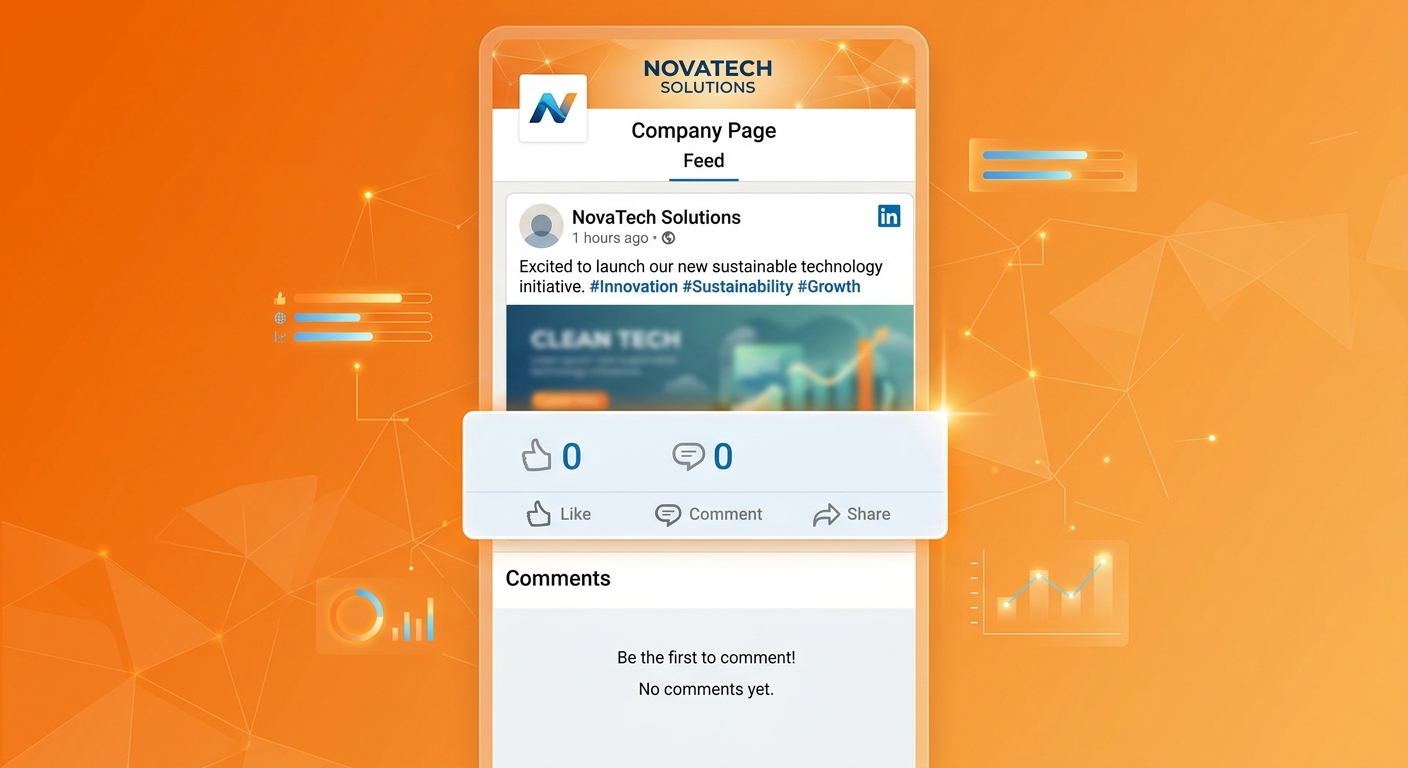
Wang Lei stared at the screen, still clutching the now-cold cup of coffee. The screen displayed the company's LinkedIn profile data: in the past 90 days, 47 posts had been published, garnering a total of 11 interactions—likes, comments, and shares combined. Seven of those were likes from internal colleagues.
He has been doing overseas marketing for 5 years, and has built an industrial equipment brand with 100,000 followers on WeChat. But LinkedIn, which his boss repeatedly mentioned as a "must-win platform for B2B companies going global," has left him completely bewildered.
This is not an isolated case.
Similar conversations occur weekly in the operations groups of various brands expanding overseas: "How can I make my LinkedIn posts effective?" "Why does it feel like nobody sees my posts?" "Is LinkedIn unsuitable for our industry?"
The problem isn't that the industry isn't a good fit. The problem is that you're using LinkedIn as a posting platform , not as a professional social network .

Act One: You think you're doing content marketing, but you're actually talking to yourself.
90 days, 47 articles, 11 interactions—the truth behind the numbers
Wang Lei's team publishes three pieces of content per week, and the content quality is not bad: product introductions, industry news, company updates, and case studies. The format is also correct: it includes images, videos, and articles. The publication time has also been carefully considered, choosing Tuesday and Thursday mornings.
Why is no one interacting?
Because they were just posting, not engaging in social media .
LinkedIn's content distribution logic is completely different from that of domestic platforms. Weibo, WeChat official accounts, and Douyin are all based on "content finding people"—the platform's algorithm pushes your content to people who might be interested. But LinkedIn's core logic is "people finding content," or more accurately, relationship networks activating content .
How many people see a post on LinkedIn depends over 70% on whether your employees and followers interact within the first 1-2 hours after it's published . If there's no early interaction, the algorithm will determine that the content is "not worth sharing," and it will slowly sink to the bottom, even becoming invisible to those who already follow you.
Wang Lei's team did not establish any internal interaction mechanism. They would post and then disperse, waiting for "natural user interaction." However, their company page only had 800 followers, and most of them were passive followers who rarely opened LinkedIn.
The content was sent out and went into a black hole.
"B2B clients don't use social media"—this excuse is harming you.
Many operations staff have a psychological comfort: B2B decision-makers are very busy and they don't use LinkedIn.
Data contradicts this idea. Official LinkedIn data shows that there are over 100 million senior managers on the platform, and 65% of B2B buyers research a supplier's LinkedIn profile before making a purchase decision. More importantly: if your competitors appear in the purchasing manager's feed and yours don't, you've already lost the first round.
The problem isn't whether your clients are on LinkedIn; the problem is whether they can see and remember you on LinkedIn.
Act Two: 5 Deep-seated Reasons That Are Killing Your Engagement Rate
On the surface, it seems that the content is ineffective, but if you break it down carefully, you will find that the problem is more systematic and deeper than you think.
Pitfall 1: Only operating the enterprise account and neglecting employees' personal accounts.
LinkedIn is a people- centric network. The reach of content from a company's homepage is inherently weaker than that of a personal account.
In LinkedIn's algorithm, content posted by personal accounts receives an average of three times more organic reach than content posted by business pages. This isn't bias; it's platform design—people prefer to hear from individuals rather than hear from brands.
Successful overseas brands keep their marketing directors, sales VPs, and technical leads active on LinkedIn, sharing industry insights, forwarding company content, and participating in client discussion threads. While the company website serves as brand endorsement, employee personal accounts are the true traffic drivers.
However, most brands going global operate by having only one operations staff member working alone to maintain a company homepage, while no one else participates at all.
This is equivalent to opening a store, but only posting a QR code at the warehouse entrance, with no salespeople going out to talk to customers.
Pitfall 2: The content posted is all "self-introduction" instead of "solving problems".
If you browse through the content of those zero-interaction corporate accounts, you'll find a pattern: over 70% of it is about themselves .
- The company participated in a certain exhibition
- New product launch
- The factory upgraded its equipment.
- Awarded [award name]
- Happy New Year to everyone!
These contents share a common characteristic: they have no direct value to the reader.
Highly engaging content on LinkedIn often solves a specific problem or evokes strong resonance. For example:
- "We helped a European manufacturer reduce their delivery cycle from 45 days to 18 days using these three methods."
- Why do most factories get stuck at the certification stage when trying to enter the US market?
- What a B2B purchasing manager won't tell you: What he values most when selecting suppliers.
The logic behind this type of content is: first provide value, then build trust, and only then can business opportunities arise . It's not about immediately selling yourself.
Pitfall 3: Never replying to comments after posting.
Even when someone occasionally leaves a comment under a post, many operations staff react by saying: "I saw it, but I don't know how to reply," or "There are too few comments to be worth handling."
This is a fatal mistake that ruins engagement rates.
LinkedIn's algorithm continuously tracks the engagement density of posts after they are published. Your reply or comment is itself a new interaction signal , which triggers the algorithm to push the post to more people. Within 72 hours of a post being published, every meaningful reply can potentially bring a new wave of exposure.
More importantly, the person who left the comment might be a potential customer or an intermediary who could introduce you to a client. If you don't reply, they'll leave and never come back.
A well-structured comment management process is the most easily overlooked yet most rewarding aspect of LinkedIn operations.
Pitfall 4: Release timing and frequency are entirely based on intuition.
"We post on Tuesday or Thursday mornings"—where does this habit come from? It's usually a suggestion of "best time to post" seen in an article.
However, the optimal time to post on LinkedIn varies greatly depending on industry, region, and audience. The optimal posting time for a Chinese brand that primarily targets European manufacturing clients may differ by more than six hours from that of a software company that primarily targets North American tech companies.
The bigger problem is that many teams haven't established a stable posting rhythm. They might post five times a week, one time the following week, and then stop posting altogether. LinkedIn's algorithm is very sensitive to account activity, and irregular posting behavior will result in the algorithm penalizing the account , causing the audience reached to shrink even when content is posted.
Establishing a sustainable posting rhythm through LinkedIn's scheduled posting tool is more important than chasing the "best time." A consistent 3-4 posts per week is far more effective than fluctuating posting frequencies.
Pitfall 5: Never looking at data, or not knowing what data to look at.
"We look at the data, but it all seems pretty much the same, and we don't know how to optimize it."
This statement exposes a core problem: the data was examined, but no analytical framework was developed .
LinkedIn provides a lot of data, but most teams only look at "impressions" and "likes." While these two metrics are important, a more crucial metric is:
- Interaction rate (number of interactions ÷ number of impressions): a core metric for measuring content quality.
- Changes in audience profile : Are your followers getting closer and closer to your target customer group?
- Job distribution reached by your posts : Did your content reach the decision-making level?
- Link click behavior : How many people clicked on links on your website or landing page?
By systematically tracking these metrics through LinkedIn data analytics , you can determine which types of content are worth continuing to create and which types are a waste of time.
Act Three: From Zero Interaction to Effective Operation – You Don't Need More Content
The good news is that all five issues can be fixed. The bad news is that fixing them doesn't require "posting more," but rather a change in operational logic .
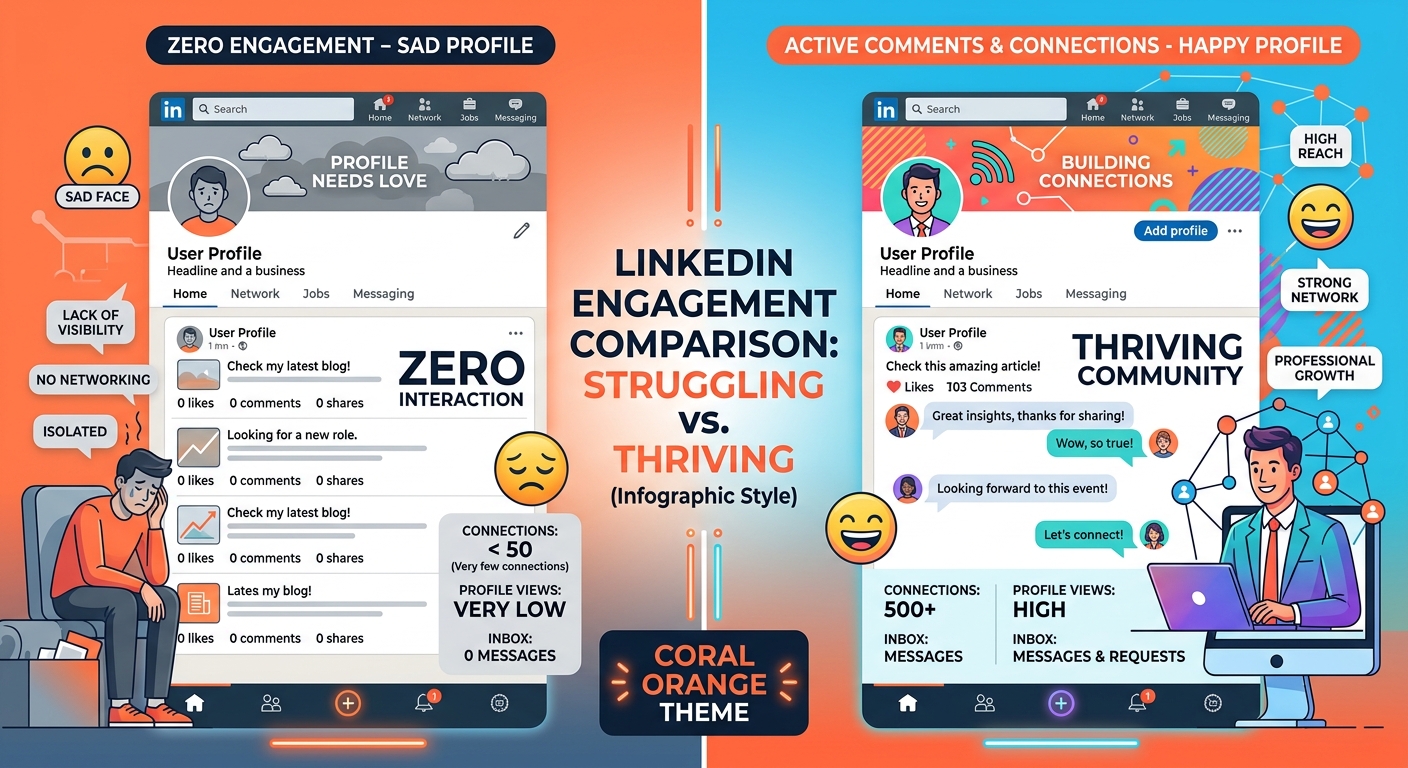
Turning point: Managing LinkedIn as a relationship network
The most fundamental shift in mindset is to stop treating LinkedIn as a content distribution channel and start treating it as a relationship network that needs to be actively cultivated .
This means:
- Comments over posts : Spending 15 minutes each day commenting on posts from clients, partners, and industry KOLs is more valuable than creating new content.
- Private message follow-up : When someone likes or comments on your post, send a private message to thank them and establish a link within 24 hours.
- Content should serve the dialogue : Each piece of content should end with a clear interactive prompt, such as "What methods did you use to deal with this problem?"
An executable 90-day improvement plan
Days 1-30: Building the Foundation
- Activate the LinkedIn accounts of 5-10 core employees and establish an internal interaction protocol (designated team members must like and comment on each post within half an hour).
- Content proportion adjustments: Self-promotion content decreased from 70% to 30%, while problem-solving and industry insight content increased to 70%.
- Establish a fixed weekly publishing schedule: 3 articles per week, Monday/Wednesday/Friday. Utilize scheduled publishing tools to plan ahead and ensure a consistent pace.
Days 31-60: Improve Quality
- Analyze the content published in the first 30 days to identify the three articles with the highest interaction rates, and analyze their common characteristics (topic, format, and opening style).
- Replicate the patterns of highly interactive content and eliminate low-interaction content types.
- Start systematically participating in discussions with target customers and industry KOLs, leaving at least 10 substantive comments each week.
Days 61-90: Magnification effect
- If a team manages multiple LinkedIn accounts or multiple marketplaces, introducing a multi-account management tool can unify the management of posting schedules and data monitoring.
- Testing native video content on LinkedIn – Video on LinkedIn reaches an average of 3-5 times more than text content.
- Establish a content reuse process: rewrite the core ideas of highly interactive posts into LinkedIn articles (long articles) and republish them.
How SocialEcho helps you systematize all of this
For overseas brand operation teams that manage multiple platforms and markets simultaneously, SocialEcho provides a management platform specifically designed for B2B social media operations.
Core features include a unified multi-account LinkedIn analytics dashboard, content scheduling, and real-time comment notifications and reply management. For teams that need to maintain bilingual (English and Chinese) content targeting multiple regional markets, this tool can significantly reduce operating costs.
Pricing : Basic plan starts at 12.5/month, Team plan starts at 18.75/month, with a 20% discount for annual payments. For professional overseas operations teams, this is equivalent to exchanging the cost of a working lunch for dozens of hours of increased efficiency per month.
FAQ: The Most Frequently Asked Questions about LinkedIn Operations for B2B Brands Going Global
Q1: My company's homepage has too few followers. Do I need to buy followers to see results?
Don't buy followers. Purchased followers aren't your target customers; they only dilute your audience profile, causing algorithms to misjudge who your content should be shown to, further reducing genuine reach. The correct approach is to have employees invite their first-degree contacts to follow the company page, and then grow organically through high-quality content.
Q2: We are in the manufacturing industry, and it seems like everyone on LinkedIn is a tech company. Is this a good fit for us?
The manufacturing industry has a very strong audience base on LinkedIn. Purchasing managers, supply chain managers, and engineering directors in the manufacturing sector are all active users on LinkedIn. The problem is usually not that the industry is unsuitable, but rather that the content is not specific enough—factory tour videos, detailed demonstrations of processes, and explanations of quality control procedures are the types of content that are very attractive to manufacturing buyers on LinkedIn.
Q3: Should the content be in Chinese or English?
It depends on your target market. If you're primarily targeting the European and American markets, English is essential, supplemented by localized expressions rather than machine translation. If you're serving both the Asia-Pacific and European/American markets, consider maintaining separate English and Chinese homepages, managing them uniformly through multi-account tools to avoid content clutter.
Q4: What should we do if we don't have a dedicated LinkedIn operations staff?
Given limited team resources, the priority order is: comment interaction > content quality > posting frequency . Posting two high-quality problem-solving articles per week is far more effective than posting one self-promotional article per day. Simultaneously, utilize scheduled posting tools like SocialEcho to separate content production and publishing, utilizing spare moments to produce content in batches and post it on a schedule, saving management costs.
Q5: What is the optimal length for a LinkedIn post?
There's no single answer, but a proven rule is that the opening (1-3 lines) that sparks curiosity is more important than the length of the main body . LinkedIn defaults to displaying 2-3 lines, followed by a collapsed "See More" section. If the first three lines don't make people want to continue reading, longer content is useless. Posts of 1200-1800 characters (400-600 Chinese characters) generally have the most stable engagement; too short and they seem shallow, too long and the completion rate drops.
Q6: How long will it take to see results?
If done correctly, you'll typically see a significant improvement in engagement rates within 4-6 weeks, an increase in follower quality (the percentage of target customers) within 2-3 months, and it will take more than 6 months to start seeing traceable business leads on LinkedIn. LinkedIn is a long-term investment, not a quick customer acquisition channel. Have realistic expectations for its results and continuously track them using data analytics tools to ensure you're on the right track.
Q7: I posted a thread but there was no interaction. Should I delete it and repost it?
Deleting posts is not recommended. Frequent deletion will negatively impact your account's ranking. A better approach is to analyze why the post isn't getting any interaction—is the opening not engaging enough? Is the topic irrelevant? Is the posting time problematic? Or was there a lack of internal team interaction within half an hour of posting? Find the cause and improve the next post, rather than deleting and starting over.
In conclusion
Wang Lei ultimately did not give up on LinkedIn. He spent three months rebuilding the entire operational logic: activating the team's six employee accounts, adjusting the content ratio from "mainly self-introduction" to "mainly problem solving", establishing an SOP for internal interaction within two hours after posting, and spending 15 minutes each day leaving substantive comments under posts from target customers.
Three months later, the number of followers on the company's page increased from 800 to 2,300. More importantly, three European buyers contacted them via LinkedIn private messages, one of whom turned into a real business opportunity.
LinkedIn is not a content marketplace, but a network of relationships. Here, you're not broadcasting to an audience; you're talking to people.
Learn to speak first, then talk about traffic.
;}.cls-2{fill:%230868f7;}.cls-3{fill:url(%23未命名的渐变_44);}.cls-4{fill:%23333;}%3c/style%3e%3clinearGradient%20id='未命名的渐变_8'%20x1='33.73'%20y1='100.61'%20x2='-0.03'%20y2='-1.06'%20gradientUnits='userSpaceOnUse'%3e%3cstop%20offset='0'%20stop-color='%237ae9fb'/%3e%3cstop%20offset='0.67'%20stop-color='%232b90f8'/%3e%3cstop%20offset='1'%20stop-color='%230868f7'/%3e%3c/linearGradient%3e%3clinearGradient%20id='未命名的渐变_44'%20x1='27.86'%20y1='18.67'%20x2='68.36'%20y2='22.22'%20gradientUnits='userSpaceOnUse'%3e%3cstop%20offset='0'%20stop-color='%235ac7f2'/%3e%3cstop%20offset='1'%20stop-color='%230868f7'/%3e%3c/linearGradient%3e%3c/defs%3e%3cpath%20class='cls-1'%20d='M29,28.74V81.91l-9.51-3.68v0L8.52,74A7.17,7.17,0,0,1,4,67.32V24.54A3.76,3.76,0,0,1,9.08,21Z'/%3e%3cpath%20class='cls-2'%20d='M68.09,78.07a13.15,13.15,0,0,1-17.9,12.06L29,81.91h0V28.74L50.19,37A13.17,13.17,0,0,0,68.08,25.3h0Z'/%3e%3cpath%20class='cls-3'%20d='M68.08,25.3a13.19,13.19,0,0,1-6.73,10.87A13.09,13.09,0,0,1,50.19,37L29,28.74V6A3.76,3.76,0,0,1,34.1,2.52l25.59,9.91A13.22,13.22,0,0,1,68.08,25.3Z'/%3e%3cpath%20class='cls-4'%20d='M129.06,81.76a4.33,4.33,0,0,1-3.19-1.31,4.4,4.4,0,0,1-1.31-3.24V56.86H97.65V77.21a4.36,4.36,0,0,1-1.35,3.2A4.68,4.68,0,0,1,93,81.76a4.32,4.32,0,0,1-3.19-1.31,4.37,4.37,0,0,1-1.32-3.24V27.27A4.58,4.58,0,0,1,89.83,24a4.59,4.59,0,0,1,7.82,3.27V48.15h26.91V27.27A4.58,4.58,0,0,1,125.91,24a4.59,4.59,0,0,1,7.82,3.27V77.21a4.37,4.37,0,0,1-1.36,3.2A4.65,4.65,0,0,1,129.06,81.76Z'/%3e%3cpath%20class='cls-4'%20d='M163.77,81.66c-6.57,0-11.76-1.92-15.44-5.7s-5.54-9.07-5.54-15.74a26.76,26.76,0,0,1,2.09-10.43,17.72,17.72,0,0,1,6.67-8.06,19.15,19.15,0,0,1,10.68-2.95,19,19,0,0,1,10.46,2.8,18.7,18.7,0,0,1,6.55,7.36,22.53,22.53,0,0,1,2.36,10.28A4.51,4.51,0,0,1,177,63.77H152.23a10.8,10.8,0,0,0,3.49,6.65c2,1.68,4.88,2.52,8.66,2.52a22.25,22.25,0,0,0,7.54-1.21c.74-.3,1.55-.67,2.37-1.07a3.75,3.75,0,0,1,1.84-.4,4.09,4.09,0,0,1,3,1.15,4,4,0,0,1,1.12,3,4.38,4.38,0,0,1-2.58,3.82,32.34,32.34,0,0,1-6.36,2.61A28.67,28.67,0,0,1,163.77,81.66ZM172.4,55.9a9.72,9.72,0,0,0-1.63-4.56A9.9,9.9,0,0,0,167,48a10.38,10.38,0,0,0-4.64-1.14,12,12,0,0,0-4.77,1.06,9.54,9.54,0,0,0-4.89,5.66,11.78,11.78,0,0,0-.51,2.3Z'/%3e%3cpath%20class='cls-4'%20d='M193,81.64a4.49,4.49,0,0,1-4.51-4.55V27.28A4.58,4.58,0,0,1,189.84,24a4.48,4.48,0,0,1,3.28-1.36A4.36,4.36,0,0,1,196.35,24a4.46,4.46,0,0,1,1.31,3.31V77.09a4.34,4.34,0,0,1-1.35,3.2A4.67,4.67,0,0,1,193,81.64Z'/%3e%3cpath%20class='cls-4'%20d='M263.79,81.71a5.7,5.7,0,0,1-4.2-1.74,5.76,5.76,0,0,1-1.73-4.19V27.37a4.58,4.58,0,0,1,1.35-3.27A4.59,4.59,0,0,1,267,27.37V72.53h24a4.58,4.58,0,0,1,3.27,7.82A4.66,4.66,0,0,1,291,81.71Z'/%3e%3cpath%20class='cls-4'%20d='M424.48,81.74a4.71,4.71,0,0,1-2.71-.88,5.43,5.43,0,0,1-1-1l-.07-.09-12.41-17-5.41,5v9.44a4.31,4.31,0,0,1-1.36,3.19,4.66,4.66,0,0,1-3.3,1.36A4.29,4.29,0,0,1,395,80.42a4.36,4.36,0,0,1-1.32-3.23V27.37A4.58,4.58,0,0,1,395,24.1a4.52,4.52,0,0,1,6.58.12,4.54,4.54,0,0,1,1.24,3.15V56.31l17.72-16.38.05,0a4.8,4.8,0,0,1,2.94-1.11,4.4,4.4,0,0,1,3.27,1.2,4.57,4.57,0,0,1,1.2,3.27,4.44,4.44,0,0,1-.77,2.33,7.45,7.45,0,0,1-1.43,1.65l-11,9.64,13.34,17.68a5,5,0,0,1,1,2.71,4.12,4.12,0,0,1-1.36,3.24A4.64,4.64,0,0,1,424.48,81.74Z'/%3e%3cpath%20class='cls-4'%20d='M317.93,81.76a21.5,21.5,0,1,1,21.17-21.5A21.37,21.37,0,0,1,317.93,81.76Zm0-34.1a12.61,12.61,0,1,0,12.42,12.6A12.52,12.52,0,0,0,317.93,47.66Z'/%3e%3cpath%20class='cls-4'%20d='M212.18,101.22a4.12,4.12,0,0,1-3.05-1.26,4.17,4.17,0,0,1-1.26-3.1V43.34a4.37,4.37,0,0,1,1.3-3.14,4.26,4.26,0,0,1,3.13-1.3,4.19,4.19,0,0,1,3.1,1.26,4.32,4.32,0,0,1,1.26,3.16,20.77,20.77,0,0,1,13-4.54,21.51,21.51,0,0,1,0,43,20.51,20.51,0,0,1-13-4.57V96.86a4.15,4.15,0,0,1-1.3,3.06A4.5,4.5,0,0,1,212.18,101.22Zm17.43-53.63c-6.23,0-12.93,4.11-12.93,12.72a12.73,12.73,0,0,0,25.46,0A12.71,12.71,0,0,0,229.61,47.59Z'/%3e%3cpath%20class='cls-4'%20d='M365.76,81.76a21.5,21.5,0,1,1,21.18-21.5A21.37,21.37,0,0,1,365.76,81.76Zm0-34.1a12.61,12.61,0,1,0,12.42,12.6A12.52,12.52,0,0,0,365.76,47.66Z'/%3e%3c/svg%3e)