
How to Use Pinterest for eCommerce in 2026: Unlock a New Traffic Growth Channel
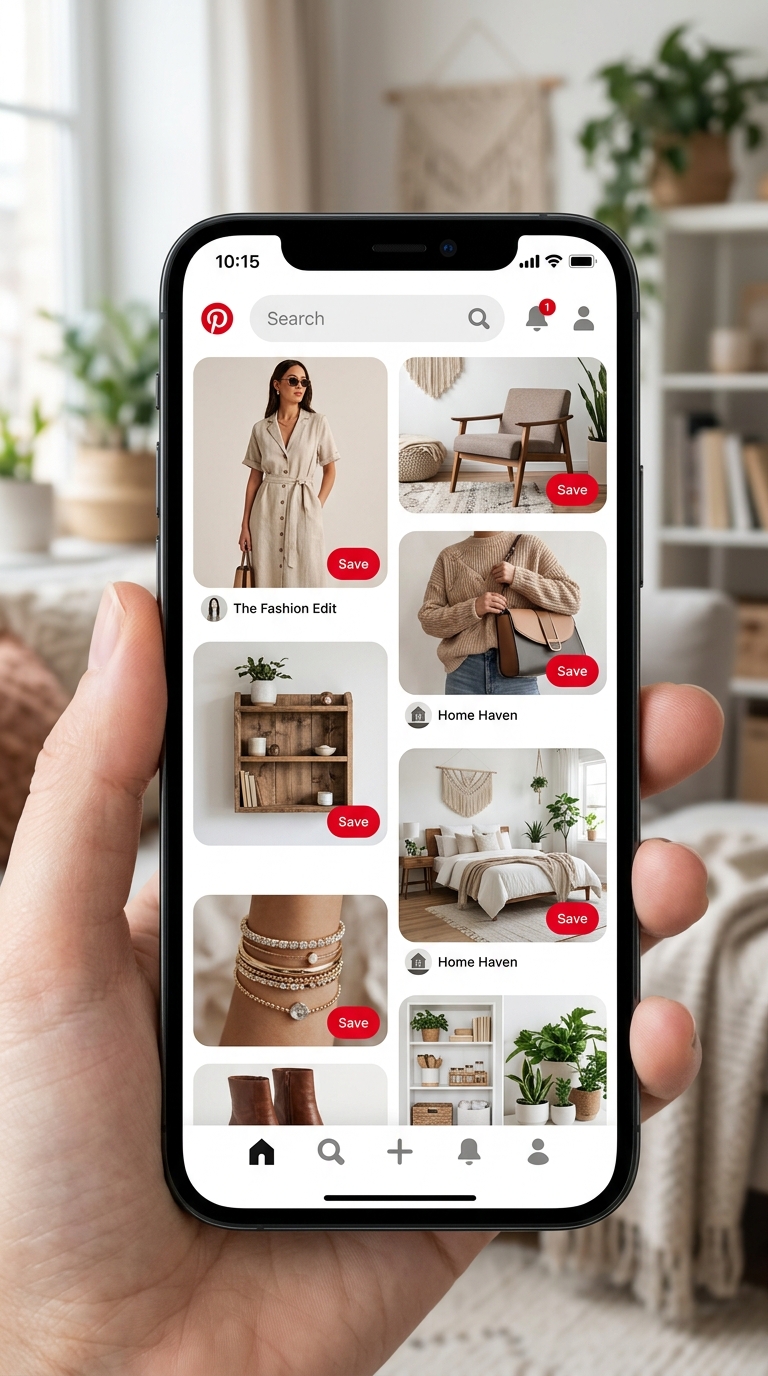
Pinterest: A severely underestimated hub for cross-border traffic
A typical overseas brand traffic analysis report often contains surprising data: a home furnishing brand's independent website receives far more organic traffic from Pinterest than from Instagram each month, while its Instagram account has tens of thousands of followers, but its Pinterest account has less than a thousand followers.
Faced with such data, many business owners instinctively react with skepticism, believing that Pinterest is merely a niche image-sharing community, lacking the explosive viral spread of TikTok and the mature influencer-driven sales ecosystem of Instagram.
These observations themselves are not wrong, but they led to strategic misjudgments. Most Chinese brands going global almost completely ignored Pinterest's potential when planning their digital marketing matrix. In fact, as global social media marketing enters a more refined operational phase in 2026, Pinterest has become a core channel for reaching high-purchase-intent audiences and achieving long-term, precise traffic generation. For cross-border sellers and foreign trade companies that are expanding into the North American and European markets, re-understanding and mastering Pinterest marketing strategies is key to breaking through traffic bottlenecks.
- Redefining Pinterest: It's not social media, it's a visual search engine.
To successfully leverage Pinterest, a core cognitive shift is essential: Pinterest is not social media in the traditional sense, but a powerful visual search engine. This is the cornerstone of understanding all its marketing strategies.
1.1 Fundamental Differences in Content Distribution Logic
Platforms like Facebook, Instagram, and TikTok are typical content distribution networks. On these platforms, users primarily and passively consume algorithmically recommended content, which has a very short lifespan, typically peaking within 24 to 72 hours before rapidly declining. Brands need to constantly create new content to maintain exposure.
In contrast, Pinterest's user behavior is closer to that of Google. Users actively search for solutions, inspiration, or products by entering keywords with clear purposes and needs. This means that content posted on Pinterest (i.e., "Pins") has an extremely long lifespan. A high-quality Pin can continuously drive organic traffic to a brand's website for 12 to 18 months, or even longer, after it is posted. This compounding effect of traffic is unmatched by other social media platforms.
1.2 User Intent: From "Killing Time" to "Active Exploration"
Official and third-party research data from Pinterest reveal the unique behavioral characteristics of its users:
- High purchase intent : Over 55% of users explicitly stated that they use Pinterest to find and buy products. This percentage is significantly higher than other social platforms, where users are more focused on social interaction and entertainment.
- Exploration and discovery : 68% of users visit Pinterest to "discover new products or new brands," and they are open to new things rather than just focusing on known brands.
- Purchase decision-making tool : Pinterest users have twice the purchase intent of those on other social media platforms. They plan, find inspiration, compare options, and ultimately make purchase decisions here.
For brands going global, this means reaching users who are no longer random "visitors," but "potential customers" with strong purchasing potential. They are already in the lower to middle of the consumer decision-making funnel and are actively preparing for future purchases.
- Unveiling Pinterest's True User Base and Value
For a long time, "niche" has been a label attached to Pinterest, but this is no longer true. The latest data reveals a large and commercially valuable user ecosystem.
- Monthly active users : As of the third quarter of 2025, Pinterest's global monthly active users have exceeded 600 million, representing a year-on-year increase of nearly 12%.
- The core markets highly overlap : its main users are located in high-value markets such as the United States, the United Kingdom, Canada, Australia and Germany, which perfectly matches the target markets of most Chinese brands going global.
- Evolution of user profile : While female users still make up the majority (approximately 76%), the male user group is the fastest growing segment, with a growth rate of up to 50% over the past three years. This means that brands can reach a more diverse range of family decision-makers.
- Age and Purchasing Power : The 18-34 age group accounts for the largest proportion (approximately 42%), and they are trendsetters. While the 35-54 age group accounts for a slightly smaller proportion, they typically have stronger purchasing power and higher average order value.
For brands targeting the North American and European markets, Pinterest is no longer a "maybe" option, but a strategic channel to directly reach their core consumer base.
- Which product categories can shine on Pinterest when going global?
Pinterest's visual characteristics and user preferences give certain categories a natural advantage. The following categories stand out in terms of search volume, user engagement, and conversion rates on the platform:
-
Highly recommended product categories :
- Home decor and furniture : This is Pinterest's flagship category. Users spend weeks or even months planning home makeovers and constantly searching for inspiration, providing the perfect environment for "long-tail traffic" in this category.
- Fashion (Women's Clothing, Accessories, Jewelry) : Visually driven fashion content is highly likely to trigger users' desire to save and click.
- Beauty and skincare : Product usage tutorials, ingredient analysis, makeup inspiration, and other content formats are very popular.
- Food & Baking : Recipes are one of the most saved and shared content types on Pinterest, demonstrating their strong viral potential.
- Lifestyle scenarios (weddings, holiday planning) : These highly planned consumption scenarios are highly compatible with Pinterest user behavior.
- Crafts and DIY : The platform's strong community atmosphere provides an ideal environment for the growth of these products.
-
Category with limited effectiveness :
- B2B Products and Services
- Software/SaaS
- Some fast-moving consumer goods (such as daily necessities)
- Pinterest SEO Core Strategy: Make Your Brand Targeted
Pinterest's content discovery mechanism is more like Google's than Instagram's. Therefore, mastering its SEO (Search Engine Optimization) rules is key to acquiring continuous free traffic.
4.1 The Four Golden Positions for Keyword Layout
- Account Profile : Clearly embed your core business keywords in your account name and bio. For example, a modern furniture brand could use "Modern Bedroom Furniture | Minimalist Home Decor".
- Board Title : A board is a folder that organizes your pins. Its name should use keywords that users would search for, rather than vague internal names like "My Collection." For example, using "Minimalist Living Room Ideas" is far more precise than simply "Living Room."
- Pin Title : The title of each pin is its most important SEO component. The title must directly and clearly contain the core keywords that the pin's content targets.
- Pin Description : In a 150-500 word description, naturally incorporate 3-5 relevant long-tail keywords and synonyms. The description should detail the pin's content and guide users to click and visit the website.
4.2 Efficient Keyword Research Methods
Pinterest itself is the most powerful keyword research tool. Enter your product's core keywords (such as "bedroom decor") into the platform's search box, and the automatically displayed suggested terms in the dropdown list (such as "bedroom decor ideas aesthetic" or "bedroom decor for small rooms") are long-tail keywords that real users are frequently searching for. The value of these terms far exceeds the estimates of any third-party tool and should be the core basis for your content creation.
- Design principles and technical specifications for high-conversion-rate Pin charts
In Pinterest's news feed, a great image is half the battle. Following these guidelines and principles can significantly improve your content's click-through rate and save rate.
-
Technical Specifications :
- Size : Always use portrait orientation. A 2:3 aspect ratio is recommended (e.g., 1000x1500 pixels) to maximize screen space on mobile devices.
- Format : Still images should use JPG or PNG. Video pins (15-60 seconds) are also a good supplementary format.
-
High conversion design principles :
- Text overlay : Add clear, easy-to-read title text to images, summarizing the content's value in one sentence (e.g., "5 Small Apartment Living Room Layout Tips"). Data shows that pin images with text overlays have a 40% higher save rate than plain images.
- Brand consistency : Maintain a consistent color scheme, font, and logo placement across all pins. This helps build brand recognition, allowing users to instantly identify your content even while scrolling quickly.
- Showcasing usage scenarios : Compared to a monotonous white background image of the product, images showing the product being used in real-life scenarios (with task models) usually garner higher user engagement.
- Build an efficient content matrix and publishing strategy
To maintain account activity and achieve sustained growth, the key is to consistently publish diverse content. For a mature account, we recommend publishing 15-20 new posts per week.
Such a high posting frequency can create significant management pressure, but SocialEcho's powerful posting features make it easy to manage. SocialEcho's "Content Scheduling" feature allows you to plan ahead and automatically post content, ensuring uninterrupted updates; while "Matrix Posting" helps you efficiently distribute different types of content to multiple accounts, greatly improving operational efficiency.
We recommend the following optimal content ratio strategy:
- Product Showcase (30%) : Utilize exquisite scene images to directly expose products, effectively guide users to click on links, and promote direct purchase.
- Lifestyle content (35%) : This type of inspirational content connects the brand with the ideal lifestyle that users aspire to. It can attract a wider audience and enhance fan loyalty.
- Tutorials/Knowledge (20%) : Providing highly practical information such as "How to maintain solid wood furniture." This type of content has a very high retention rate and can bring you a steady stream of long-term traffic.
- User-generated content (UGC) / Collaborative content (15%) : Showcasing real customer use cases or collaborating with influencers can effectively enhance brand social recognition and user trust.
A key principle is that while tutorials and knowledge-based content don't directly drive sales, they are crucial for enhancing account authority and acquiring long-term, stable traffic. Users saving this content means your brand has secured a place in their future decision-making.
- Cross-platform integration: Maximizing the value of Pinterest's traffic
Pinterest should not exist in isolation; linking it with other marketing channels can maximize the value of its traffic.
- Link to your independent website : All pins should link to the most relevant pages on your independent website (product pages, category pages, or blog posts). Additionally, add "Save to Pinterest" buttons to your website's product detail pages and blog posts to encourage website visitors to save your content to their Pinterest boards, creating a closed-loop traffic flow.
- Linking with blog content : If your brand has a blog, for each new article published, you should create 3-5 different PIN images with varying titles and angles, each linking to the article. This is one of the most efficient content reuse strategies.
- Integration with Instagram : High-quality product or scene images you post on Instagram, after being cropped and redesigned (converted to 2:3 vertical images and captions added), can be directly reused as Pinterest pins.
- Data-driven decision-making: Key Pinterest metrics that must be tracked
Effective marketing relies heavily on data tracking. In Pinterest Analytics, the following core metrics should be closely monitored:
- Impressions : The number of times your content is displayed, reflecting the breadth of its reach.
- Saves : The number of times users save your pin to their canvas. This is an extremely important signal, indicating that users believe your content has long-term value and is a sign of high-quality content.
- Outbound Clicks : The number of times users click on a link and are redirected to your website. This is the most critical metric for measuring the direct traffic value that Pinterest brings to your business.
- Save Rate : The number of saved items divided by the number of impressions. This ratio helps you determine which types of content are most popular with users.
For sales-driven brands expanding overseas, outbound clicks and saves are far more important than impressions. However, when managing multiple social media channels, including Pinterest, Instagram, and Facebook, switching between platforms to view data becomes extremely inefficient. To achieve comprehensive performance evaluation, using a multi-channel management tool like SocialEcho is essential. It integrates Pinterest data with data from other platforms into a single dashboard, helping you make cross-platform comparisons, clearly understand overall marketing performance, and make more informed strategy adjustments.
FAQ: Frequently Asked Questions
Q1: How long does it take to see results from operating a Pinterest account?
Pinterest is a platform that requires patience and persistence. It typically takes 3-6 months of consistent content publishing and optimization to see a significant increase in organic search traffic. Its SEO effect is compounded; once momentum is established, traffic becomes very stable and consistent. Many brands experience modest data in the first two months, but then see an explosive growth in traffic in the fourth or fifth month.
Q2: Does the content need to be created specifically for Pinterest or can it be reused from other platforms?
While images can be reused extensively, they must be adapted for local use. For example, Instagram's 1:1 square images need to be cropped into 2:3 vertical images; TikTok's short videos can be edited into video pins by extracting the best parts; and the core ideas of blog posts can be extracted and made into infographics. A key adaptation step is to overlay clear caption text on the image, a unique requirement of Pinterest content.
Q3: What unique advantages do Chinese brands have on Pinterest when going global?
Besides supply chain advantages, Chinese brands have another often overlooked advantage on Pinterest: price competitiveness. Many users in Europe and America compare prices after searching for product inspiration on Pinterest. If your product is visually appealing and of comparable quality to your competitors, then a more attractive price is a powerful differentiating factor.
Q4: What are some recommended tools for publishing and managing Pinterest content?
Manually managing daily posting tasks can be extremely time-consuming. We recommend using a multi-platform social media management tool like SocialEcho. You can batch upload and schedule pins for the next few weeks, automating the posting process. Furthermore, its unified data analytics capabilities also support Pinterest, allowing you to manage content and evaluate performance within a single platform, significantly improving operational efficiency.
Q5: Is it worthwhile to run Pinterest ads?
It's well worth it, especially after your account has accumulated a certain amount of organic traffic. Because Pinterest users inherently have purchasing intent, the ROI of its ads is generally better than that of social and entertainment-focused platforms. Best practice is to first identify the pins with the highest save and click-through rates through three months of organic content creation, and then directly convert these market-proven, high-quality content into ads for promotion. The success rate will be far higher than creating ad creatives out of thin air.
Q6: How to handle language issues in pin diagrams and descriptions?
If your target market is English-speaking countries, then all text content—including pin titles, descriptions, board names, and overlay text on images—must be in idiomatic, professional English. Pinterest's search engine is keyword-based, and Chinese content will not be found by English-speaking users. If you are operating in multiple markets in different languages, the best practice is to create a separate Pinterest account for each market.
Summary and Recommendations
Stop treating Pinterest as just a dispensable image website! It's actually a "visual search engine" that brings in a steady stream of targeted customers, making it an unmissable goldmine of traffic for home decor, fashion, and beauty brands. Want to efficiently leverage Pinterest, spending your valuable time effectively while maintaining a clear overall marketing strategy? Try SocialEcho. It helps you manage scheduled content publishing and data integration and analysis in one place, making your Pinterest marketing twice as effective. Sign up for SocialEcho now and start your high-growth journey!
;}.cls-2{fill:%230868f7;}.cls-3{fill:url(%23未命名的渐变_44);}.cls-4{fill:%23333;}%3c/style%3e%3clinearGradient%20id='未命名的渐变_8'%20x1='33.73'%20y1='100.61'%20x2='-0.03'%20y2='-1.06'%20gradientUnits='userSpaceOnUse'%3e%3cstop%20offset='0'%20stop-color='%237ae9fb'/%3e%3cstop%20offset='0.67'%20stop-color='%232b90f8'/%3e%3cstop%20offset='1'%20stop-color='%230868f7'/%3e%3c/linearGradient%3e%3clinearGradient%20id='未命名的渐变_44'%20x1='27.86'%20y1='18.67'%20x2='68.36'%20y2='22.22'%20gradientUnits='userSpaceOnUse'%3e%3cstop%20offset='0'%20stop-color='%235ac7f2'/%3e%3cstop%20offset='1'%20stop-color='%230868f7'/%3e%3c/linearGradient%3e%3c/defs%3e%3cpath%20class='cls-1'%20d='M29,28.74V81.91l-9.51-3.68v0L8.52,74A7.17,7.17,0,0,1,4,67.32V24.54A3.76,3.76,0,0,1,9.08,21Z'/%3e%3cpath%20class='cls-2'%20d='M68.09,78.07a13.15,13.15,0,0,1-17.9,12.06L29,81.91h0V28.74L50.19,37A13.17,13.17,0,0,0,68.08,25.3h0Z'/%3e%3cpath%20class='cls-3'%20d='M68.08,25.3a13.19,13.19,0,0,1-6.73,10.87A13.09,13.09,0,0,1,50.19,37L29,28.74V6A3.76,3.76,0,0,1,34.1,2.52l25.59,9.91A13.22,13.22,0,0,1,68.08,25.3Z'/%3e%3cpath%20class='cls-4'%20d='M129.06,81.76a4.33,4.33,0,0,1-3.19-1.31,4.4,4.4,0,0,1-1.31-3.24V56.86H97.65V77.21a4.36,4.36,0,0,1-1.35,3.2A4.68,4.68,0,0,1,93,81.76a4.32,4.32,0,0,1-3.19-1.31,4.37,4.37,0,0,1-1.32-3.24V27.27A4.58,4.58,0,0,1,89.83,24a4.59,4.59,0,0,1,7.82,3.27V48.15h26.91V27.27A4.58,4.58,0,0,1,125.91,24a4.59,4.59,0,0,1,7.82,3.27V77.21a4.37,4.37,0,0,1-1.36,3.2A4.65,4.65,0,0,1,129.06,81.76Z'/%3e%3cpath%20class='cls-4'%20d='M163.77,81.66c-6.57,0-11.76-1.92-15.44-5.7s-5.54-9.07-5.54-15.74a26.76,26.76,0,0,1,2.09-10.43,17.72,17.72,0,0,1,6.67-8.06,19.15,19.15,0,0,1,10.68-2.95,19,19,0,0,1,10.46,2.8,18.7,18.7,0,0,1,6.55,7.36,22.53,22.53,0,0,1,2.36,10.28A4.51,4.51,0,0,1,177,63.77H152.23a10.8,10.8,0,0,0,3.49,6.65c2,1.68,4.88,2.52,8.66,2.52a22.25,22.25,0,0,0,7.54-1.21c.74-.3,1.55-.67,2.37-1.07a3.75,3.75,0,0,1,1.84-.4,4.09,4.09,0,0,1,3,1.15,4,4,0,0,1,1.12,3,4.38,4.38,0,0,1-2.58,3.82,32.34,32.34,0,0,1-6.36,2.61A28.67,28.67,0,0,1,163.77,81.66ZM172.4,55.9a9.72,9.72,0,0,0-1.63-4.56A9.9,9.9,0,0,0,167,48a10.38,10.38,0,0,0-4.64-1.14,12,12,0,0,0-4.77,1.06,9.54,9.54,0,0,0-4.89,5.66,11.78,11.78,0,0,0-.51,2.3Z'/%3e%3cpath%20class='cls-4'%20d='M193,81.64a4.49,4.49,0,0,1-4.51-4.55V27.28A4.58,4.58,0,0,1,189.84,24a4.48,4.48,0,0,1,3.28-1.36A4.36,4.36,0,0,1,196.35,24a4.46,4.46,0,0,1,1.31,3.31V77.09a4.34,4.34,0,0,1-1.35,3.2A4.67,4.67,0,0,1,193,81.64Z'/%3e%3cpath%20class='cls-4'%20d='M263.79,81.71a5.7,5.7,0,0,1-4.2-1.74,5.76,5.76,0,0,1-1.73-4.19V27.37a4.58,4.58,0,0,1,1.35-3.27A4.59,4.59,0,0,1,267,27.37V72.53h24a4.58,4.58,0,0,1,3.27,7.82A4.66,4.66,0,0,1,291,81.71Z'/%3e%3cpath%20class='cls-4'%20d='M424.48,81.74a4.71,4.71,0,0,1-2.71-.88,5.43,5.43,0,0,1-1-1l-.07-.09-12.41-17-5.41,5v9.44a4.31,4.31,0,0,1-1.36,3.19,4.66,4.66,0,0,1-3.3,1.36A4.29,4.29,0,0,1,395,80.42a4.36,4.36,0,0,1-1.32-3.23V27.37A4.58,4.58,0,0,1,395,24.1a4.52,4.52,0,0,1,6.58.12,4.54,4.54,0,0,1,1.24,3.15V56.31l17.72-16.38.05,0a4.8,4.8,0,0,1,2.94-1.11,4.4,4.4,0,0,1,3.27,1.2,4.57,4.57,0,0,1,1.2,3.27,4.44,4.44,0,0,1-.77,2.33,7.45,7.45,0,0,1-1.43,1.65l-11,9.64,13.34,17.68a5,5,0,0,1,1,2.71,4.12,4.12,0,0,1-1.36,3.24A4.64,4.64,0,0,1,424.48,81.74Z'/%3e%3cpath%20class='cls-4'%20d='M317.93,81.76a21.5,21.5,0,1,1,21.17-21.5A21.37,21.37,0,0,1,317.93,81.76Zm0-34.1a12.61,12.61,0,1,0,12.42,12.6A12.52,12.52,0,0,0,317.93,47.66Z'/%3e%3cpath%20class='cls-4'%20d='M212.18,101.22a4.12,4.12,0,0,1-3.05-1.26,4.17,4.17,0,0,1-1.26-3.1V43.34a4.37,4.37,0,0,1,1.3-3.14,4.26,4.26,0,0,1,3.13-1.3,4.19,4.19,0,0,1,3.1,1.26,4.32,4.32,0,0,1,1.26,3.16,20.77,20.77,0,0,1,13-4.54,21.51,21.51,0,0,1,0,43,20.51,20.51,0,0,1-13-4.57V96.86a4.15,4.15,0,0,1-1.3,3.06A4.5,4.5,0,0,1,212.18,101.22Zm17.43-53.63c-6.23,0-12.93,4.11-12.93,12.72a12.73,12.73,0,0,0,25.46,0A12.71,12.71,0,0,0,229.61,47.59Z'/%3e%3cpath%20class='cls-4'%20d='M365.76,81.76a21.5,21.5,0,1,1,21.18-21.5A21.37,21.37,0,0,1,365.76,81.76Zm0-34.1a12.61,12.61,0,1,0,12.42,12.6A12.52,12.52,0,0,0,365.76,47.66Z'/%3e%3c/svg%3e)