
Missed Comments, Slow Approvals, Scattered Data
Missed Comments, Slow Approvals, Scattered Data…Who Understands the Social Media Manager's Pain?

8 AM: The Moment You Open Your Computer, Anxiety Begins
5 platform backends are waiting for you.
TikTok comments: 38 unread. Instagram: 12. Facebook: several customer inquiries. LinkedIn: 3 DMs from potential clients. X (Twitter): a few user complaints.
You start clicking one by one, copying and pasting replies, switching, copying and pasting again, switching again.
Two and a half hours later.
During this time, you drank half a cup of coffee—forgot to finish it because you were switching too frequently.
This is the daily life of so many social media managers.
Those 20 Minutes of Missed Comments Cost You a Customer
You finally finished replying to all 5 platforms' comments, breathed a sigh of relief, and went to a meeting.
40 minutes later you return, open TikTok, and see a comment: "How do I buy this product?"
Posted 1 hour ago.
You reply: "Hello, here's the product link... Is there anything else you'd like to know?"
No response.
You wait all afternoon.
Next day you discover: this user bought from your competitor.
Competitor's response time: 25 minutes.
20-minute difference, one customer lost.
This isn't just your problem. Data shows that users who don't get a response within 1 hour of commenting have over 60% lower conversion rates.
Missed comments aren't just occasional oversight—it's a systemic efficiency problem. When you're replying on other platforms, this platform's comment section gets ignored.
The core value of Comment Management is solving the "rob Peter to pay Paul" problem. All platform comments handled in one inbox, never miss a single one.
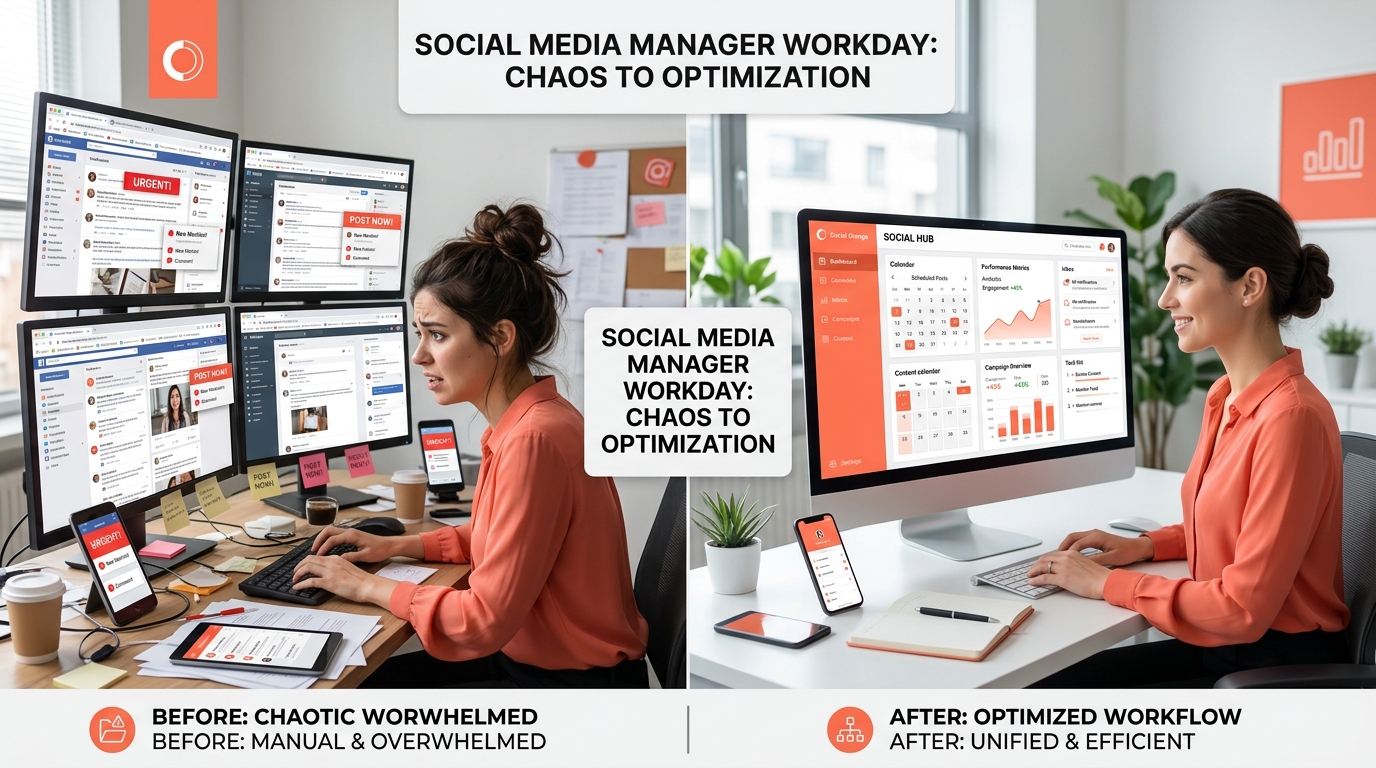
Boss Wants Data, You Open 5 Backends and Start Screenshotting
Every Monday, your boss wants last week's social media report.
You open TikTok backend, screenshot. Open Instagram backend, screenshot. Open Facebook backend, screenshot. Open LinkedIn backend, screenshot.
You start pasting into Excel, consolidating, calculating percentages, making charts.
2 hours later, report done. You send it to your boss, who asks: "Is this data accurate? Why is it different from last week's?"
Your heart skips a beat—indeed, several data definitions are inconsistent, but you're too exhausted to fix it.
Manually consolidating data from 5 platforms isn't just time-consuming—it's the root of errors. Each platform has different data definitions, different statistical methods, numbers calculated in Excel are naturally "approximations."
Analytics automatically consolidates data from 8 platforms, unified methodology, one-click report export. The 2 hours you spend on screenshots, tools handle in 1 minute.
Approval Workflow Takes 3 Days, Content Finally Posts
You want to post a Dragon Boat Festival promotional content, needs approval from marketing manager and brand director.
You send the copy to internal communication tool, marketing manager says "wait for me to review," wait 6 hours. That night, marketing manager finishes, says "OK," you send to brand director.
Brand director says "wait, this image is wrong, need to change." You find a new image, send again, wait again.
3 days later, content finally posts.
Dragon Boat Festival has passed.
This is what teams with complex internal processes are experiencing.
Content publishing approval workflows relying on verbal communication and file transfers—3 days per content is normal. 7 days isn't unusual either.
Publishing supports team collaboration and approval workflows. Content submission → approval → revision → publishing, all done online. A 3-day workflow can be compressed to 3 hours.
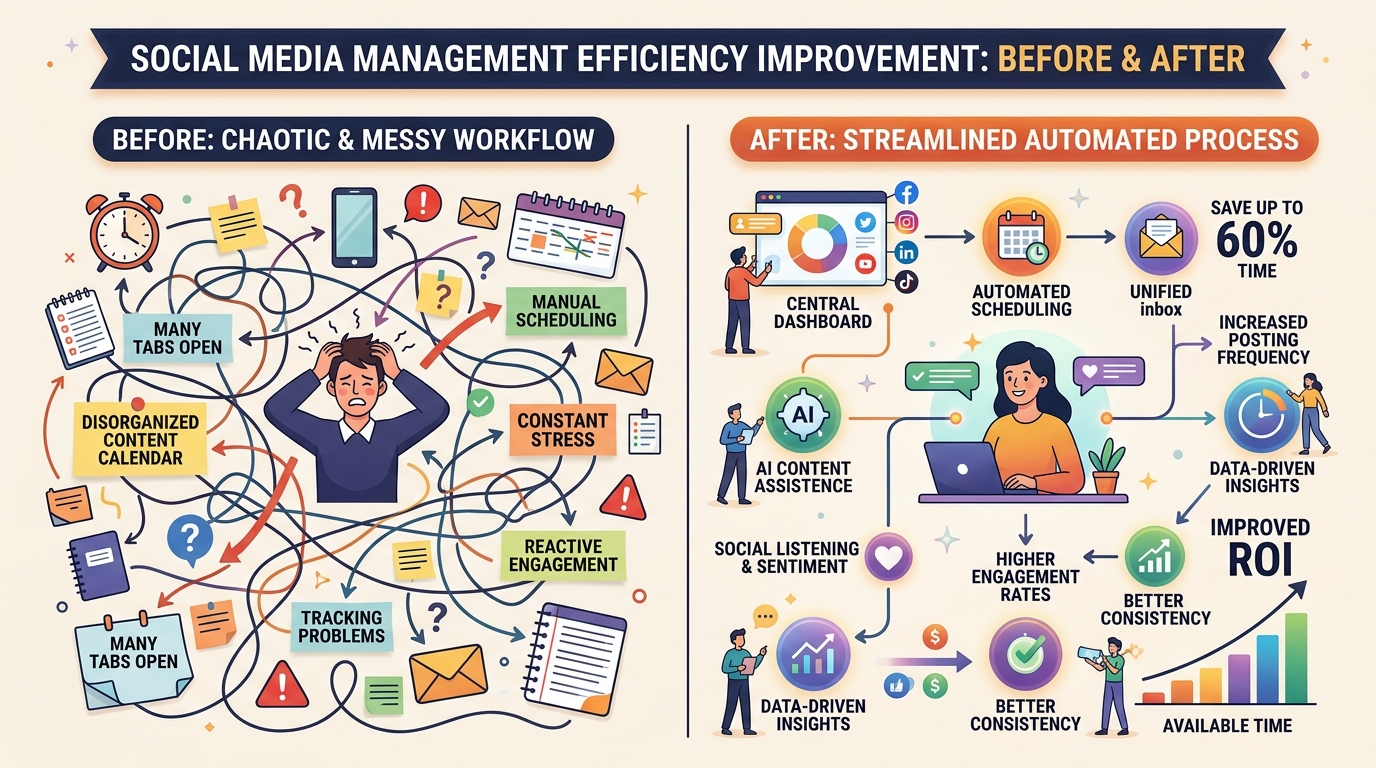
It's Not That You're Not Working Hard Enough—It's the Tool Problem
I've seen too many operations teams: 5 people managing 10 accounts, working overtime until 9 PM daily.
Not because they're not working hard—because the tools they're using are dragging them down.
5 platforms, 5 backends—switching itself is a cost.
Comments rely on manual monitoring—missing them is inevitable.
Data relies on screenshot consolidation—errors are inevitable.
Approvals rely on verbal communication—delays are inevitable.
This isn't a people problem—it's a tool problem.
With the right tools, 3 people can manage 20 accounts, efficiency up 100%, overtime? Non-existent.
FAQ
Q1: Is low operations efficiency really just a tool problem?
A: Tools are the biggest factor, but not the only one. Process standardization and team collaboration are equally important. But good tools make processes and collaboration more efficient.
Q2: Will switching tools be difficult?
A: There's an initial learning curve, but SocialEcho onboarding is simple. Most teams fully adapt within 1-2 weeks.
Q3: Will automated comment replies be too robotic?
A: SocialEcho's AI replies aren't simple keyword triggers—they're intelligent responses understanding user intent. You can set auto-reply + manual review, balancing efficiency and safety.
Q4: How accurate is multi-platform data consolidation?
A: All data comes from official platform APIs, unified statistical methodology, accuracy guaranteed.
**Q5: Is there a plan for small teams **(2-3 people)
A: Yes. SocialEcho Basic Edition starts at $10/month/account—affordable for 2-3 person small teams.
This isn't your problem. It's the tool problem.
Start your free trial of SocialEcho and experience 100% efficiency improvement →
👉 https://www.socialecho.net
;}.cls-2{fill:%230868f7;}.cls-3{fill:url(%23未命名的渐变_44);}.cls-4{fill:%23333;}%3c/style%3e%3clinearGradient%20id='未命名的渐变_8'%20x1='33.73'%20y1='100.61'%20x2='-0.03'%20y2='-1.06'%20gradientUnits='userSpaceOnUse'%3e%3cstop%20offset='0'%20stop-color='%237ae9fb'/%3e%3cstop%20offset='0.67'%20stop-color='%232b90f8'/%3e%3cstop%20offset='1'%20stop-color='%230868f7'/%3e%3c/linearGradient%3e%3clinearGradient%20id='未命名的渐变_44'%20x1='27.86'%20y1='18.67'%20x2='68.36'%20y2='22.22'%20gradientUnits='userSpaceOnUse'%3e%3cstop%20offset='0'%20stop-color='%235ac7f2'/%3e%3cstop%20offset='1'%20stop-color='%230868f7'/%3e%3c/linearGradient%3e%3c/defs%3e%3cpath%20class='cls-1'%20d='M29,28.74V81.91l-9.51-3.68v0L8.52,74A7.17,7.17,0,0,1,4,67.32V24.54A3.76,3.76,0,0,1,9.08,21Z'/%3e%3cpath%20class='cls-2'%20d='M68.09,78.07a13.15,13.15,0,0,1-17.9,12.06L29,81.91h0V28.74L50.19,37A13.17,13.17,0,0,0,68.08,25.3h0Z'/%3e%3cpath%20class='cls-3'%20d='M68.08,25.3a13.19,13.19,0,0,1-6.73,10.87A13.09,13.09,0,0,1,50.19,37L29,28.74V6A3.76,3.76,0,0,1,34.1,2.52l25.59,9.91A13.22,13.22,0,0,1,68.08,25.3Z'/%3e%3cpath%20class='cls-4'%20d='M129.06,81.76a4.33,4.33,0,0,1-3.19-1.31,4.4,4.4,0,0,1-1.31-3.24V56.86H97.65V77.21a4.36,4.36,0,0,1-1.35,3.2A4.68,4.68,0,0,1,93,81.76a4.32,4.32,0,0,1-3.19-1.31,4.37,4.37,0,0,1-1.32-3.24V27.27A4.58,4.58,0,0,1,89.83,24a4.59,4.59,0,0,1,7.82,3.27V48.15h26.91V27.27A4.58,4.58,0,0,1,125.91,24a4.59,4.59,0,0,1,7.82,3.27V77.21a4.37,4.37,0,0,1-1.36,3.2A4.65,4.65,0,0,1,129.06,81.76Z'/%3e%3cpath%20class='cls-4'%20d='M163.77,81.66c-6.57,0-11.76-1.92-15.44-5.7s-5.54-9.07-5.54-15.74a26.76,26.76,0,0,1,2.09-10.43,17.72,17.72,0,0,1,6.67-8.06,19.15,19.15,0,0,1,10.68-2.95,19,19,0,0,1,10.46,2.8,18.7,18.7,0,0,1,6.55,7.36,22.53,22.53,0,0,1,2.36,10.28A4.51,4.51,0,0,1,177,63.77H152.23a10.8,10.8,0,0,0,3.49,6.65c2,1.68,4.88,2.52,8.66,2.52a22.25,22.25,0,0,0,7.54-1.21c.74-.3,1.55-.67,2.37-1.07a3.75,3.75,0,0,1,1.84-.4,4.09,4.09,0,0,1,3,1.15,4,4,0,0,1,1.12,3,4.38,4.38,0,0,1-2.58,3.82,32.34,32.34,0,0,1-6.36,2.61A28.67,28.67,0,0,1,163.77,81.66ZM172.4,55.9a9.72,9.72,0,0,0-1.63-4.56A9.9,9.9,0,0,0,167,48a10.38,10.38,0,0,0-4.64-1.14,12,12,0,0,0-4.77,1.06,9.54,9.54,0,0,0-4.89,5.66,11.78,11.78,0,0,0-.51,2.3Z'/%3e%3cpath%20class='cls-4'%20d='M193,81.64a4.49,4.49,0,0,1-4.51-4.55V27.28A4.58,4.58,0,0,1,189.84,24a4.48,4.48,0,0,1,3.28-1.36A4.36,4.36,0,0,1,196.35,24a4.46,4.46,0,0,1,1.31,3.31V77.09a4.34,4.34,0,0,1-1.35,3.2A4.67,4.67,0,0,1,193,81.64Z'/%3e%3cpath%20class='cls-4'%20d='M263.79,81.71a5.7,5.7,0,0,1-4.2-1.74,5.76,5.76,0,0,1-1.73-4.19V27.37a4.58,4.58,0,0,1,1.35-3.27A4.59,4.59,0,0,1,267,27.37V72.53h24a4.58,4.58,0,0,1,3.27,7.82A4.66,4.66,0,0,1,291,81.71Z'/%3e%3cpath%20class='cls-4'%20d='M424.48,81.74a4.71,4.71,0,0,1-2.71-.88,5.43,5.43,0,0,1-1-1l-.07-.09-12.41-17-5.41,5v9.44a4.31,4.31,0,0,1-1.36,3.19,4.66,4.66,0,0,1-3.3,1.36A4.29,4.29,0,0,1,395,80.42a4.36,4.36,0,0,1-1.32-3.23V27.37A4.58,4.58,0,0,1,395,24.1a4.52,4.52,0,0,1,6.58.12,4.54,4.54,0,0,1,1.24,3.15V56.31l17.72-16.38.05,0a4.8,4.8,0,0,1,2.94-1.11,4.4,4.4,0,0,1,3.27,1.2,4.57,4.57,0,0,1,1.2,3.27,4.44,4.44,0,0,1-.77,2.33,7.45,7.45,0,0,1-1.43,1.65l-11,9.64,13.34,17.68a5,5,0,0,1,1,2.71,4.12,4.12,0,0,1-1.36,3.24A4.64,4.64,0,0,1,424.48,81.74Z'/%3e%3cpath%20class='cls-4'%20d='M317.93,81.76a21.5,21.5,0,1,1,21.17-21.5A21.37,21.37,0,0,1,317.93,81.76Zm0-34.1a12.61,12.61,0,1,0,12.42,12.6A12.52,12.52,0,0,0,317.93,47.66Z'/%3e%3cpath%20class='cls-4'%20d='M212.18,101.22a4.12,4.12,0,0,1-3.05-1.26,4.17,4.17,0,0,1-1.26-3.1V43.34a4.37,4.37,0,0,1,1.3-3.14,4.26,4.26,0,0,1,3.13-1.3,4.19,4.19,0,0,1,3.1,1.26,4.32,4.32,0,0,1,1.26,3.16,20.77,20.77,0,0,1,13-4.54,21.51,21.51,0,0,1,0,43,20.51,20.51,0,0,1-13-4.57V96.86a4.15,4.15,0,0,1-1.3,3.06A4.5,4.5,0,0,1,212.18,101.22Zm17.43-53.63c-6.23,0-12.93,4.11-12.93,12.72a12.73,12.73,0,0,0,25.46,0A12.71,12.71,0,0,0,229.61,47.59Z'/%3e%3cpath%20class='cls-4'%20d='M365.76,81.76a21.5,21.5,0,1,1,21.18-21.5A21.37,21.37,0,0,1,365.76,81.76Zm0-34.1a12.61,12.61,0,1,0,12.42,12.6A12.52,12.52,0,0,0,365.76,47.66Z'/%3e%3c/svg%3e)