
How to Succeed on TikTok Shop in Southeast Asia: Policy Compliance, Viral Content & Winning Products
At the end of 2025, TikTok Shop made a key move in Southeast Asia: adjusting commission rates, increasing platform fees for some categories from 3% to 5-8%, and imposing stricter restrictions on the entry threshold for non-local merchants.
The day the news came out, the groups for cross-border e-commerce exploded.
Some call this "doomsday," others "a reshuffling." But those who truly understand the Southeast Asian market structure are doing something different: recalculating and finding business models that still work under the new rules.
The purpose of this article is not to judge whether TikTok Shop is worth doing, but to tell you how to make a sales channel work in the current policy environment and market landscape.
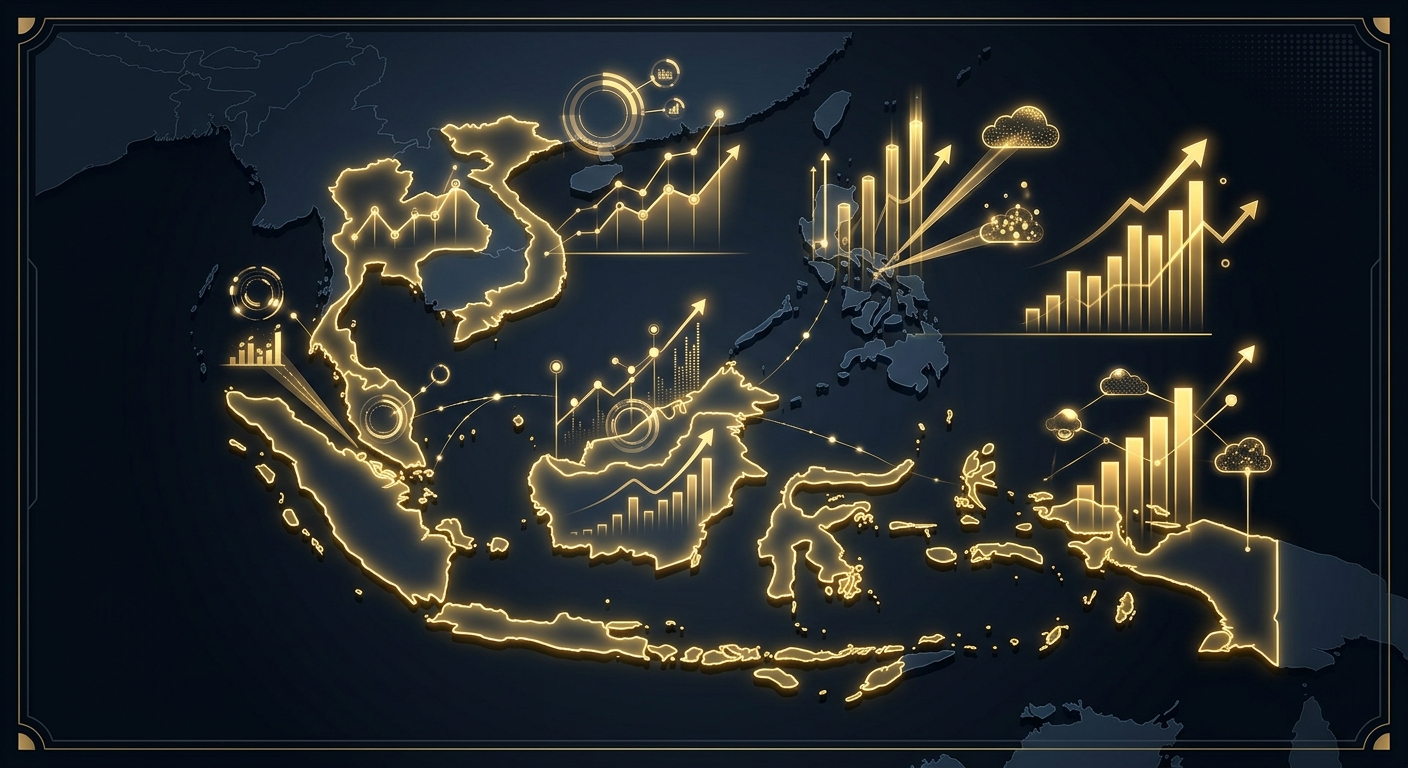
Key policy changes in 2026: 3 things you need to understand
First: Localization requirements are becoming increasingly stringent.
TikTok is strengthening its local merchant advantages in several of Southeast Asia's most important markets (Indonesia, Thailand, Vietnam, and Malaysia). Specifically:
Locally registered merchants receive significantly more traffic support than cross-border merchants. Given the same content quality and engagement data, local accounts can gain more organic traffic.
This isn't "discrimination," it's a platform's localization strategy. After TikTok was forced to merge with Tokopedia in Indonesia, it needed to prove to regulators that "I'm helping the local economy"—giving more traffic to local businesses is both politically correct and a business strategy.
Impact on you : If you're still using a purely cross-border account to run a TikTok Shop in Southeast Asia, you need to seriously consider a localization strategy—registering a local company, using a local warehouse for shipping, and operating the account locally. Costs will increase, but the traffic advantage will likely offset these costs.
Second: Small, low-priced items are still the mainstream, but profit margins are shrinking.
The main drivers of sales on Southeast Asian TikTok Shops have consistently been small consumer goods priced between 30 and 100 yuan (equivalent to RMB).
The changes in 2026 are: the competition density in this segment is more than three times that of 2024, the number of sellers has increased while the growth rate of the number of buyers has slowed down, and the profit per item has been compressed.
Impact on you : The model of relying solely on low prices and high volume is becoming increasingly difficult in fiercely competitive categories. You need to find categories with higher profit margins (tools, professional beauty lines, mid-to-high-end snacks), or differentiate yourself through content quality (for the same product, better content can lead to a conversion rate 2-3 times higher than competitors, thus justifying the premium pricing).
Thirdly: Platforms have strengthened compliance reviews, significantly increasing the cost of violations.
In 2026, TikTok Shop significantly increased penalties for the following behaviors:
- Exaggerated product efficacy claims (especially in the food and health supplement categories).
- Fake reviews/brushing orders
- Listing content that fails to display product qualifications as required
Violations will no longer just result in the deletion of posts; accumulated violations may lead to the permanent ban of a merchant's account.
Impact on you : Content compliance must be a strict prerequisite; don't risk account suspension for short-term viral growth. Establishing compliant content templates and ensuring each shopping video's promotional points have clear justifications is a basic practice in 2026.
The three formulas for creating viral content have all been validated by real data.
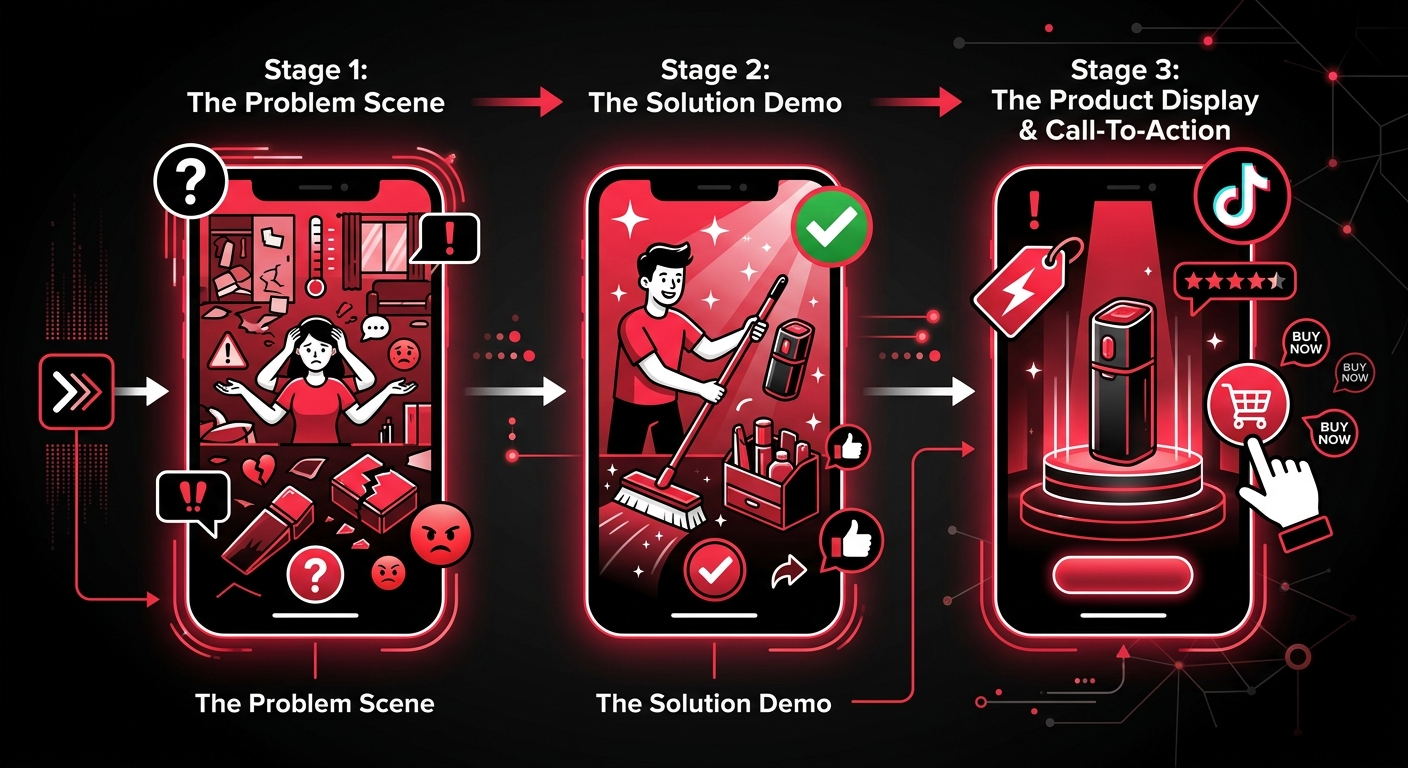
Formula 1: 15-second short video of "problem-solution"
Format: The first 3 seconds present a real-world pain point → The middle 8 seconds demonstrate how the product solves the problem → The last 4 seconds showcase the product and purchase information.
This is the video format with the most stable conversion rate for TikTok Shop in Southeast Asia. The reason is simple: it conforms to TikTok's completion rate algorithm and provides users with sufficient decision-making information.
Key to this approach: Don't start with an introduction in the first 3 seconds; immediately present "Have you encountered this problem as well?" In the Indonesian market, starting with the local language (even just one sentence) results in a completion rate that is over 30% higher than speaking entirely in English.
Formula 2: Before and after comparison of real users
Format: Completely identical use cases, from the state before use to the process during use, and then a comparison of the results after use.
These types of videos have extremely high sharing rates because "comparison" is the most primal shortcut for human judgment. When users see obvious differences, they will instinctively want to share them with friends who have similar needs.
Be mindful of compliance boundaries: Avoid using absolute terms to describe effects ("100% effective", "completely solve"), instead present real, visible changes and let the visuals speak for themselves.
Formula 3: Trust Building Through "Unpacking and Inspection"
This format is particularly effective in Southeast Asia because Southeast Asian users have a lower trust threshold for cross-border shopping than those in Europe and America, but they have genuine concerns about product quality.
Format: Real unboxing process → Comparison of actual product with page description → Real user experience
Key point: Don't over-edit; authenticity is key. A slightly messy home environment and unretouched user feedback can be more convincing than professional studio content.
Product selection strategy: Which product categories are still worth betting on in 2026?
Before delving into a specific product category, you can use social media monitoring tools to track the discussion and sentiment trends of Southeast Asian users regarding different product categories, identify the real demand gaps in the current market, and then decide on the product selection direction.
Category worth betting on
Personal care/beauty (mid-range pricing) : The consumption upgrade trend of the middle class in Southeast Asia is obvious, and there is room for growth in skin care products in the 50-200 yuan range, especially those with "transparent ingredients" and "dermatological certification".
Kitchen/Home Gadgets : Southeast Asian families cook frequently, so gadgets that solve practical cooking pain points (food preservation, cleaning tools, practical kitchen appliances) naturally have "before & after" material for content creation, making them suitable for content e-commerce logic.
Pet supplies : Southeast Asian pet owners' willingness to spend is growing rapidly, but local competition in this category is not yet fierce, and the window of opportunity for entry has not yet closed.
Small fitness/sports equipment : Southeast Asian consumers have become increasingly health-conscious after the pandemic, resulting in stable demand for home fitness equipment. The average order value is higher than that of fast-moving consumer goods, and the profit margin is better.
Category requiring caution
Food and beverage : The qualification requirements are complex, compliance is difficult, and there is a high risk of being removed from the market after being listed.
Electronics : Competition is extremely fierce, with numerous local suppliers offering competitive prices already on the platform, making differentiation very difficult. If you're already operating a TikTok Shop account, TikTok's AI-powered interaction automation can help you quickly identify product feedback in the comments section, discovering which features users care about most, and providing data support for differentiated product selection.
Counterfeit/Infringement-Flawed : In 2026, TikTok Shop's intellectual property review will be much stricter than before. Once reported, the losses will far outweigh the short-term gains.
Operational efficiency: How to manage multiple marketplace accounts simultaneously
When targeting the Southeast Asian market, it's often not just about one country. Operating simultaneously in Indonesia, Thailand, and Malaysia is a standard practice for many overseas expansion teams.
This raises an efficiency issue: each market has different content languages, posting time zones, and separate account systems. A team of 2-3 people managing 6-9 TikTok accounts simultaneously becomes a nightmare in terms of time spent switching accounts and repeatedly posting content without a unified management tool.
TikTok comment management and scheduled posting tools help you manage content scheduling and comment replies for multiple TikTok accounts in a unified backend. AI can automatically identify and quickly respond to inquiries about purchasing intent in the comments ("Where to buy?", "Has it been shipped to Malaysia?")—the response speed to these high-intent comments directly impacts the conversion rate.
TikTok's data analytics features allow for horizontal comparison of the performance of multiple accounts and videos, quickly identifying patterns in viral content and providing data-driven support for product selection and content strategies, rather than relying on intuition.
Is it still worthwhile to do Southeast Asian TikTok Shop now?
This question was asked in 2024, in 2025, and is still being asked in 2026.
The truth is: every time platform policies tighten, it's a reshuffling of the market. Those sellers who rely solely on policy benefits and lack genuine product and content creation capabilities are eliminated. Those who remain are those who truly focus on creating quality products and content.
TikTok's monthly active users in Southeast Asia exceeded 400 million in Q1 2026. This is a massive and growing market, and there's no indication that it will disappear. Tighter regulations raise the barrier to entry, but this also means that those who remain will face less competitive pressure.
The window of opportunity is not "anywhere you go when it's open," but rather "go in if you're prepared, otherwise it's a waste of time."
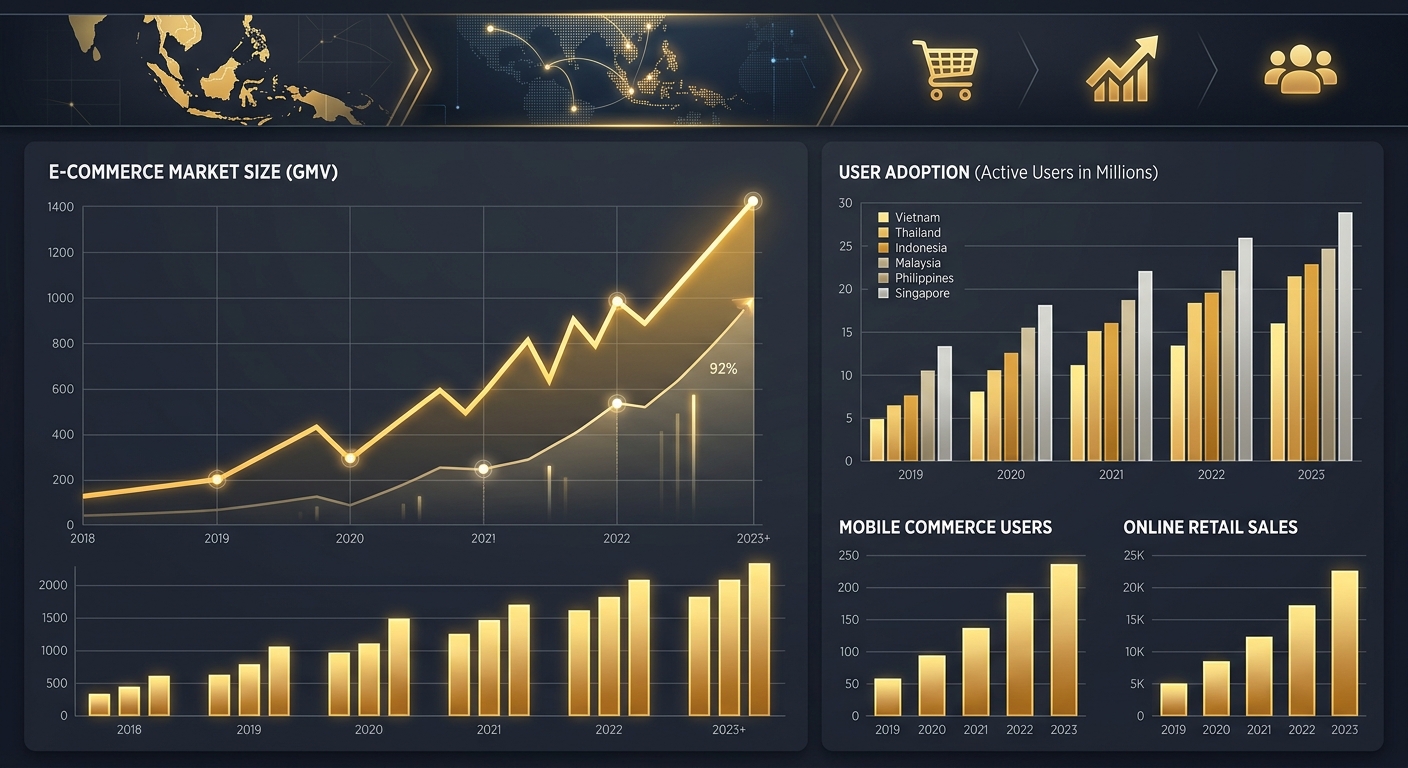
summary
Three core elements for operating a TikTok Shop in Southeast Asia in 2026:
Policy level : Localization is a trend, raising compliance standards is a hard requirement, and the cost of violations has increased significantly.
Content layer : Three effective formulas – "problem-solution" short videos, before-and-after comparisons, and unboxing/testing trust-based content. The first 3 seconds determine the completion rate, and the completion rate determines the streaming rate.
Product selection : Mid-range personal care, kitchen tools, pet supplies, and home fitness are worthwhile areas to invest in; highly competitive electronics and food products with complex compliance requirements require caution.
The efficiency issues of operating in multiple markets can be solved by using a unified multi-account management tool, freeing up time for content creation and product selection.
Try SocialEcho for free now and manage multiple TikTok Shop accounts →
👉 https://www.socialecho.net/share/blogcn
Frequently Asked Questions
Q1: Is it still worthwhile to enter the Southeast Asian TikTok Shop in 2026?
A: The overall market is still growing, and TikTok has over 400 million monthly active users in Southeast Asia. The reshuffling effect brought about by tightening policies has actually reduced the competitive pressure on sellers with genuine products and content capabilities. The key is to choose the right category, localize effectively, and operate in compliance with regulations.
Q2: How should cross-border merchants respond to localized traffic allocation policies?
A: The most effective approach is to register a local company (Indonesia/Thailand/Malaysia), ship from a local warehouse, and operate local accounts. This increases costs, but the advantage in traffic usually covers these costs. If localization is not feasible temporarily, you can compensate for the traffic gap through partnerships with local influencers.
Q3: How to design the first 3 seconds of a TikTok Shop video?
A: Directly present the target user's real pain points or usage scenarios; avoid introducing the brand at the beginning. In markets like Indonesia and Thailand, starting with a sentence in the local language (even if the rest is mainly in English) can increase completion rates by over 30%. A suggested formula is: a 15-second short video with a "problem-solution" structure. The first 3 seconds = pain point, the middle 8 seconds = solution process, and the last 4 seconds = product + purchase information.
Q4: How do I manage TikTok accounts in multiple Southeast Asian markets (Indonesia + Thailand + Malaysia)?
A: Use a unified multi-account management tool. TikTok's comment management and scheduled posting tools allow you to manage accounts in multiple markets from a single backend, set posting times for different time zones, and have AI automatically identify and prioritize posts based on purchase intent in the comments section. This eliminates the need for multiple people to monitor accounts in different markets separately.
Q5: Which product categories are the most worthwhile to bet on in 2026?
A: Mid-range pricing for personal care/beauty products (consumption upgrade trend), kitchen/home gadgets (naturally have before & after content material), pet supplies (unsaturated competition), and small fitness/sports equipment (high average order value, good profit margin). Caution is advised for food products with high compliance requirements and highly competitive electronics products.
Q6: How to avoid the risks of TikTok Shop violations?
A: The core of compliance in 2026 is: avoid absolute terms ("100% effective", etc.), refrain from fraudulent orders, and ensure that all uploaded content has supporting product qualifications. Establish compliant content templates, ensuring that each video's promotional points are supported by clear product descriptions. Simultaneously, monitor competitors and platform policy updates through social media monitoring tools to proactively identify risk signals.
;}.cls-2{fill:%230868f7;}.cls-3{fill:url(%23未命名的渐变_44);}.cls-4{fill:%23333;}%3c/style%3e%3clinearGradient%20id='未命名的渐变_8'%20x1='33.73'%20y1='100.61'%20x2='-0.03'%20y2='-1.06'%20gradientUnits='userSpaceOnUse'%3e%3cstop%20offset='0'%20stop-color='%237ae9fb'/%3e%3cstop%20offset='0.67'%20stop-color='%232b90f8'/%3e%3cstop%20offset='1'%20stop-color='%230868f7'/%3e%3c/linearGradient%3e%3clinearGradient%20id='未命名的渐变_44'%20x1='27.86'%20y1='18.67'%20x2='68.36'%20y2='22.22'%20gradientUnits='userSpaceOnUse'%3e%3cstop%20offset='0'%20stop-color='%235ac7f2'/%3e%3cstop%20offset='1'%20stop-color='%230868f7'/%3e%3c/linearGradient%3e%3c/defs%3e%3cpath%20class='cls-1'%20d='M29,28.74V81.91l-9.51-3.68v0L8.52,74A7.17,7.17,0,0,1,4,67.32V24.54A3.76,3.76,0,0,1,9.08,21Z'/%3e%3cpath%20class='cls-2'%20d='M68.09,78.07a13.15,13.15,0,0,1-17.9,12.06L29,81.91h0V28.74L50.19,37A13.17,13.17,0,0,0,68.08,25.3h0Z'/%3e%3cpath%20class='cls-3'%20d='M68.08,25.3a13.19,13.19,0,0,1-6.73,10.87A13.09,13.09,0,0,1,50.19,37L29,28.74V6A3.76,3.76,0,0,1,34.1,2.52l25.59,9.91A13.22,13.22,0,0,1,68.08,25.3Z'/%3e%3cpath%20class='cls-4'%20d='M129.06,81.76a4.33,4.33,0,0,1-3.19-1.31,4.4,4.4,0,0,1-1.31-3.24V56.86H97.65V77.21a4.36,4.36,0,0,1-1.35,3.2A4.68,4.68,0,0,1,93,81.76a4.32,4.32,0,0,1-3.19-1.31,4.37,4.37,0,0,1-1.32-3.24V27.27A4.58,4.58,0,0,1,89.83,24a4.59,4.59,0,0,1,7.82,3.27V48.15h26.91V27.27A4.58,4.58,0,0,1,125.91,24a4.59,4.59,0,0,1,7.82,3.27V77.21a4.37,4.37,0,0,1-1.36,3.2A4.65,4.65,0,0,1,129.06,81.76Z'/%3e%3cpath%20class='cls-4'%20d='M163.77,81.66c-6.57,0-11.76-1.92-15.44-5.7s-5.54-9.07-5.54-15.74a26.76,26.76,0,0,1,2.09-10.43,17.72,17.72,0,0,1,6.67-8.06,19.15,19.15,0,0,1,10.68-2.95,19,19,0,0,1,10.46,2.8,18.7,18.7,0,0,1,6.55,7.36,22.53,22.53,0,0,1,2.36,10.28A4.51,4.51,0,0,1,177,63.77H152.23a10.8,10.8,0,0,0,3.49,6.65c2,1.68,4.88,2.52,8.66,2.52a22.25,22.25,0,0,0,7.54-1.21c.74-.3,1.55-.67,2.37-1.07a3.75,3.75,0,0,1,1.84-.4,4.09,4.09,0,0,1,3,1.15,4,4,0,0,1,1.12,3,4.38,4.38,0,0,1-2.58,3.82,32.34,32.34,0,0,1-6.36,2.61A28.67,28.67,0,0,1,163.77,81.66ZM172.4,55.9a9.72,9.72,0,0,0-1.63-4.56A9.9,9.9,0,0,0,167,48a10.38,10.38,0,0,0-4.64-1.14,12,12,0,0,0-4.77,1.06,9.54,9.54,0,0,0-4.89,5.66,11.78,11.78,0,0,0-.51,2.3Z'/%3e%3cpath%20class='cls-4'%20d='M193,81.64a4.49,4.49,0,0,1-4.51-4.55V27.28A4.58,4.58,0,0,1,189.84,24a4.48,4.48,0,0,1,3.28-1.36A4.36,4.36,0,0,1,196.35,24a4.46,4.46,0,0,1,1.31,3.31V77.09a4.34,4.34,0,0,1-1.35,3.2A4.67,4.67,0,0,1,193,81.64Z'/%3e%3cpath%20class='cls-4'%20d='M263.79,81.71a5.7,5.7,0,0,1-4.2-1.74,5.76,5.76,0,0,1-1.73-4.19V27.37a4.58,4.58,0,0,1,1.35-3.27A4.59,4.59,0,0,1,267,27.37V72.53h24a4.58,4.58,0,0,1,3.27,7.82A4.66,4.66,0,0,1,291,81.71Z'/%3e%3cpath%20class='cls-4'%20d='M424.48,81.74a4.71,4.71,0,0,1-2.71-.88,5.43,5.43,0,0,1-1-1l-.07-.09-12.41-17-5.41,5v9.44a4.31,4.31,0,0,1-1.36,3.19,4.66,4.66,0,0,1-3.3,1.36A4.29,4.29,0,0,1,395,80.42a4.36,4.36,0,0,1-1.32-3.23V27.37A4.58,4.58,0,0,1,395,24.1a4.52,4.52,0,0,1,6.58.12,4.54,4.54,0,0,1,1.24,3.15V56.31l17.72-16.38.05,0a4.8,4.8,0,0,1,2.94-1.11,4.4,4.4,0,0,1,3.27,1.2,4.57,4.57,0,0,1,1.2,3.27,4.44,4.44,0,0,1-.77,2.33,7.45,7.45,0,0,1-1.43,1.65l-11,9.64,13.34,17.68a5,5,0,0,1,1,2.71,4.12,4.12,0,0,1-1.36,3.24A4.64,4.64,0,0,1,424.48,81.74Z'/%3e%3cpath%20class='cls-4'%20d='M317.93,81.76a21.5,21.5,0,1,1,21.17-21.5A21.37,21.37,0,0,1,317.93,81.76Zm0-34.1a12.61,12.61,0,1,0,12.42,12.6A12.52,12.52,0,0,0,317.93,47.66Z'/%3e%3cpath%20class='cls-4'%20d='M212.18,101.22a4.12,4.12,0,0,1-3.05-1.26,4.17,4.17,0,0,1-1.26-3.1V43.34a4.37,4.37,0,0,1,1.3-3.14,4.26,4.26,0,0,1,3.13-1.3,4.19,4.19,0,0,1,3.1,1.26,4.32,4.32,0,0,1,1.26,3.16,20.77,20.77,0,0,1,13-4.54,21.51,21.51,0,0,1,0,43,20.51,20.51,0,0,1-13-4.57V96.86a4.15,4.15,0,0,1-1.3,3.06A4.5,4.5,0,0,1,212.18,101.22Zm17.43-53.63c-6.23,0-12.93,4.11-12.93,12.72a12.73,12.73,0,0,0,25.46,0A12.71,12.71,0,0,0,229.61,47.59Z'/%3e%3cpath%20class='cls-4'%20d='M365.76,81.76a21.5,21.5,0,1,1,21.18-21.5A21.37,21.37,0,0,1,365.76,81.76Zm0-34.1a12.61,12.61,0,1,0,12.42,12.6A12.52,12.52,0,0,0,365.76,47.66Z'/%3e%3c/svg%3e)