
Sprout Social 2026 Report: Brands That Reply to Comments Within 1 Hour Have 40% Higher Conversion Rates
Social media comments are direct feedback from potential customers. Efficient utilization can significantly improve conversion rates.
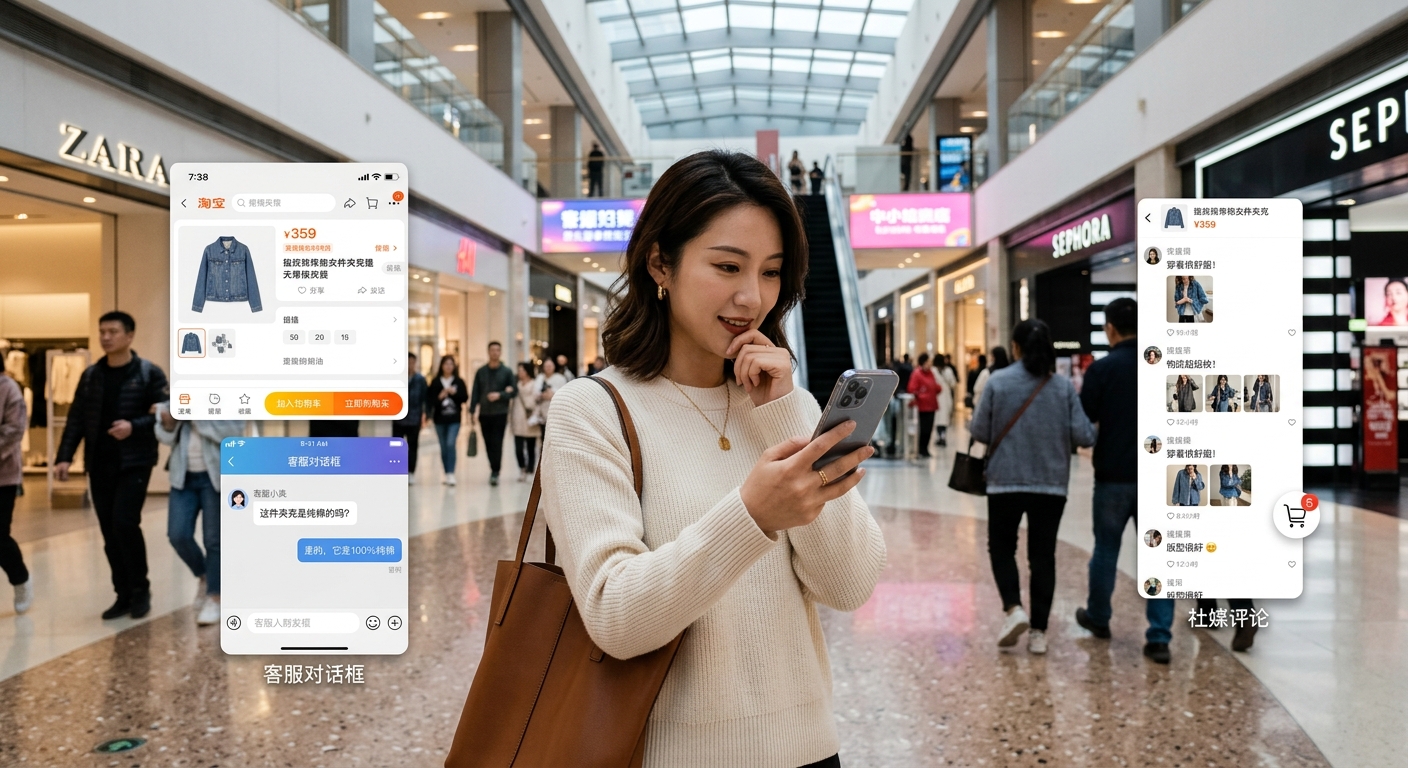
It was an ordinary Saturday afternoon.
A user left a comment on a sports brand Instagram post: "Do these running shoes run small? I normally wear size 41, should I get 41 or 42?"
This comment received a brand reply 36 hours later.
But the user had already bought a pair from a competitor.
Sprout Social 2026 Report Core Data
In early 2026, Sprout Social released its annual Social Media Consumer Behavior Report. One piece of data sparked widespread discussion in the industry:
Brands that reply to comments within 1 hour have a 40% higher probability of final customer conversion compared to non-replied situations.
The logic behind this number is not complicated:
When consumers leave comments on brand social media posts, they are essentially publicly expressing purchase intent or product doubts. They are willing to stop, type, and wait — indicating they are still considering this brand.
Brand response speed directly determines how far this "consideration" can go:
- Reply within 1 hour: User is still in active browsing state, purchase decision window has not closed
- Reply in 1-6 hours: User may have browsed multiple competitors, decisions are scattered
- More than 12 hours: User very likely already made a decision — either bought from a competitor, or gave up
This is the essence of the "1-hour golden window."
Brand Comment Reply Status: Which Tier Are You In?
According to the same report survey, brand comment reply status distribution:
| Reply Timeframe | Brand Percentage |
|---|---|
| Within 1 hour | Only 11% |
| 1-6 hours | 23% |
| 6-24 hours | 31% |
| Over 24 hours or no reply | 35% |
Over one-third of brands either reply after 24 hours or do not reply at all.
This means a large number of potential conversion opportunities disappear in silence.
More notably: Only 11% of brands achieve "1-hour reply." This 11% enjoys a 40% higher conversion rate compared to most competitors.
This is a very low threshold for a competitive advantage that very few people achieve.
Why Can Most Brands Not Achieve 1-Hour Reply?
The answer is actually very simple: insufficient manpower, wrong timing.
Manpower issue: An active brand account may receive dozens to hundreds of comments daily. If every comment needs human one-by-one reply, it requires dedicated comment management personnel, which is very expensive.
Timing issue: When are consumers most active? Usually 8 PM-11 PM, weekends, holidays. But most brand operations teams work 9 AM-6 PM, weekdays only.
This creates a structural contradiction: The time periods when users are most active are precisely when brand operations strength is weakest.
Learn Instagram Comment Auto-Reply
How Does Comment Auto-Reply Solve This Problem
A comment auto-reply system is essentially giving the brand a "comment assistant that never goes off duty."
Coverage strategy:
FAQ comments (approximately 40-50% of comments):
Product sizing, delivery range, usage methods, return/exchange policies... These questions appear daily and repeatedly. You can preset accurate answers and auto-trigger.
Users receive accurate answers within minutes of asking, with extremely high satisfaction and significantly improved purchase intent conversion rate.
Interaction comments (approximately 20-30% of comments):
Emojis, likes, "So good!" "Amazing!" — these do not need substantive replies. But if the brand ignores them, it seems cold.
Auto-reply with a warm thank you message maintains engagement rate (beneficial for algorithmic push) while leaving a good impression on users.
Guidance comments (approximately 10-15% of comments):
Users expressed purchase intent but have no specific questions, such as "I really want to buy!" "Where can I find this?"
Can set auto-reply guiding users to product page or private message, directly entering conversion path.
Learn Facebook Comment Auto-Reply
Comments requiring human handling (approximately 15-25%):
Complaints, complex inquiries, emotionally charged comments, media inquiries — these are identified by the system and tagged, preferentially pushed to human processing, not using auto-reply.
Real Case: A Home Furnishings Brand Comment Transformation
A Nordic minimalist style home export brand, Instagram main account approximately 150K followers, daily comment volume between 80-150.

Before transformation:
- 1 person responsible for comment management, processed during working hours
- Average reply rate approximately 55% (many comments missed)
- Average reply time: 6.2 hours on workdays,无人处理 on weekends/nights
- Monthly comment-attributable trackable sales: approximately $8,200
After connecting SocialEcho comment auto-reply:
- Auto-handled approximately 65% of comments (FAQ + interaction types)
- Humans only needed to handle approximately 35% (system pushed queue, centralized processing)
- Overall reply rate increased to 92%
- Average reply time (including auto-reply): 23 minutes
- Monthly comment-attributable trackable sales: approximately $13,600 (66% improvement)
Learn TikTok Comment Auto-Reply
How to Set Up High-Quality Auto-Reply
Auto-reply quality determines whether it can truly help users (rather than annoy them more).
5 standards for high-quality auto-reply:
- Accurate: FAQ answers must be genuinely accurate product information, no vagueness
- Helpful: Replies should solve problems, not just "we received your question"
- Natural: Tone aligns with brand style, does not sound like a canned response
- Has variants: Similar questions have 3-5 different expression versions, avoiding spam-like repetition
- Knows boundaries: Complex questions should not auto-reply, must route to human
Learn SocialEcho Engagement Management
FAQ
Q1: Is the 1-hour reply goal really achievable?
A: For comment types covered by AI auto-reply, replies can be made within minutes. For comments requiring human handling, usually achievable within 1-2 hours during team working hours. For non-working hours, can first send a transitional reply "We have received your question, will reply within X hours."
Q2: Will auto-reply make the brand seem insincere?
A: The key lies in auto-reply content quality. A fast reply that accurately answers the user question is more satisfying to the user than a slow human reply saying "under review, please be patient."
Q3: Users in different regions speak different languages. Does auto-reply support multiple languages?
A: Mainstream tools support setting independent trigger rules and reply content for different languages. Export brands can separately configure Chinese, English, Spanish, and other language versions.
Q4: How to know how many conversions auto-reply has brought?
A: You can attach UTM parameters to auto-reply product links and track conversion paths from comments through Google Analytics. Not 100% accurate, but provides reference data.
Q5: Small brand with low comment volume. Is configuring auto-reply worthwhile?
A: Even with only 20-30 comments daily, auto-reply has value — it ensures comments during non-working hours (evenings, weekends) are not missed. And these time periods are often when users are most active.
Summary
Sprout Social 2026 report data illustrates a simple fact: Comment reply speed directly determines the commercial value of social media operations.
Achieving 1-hour reply does not require hiring more people — it requires a correct set of tools and processes.
The 11% of brands achieving this are enjoying a 40% higher conversion rate than most competitors.
Would you like to join this 11%?
Visit SocialEcho to learn how to configure a high-quality comment auto-reply system for your brand.
;}.cls-2{fill:%230868f7;}.cls-3{fill:url(%23未命名的渐变_44);}.cls-4{fill:%23333;}%3c/style%3e%3clinearGradient%20id='未命名的渐变_8'%20x1='33.73'%20y1='100.61'%20x2='-0.03'%20y2='-1.06'%20gradientUnits='userSpaceOnUse'%3e%3cstop%20offset='0'%20stop-color='%237ae9fb'/%3e%3cstop%20offset='0.67'%20stop-color='%232b90f8'/%3e%3cstop%20offset='1'%20stop-color='%230868f7'/%3e%3c/linearGradient%3e%3clinearGradient%20id='未命名的渐变_44'%20x1='27.86'%20y1='18.67'%20x2='68.36'%20y2='22.22'%20gradientUnits='userSpaceOnUse'%3e%3cstop%20offset='0'%20stop-color='%235ac7f2'/%3e%3cstop%20offset='1'%20stop-color='%230868f7'/%3e%3c/linearGradient%3e%3c/defs%3e%3cpath%20class='cls-1'%20d='M29,28.74V81.91l-9.51-3.68v0L8.52,74A7.17,7.17,0,0,1,4,67.32V24.54A3.76,3.76,0,0,1,9.08,21Z'/%3e%3cpath%20class='cls-2'%20d='M68.09,78.07a13.15,13.15,0,0,1-17.9,12.06L29,81.91h0V28.74L50.19,37A13.17,13.17,0,0,0,68.08,25.3h0Z'/%3e%3cpath%20class='cls-3'%20d='M68.08,25.3a13.19,13.19,0,0,1-6.73,10.87A13.09,13.09,0,0,1,50.19,37L29,28.74V6A3.76,3.76,0,0,1,34.1,2.52l25.59,9.91A13.22,13.22,0,0,1,68.08,25.3Z'/%3e%3cpath%20class='cls-4'%20d='M129.06,81.76a4.33,4.33,0,0,1-3.19-1.31,4.4,4.4,0,0,1-1.31-3.24V56.86H97.65V77.21a4.36,4.36,0,0,1-1.35,3.2A4.68,4.68,0,0,1,93,81.76a4.32,4.32,0,0,1-3.19-1.31,4.37,4.37,0,0,1-1.32-3.24V27.27A4.58,4.58,0,0,1,89.83,24a4.59,4.59,0,0,1,7.82,3.27V48.15h26.91V27.27A4.58,4.58,0,0,1,125.91,24a4.59,4.59,0,0,1,7.82,3.27V77.21a4.37,4.37,0,0,1-1.36,3.2A4.65,4.65,0,0,1,129.06,81.76Z'/%3e%3cpath%20class='cls-4'%20d='M163.77,81.66c-6.57,0-11.76-1.92-15.44-5.7s-5.54-9.07-5.54-15.74a26.76,26.76,0,0,1,2.09-10.43,17.72,17.72,0,0,1,6.67-8.06,19.15,19.15,0,0,1,10.68-2.95,19,19,0,0,1,10.46,2.8,18.7,18.7,0,0,1,6.55,7.36,22.53,22.53,0,0,1,2.36,10.28A4.51,4.51,0,0,1,177,63.77H152.23a10.8,10.8,0,0,0,3.49,6.65c2,1.68,4.88,2.52,8.66,2.52a22.25,22.25,0,0,0,7.54-1.21c.74-.3,1.55-.67,2.37-1.07a3.75,3.75,0,0,1,1.84-.4,4.09,4.09,0,0,1,3,1.15,4,4,0,0,1,1.12,3,4.38,4.38,0,0,1-2.58,3.82,32.34,32.34,0,0,1-6.36,2.61A28.67,28.67,0,0,1,163.77,81.66ZM172.4,55.9a9.72,9.72,0,0,0-1.63-4.56A9.9,9.9,0,0,0,167,48a10.38,10.38,0,0,0-4.64-1.14,12,12,0,0,0-4.77,1.06,9.54,9.54,0,0,0-4.89,5.66,11.78,11.78,0,0,0-.51,2.3Z'/%3e%3cpath%20class='cls-4'%20d='M193,81.64a4.49,4.49,0,0,1-4.51-4.55V27.28A4.58,4.58,0,0,1,189.84,24a4.48,4.48,0,0,1,3.28-1.36A4.36,4.36,0,0,1,196.35,24a4.46,4.46,0,0,1,1.31,3.31V77.09a4.34,4.34,0,0,1-1.35,3.2A4.67,4.67,0,0,1,193,81.64Z'/%3e%3cpath%20class='cls-4'%20d='M263.79,81.71a5.7,5.7,0,0,1-4.2-1.74,5.76,5.76,0,0,1-1.73-4.19V27.37a4.58,4.58,0,0,1,1.35-3.27A4.59,4.59,0,0,1,267,27.37V72.53h24a4.58,4.58,0,0,1,3.27,7.82A4.66,4.66,0,0,1,291,81.71Z'/%3e%3cpath%20class='cls-4'%20d='M424.48,81.74a4.71,4.71,0,0,1-2.71-.88,5.43,5.43,0,0,1-1-1l-.07-.09-12.41-17-5.41,5v9.44a4.31,4.31,0,0,1-1.36,3.19,4.66,4.66,0,0,1-3.3,1.36A4.29,4.29,0,0,1,395,80.42a4.36,4.36,0,0,1-1.32-3.23V27.37A4.58,4.58,0,0,1,395,24.1a4.52,4.52,0,0,1,6.58.12,4.54,4.54,0,0,1,1.24,3.15V56.31l17.72-16.38.05,0a4.8,4.8,0,0,1,2.94-1.11,4.4,4.4,0,0,1,3.27,1.2,4.57,4.57,0,0,1,1.2,3.27,4.44,4.44,0,0,1-.77,2.33,7.45,7.45,0,0,1-1.43,1.65l-11,9.64,13.34,17.68a5,5,0,0,1,1,2.71,4.12,4.12,0,0,1-1.36,3.24A4.64,4.64,0,0,1,424.48,81.74Z'/%3e%3cpath%20class='cls-4'%20d='M317.93,81.76a21.5,21.5,0,1,1,21.17-21.5A21.37,21.37,0,0,1,317.93,81.76Zm0-34.1a12.61,12.61,0,1,0,12.42,12.6A12.52,12.52,0,0,0,317.93,47.66Z'/%3e%3cpath%20class='cls-4'%20d='M212.18,101.22a4.12,4.12,0,0,1-3.05-1.26,4.17,4.17,0,0,1-1.26-3.1V43.34a4.37,4.37,0,0,1,1.3-3.14,4.26,4.26,0,0,1,3.13-1.3,4.19,4.19,0,0,1,3.1,1.26,4.32,4.32,0,0,1,1.26,3.16,20.77,20.77,0,0,1,13-4.54,21.51,21.51,0,0,1,0,43,20.51,20.51,0,0,1-13-4.57V96.86a4.15,4.15,0,0,1-1.3,3.06A4.5,4.5,0,0,1,212.18,101.22Zm17.43-53.63c-6.23,0-12.93,4.11-12.93,12.72a12.73,12.73,0,0,0,25.46,0A12.71,12.71,0,0,0,229.61,47.59Z'/%3e%3cpath%20class='cls-4'%20d='M365.76,81.76a21.5,21.5,0,1,1,21.18-21.5A21.37,21.37,0,0,1,365.76,81.76Zm0-34.1a12.61,12.61,0,1,0,12.42,12.6A12.52,12.52,0,0,0,365.76,47.66Z'/%3e%3c/svg%3e)