
YouTube Brand Report 2026 Q1: Focus on Retention and Engagement to Win
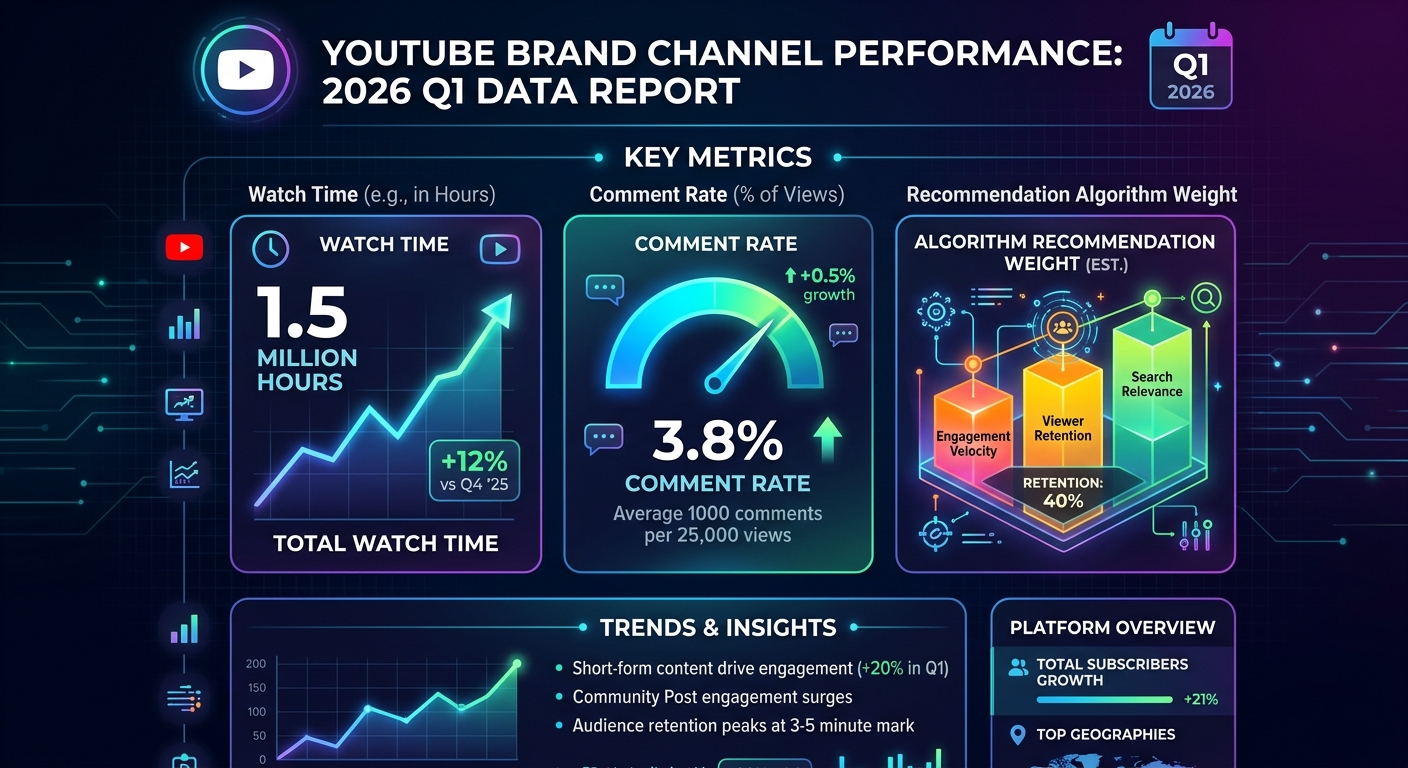
8%. This is a key factor in YouTube's Q1 2026 data—for every minute increase in viewer engagement, the video's algorithmic recommendation exposure increases by approximately 8%. (Source: YouTube's official Creator Insider Q1 2026 report)
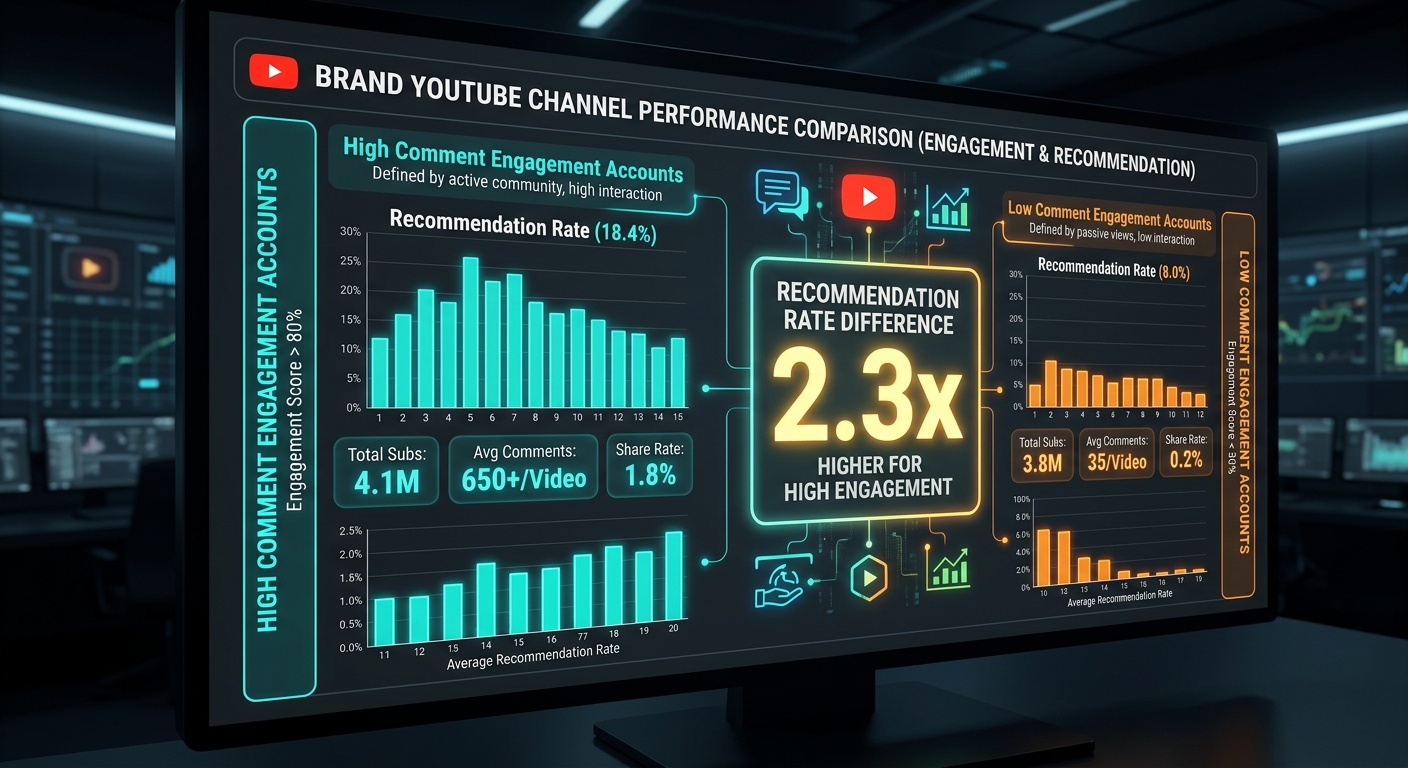
Meanwhile, another set of data is also worth the brand operation team's attention: channels with a comment reply rate of over 40% receive 2.3 times more algorithm recommendations than accounts of similar size.
What do these two sets of figures mean? They mean that YouTube's streaming logic has quietly undergone a major shift— from "account size driven" to "content quality driven." And the core dimensions for measuring content quality are audience retention rate and the depth of comment interaction.
The problem is that the vast majority of brands operating overseas still regard "gaining followers" as their core KPI.
Background: The YouTube 2026 algorithm has undergone deep iterations.
Since the second half of 2025, YouTube has been continuously making structural adjustments to its recommendation algorithm. By 2026, these adjustments had been largely implemented and were fully reflected in the Q1 data.
There are three core changes:
First, the weighting of the viewer retention rate has been significantly increased. The algorithm's judgment of video quality increasingly relies on "how long viewers actually watched" rather than "how many times they clicked." A channel with 500,000 subscribers but an average viewing time of only 45 seconds may be less efficient in recommendations than a channel with 100,000 subscribers but an average viewing time of 6 minutes.
Second, comment interaction has become an important component of algorithmic signals. YouTube's algorithm has begun to incorporate "whether a channel actively responds to comments" into its feed weighting. This means that the comment section is no longer just a place for brands to communicate with users; it is also a window for sending signals to the algorithm.
Third, there is a strong positive correlation between posting frequency and recommendation volume. According to industry research data, channels that post more than three videos per week receive 4.2 times more algorithmic recommendations than channels that post only one video per week. (Source: Social Media Examiner 2026 YouTube Operations Benchmark Report)
These three changes together constitute YouTube's new algorithmic ecosystem in 2026.
C. Conflict: Brand accounts are still using outdated frameworks to assess health.
Despite algorithm iterations, most overseas brands' YouTube operation systems remain stuck in the mindset of 2022-2023.
Common symptoms include:
- KPIs are set with subscription numbers as the anchor : the core metric for monthly reports is "new subscriptions," rather than watch time or comment engagement.
- The content strategy is driven by creating viral hits : pursuing high viewership for individual videos while neglecting the overall retention quality of the channel.
- The comment section is in a "laissez-faire" state : there is no fixed comment reply mechanism, and user questions in the comment section often go unanswered for 48 hours.
- The release schedule is unstable : releases are concentrated when resources are available, but long periods of inactivity occur when resources are unavailable, and there is a lack of a systematic content calendar.
This old framework was effective in the early days of YouTube operations—when the algorithm placed more emphasis on subscriber count and click-through rate. However, the algorithmic ecosystem in 2026 is different, and operating with the old framework directly leads to a vicious cycle where brand accounts "post videos but no one watches them, and if no one watches them, they post even less."
The average subscription conversion rate for brand accounts is currently only 0.8% (view-to-subscribe conversion, source: YouTube's official 2026 Q1 content creator data report). This figure indicates that simply pursuing views to increase subscriptions is an inefficient approach.
Q: What metrics will YouTube's 2026 algorithm truly prioritize?
After clarifying the background and conflict, the core issue emerges:
If subscriber count is no longer a core metric, what data should brand accounts focus on tracking? How can they optimize their operational strategies based on this data?
The answer consists of two parts: 5 core algorithm weight metrics + corresponding actionable improvement suggestions .
A. Answer: 5 core indicators and improvement paths
Metric 1: Average View Duration
Why it matters: For every additional minute of viewing time, recommended exposure increases by approximately 8%. This is the most direct algorithmic relevance data for Q1 2026.
Health benchmark: For brand videos that are 5-10 minutes long, an average viewing time of 50%-60% of the total video length is considered excellent; if it is less than 30%, the content structure needs to be optimized immediately.
Suggestions for improvement:
- Place the "hook" in the first 15 seconds of the video, clearly informing the audience "what problem this video can solve."
- Set a content climax or information density peak in the middle of the video (usually around 40%-60% of the total length) to reduce the drop-off rate.
- In the YouTube Analytics panel of YouTube Studio, regularly review the "Viewer Retention Curve" to identify specific points in time when users churn significantly, and then optimize those sections of content accordingly.
Metric 2: Comment Reply Rate
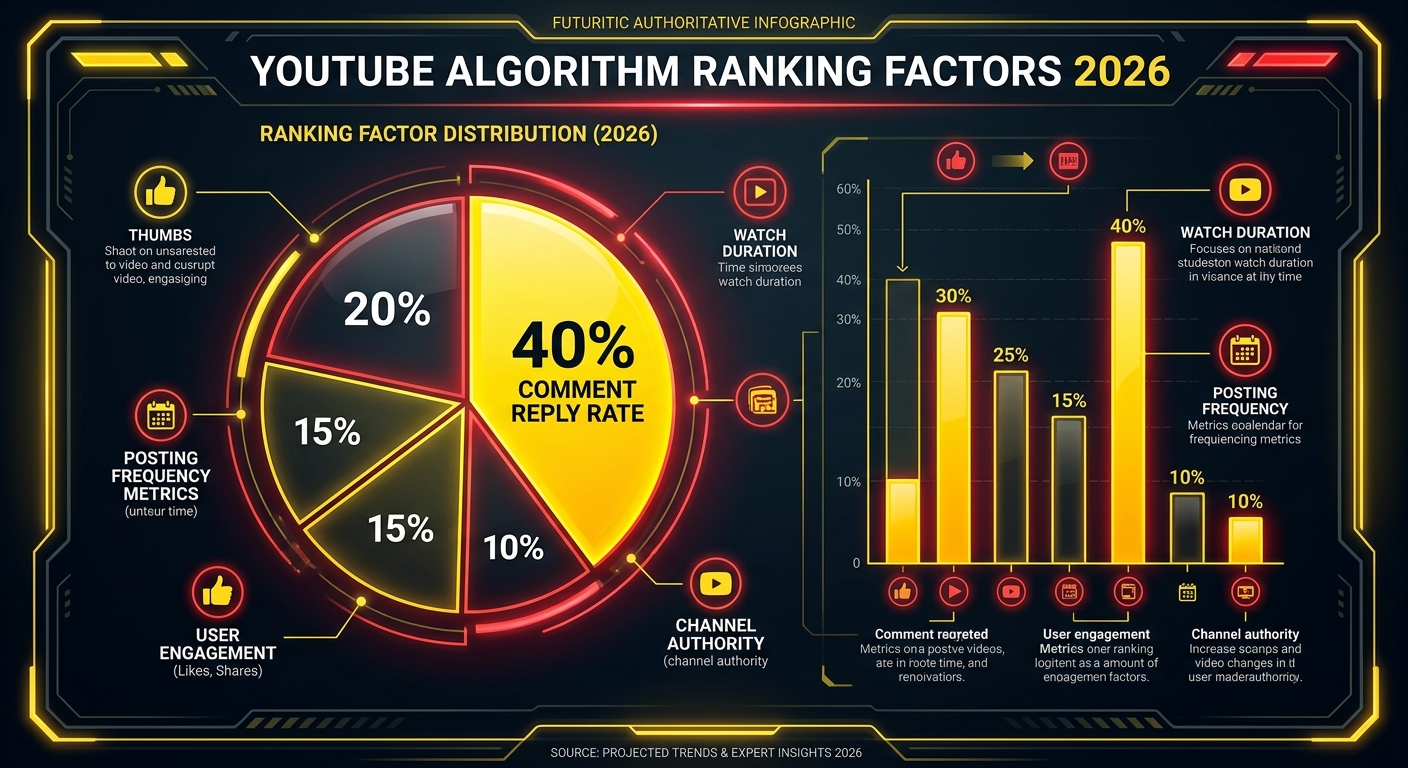
Why it's important: Channels with a comment reply rate exceeding 40% receive 2.3 times more algorithm-recommended content than accounts of similar size. This is the most actionable finding in this data report.
What is the comment response rate? It's the percentage of comments that the channel's official account responds to after receiving user comments. The formula is: Number of comments replied by the account ÷ Total number of comments received.
Healthy benchmark: 40% is a clear watershed for algorithmic gain. For brand accounts with fewer than 50 comments per day, maintaining a response rate of 50%-70% is an achievable goal.
Suggestions for improvement:
- Establish a standardized workflow for replying to comments and assign a specific person to handle comments daily.
- Prioritize replying to the following types of comments: questions, comments with high likes, and comments from new users who are interacting for the first time.
- For frequently asked questions, prepare template responses to improve processing efficiency.
- Use YouTube comment management tools to manage comments uniformly and avoid omissions.
For accounts with a large number of comments (100+ per day), YouTube's automatic comment reply function can be used to set up smart reply rules for common questions, ensuring a high response rate while controlling labor costs.
Indicator 3: Publishing Frequency
Why it matters: Channels that post 3+ videos per week receive 4.2 times more algorithmic recommendations than channels that post only 1 video per week. There is a strong positive correlation between posting frequency and recommendation volume.
Important note: The "3 videos" here are not the same as "3 high-production-cost brand videos". YouTube Shorts, behind-the-scenes footage, product tutorials, quick Q&As - these lightweight content are also counted in the posting frequency and often receive a good algorithm response.
Suggestions for improvement:
- Content assets are categorized as follows: long videos (over 10 minutes) + medium videos (3-7 minutes) + short videos (under 60 seconds).
- Plan at least one long video and two lightweight content pieces per week to ensure the release density required by the algorithm.
- Use YouTube's scheduled publishing feature to plan your content calendar in advance and avoid publishing delays caused by internal approval processes.
Indicator 4: Engagement Rate
Why it matters: The industry benchmark for YouTube engagement rates for brands going global is 0.5%-2%. Engagement rate (including likes, comments, shares, and saves) is a comprehensive signal used by algorithms to judge content quality.
Calculation method: Interaction rate = (Number of likes + Number of comments + Number of shares) ÷ Number of views
Health benchmark: Below 0.5% means there is a disconnect between the content and the audience; 1%-2% is in the healthy range; above 2% indicates that the content resonates highly with the audience, and the algorithm will give it extra recommendation weight.
Suggestions for improvement:
- Include clear interactive prompts at the end of the video: instead of simply saying "like it, please give it a thumbs up," pose a specific question related to the video content to encourage comments.
- Engage actively within the first two hours after a video is published—the algorithm has a "cold start observation period" for newly published videos, and the initial interaction rate directly affects the subsequent recommendation scope.
- Regularly monitor competitor account engagement data to understand industry benchmarks and grasp competitors' content pacing and engagement performance through YouTube competitor monitoring.
Metric 5: Click-Through Rate (CTR)
Why it's important: CTR is the "initial screening signal" that the algorithm uses to decide whether to widely recommend a video. Even if a video has a high retention rate and engagement rate, if the CTR is too low, the algorithm won't open it in its exposure pool.
Healthy benchmark: Official YouTube data shows that the average CTR is between 2% and 10%. For brand accounts, maintaining 4% to 6% is considered a better level.
Suggestions for improvement:
- Cover image optimization: high contrast, clear visual focus, and text that is clearly legible even at mobile thumbnail size (recommended word count not to exceed 6 characters).
- Title optimization: The first 50 characters should contain the core keywords and provide a clear "benefit promise" (telling the audience what they will get after reading).
- YouTube Studio has a built-in feature to perform A/B testing on the cover of the same video, helping you find the best cover.
Comprehensive Dashboard: Brand Account Health Self-Check
Based on the above five indicators, the brand operations team can establish a simple self-assessment framework for brand health:
| index | Danger Zone | healthy zone | Excellent range |
|---|---|---|---|
| Average viewing time | 30%-50% | >50% | |
| Comment response rate | 20%-40% | >40% | |
| Weekly release frequency | 1-2 items | 3+ | |
| Interaction rate | 0.5%-2% | >2% | |
| Video CTR | 2%-6% | >6% |
It is recommended to conduct a full-channel data check-up once a month, comparing each of the above 5 indicators one by one, identifying weaknesses, and prioritizing the optimization of indicators in the "danger zone".
From Data to Execution: How SocialEcho Helps Brand Accounts Achieve Transform Metrics
Understanding the metrics is the first step, but systematic execution is the key.
For brand operations teams, the biggest challenge is often not "not knowing what to do," but "knowing what to do but not having enough manpower and tools to continuously execute it."
Comment management is a prime example of a bottleneck in execution. A brand account with an average of 500,000 video views per month may receive thousands of comments monthly. Relying entirely on manual processing of each comment is not only inefficient but also prone to missing valuable user feedback.
SocialEcho provides full-chain YouTube operation support for brands going global, including:
- Batch comment management and automatic reply : Set rules for frequently asked questions to automatically trigger replies and ensure a reply rate consistently above 40%.
- Multi-account data dashboard : Displays 5 core indicators in one place, supports comparison by time period, and quickly identifies abnormal fluctuations.
- Competitor data monitoring : Automatically tracks the posting frequency and interaction rate changes of competitor accounts to assist in content strategy decisions.
- Scheduled releases and content calendar : Supports advanced scheduling of releases to maintain a stable release frequency.
The basic plan starts at 12.5/month, and the team plan starts at 18.75/month, with a 20% discount for annual payments. For operations teams with multiple brand accounts or collaborative needs, the team plan's multi-account management feature can significantly reduce collaboration costs.
FAQ
Q1: Is the number of subscribers really completely unimportant?
A: Subscriber count still has some reference value, but its weight in the algorithm has significantly decreased. YouTube's 2026 algorithm places more emphasis on "content quality signals" (retention rate, engagement rate) rather than "historical accumulation" (subscriber count). An account with a large number of subscribers but declining content quality will see its recommendation volume continue to shrink; while an account with fewer subscribers but high content retention rate can receive more recommendations.
Q2: Do I have to post 3 videos per week? What if the production costs are too high?
A: The key lies in content categorization. Not every video needs high production costs. YouTube Shorts (under 60 seconds) have a low production threshold, and their algorithmic exposure logic is relatively independent, which helps to increase the posting frequency without significantly increasing costs. One well-made long video + two Shorts per week is an feasible starting point.
Q3: How to quickly improve comment response rate?
A: Two steps: First, within 6 hours of posting the video, actively view and reply to the first 20-30 comments (this is the time window with the highest interaction rate); second, create reply templates for frequently asked questions and use YouTube's automatic comment reply tool to maintain a reply rate of over 40% without relying on a large amount of manual work.
Q4: If the interaction rate is below 0.5%, where should we start to optimize it?
A: Prioritize checking two areas: first, the relevance of the content to the audience (does it truly address the pain points of the target audience?); second, the clarity of the action guidance (does the video end with clear interactive guidance, rather than a vague "like and follow"). Content relevance is fundamental, while action guidance acts as an amplifier.
Q5: What size brand account is SocialEcho suitable for?
A: SocialEcho is suitable for brand accounts with systematic operational needs, regardless of account size. For newly established accounts (subscriber and comment management, data dashboards help establish correct operational habits from the start); for mature accounts (subscribers > 100,000), competitor monitoring and multi-account management features are more valuable. The basic version costs $12.5/month, which is an extremely low trial-and-error cost for brand operation teams.
Q6: Does the YouTube algorithm treat brand accounts and individual creator accounts the same?
A: The algorithm itself doesn't differentiate between account types, but brand accounts face two unique challenges in practice: first, content is often too "branded" and lacks authenticity, leading to low interaction rates; second, customer complaints or negative content easily appear in the comment section, and improper handling can damage the account's image. It is recommended that brand accounts move closer to the style of "useful content creators" rather than purely "brand promotional videos."
Q7: How can I determine if my channel has been penalized by the algorithm?
A: We mainly observe two signals: First, whether the recommended traffic ("Traffic Sources" data in YouTube Studio) within 72 hours of the video's release is significantly lower than the historical average; second, whether the "Click-Through Rate" continues to decline. If both signals appear simultaneously, we recommend using data analysis tools to diagnose recent content item by item, identify the specific videos causing abnormal retention or interaction rates, analyze the reasons, and then make targeted improvements.
Conclusion
YouTube's 2026 algorithm iteration is essentially a "repricing of content quality." The algorithm begins to more accurately identify the difference between "truly valuable content" and "merely existing content," and gives it drastically different recommendation treatment.
For brands going global, this presents both a challenge and an opportunity. The challenge lies in rebuilding the operational framework; the opportunity lies in the fact that once a content system with high retention and high engagement rates is established, brand accounts can obtain continuous algorithmic traffic at a relatively low cost, forming a long-term accumulation of content assets.
Suggested priority order for the five core metrics:
- Comment response rate (fastest to show results, and the most direct benefit from algorithmic optimization)
- Release frequency (the effects of the increase are usually visible within 2-4 weeks).
- Average viewing time (requires content structure optimization, period will be longer).
- Interaction rate (driven by content quality; a result, not a cause)
- CTR (Continuous A/B Testing of Cover and Headline)
Starting with the comment response rate is the best starting point for achieving the highest ROI.
;}.cls-2{fill:%230868f7;}.cls-3{fill:url(%23未命名的渐变_44);}.cls-4{fill:%23333;}%3c/style%3e%3clinearGradient%20id='未命名的渐变_8'%20x1='33.73'%20y1='100.61'%20x2='-0.03'%20y2='-1.06'%20gradientUnits='userSpaceOnUse'%3e%3cstop%20offset='0'%20stop-color='%237ae9fb'/%3e%3cstop%20offset='0.67'%20stop-color='%232b90f8'/%3e%3cstop%20offset='1'%20stop-color='%230868f7'/%3e%3c/linearGradient%3e%3clinearGradient%20id='未命名的渐变_44'%20x1='27.86'%20y1='18.67'%20x2='68.36'%20y2='22.22'%20gradientUnits='userSpaceOnUse'%3e%3cstop%20offset='0'%20stop-color='%235ac7f2'/%3e%3cstop%20offset='1'%20stop-color='%230868f7'/%3e%3c/linearGradient%3e%3c/defs%3e%3cpath%20class='cls-1'%20d='M29,28.74V81.91l-9.51-3.68v0L8.52,74A7.17,7.17,0,0,1,4,67.32V24.54A3.76,3.76,0,0,1,9.08,21Z'/%3e%3cpath%20class='cls-2'%20d='M68.09,78.07a13.15,13.15,0,0,1-17.9,12.06L29,81.91h0V28.74L50.19,37A13.17,13.17,0,0,0,68.08,25.3h0Z'/%3e%3cpath%20class='cls-3'%20d='M68.08,25.3a13.19,13.19,0,0,1-6.73,10.87A13.09,13.09,0,0,1,50.19,37L29,28.74V6A3.76,3.76,0,0,1,34.1,2.52l25.59,9.91A13.22,13.22,0,0,1,68.08,25.3Z'/%3e%3cpath%20class='cls-4'%20d='M129.06,81.76a4.33,4.33,0,0,1-3.19-1.31,4.4,4.4,0,0,1-1.31-3.24V56.86H97.65V77.21a4.36,4.36,0,0,1-1.35,3.2A4.68,4.68,0,0,1,93,81.76a4.32,4.32,0,0,1-3.19-1.31,4.37,4.37,0,0,1-1.32-3.24V27.27A4.58,4.58,0,0,1,89.83,24a4.59,4.59,0,0,1,7.82,3.27V48.15h26.91V27.27A4.58,4.58,0,0,1,125.91,24a4.59,4.59,0,0,1,7.82,3.27V77.21a4.37,4.37,0,0,1-1.36,3.2A4.65,4.65,0,0,1,129.06,81.76Z'/%3e%3cpath%20class='cls-4'%20d='M163.77,81.66c-6.57,0-11.76-1.92-15.44-5.7s-5.54-9.07-5.54-15.74a26.76,26.76,0,0,1,2.09-10.43,17.72,17.72,0,0,1,6.67-8.06,19.15,19.15,0,0,1,10.68-2.95,19,19,0,0,1,10.46,2.8,18.7,18.7,0,0,1,6.55,7.36,22.53,22.53,0,0,1,2.36,10.28A4.51,4.51,0,0,1,177,63.77H152.23a10.8,10.8,0,0,0,3.49,6.65c2,1.68,4.88,2.52,8.66,2.52a22.25,22.25,0,0,0,7.54-1.21c.74-.3,1.55-.67,2.37-1.07a3.75,3.75,0,0,1,1.84-.4,4.09,4.09,0,0,1,3,1.15,4,4,0,0,1,1.12,3,4.38,4.38,0,0,1-2.58,3.82,32.34,32.34,0,0,1-6.36,2.61A28.67,28.67,0,0,1,163.77,81.66ZM172.4,55.9a9.72,9.72,0,0,0-1.63-4.56A9.9,9.9,0,0,0,167,48a10.38,10.38,0,0,0-4.64-1.14,12,12,0,0,0-4.77,1.06,9.54,9.54,0,0,0-4.89,5.66,11.78,11.78,0,0,0-.51,2.3Z'/%3e%3cpath%20class='cls-4'%20d='M193,81.64a4.49,4.49,0,0,1-4.51-4.55V27.28A4.58,4.58,0,0,1,189.84,24a4.48,4.48,0,0,1,3.28-1.36A4.36,4.36,0,0,1,196.35,24a4.46,4.46,0,0,1,1.31,3.31V77.09a4.34,4.34,0,0,1-1.35,3.2A4.67,4.67,0,0,1,193,81.64Z'/%3e%3cpath%20class='cls-4'%20d='M263.79,81.71a5.7,5.7,0,0,1-4.2-1.74,5.76,5.76,0,0,1-1.73-4.19V27.37a4.58,4.58,0,0,1,1.35-3.27A4.59,4.59,0,0,1,267,27.37V72.53h24a4.58,4.58,0,0,1,3.27,7.82A4.66,4.66,0,0,1,291,81.71Z'/%3e%3cpath%20class='cls-4'%20d='M424.48,81.74a4.71,4.71,0,0,1-2.71-.88,5.43,5.43,0,0,1-1-1l-.07-.09-12.41-17-5.41,5v9.44a4.31,4.31,0,0,1-1.36,3.19,4.66,4.66,0,0,1-3.3,1.36A4.29,4.29,0,0,1,395,80.42a4.36,4.36,0,0,1-1.32-3.23V27.37A4.58,4.58,0,0,1,395,24.1a4.52,4.52,0,0,1,6.58.12,4.54,4.54,0,0,1,1.24,3.15V56.31l17.72-16.38.05,0a4.8,4.8,0,0,1,2.94-1.11,4.4,4.4,0,0,1,3.27,1.2,4.57,4.57,0,0,1,1.2,3.27,4.44,4.44,0,0,1-.77,2.33,7.45,7.45,0,0,1-1.43,1.65l-11,9.64,13.34,17.68a5,5,0,0,1,1,2.71,4.12,4.12,0,0,1-1.36,3.24A4.64,4.64,0,0,1,424.48,81.74Z'/%3e%3cpath%20class='cls-4'%20d='M317.93,81.76a21.5,21.5,0,1,1,21.17-21.5A21.37,21.37,0,0,1,317.93,81.76Zm0-34.1a12.61,12.61,0,1,0,12.42,12.6A12.52,12.52,0,0,0,317.93,47.66Z'/%3e%3cpath%20class='cls-4'%20d='M212.18,101.22a4.12,4.12,0,0,1-3.05-1.26,4.17,4.17,0,0,1-1.26-3.1V43.34a4.37,4.37,0,0,1,1.3-3.14,4.26,4.26,0,0,1,3.13-1.3,4.19,4.19,0,0,1,3.1,1.26,4.32,4.32,0,0,1,1.26,3.16,20.77,20.77,0,0,1,13-4.54,21.51,21.51,0,0,1,0,43,20.51,20.51,0,0,1-13-4.57V96.86a4.15,4.15,0,0,1-1.3,3.06A4.5,4.5,0,0,1,212.18,101.22Zm17.43-53.63c-6.23,0-12.93,4.11-12.93,12.72a12.73,12.73,0,0,0,25.46,0A12.71,12.71,0,0,0,229.61,47.59Z'/%3e%3cpath%20class='cls-4'%20d='M365.76,81.76a21.5,21.5,0,1,1,21.18-21.5A21.37,21.37,0,0,1,365.76,81.76Zm0-34.1a12.61,12.61,0,1,0,12.42,12.6A12.52,12.52,0,0,0,365.76,47.66Z'/%3e%3c/svg%3e)