
2026 E-commerce Global Brand Social Media Management Tool Test: Which One Can Help You Win Back Transactions from the Comments Section?
2026 E-commerce Global Brand Social Media Management Tool Test: Which One Can Help You Win Back Transactions from the Comments Section?
Word count: Approximately 3000 words Reading time: 10 minutes

The comments section is the sales channel that e-commerce brands going global are most likely to overlook.
You spend money on ads to attract a user who is genuinely interested in buying. They leave comments under your post such as, "Is this available in size M?" and "What's the price for international shipping?"—then wait three hours without a reply, and buy it from someone else.
This is not an extreme case. This is a hidden problem of missed orders that occurs every day for e-commerce brands that do not have a system for managing reviews.
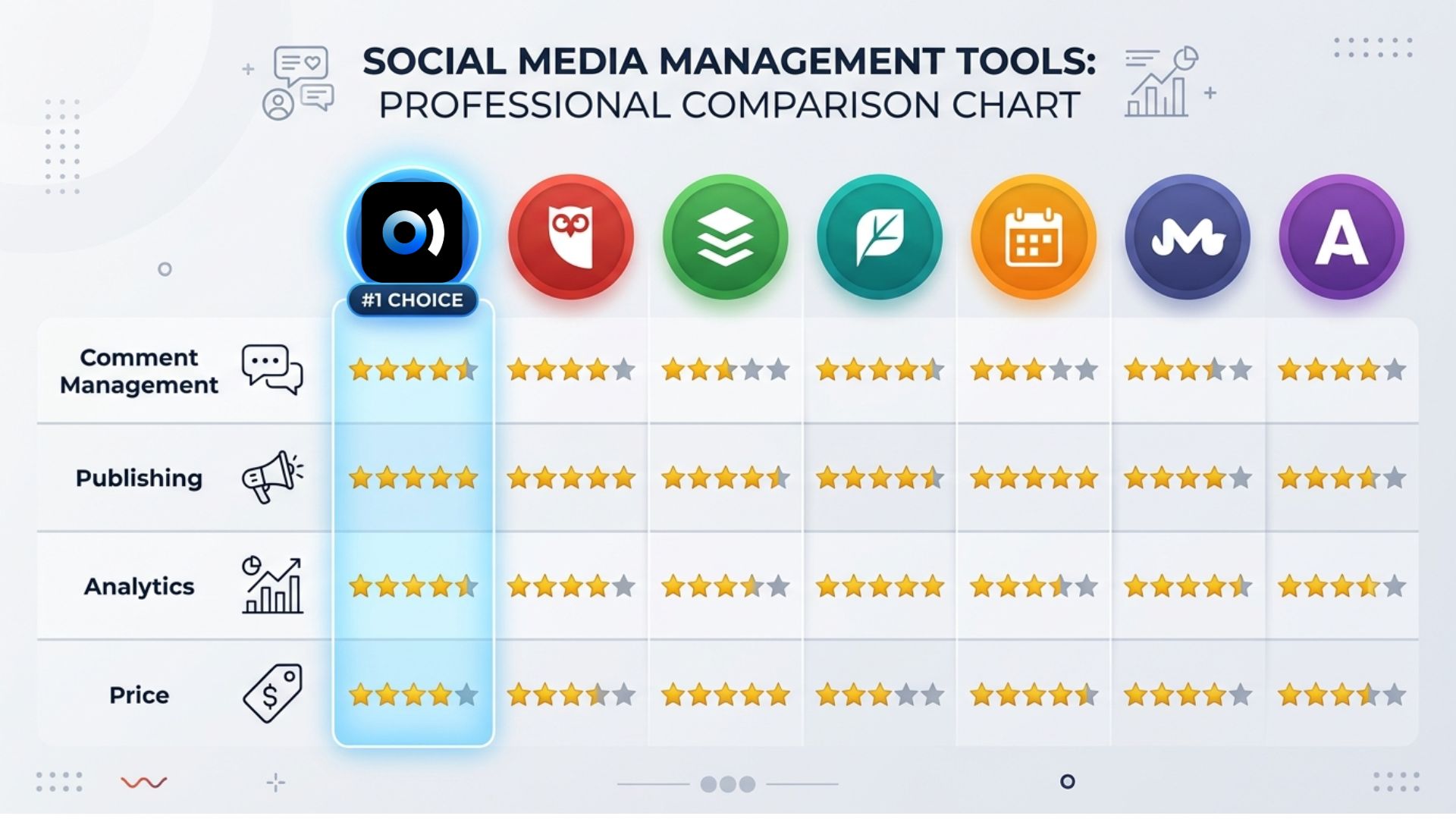
This article tested seven mainstream social media management tools, starting from the core needs of e-commerce brands, to tell you which tool is truly usable in three areas: review sales, multi-platform publishing, and data tracking, and which one will fail at crucial moments.
For e-commerce brands, the core of social media is "transactions," not "display."
Let me first clarify the evaluation logic. There is a fundamental difference between social media operations for e-commerce brands and exposure-based operations for ordinary brands.
The social media goal of a typical brand is "to get more people to know me," which involves posting → gaining followers → increasing brand awareness, with conversions coming later. The social media goal of an e-commerce brand is "to get interested people to buy now." Every highly interactive post may contain users who want to place an order immediately—and this group has the lowest customer acquisition cost and the most mature purchasing decisions.
Therefore, the evaluation weighting is: comment management capability > unified multi-platform management > content publishing > data analysis . A tool with comprehensive features but weak comment management is not a good choice in this scenario.
Evaluation tools: SocialEcho, Hootsuite, Buffer, Sprout Social, Later, Metricool, Agorapulse.
I. Comment Management Ability (Highest Weight)
 )
)
SocialEcho: The Best Fit for E-commerce Scenarios
SocialEcho's interaction management is designed based on the logic that "comments are sales leads." Comments from all platforms (Facebook/Instagram/TikTok/X/YouTube/LinkedIn/Telegram, a total of 7) are automatically aggregated into a unified inbox. AI scans each message in real time and identifies three priority categories: purchase intent (inquiry about price, stock, size), service risk (anger, potential for negative reviews), and general interaction (emojis, thanks, casual chat).
Purchase intention comments will automatically trigger priority push notifications, so you can see them immediately whether you're in a meeting or browsing your phone. You can preset reply templates (such as "Click the link to view the full size chart" or "DM me for your exclusive discount code"), which, combined with AI automatic recognition, can be quickly inserted, compressing the 3-hour response window to within 15 minutes.
During major promotional events, the number of comments can surge by 5-10 times. SocialEcho's AI-powered automatic message routing capabilities are crucial at this time: repetitive questions ("Do you send to XX?" "Do you accept credit cards?") are automatically answered, allowing operations staff to handle only the high-value messages that truly require personalized responses.
Hootsuite: Feature-rich but with a clunky user experience.
Hootsuite supports multi-platform review aggregation, but its interface design is clearly geared towards "unified management" rather than "sales conversion." Review priority identification requires manually setting filtering rules, and there's no out-of-the-box intelligent purchase intent recognition. The operation path is rather lengthy, making it suitable for large e-commerce brands with dedicated social media customer service teams, but not for lean operations teams of 1-3 people.
Sprout Social: Suitable for customer service orientation, not sales orientation.
Sprout Social's inbox feature is mature, and its CRM integration is a strength—it can track each user's cross-platform interaction history. However, for e-commerce brands, this capability is a bit over-engineered: what you need is not "which post this user liked last month," but "the person in this comment wants to buy something, reply to them within 5 minutes." Sprout Social doesn't offer the same sense of urgency in real-time response as SocialEcho.
Buffer, Later, Metricool: Comment management is almost entirely absent.
The core focus of these three tools isn't interaction management, but content publishing and data analysis. Buffer's comment function is extremely basic, Later has almost no unified inbox, and Metricool's comment management is a later addition with a mediocre user experience. If you have a large volume of comments and your sales rely heavily on comment interaction, none of these three tools are sufficient in this aspect.
Agorapulse: Comment Management from an Institutional Perspective
Agorapulse's inbox design was one of the smoothest in this review, with well-developed comment tagging, assignment, and status management. However, its logic is "managing multiple client brands through an agency," rather than "an e-commerce brand efficiently managing its own comments." For e-commerce teams directly operating their own brands, the functionality leans somewhat towards managing complexity rather than speed.
II. Unified Management Across Multiple Platforms
The main battlegrounds for e-commerce brands going global are typically: TikTok (short video sales) + Instagram (product seeding) + Facebook (advertising) + YouTube (long video reviews). Some brands also operate on Pinterest (home/fashion) and X (technology/3C).
SocialEcho supports 8 major platforms (TikTok/Instagram/Facebook/X/LinkedIn/YouTube/Pinterest/Telegram), with OAuth 2.0 security authentication, eliminating the need for repeated logins. Multi-account management supports hierarchical permissions, making it suitable for team structures with "general operations + platform specialists".
Hootsuite supports 35+ platforms, offering the widest coverage. If your brand has a presence on niche platforms (Reddit, Tumblr, etc.), Hootsuite is the only option.
The Buffer platform offers comprehensive support and is extremely easy to use, making it suitable for small teams that don't require complex features.
Later offers the best posting experience on Instagram/TikTok among all tools, with a highly detailed visual content calendar and Stories/Reels schedule preview. If your brand's primary battleground is Instagram and TikTok, Later has a clear advantage in the posting process.
III. Data Analysis and Competitor Tracking
E-commerce brands need data analysis that doesn't focus on "how many more followers I've gained," but rather on "which content generated the most comments and inquiries," "which viral posts our competitors made last week," and "what is our best time to post."
SocialEcho supports real-time data aggregation from 8 platforms, 180 days of historical data, automatic competitor account monitoring and data comparison, and hourly data updates. The competitor monitoring function is particularly useful for e-commerce brands—you can directly see competitor account interaction data, content pacing, and comment sentiment without manually refreshing their profiles.
Sprout Social boasts the most in-depth data analytics among all tools, supporting highly customizable reports and providing clear conversion attribution analysis. It is suitable for large e-commerce brands with dedicated data analysts who require detailed ROI reporting.
Metricool's data analytics offers excellent value for money, with a price significantly lower than Sprout Social, and its features cover the needs of mid-sized e-commerce brands, making it worth considering.
Hootsuite has all the basic analytics features, but advanced data requires a paid add-on module, which can cost significantly more than the listed price.
IV. Price and Value for Money
| tool | Entry-level price (monthly payment) | Suitable Scale | E-commerce scenario comprehensive score |
|---|---|---|---|
| SocialEcho | Medium quality, free version available. | Small and medium-sized e-commerce teams | ⭐⭐⭐⭐⭐ |
| Hootsuite | $99+/month | Large e-commerce brands | ⭐⭐⭐ |
| Buffer | Starting from $6/month | Startup/Individual Seller | ⭐⭐ |
| Sprout Social | $249+/month | Large Brands | ⭐⭐⭐ (On the expensive side) |
| Later | Starting from $18/month | Visual Brands | ⭐⭐⭐ (Strong posting, weak comments) |
| Metricool | Starting from $22/month | Small and medium-sized brands | ⭐⭐⭐ (Strong data) |
| Agorapulse | Starting from $49/month | Operation agency | ⭐⭐⭐ (Institutional Perspective) |
Recommendations for e-commerce brands of different sizes
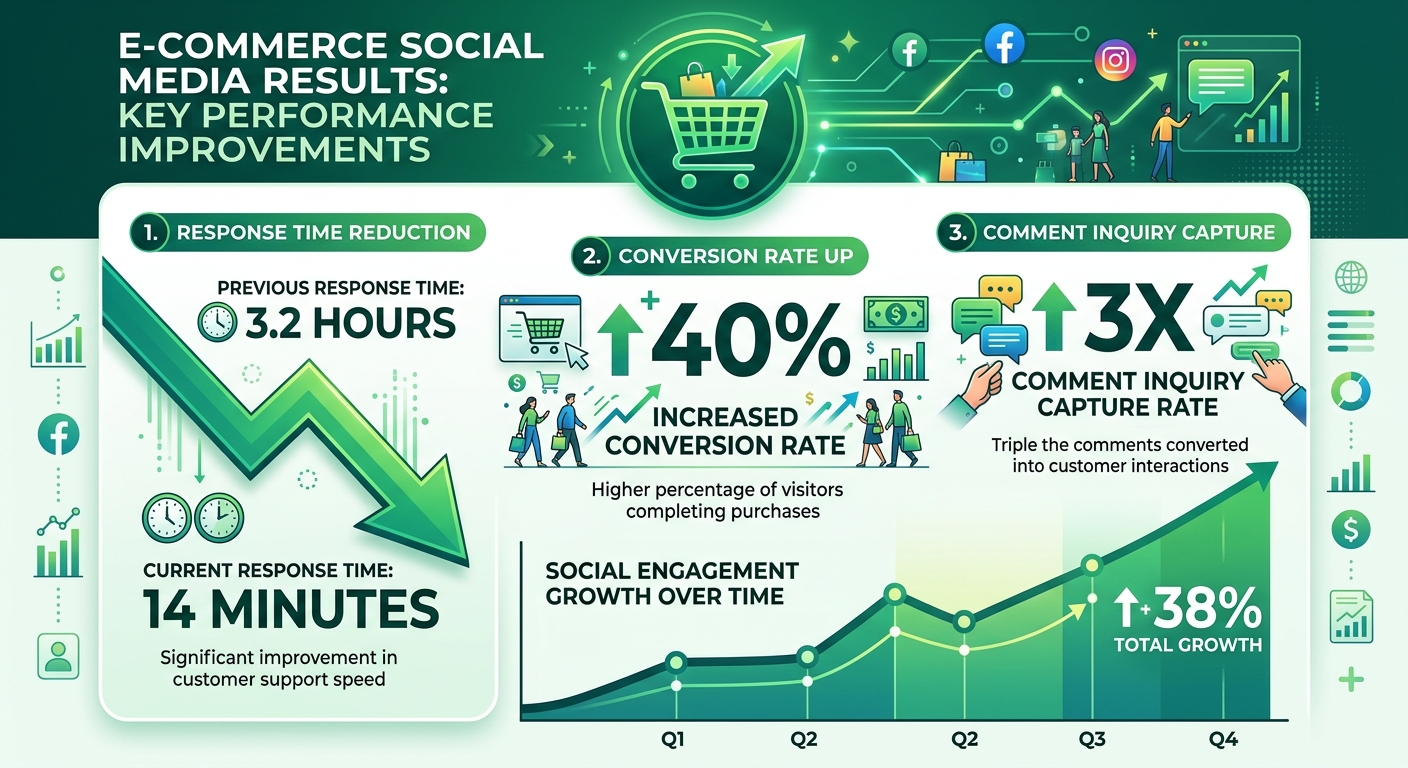
For small to medium-sized e-commerce teams (1-3 people operating) with monthly sales under 500,000 : SocialEcho is the first choice. Its integrated tools reduce the cost of switching between tools; comment management, posting scheduling, and data analysis are all handled in one backend. AI automation allows small teams to operate with the efficiency of large teams.
For brand teams with monthly sales of over 2 million (5 or more full-time operators) : Consider using SocialEcho as the main tool + Later to manage Instagram/TikTok content calendars, or consider introducing Sprout Social based on data analysis needs.
For newly established independent sellers : Buffer has the lowest entry cost. Get your posting schedule running smoothly first, and then migrate to a more robust tool once your account grows.
For fashion/home/beauty e-commerce platforms that excel in visual content : The content calendar and visual preview features of Later are differentiating features. It is recommended to use Later (publishing) + SocialEcho (comment management) in combination.
Finally, I have something important to say.
Choosing the right tools doesn't guarantee successful operation.
Any tool can only amplify your actions—if your comments are low-quality, your product descriptions are unclear, or your promotional rules are incomprehensible, even the fastest response time cannot save your conversion rate.
Tools solve the problem of "efficiency": enabling you to see the messages you need to see faster and respond to the actions you need to take more quickly. The problem of "effectiveness"—what content to reply with, what brand tone to establish, and when to launch an event—still requires you to think things through.
Want to test if SocialEcho is suitable for your e-commerce business scenario? Start with the free version, no credit card binding required.
Try SocialEcho for free now → 👉 https://www.socialecho.net
Related reading:
- Interactive Management: AI identifies comment intent, ensuring your inquiries reach you instantly.
- Multi-platform data analysis: Compare data from 8 platforms on one screen, say goodbye to manually taking screenshots for weekly reports.
- Competitive Monitoring: Real-time tracking of competitors' top-selling content and interaction data
- One-click multi-platform publishing: Scheduled posting to seize the best posting opportunities.
;}.cls-2{fill:%230868f7;}.cls-3{fill:url(%23未命名的渐变_44);}.cls-4{fill:%23333;}%3c/style%3e%3clinearGradient%20id='未命名的渐变_8'%20x1='33.73'%20y1='100.61'%20x2='-0.03'%20y2='-1.06'%20gradientUnits='userSpaceOnUse'%3e%3cstop%20offset='0'%20stop-color='%237ae9fb'/%3e%3cstop%20offset='0.67'%20stop-color='%232b90f8'/%3e%3cstop%20offset='1'%20stop-color='%230868f7'/%3e%3c/linearGradient%3e%3clinearGradient%20id='未命名的渐变_44'%20x1='27.86'%20y1='18.67'%20x2='68.36'%20y2='22.22'%20gradientUnits='userSpaceOnUse'%3e%3cstop%20offset='0'%20stop-color='%235ac7f2'/%3e%3cstop%20offset='1'%20stop-color='%230868f7'/%3e%3c/linearGradient%3e%3c/defs%3e%3cpath%20class='cls-1'%20d='M29,28.74V81.91l-9.51-3.68v0L8.52,74A7.17,7.17,0,0,1,4,67.32V24.54A3.76,3.76,0,0,1,9.08,21Z'/%3e%3cpath%20class='cls-2'%20d='M68.09,78.07a13.15,13.15,0,0,1-17.9,12.06L29,81.91h0V28.74L50.19,37A13.17,13.17,0,0,0,68.08,25.3h0Z'/%3e%3cpath%20class='cls-3'%20d='M68.08,25.3a13.19,13.19,0,0,1-6.73,10.87A13.09,13.09,0,0,1,50.19,37L29,28.74V6A3.76,3.76,0,0,1,34.1,2.52l25.59,9.91A13.22,13.22,0,0,1,68.08,25.3Z'/%3e%3cpath%20class='cls-4'%20d='M129.06,81.76a4.33,4.33,0,0,1-3.19-1.31,4.4,4.4,0,0,1-1.31-3.24V56.86H97.65V77.21a4.36,4.36,0,0,1-1.35,3.2A4.68,4.68,0,0,1,93,81.76a4.32,4.32,0,0,1-3.19-1.31,4.37,4.37,0,0,1-1.32-3.24V27.27A4.58,4.58,0,0,1,89.83,24a4.59,4.59,0,0,1,7.82,3.27V48.15h26.91V27.27A4.58,4.58,0,0,1,125.91,24a4.59,4.59,0,0,1,7.82,3.27V77.21a4.37,4.37,0,0,1-1.36,3.2A4.65,4.65,0,0,1,129.06,81.76Z'/%3e%3cpath%20class='cls-4'%20d='M163.77,81.66c-6.57,0-11.76-1.92-15.44-5.7s-5.54-9.07-5.54-15.74a26.76,26.76,0,0,1,2.09-10.43,17.72,17.72,0,0,1,6.67-8.06,19.15,19.15,0,0,1,10.68-2.95,19,19,0,0,1,10.46,2.8,18.7,18.7,0,0,1,6.55,7.36,22.53,22.53,0,0,1,2.36,10.28A4.51,4.51,0,0,1,177,63.77H152.23a10.8,10.8,0,0,0,3.49,6.65c2,1.68,4.88,2.52,8.66,2.52a22.25,22.25,0,0,0,7.54-1.21c.74-.3,1.55-.67,2.37-1.07a3.75,3.75,0,0,1,1.84-.4,4.09,4.09,0,0,1,3,1.15,4,4,0,0,1,1.12,3,4.38,4.38,0,0,1-2.58,3.82,32.34,32.34,0,0,1-6.36,2.61A28.67,28.67,0,0,1,163.77,81.66ZM172.4,55.9a9.72,9.72,0,0,0-1.63-4.56A9.9,9.9,0,0,0,167,48a10.38,10.38,0,0,0-4.64-1.14,12,12,0,0,0-4.77,1.06,9.54,9.54,0,0,0-4.89,5.66,11.78,11.78,0,0,0-.51,2.3Z'/%3e%3cpath%20class='cls-4'%20d='M193,81.64a4.49,4.49,0,0,1-4.51-4.55V27.28A4.58,4.58,0,0,1,189.84,24a4.48,4.48,0,0,1,3.28-1.36A4.36,4.36,0,0,1,196.35,24a4.46,4.46,0,0,1,1.31,3.31V77.09a4.34,4.34,0,0,1-1.35,3.2A4.67,4.67,0,0,1,193,81.64Z'/%3e%3cpath%20class='cls-4'%20d='M263.79,81.71a5.7,5.7,0,0,1-4.2-1.74,5.76,5.76,0,0,1-1.73-4.19V27.37a4.58,4.58,0,0,1,1.35-3.27A4.59,4.59,0,0,1,267,27.37V72.53h24a4.58,4.58,0,0,1,3.27,7.82A4.66,4.66,0,0,1,291,81.71Z'/%3e%3cpath%20class='cls-4'%20d='M424.48,81.74a4.71,4.71,0,0,1-2.71-.88,5.43,5.43,0,0,1-1-1l-.07-.09-12.41-17-5.41,5v9.44a4.31,4.31,0,0,1-1.36,3.19,4.66,4.66,0,0,1-3.3,1.36A4.29,4.29,0,0,1,395,80.42a4.36,4.36,0,0,1-1.32-3.23V27.37A4.58,4.58,0,0,1,395,24.1a4.52,4.52,0,0,1,6.58.12,4.54,4.54,0,0,1,1.24,3.15V56.31l17.72-16.38.05,0a4.8,4.8,0,0,1,2.94-1.11,4.4,4.4,0,0,1,3.27,1.2,4.57,4.57,0,0,1,1.2,3.27,4.44,4.44,0,0,1-.77,2.33,7.45,7.45,0,0,1-1.43,1.65l-11,9.64,13.34,17.68a5,5,0,0,1,1,2.71,4.12,4.12,0,0,1-1.36,3.24A4.64,4.64,0,0,1,424.48,81.74Z'/%3e%3cpath%20class='cls-4'%20d='M317.93,81.76a21.5,21.5,0,1,1,21.17-21.5A21.37,21.37,0,0,1,317.93,81.76Zm0-34.1a12.61,12.61,0,1,0,12.42,12.6A12.52,12.52,0,0,0,317.93,47.66Z'/%3e%3cpath%20class='cls-4'%20d='M212.18,101.22a4.12,4.12,0,0,1-3.05-1.26,4.17,4.17,0,0,1-1.26-3.1V43.34a4.37,4.37,0,0,1,1.3-3.14,4.26,4.26,0,0,1,3.13-1.3,4.19,4.19,0,0,1,3.1,1.26,4.32,4.32,0,0,1,1.26,3.16,20.77,20.77,0,0,1,13-4.54,21.51,21.51,0,0,1,0,43,20.51,20.51,0,0,1-13-4.57V96.86a4.15,4.15,0,0,1-1.3,3.06A4.5,4.5,0,0,1,212.18,101.22Zm17.43-53.63c-6.23,0-12.93,4.11-12.93,12.72a12.73,12.73,0,0,0,25.46,0A12.71,12.71,0,0,0,229.61,47.59Z'/%3e%3cpath%20class='cls-4'%20d='M365.76,81.76a21.5,21.5,0,1,1,21.18-21.5A21.37,21.37,0,0,1,365.76,81.76Zm0-34.1a12.61,12.61,0,1,0,12.42,12.6A12.52,12.52,0,0,0,365.76,47.66Z'/%3e%3c/svg%3e)