
Top 10 AI Social Media Tools for Global Brands in 2026

For global brands and international marketing teams, social media management is no longer just about posting content on time. A single team may need to manage Facebook, Instagram, TikTok, YouTube, X, LinkedIn, Pinterest, Reddit, Threads, Telegram, and other platforms across different regions, languages, brands, and time zones.
That is why AI social media tools are becoming essential in 2026. The right tool can help teams create content, generate images and videos, adapt posts for different platforms, schedule content, automate replies, analyze performance, and connect social media workflows with internal systems or AI agents.
In this guide, we compare the top 10 AI social media tools for global brands in 2026:
- SocialEcho
- Hootsuite
- Buffer
- Sprout Social
- Later
- Metricool
- Zernio
- Jasper
- SocialBee
- Brandwatch
Key Takeaways
- SocialEcho is best for global brands, cross-border e-commerce teams, agencies, and multi-account social media teams. It combines AI text, image, and video generation, multi-platform publishing, AI auto-replies, analytics, and open API capabilities.
- Hootsuite is a mature option for large enterprises with established social media workflows.
- Buffer is a lightweight choice for small teams that need simple scheduling and AI writing support.
- Sprout Social is strong for social listening, analytics, customer insights, and reporting.
- Later is a good fit for visual-first brands, influencer marketing, and creator campaigns.
- Metricool works well for small and mid-sized teams that need scheduling, analytics, and AI writing in one place.
- Zernio is best for developers, AI agent builders, and SaaS teams that need a unified social media API.
- Jasper is strong for branded marketing copy and campaign content.
- SocialBee is useful for teams with recurring content categories and structured posting workflows.
- Brandwatch is built for enterprise social listening, consumer insights, and brand monitoring.
Why Global Brands Need AI Social Media Tools
Global social media operations are complex because teams need to manage multiple platforms, accounts, languages, content formats, and audience interactions at the same time.
One campaign may need to be rewritten for LinkedIn, TikTok, Instagram, X, and Facebook. A product launch may need to be published across dozens of regional accounts. Comments and DMs may include repeated questions about pricing, shipping, product details, partnerships, and customer support.
Common challenges include:
- Switching between too many social media platforms
- Managing multiple accounts across regions or brands
- Creating enough text, image, and video content
- Adapting posts for different platforms
- Replying to comments and messages on time
- Localizing content for different markets
- Collecting performance data from different dashboards
- Managing team permissions and collaboration
AI social media tools help teams reduce repetitive work and build a more efficient social media workflow. They do not replace strategy, creativity, or human judgment, but they can make daily execution much faster.
How to Choose an AI Social Media Tool
When choosing an AI social media tool, global brands should look beyond basic caption generation. The best tools should support the full workflow from content creation to publishing, engagement, analytics, and automation.
Key factors to consider include:
- Platform coverage: Does the tool support the major global social media platforms your team uses?
- Multi-account management: Can it manage brand, regional, store, or client accounts in one workspace?
- AI content creation: Does it support text, image, video generation, and platform-specific rewriting?
- AI auto-replies: Can it help respond to comments and DMs to improve engagement efficiency?
- Scheduling and calendar: Does it support bulk publishing, drafts, content calendars, and time zones?
- Analytics: Can it track post performance, account performance, and cross-platform results?
- API and security: Does it support official authorization, team permissions, and API access for automation?
Top 10 AI Social Media Tools for Global Brands in 2026
1. SocialEcho
Best for: Global brands, cross-border e-commerce teams, agencies, multi-account teams, and international marketing teams

SocialEcho is an AI-powered social media workspace built for global brands and teams that manage multiple platforms, accounts, and markets.
It is more than a scheduling tool. SocialEcho covers the full social media workflow, including AI content creation, multi-platform publishing, comment and DM management, AI auto-replies, analytics, and API-based automation.
Teams can manage Facebook, Instagram, TikTok, YouTube, X, LinkedIn, Pinterest, Reddit, Telegram, Threads, and other major overseas social media platforms from one workspace. This helps reduce manual platform switching and improves the efficiency of daily social media operations.
SocialEcho stands out in three main areas.
First, it offers richer AI content creation. Teams can generate and rewrite social media copy, create AI images, generate AI videos, and adapt content for different platforms. This is especially useful for teams that need to produce short videos, image posts, campaign content, and multilingual assets at scale.
Second, it supports AI auto-replies. Many social media management tools focus mainly on publishing and scheduling, but do not offer complete automation for comments and DMs. SocialEcho helps teams respond to comments and messages more efficiently, making it useful for handling product questions, sales inquiries, support issues, and partnership requests.
Third, it offers open API capabilities. In addition to a visual workspace for marketing teams, SocialEcho also supports API access for automation systems, AI agents, and internal tools. This makes it suitable for teams that need both an operational dashboard and technical integration.
Key Features
- Multi-platform social media account management
- Multi-account publishing and scheduling
- AI copy generation and rewriting
- AI image generation
- AI video generation
- Platform-specific content adaptation
- AI comment and DM auto-replies
- Unified inbox
- Account grouping and team collaboration
- Post-level and account-level analytics
- Open API capabilities
- Official API authorization
Best For
SocialEcho is especially useful for:
- Global brands managing multiple overseas social media platforms
- Cross-border e-commerce teams managing store, brand, or regional accounts
- Agencies and MCN teams managing multiple client accounts
- Content teams that need to generate text, images, and videos at scale
- Marketing and customer support teams with high comment and DM volume
- Teams that want to connect social media workflows with APIs, AI agents, or automation systems
2. Hootsuite
Best for: Large enterprises and mature social media teams

Hootsuite is one of the most established social media management platforms. It covers scheduling, team collaboration, analytics, social listening, and enterprise-level workflows.
It is a good fit for large organizations with mature social media processes. Hootsuite is especially useful for teams that need structured permissions, approvals, reporting, and social media governance.
Key Features
- Social media scheduling
- AI writing assistance
- Analytics and reporting
- Social listening
- Team collaboration
- Best-time-to-post recommendations
Limitations
Hootsuite can be expensive for smaller teams, and some advanced features may require higher-tier plans.
3. Buffer
Best for: Small teams, startups, and individual creators
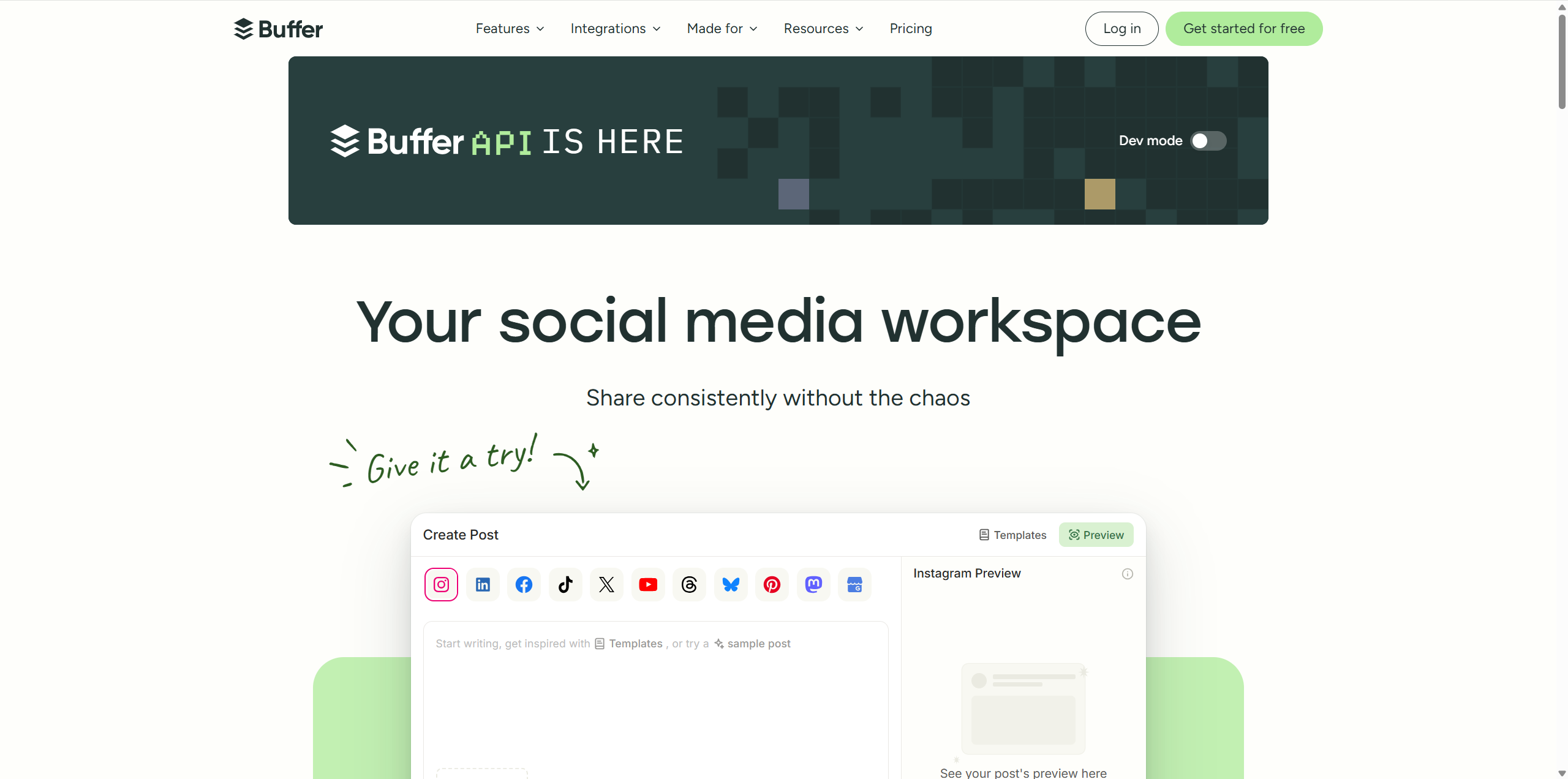
Buffer is a lightweight social media scheduling tool with a simple interface and fast onboarding. It is useful for teams that need basic content planning, scheduling, and performance tracking.
Buffer’s AI Assistant can help generate and improve social media copy, but the platform is still more focused on simple publishing than complex multi-account operations.
Key Features
- Social media scheduling
- AI writing assistant
- Content planning
- Basic analytics
- Team collaboration
Limitations
Buffer is less suitable for complex multi-account management, advanced engagement automation, and deeper analytics workflows.
4. Sprout Social
Best for: Brands focused on analytics, social listening, and customer insights
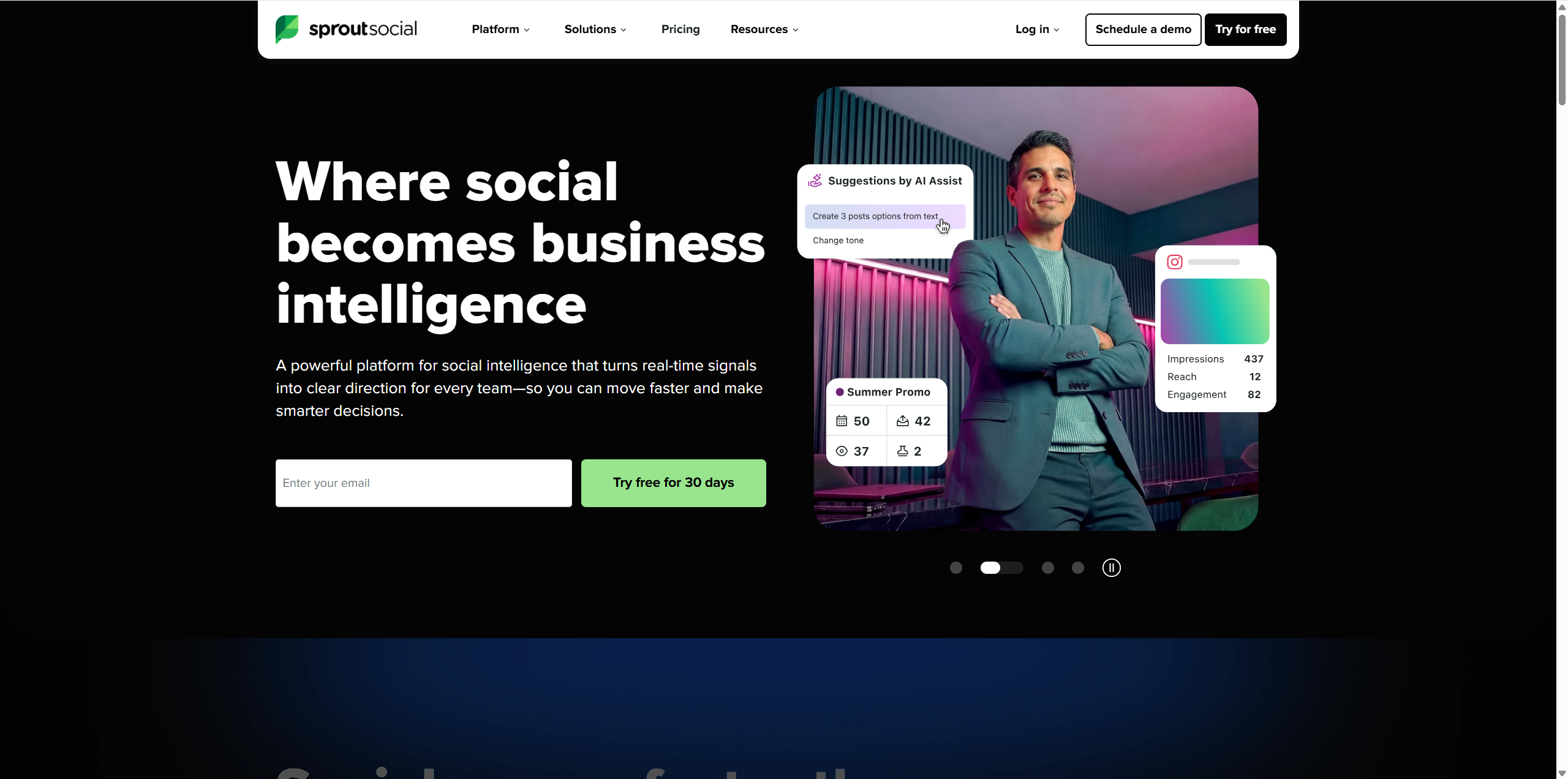
Sprout Social is a premium social media management platform with strong capabilities in social listening, reporting, customer insights, and analytics.
It is a good fit for mid-sized and large brands that need to monitor brand mentions, audience sentiment, competitor activity, and content performance.
Key Features
- Content publishing
- Smart inbox
- Social listening
- AI-powered insights
- Sentiment analysis
- Reporting and analytics
Limitations
Sprout Social is more expensive than many lightweight tools. It is also more focused on analytics and management than high-volume AI content creation.
5. Later
Best for: Visual content, influencer marketing, and creator campaigns

Later is a good choice for brands that rely heavily on Instagram, TikTok, short-form video, visual planning, and influencer marketing. Its visual content calendar is easy to use, and it works well for creator-led campaigns.
Key Features
- Visual content planning
- Social media publishing
- Influencer marketing management
- Creator collaboration
- Performance tracking
Limitations
Later is not mainly built for complex multi-account matrix operations or AI-powered comment and DM automation.
6. Metricool
Best for: Small and mid-sized teams, agencies, and growing brands
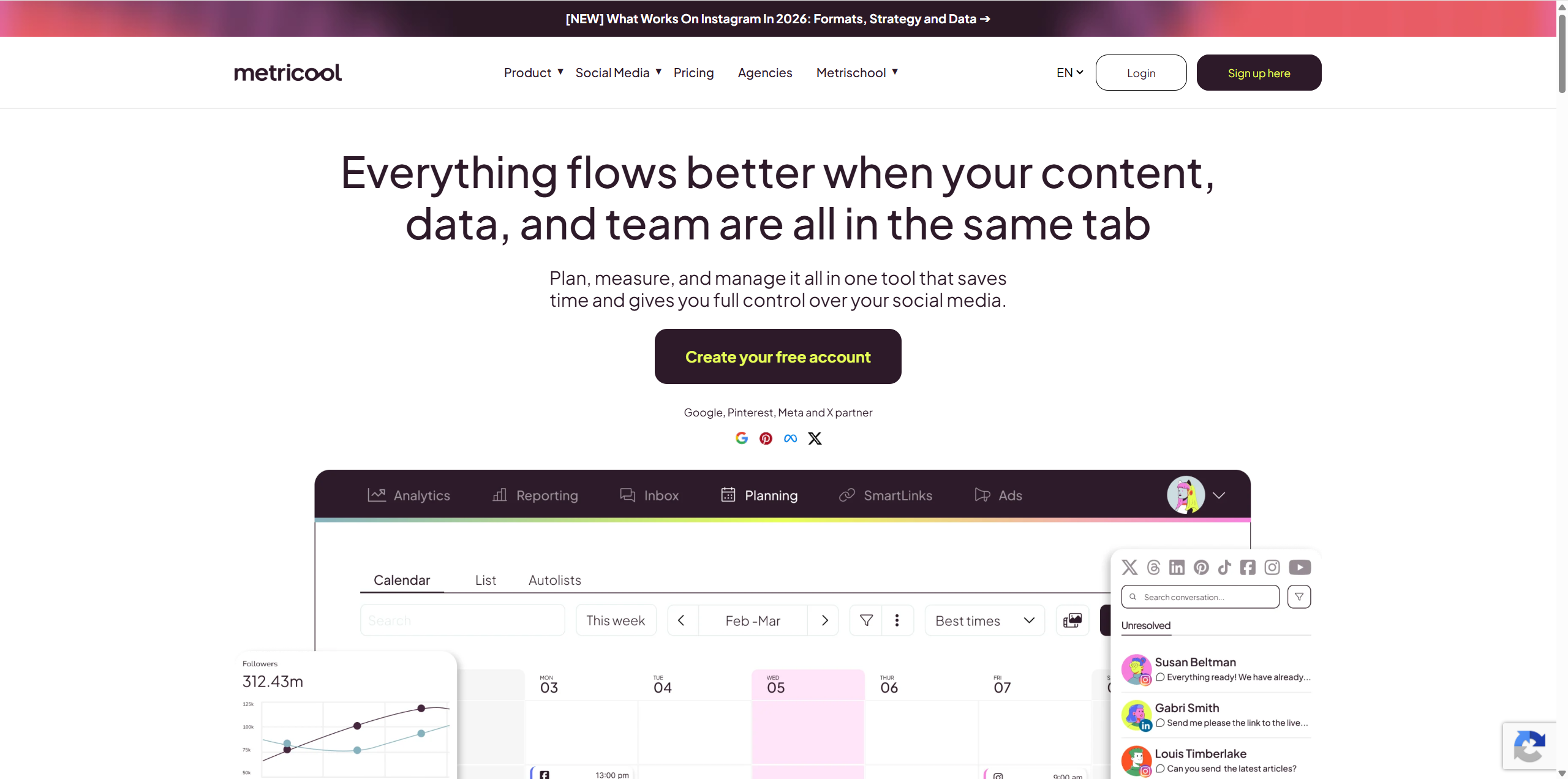
Metricool combines content planning, scheduling, analytics, and AI writing support. It is a practical option for teams that want to manage basic social media workflows from one platform.
Key Features
- AI social media assistant
- Content scheduling
- Analytics
- Best-time-to-post suggestions
- Hashtag suggestions
- Team collaboration
Limitations
Metricool is useful for standard social media management, but it is less focused on AI auto-replies, complex multi-account operations, and API-based automation.
7. Zernio
Best for: Developers, AI agent builders, and SaaS teams
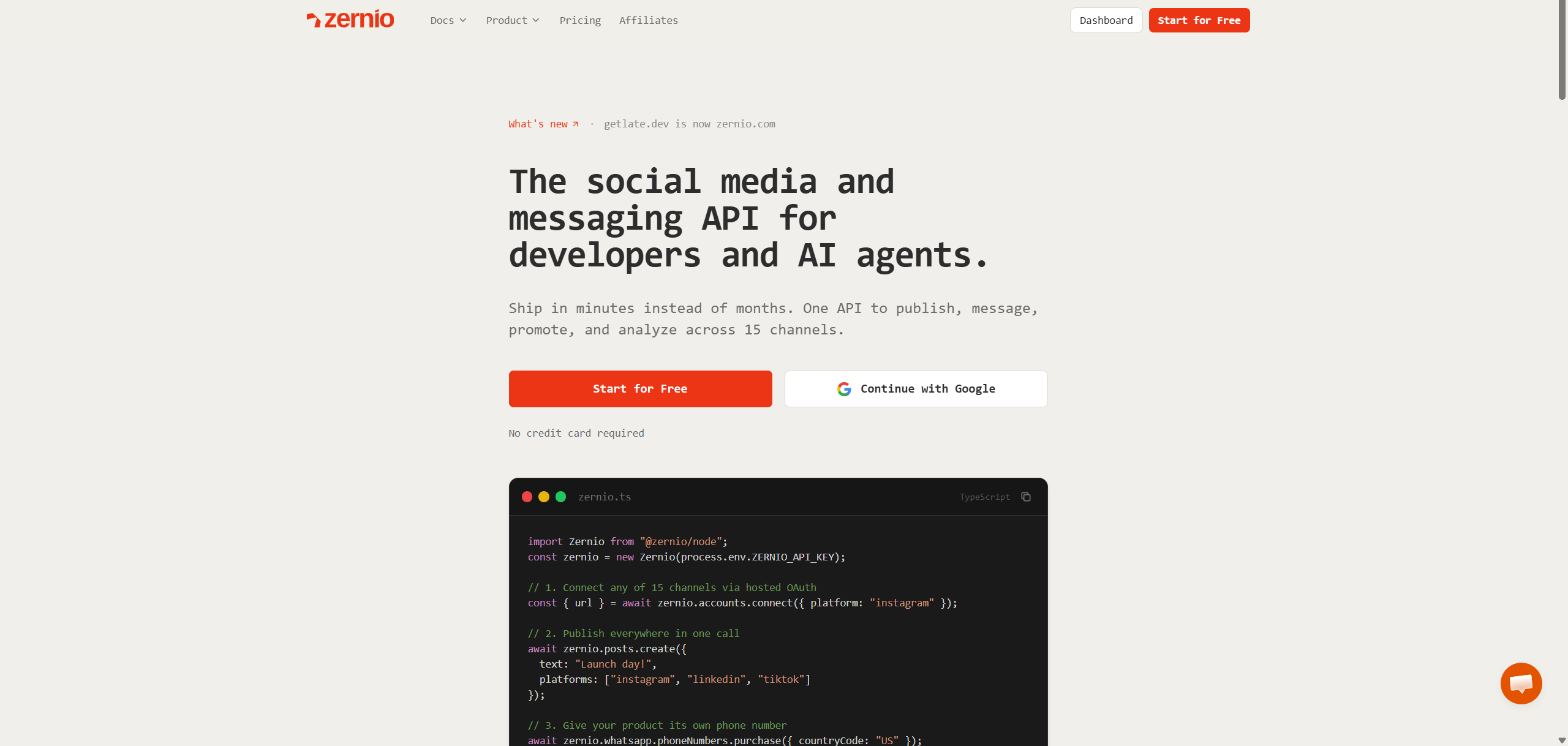
Zernio is more of a technical infrastructure tool than a traditional social media dashboard. Its main value is a unified social media API that helps developers connect multiple platforms through one interface.
It is useful for teams that want to embed social media capabilities into their own products, internal systems, automation tools, or AI agents.
Key Features
- Unified social media API
- Multi-platform publishing
- Comment API
- DM API
- Analytics API
- AI agent automation support
- Multi-platform integration
Zernio vs. SocialEcho
Zernio is more focused on API infrastructure and is best for technical teams that want to build their own integrations.
SocialEcho is a complete AI social media workspace that also offers API capabilities. It is designed for marketing and operations teams that need a ready-to-use dashboard, while still giving technical teams the ability to connect workflows through API access.
In simple terms:
- Choose SocialEcho if you need a visual social media workspace.
- Choose Zernio if you mainly need to embed social media capabilities into your own product or AI agent.
- Choose SocialEcho if you need both an operations dashboard and API-based automation.
Limitations
Zernio may have a higher learning curve for non-technical teams. It is not a traditional content creation tool for daily social media operators.
8. Jasper
Best for: Content marketing teams and brand copywriting teams
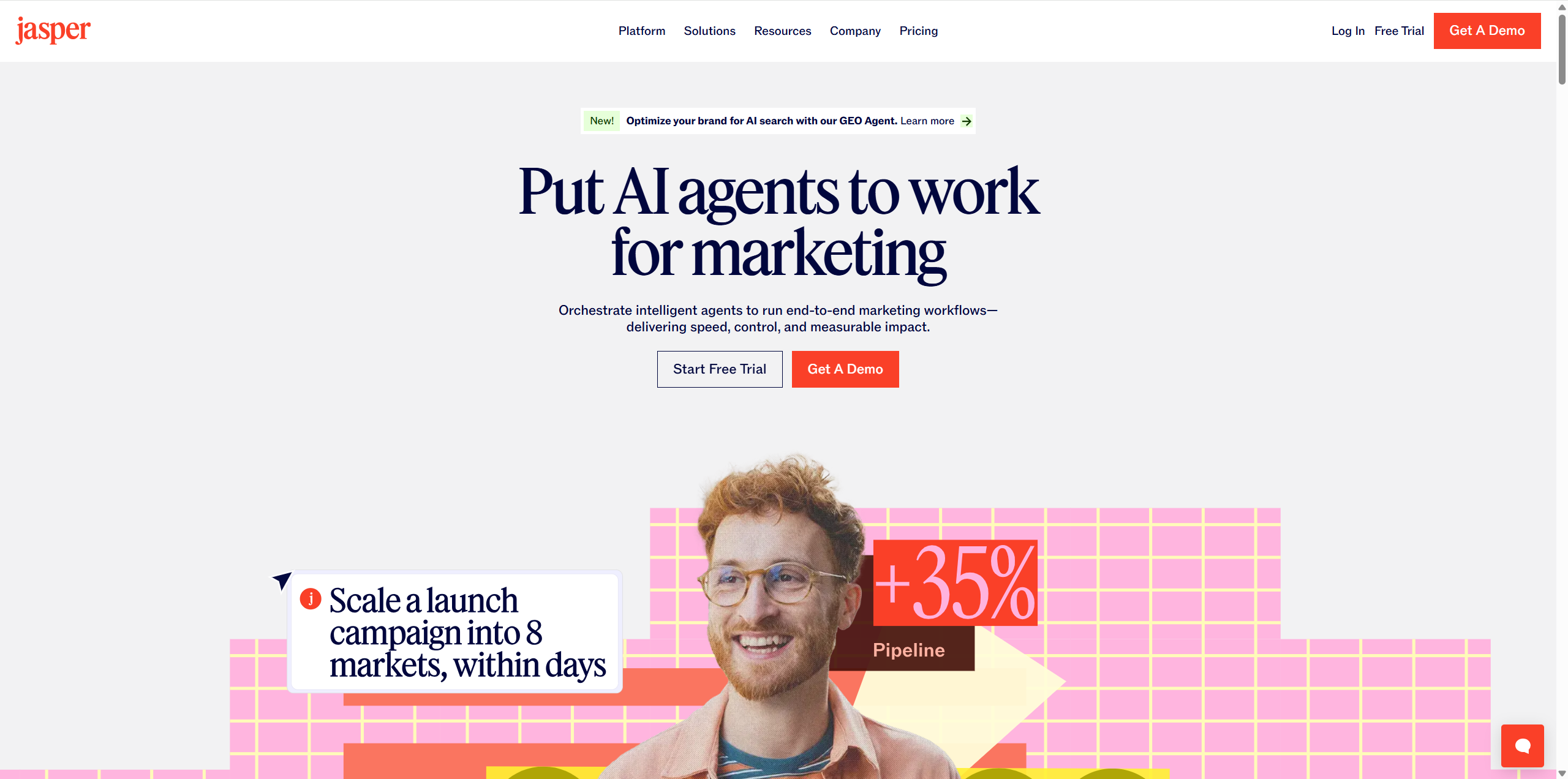
Jasper is an AI content creation tool built for marketing teams. It helps generate social media copy, ad copy, emails, blogs, landing page content, and campaign assets.
Its strength is brand voice control and scalable copy generation. However, it is not a full social media management platform. Teams still need another tool for publishing, scheduling, engagement, and analytics.
Key Features
- AI social media copy generation
- Brand voice management
- Campaign content creation
- Long-form content repurposing
- Multi-channel copywriting
Limitations
Jasper does not manage social media accounts, comments, DMs, or publishing workflows on its own.
9. SocialBee
Best for: Teams with recurring content categories and structured posting workflows
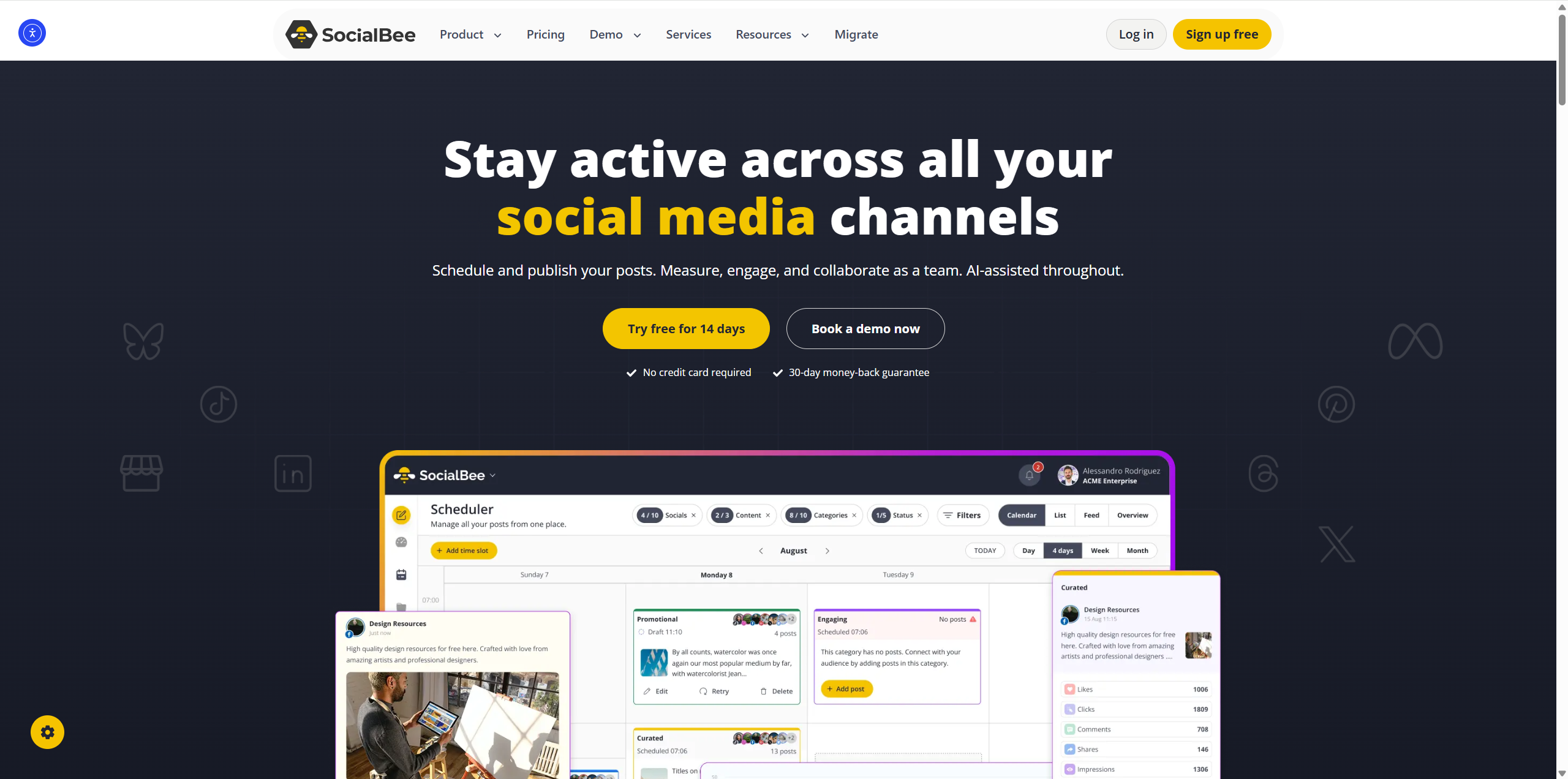
SocialBee is useful for teams with long-term content plans. It helps organize posts by category, such as product tips, customer stories, industry insights, promotions, and educational content.
Key Features
- AI content generation
- Content categories
- Scheduling
- Recurring posting
- Analytics
Limitations
SocialBee is better for regular content scheduling than complex global workflows or AI-powered reply automation.
10. Brandwatch
Best for: Large enterprises, PR teams, and market research teams
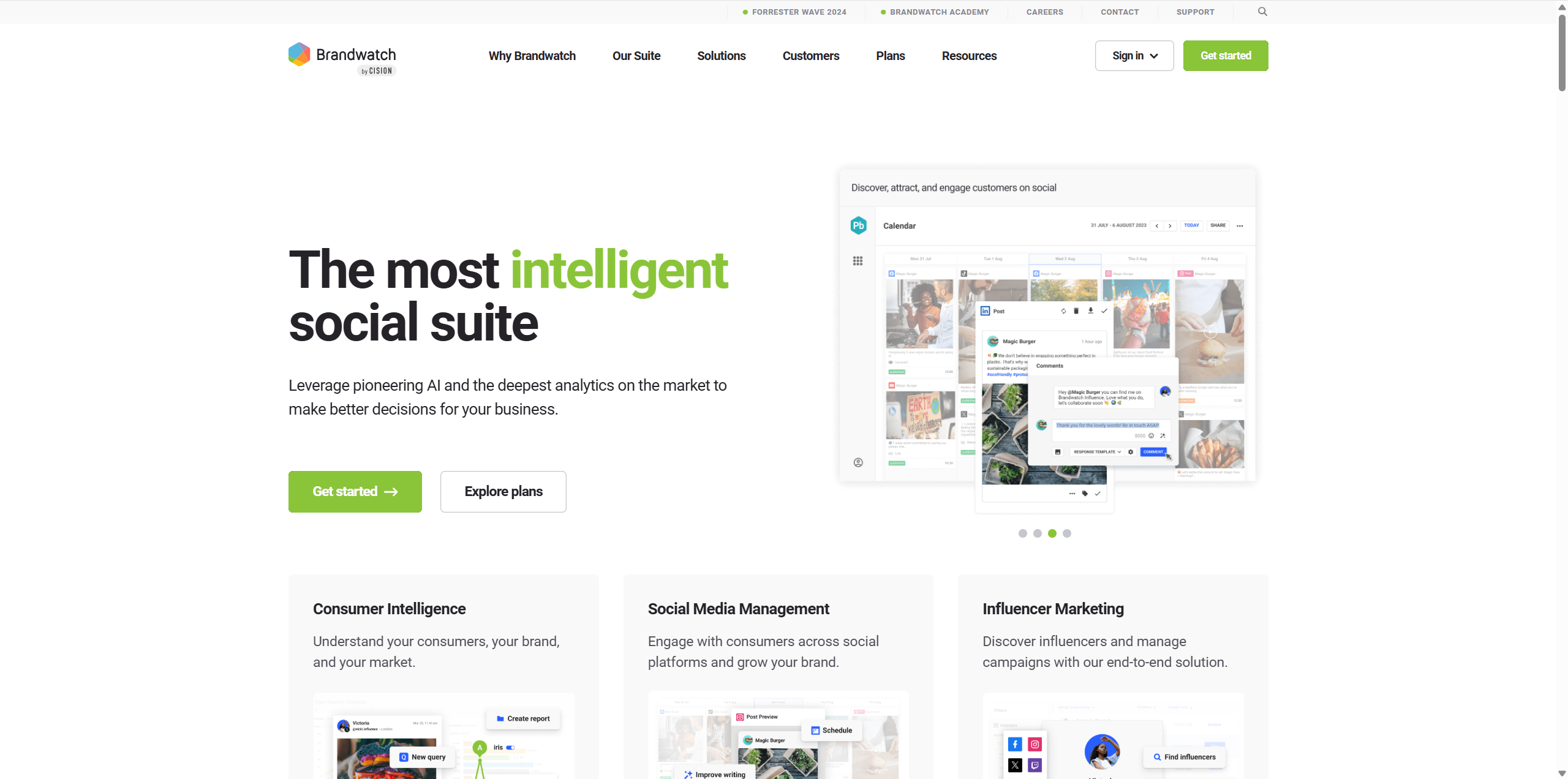
Brandwatch is focused on enterprise social listening and consumer intelligence. It is useful for brand monitoring, sentiment analysis, competitor research, market trends, and reputation management.
Key Features
- Social listening
- Consumer intelligence
- AI-powered analytics
- Brand monitoring
- Sentiment analysis
- Reporting
Limitations
Brandwatch is more of an insights and intelligence platform than a lightweight scheduling or content creation tool. It also has a higher cost and learning curve.
AI Social Media Tools Comparison Table
| Tool | Best For | AI / Technical Strength | Ideal Team |
|---|---|---|---|
| SocialEcho | Multi-platform, multi-account social media operations | AI text, image, and video generation, AI auto-replies, open API | Global brands, cross-border e-commerce teams, agencies, and multi-account teams |
| Hootsuite | Enterprise social media management | AI writing support, scheduling, and analytics | Large marketing teams |
| Buffer | Lightweight scheduling | AI writing assistant | Small teams, startups |
| Sprout Social | Social listening and analytics | AI insights, sentiment analysis | Mid-sized and large brands |
| Later | Visual content and influencer marketing | Visual planning, AI insights | Consumer brands, creator teams |
| Metricool | Scheduling, analytics, and AI writing | AI assistant, best-time-to-post suggestions | Small teams, agencies |
| Zernio | Unified social media API | API automation, multi-platform integration | Developers, AI agent builders, SaaS teams |
| Jasper | Branded marketing copy | Brand voice, AI content generation | Content marketing teams |
| SocialBee | Content categories and recurring posting | AI content generation | Small teams, content teams |
| Brandwatch | Social listening and consumer insights | AI-powered social intelligence | Enterprises, PR teams |
Final Recommendation
AI will not fully replace social media teams, but it can remove a large amount of repetitive work.
In 2026, a strong AI social media tool for global brands should help teams:
- Generate text, image, and video content
- Rewrite content for different platforms
- Manage multiple overseas social media accounts
- Automatically respond to comments and DMs
- Track content and account performance
- Support APIs or automation workflows
If your team manages multiple social platforms, accounts, or markets, SocialEcho is worth considering first. It gives marketing teams a ready-to-use AI social media workspace while also offering API capabilities for technical teams that want to connect automation systems or AI agent workflows.
Start your 7-day free trial and manage more overseas social media accounts with less effort.
FAQ
What are AI social media tools?
AI social media tools help teams create content, generate images and videos, rewrite posts, schedule content, reply to comments and DMs, and analyze performance with AI.
Why do global brands need AI social media tools?
Global brands manage multiple platforms, accounts, languages, and markets. AI tools reduce repetitive work and improve content creation, publishing, engagement, and reporting efficiency.
What is the best AI social media tool for global brands?
For teams that need multi-platform management, AI content generation, auto-replies, analytics, and API access, SocialEcho is a strong choice.
Can AI social media tools automatically reply to comments and DMs?
Some tools can, but not all. SocialEcho supports AI-assisted replies for comments and DMs, helping teams respond faster and improve engagement.
Can AI social media tools generate images and videos?
Yes, some AI social media tools support image, video, and copy generation. These features help teams produce more content with less manual work.
Which AI social media tools are suitable for small teams?
Small teams can consider Buffer, Metricool, or SocialBee. Teams managing multiple overseas accounts can also consider SocialEcho.
What should you look for when choosing an AI social media tool?
Look for platform coverage, multi-account management, AI content creation, AI auto-replies, analytics, team permissions, security, compliance, and API support.
;}.cls-2{fill:%230868f7;}.cls-3{fill:url(%23未命名的渐变_44);}.cls-4{fill:%23333;}%3c/style%3e%3clinearGradient%20id='未命名的渐变_8'%20x1='33.73'%20y1='100.61'%20x2='-0.03'%20y2='-1.06'%20gradientUnits='userSpaceOnUse'%3e%3cstop%20offset='0'%20stop-color='%237ae9fb'/%3e%3cstop%20offset='0.67'%20stop-color='%232b90f8'/%3e%3cstop%20offset='1'%20stop-color='%230868f7'/%3e%3c/linearGradient%3e%3clinearGradient%20id='未命名的渐变_44'%20x1='27.86'%20y1='18.67'%20x2='68.36'%20y2='22.22'%20gradientUnits='userSpaceOnUse'%3e%3cstop%20offset='0'%20stop-color='%235ac7f2'/%3e%3cstop%20offset='1'%20stop-color='%230868f7'/%3e%3c/linearGradient%3e%3c/defs%3e%3cpath%20class='cls-1'%20d='M29,28.74V81.91l-9.51-3.68v0L8.52,74A7.17,7.17,0,0,1,4,67.32V24.54A3.76,3.76,0,0,1,9.08,21Z'/%3e%3cpath%20class='cls-2'%20d='M68.09,78.07a13.15,13.15,0,0,1-17.9,12.06L29,81.91h0V28.74L50.19,37A13.17,13.17,0,0,0,68.08,25.3h0Z'/%3e%3cpath%20class='cls-3'%20d='M68.08,25.3a13.19,13.19,0,0,1-6.73,10.87A13.09,13.09,0,0,1,50.19,37L29,28.74V6A3.76,3.76,0,0,1,34.1,2.52l25.59,9.91A13.22,13.22,0,0,1,68.08,25.3Z'/%3e%3cpath%20class='cls-4'%20d='M129.06,81.76a4.33,4.33,0,0,1-3.19-1.31,4.4,4.4,0,0,1-1.31-3.24V56.86H97.65V77.21a4.36,4.36,0,0,1-1.35,3.2A4.68,4.68,0,0,1,93,81.76a4.32,4.32,0,0,1-3.19-1.31,4.37,4.37,0,0,1-1.32-3.24V27.27A4.58,4.58,0,0,1,89.83,24a4.59,4.59,0,0,1,7.82,3.27V48.15h26.91V27.27A4.58,4.58,0,0,1,125.91,24a4.59,4.59,0,0,1,7.82,3.27V77.21a4.37,4.37,0,0,1-1.36,3.2A4.65,4.65,0,0,1,129.06,81.76Z'/%3e%3cpath%20class='cls-4'%20d='M163.77,81.66c-6.57,0-11.76-1.92-15.44-5.7s-5.54-9.07-5.54-15.74a26.76,26.76,0,0,1,2.09-10.43,17.72,17.72,0,0,1,6.67-8.06,19.15,19.15,0,0,1,10.68-2.95,19,19,0,0,1,10.46,2.8,18.7,18.7,0,0,1,6.55,7.36,22.53,22.53,0,0,1,2.36,10.28A4.51,4.51,0,0,1,177,63.77H152.23a10.8,10.8,0,0,0,3.49,6.65c2,1.68,4.88,2.52,8.66,2.52a22.25,22.25,0,0,0,7.54-1.21c.74-.3,1.55-.67,2.37-1.07a3.75,3.75,0,0,1,1.84-.4,4.09,4.09,0,0,1,3,1.15,4,4,0,0,1,1.12,3,4.38,4.38,0,0,1-2.58,3.82,32.34,32.34,0,0,1-6.36,2.61A28.67,28.67,0,0,1,163.77,81.66ZM172.4,55.9a9.72,9.72,0,0,0-1.63-4.56A9.9,9.9,0,0,0,167,48a10.38,10.38,0,0,0-4.64-1.14,12,12,0,0,0-4.77,1.06,9.54,9.54,0,0,0-4.89,5.66,11.78,11.78,0,0,0-.51,2.3Z'/%3e%3cpath%20class='cls-4'%20d='M193,81.64a4.49,4.49,0,0,1-4.51-4.55V27.28A4.58,4.58,0,0,1,189.84,24a4.48,4.48,0,0,1,3.28-1.36A4.36,4.36,0,0,1,196.35,24a4.46,4.46,0,0,1,1.31,3.31V77.09a4.34,4.34,0,0,1-1.35,3.2A4.67,4.67,0,0,1,193,81.64Z'/%3e%3cpath%20class='cls-4'%20d='M263.79,81.71a5.7,5.7,0,0,1-4.2-1.74,5.76,5.76,0,0,1-1.73-4.19V27.37a4.58,4.58,0,0,1,1.35-3.27A4.59,4.59,0,0,1,267,27.37V72.53h24a4.58,4.58,0,0,1,3.27,7.82A4.66,4.66,0,0,1,291,81.71Z'/%3e%3cpath%20class='cls-4'%20d='M424.48,81.74a4.71,4.71,0,0,1-2.71-.88,5.43,5.43,0,0,1-1-1l-.07-.09-12.41-17-5.41,5v9.44a4.31,4.31,0,0,1-1.36,3.19,4.66,4.66,0,0,1-3.3,1.36A4.29,4.29,0,0,1,395,80.42a4.36,4.36,0,0,1-1.32-3.23V27.37A4.58,4.58,0,0,1,395,24.1a4.52,4.52,0,0,1,6.58.12,4.54,4.54,0,0,1,1.24,3.15V56.31l17.72-16.38.05,0a4.8,4.8,0,0,1,2.94-1.11,4.4,4.4,0,0,1,3.27,1.2,4.57,4.57,0,0,1,1.2,3.27,4.44,4.44,0,0,1-.77,2.33,7.45,7.45,0,0,1-1.43,1.65l-11,9.64,13.34,17.68a5,5,0,0,1,1,2.71,4.12,4.12,0,0,1-1.36,3.24A4.64,4.64,0,0,1,424.48,81.74Z'/%3e%3cpath%20class='cls-4'%20d='M317.93,81.76a21.5,21.5,0,1,1,21.17-21.5A21.37,21.37,0,0,1,317.93,81.76Zm0-34.1a12.61,12.61,0,1,0,12.42,12.6A12.52,12.52,0,0,0,317.93,47.66Z'/%3e%3cpath%20class='cls-4'%20d='M212.18,101.22a4.12,4.12,0,0,1-3.05-1.26,4.17,4.17,0,0,1-1.26-3.1V43.34a4.37,4.37,0,0,1,1.3-3.14,4.26,4.26,0,0,1,3.13-1.3,4.19,4.19,0,0,1,3.1,1.26,4.32,4.32,0,0,1,1.26,3.16,20.77,20.77,0,0,1,13-4.54,21.51,21.51,0,0,1,0,43,20.51,20.51,0,0,1-13-4.57V96.86a4.15,4.15,0,0,1-1.3,3.06A4.5,4.5,0,0,1,212.18,101.22Zm17.43-53.63c-6.23,0-12.93,4.11-12.93,12.72a12.73,12.73,0,0,0,25.46,0A12.71,12.71,0,0,0,229.61,47.59Z'/%3e%3cpath%20class='cls-4'%20d='M365.76,81.76a21.5,21.5,0,1,1,21.18-21.5A21.37,21.37,0,0,1,365.76,81.76Zm0-34.1a12.61,12.61,0,1,0,12.42,12.6A12.52,12.52,0,0,0,365.76,47.66Z'/%3e%3c/svg%3e)