
2026 Hootsuite Alternatives: 12 More Affordable and Feature-Rich Options
2026 Hootsuite Alternatives: 12 More Affordable and Feature-Rich Options
The day the renewal notice arrived in your email, you sat down and did the math.
Hootsuite Professional, 99/month, annual subscription—99 × 12 = $1,188/year. You didn't think much of it when you renewed last year, but this year's bill made you pause. You open the backend and check each feature: how many are actually used by your team? Schedule releases are used, reports are occasionally exported, but the other buttons—approval workflows, advanced analytics, third-party integrations—are basically untouched. In the end, you've probably only used less than half the value priced at the bill.
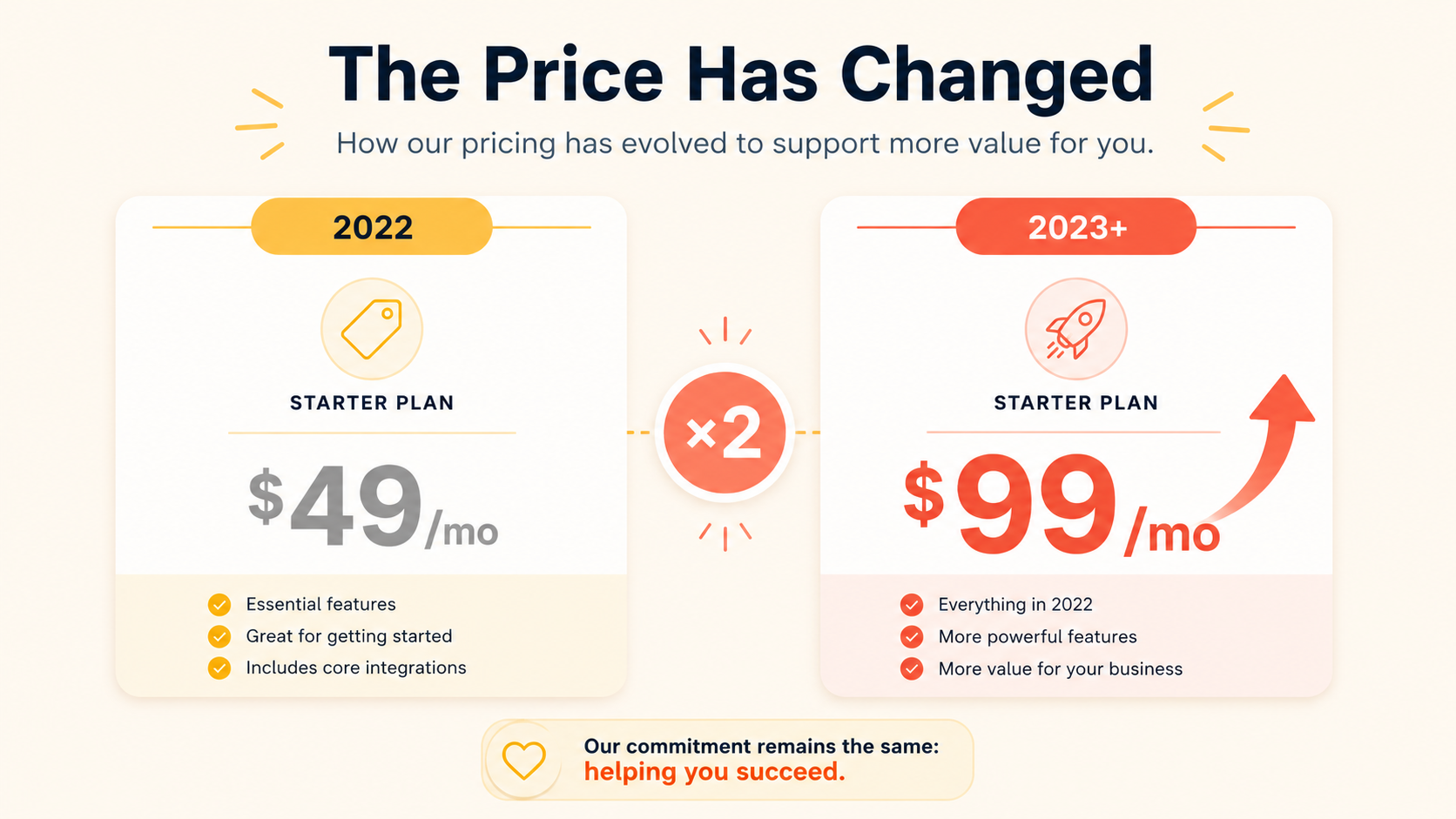
This isn't because Hootsuite has gotten worse. The price increase in 2023 did happen; the Professional plan went from about 49/month to 99/month, and the Team plan went up to $249/month. The problem is that you're using a tool designed for large enterprises, but your business scenario doesn't require that level of complexity.
Before switching tools, there are two things worth considering. First, where is your real bottleneck? Is it insufficient content production capacity, a lack of AI content generation, the absence of TikTok Shop e-commerce integration, or cumbersome team collaboration and permission management? Different bottlenecks require completely different tool choices. Second, what is your budget limit? The tools on this list range from a free version of 0 to 249 per user per month; the price range determines the difference in feature coverage.
A list of 12 Hootsuite alternatives (2026)
| tool | Starting price (monthly payment) | AI Content Generation | TikTok Shop | Social media monitoring | Suitable for |
|---|---|---|---|---|---|
| SocialEcho | Starting from $15/month | ✅ Images/Videos/Text | ✅ | ✅ | Overseas Brands & E-commerce |
| Buffer | Starting at $5/channel/month | △ Copywriting | ✗ | ✗ | Small team lightweight scheduling |
| Sprout Social | Starting from $249/user/month | △ Supporting text | ✗ | △ | Enterprise Social CRM |
| Later | Starting from $18/month | △ Copywriting | ✗ | ✗ | Instagram visual content |
| Metricool | Free; starting at $22/month | △ Copywriting | ✗ | △ | Data analytics driven |
| Agorapulse | Starting from $49/user/month | ✗ | ✗ | ✗ | Operation agency |
| Publer | Starting from $12/month | △ Copywriting | ✗ | ✗ | Small team with limited budget |
| SocialBee | Starting from $29/month | △ Copywriting | ✗ | ✗ | Evergreen content reuse |
| Sendible | Starting from $29/month | ✗ | ✗ | ✗ | White Label Agency Operation |
| Zoho Social | Starting from $10/month | ✗ | ✗ | ✗ | Zoho ecosystem users |
| Vista Social | Starting from $39/month | △ Copywriting | ✗ | △ | Mid-priced all-purpose tools |
| Loomly | Starting from $32/month | △ Copywriting | ✗ | ✗ | Content Calendar + Team Approval |
✅ Native support △ Limited support or requires plugin ✗ Not supported
The following 12 tools cover different scenarios from cross-border e-commerce to large-scale agency operations. Each tool provides a real price and a one-sentence judgment on its applicability, helping you avoid pitfalls you might otherwise encounter.
Option 1: SocialEcho — A comprehensive AI feature option for teams expanding overseas.
Who is it suitable for : Overseas brand teams and e-commerce sellers who need AI copywriting/image/video generation, TikTok Shop e-commerce functionality, and unified management across 11 platforms.
Background in a sentence : SocialEcho is a full-fledged social media AI workbench for companies going global. It has official OAuth direct connections to 11 mainstream platforms—Facebook, Instagram , X, LinkedIn, TikTok , TikTok Shop , YouTube, Pinterest, Reddit, Telegram, and Threads—ensuring account security and not relying on third-party cookies.
The biggest difference between it and Hootsuite isn't the number of platforms, but the depth of coverage throughout the entire content lifecycle. The AI creation module supports generating images and short videos from a single sentence, and the master copy can be automatically rewritten for different tones and word counts for each platform, saving you the trouble of switching between multiple AI tools. The content publishing module supports batch scheduling and timed publishing, covering all platforms with a single operation. If you're running a TikTok Shop, product cart management and sales video management are also built-in, creating a closed loop for e-commerce operations from content to interaction.
In terms of comment management, the interaction management system aggregates comments and private messages from all platforms into a unified inbox. AI automates the identification of emotions and intentions, reducing the burden of manual review. Teams engaged in overseas brand marketing can also use social media monitoring to track competitor activities and KOL content. For developers or automation workflow scenarios, the AI Agent API has opened 8 publishing and analysis interfaces, supporting integration with mainstream frameworks such as n8n, Zapier, and OpenClaw.
Pricing : Free version 0 (with limited features); Basic version starts at 15/month (annual subscription, minimum of 5 accounts, equivalent to 3/account); Team version starts at 20/month (annual subscription, minimum of 5 accounts). Compared to Hootsuite Professional 10 accounts at $99/month, the price difference is significant for the same number of accounts. For a detailed feature comparison, please see the SocialEcho vs Hootsuite comparison page.
To be frank , SocialEcho has a wide range of features, so initial configuration will take a bit more time. If your main needs are content scheduling and data reporting, you should allow for a learning curve in advance.
If the requirement is simply content scheduling, and there aren't many platforms and the team is small, are there any lighter and cheaper options?
Section 2: Buffer — A lightweight scheduling starting point for small teams
Suitable for : Teams of 1-2 people whose core requirement is to publish content on a regular schedule, without the need for complex data analysis or AI content generation.
After Hootsuite raised its prices, Buffer became the first alternative that many small and medium-sized teams thought of. It makes "scheduled publishing" clean enough—queue scheduling, draft management, unified operation across multiple platforms, and a simple interface with almost zero learning curve. For small teams just starting out overseas and whose accounts are still in the early stages, Buffer is indeed quick to get started with.
Its free version supports 3 social media channels, with a maximum of 10 posts per channel, suitable for personal testing. The paid version, Essentials, is charged per channel, with a monthly fee of $25 for 5 accounts (annual payment), which is much cheaper than Hootsuite.
Points to note : Buffer lacks AI video/image generation capabilities, and social media monitoring and competitor tracking are not within its functionality. If you need more than just "posting," Buffer's features will become less relevant sooner. TikTok Shop is also not supported. For a more detailed feature comparison, please refer to the SocialEcho vs Buffer page.
Pricing : Free version available; Essentials $5/channel/month (annual subscription).
Buffer excels in its simplicity, but if the team grows to dozens of people and involves cross-departmental collaboration, and the report output needs to be customized, then a more "thick" tool is required.
Option 3: Sprout Social — A deep social CRM solution for those with a sufficient budget.
Suitable for : Large brand teams with high customer service needs, cross-departmental collaboration, and who use social media as an extension of CRM.
Sprout Social positions itself as a "social CRM," not just a publishing tool. Its Smart Inbox organizes all platform messages by user identity, allowing you to see the complete interaction history of the same user on Instagram and X, which is of significant value to brands that heavily rely on social media for customer service.
In terms of data analysis , Sprout Social's competitor comparison reports are detailed, and its tiered breakdown of content performance is suitable for quarterly reviews or industry benchmarks. The content approval process is also quite comprehensive—creator submission, supervisor approval, and scheduled release are all documented, making it useful for multi-department teams operating across time zones.
Important notes : The Standard version costs 249 per user per month, and a three-person team costs 747 per month—more than double the price of Hootsuite. TikTok Shop offers limited support and is not suitable for teams focused on e-commerce sales.
Pricing : Standard starts at 249/user/month, Professional starts at 399/user/month.
$249 per user is too expensive, but you still want a more visually appealing Instagram content schedule—this next tool is designed specifically for this scenario.
Option 4: Later — A visually-centric Instagram solution
Who is it suitable for ? The content is mainly composed of images and short videos, with Instagram and Pinterest as the core platforms, leaning towards individual creators or visual brands.
Later's core feature is a visual timeline—arranging upcoming posts in a grid view along a timeline, allowing you to see at a glance whether the overall visual style of the feed is consistent. For brand accounts that need to maintain an Instagram visual identity, this design is more intuitive than a traditional calendar view.
It supports scheduled publishing for Instagram Reels and Stories, and the Link in Bio feature turns the homepage link into a mini-navigation page, suitable for content-driven sales scenarios. The suggested publishing times are also quite user-friendly, reducing decision-making friction for budding creators.
Points to note : Later is naturally designed with Instagram at its core, and its support for LinkedIn, YouTube, and TikTok Shop is relatively basic. If you need to manage multiple platforms in your overseas business, the platform coverage may not be sufficient, and TikTok's functionality is far less than native support.
Pricing : Starter 18/month, Growth 40/month, Advanced $80/month.
Later is great for creating visual content, but if you care more about data—when to publish, what kind of content is effective, what your competitors are doing lately—this data analysis-driven tool is more suitable for you.
Item 5: Metricool — A mid-lightweight option known for its data analysis capabilities.
Who is it suitable for : Small and medium-sized teams or individuals who value competitor analysis and content data review, but do not need enterprise-level report volumes.
Metricool's data analytics capabilities are quite outstanding in this price range. Competitor tracking is a frequently mentioned feature—you can input competitor accounts to continuously monitor their posting frequency, engagement rates, and follower growth trends, which is valuable for developing content strategies. Posting time suggestions are also based on your account's historical data, making them more practical than generic suggestions.
If you haven't decided on your release schedule yet, you can first use SocialEcho's free tool to run the logic for the optimal release time , and then compare it with Metricool's historical data.
Points to note : Metricool's AI-powered content creation features primarily focus on text generation and lack video generation capabilities. TikTok Shop is not included in the platform's coverage, making it unsuitable for overseas e-commerce scenarios. The free version has limitations on the number of brands and the depth of analysis; in practice, upgrading to the paid version will likely be necessary.
Pricing : Free version available; Starter starts at $22/month.
Metricool is well-suited for one or two people managing multiple accounts, but if you are an agency serving multiple brand clients, you'll need to change the logic for permission isolation and customized reports.
Item 6: Agorapulse — A team collaboration tool for e-commerce service providers
Who is this suitable for : Social media management agencies that need to manage multiple brand clients, strictly isolate permissions, and provide reports visible to clients.
Anyone who works in e-commerce operations knows that the biggest headache isn't posting, but generating client reports at the end of the month—each client needs data from different dimensions, some want competitor comparisons, others want detailed interaction data. Agorapulse has invested heavily in this area: report templates can be generated individually by brand and can be sent directly to clients for review, reducing the need for manually compiling Excel spreadsheets.
The Unified Inbox can be switched by brand account to avoid messages from different clients getting mixed up. Team members have granular permission allocation, with separate read-only views for clients and internal editing permissions. Social media management agencies can directly refer to this model.
Important notes : Agorapulse's pricing is tiered by user, and the larger the team, the faster the cost increases. The Standard version is 49 per user per month, so a team of 10 would cost 490 per month. It lacks AI content generation capabilities, and TikTok Shop is not supported.
Pricing : Starting from Standard $49/user/month (annual billing).
Agorapulse has solid collaboration features, but if the team only has 1-2 people, $49/user/month is a bit heavy - the next one is more suitable for small teams with limited budgets to start with.
Item 7: Publer — A Lightweight Starting Point for Teams on a Limited Budget
Who is this suitable for : Individuals or small teams of 2-3 people who are just starting to manage multiple platform accounts and have a budget of less than $15/month.
Publer has a good reputation among lightweight tools, with a clean interface, complete basic scheduling functions, and support for mainstream platforms such as Facebook, Instagram, X, LinkedIn, and TikTok. It has a "recurring posting" feature that allows you to set evergreen content to recur, saving you the trouble of repeatedly scheduling manually.
AI copywriting assistants can quickly generate first drafts, which lowers the content production threshold for small teams without dedicated content planners. Getting it up and running is its advantage.
Points to note : Publer's team collaboration features are relatively basic, lacking in-depth competitor monitoring or social media listening capabilities, and it doesn't support the TikTok Shop e-commerce module. It's a good starting point, but as the number of accounts and business needs grow, its functional limitations will likely surface relatively quickly.
Pricing : Professional starts at $12/month (5 social media accounts, 1 user).
Publer is affordable, but if you have a lot of historical content that you need to reuse repeatedly, tools specifically designed for content reuse can save you a lot of effort.
Item 8: SocialBee — A content reuse tool that gives old content a new lease on life.
Suitable for : Content teams or bloggers with a large inventory of content, a large number of evergreen articles or videos, and who want their old content to continue to drive traffic.
SocialBee's core design is "content looping"—you categorize articles, pictures, and videos into content buckets, then set publishing rules, and the system automatically publishes them in rotation according to category, ensuring that each type of content gets a turn of exposure and preventing old content from sinking to the bottom.
For brand bloggers or knowledge-sharing teams with a continuous accumulation of content, this logic allows existing content to have a longer lifespan, eliminating the need to constantly produce new content.
Points to note : SocialBee's AI-powered content creation features primarily focus on text generation and lack image or video generation capabilities. If you need to create content from scratch rather than reuse existing content, its core value will be diminished. TikTok Shop and social media monitoring are also not included in its functionality.
Pricing : Bootstrap starts at $29/month (5 social media accounts).
Content reuse solves the problem of "wasting old content," but if you serve European or North American clients and also need white label reports, then this tool is positioned completely differently.
Section 9: Sendible — A white label solution for international service providers
Who is this suitable for : Agencies serving English-speaking or European clients, especially teams with white label requirements.
Sendible's white-label solution is its differentiating selling point: you can change the entire platform interface to your own brand colors, logo, and domain name, and customers will see your company's products instead of the Sendible logo when they log in. For agencies that want to serve clients with a "proprietary tool" image, this feature reduces the risk of clients bypassing intermediaries and directly purchasing tool subscriptions.
It supports direct publishing to mainstream platforms, has a relatively complete content approval process and calendar view, and also has an RSS auto-posting function, making it suitable for news media clients to automatically synchronize blog content.
Points to note : Sendible's AI content generation capabilities are basic, and its integration with TikTok Shop is not deep. White Label functionality is only available in the White Label version, which has a significantly higher starting price.
Pricing : Creator 29/month, Traction 89/month, White Label from $240/month.
White label addresses the "brand ownership" issue, but if your company already uses the Zoho ecosystem, there's a more natural combination option.
Item 10: Zoho Social — Add a social media module to teams already within the Zoho ecosystem.
Suitable for : Small and medium-sized enterprises that are already using Zoho CRM, Zoho Campaigns or other Zoho products and need to integrate social media data into their business systems.
Zoho Social's greatest value lies not in its outstanding social media features, but in its deep integration with the Zoho ecosystem. Social media leads can be directly synced into Zoho CRM to become potential customers, and comments and interactions can be linked to contacts in the CRM, allowing the sales team to see customer behavior on social media in real time.
For B2B overseas expansion teams or sales of high-priced products, the value of integrating social media and CRM far exceeds that of a standalone publishing tool.
Points to note : If you're not within the Zoho ecosystem, Zoho Social's competitiveness as an independent social media tool is relatively limited. Its AI functionality is limited, it doesn't support TikTok Shop, and its platform reach is narrow.
Pricing : Standard 10/month (1 user, 1 brand), Professional from 30/month.
For teams outside the Zoho ecosystem who need a mid-priced, all-in-one tool, this one offers broader coverage.
Option 11: Vista Social — A mid-priced all-rounder
Who is this suitable for : Medium-sized teams with a budget of around $40/month who need to manage multi-platform publishing, data analysis, and comment management, while also monitoring user feedback.
Vista Social offers relatively broad coverage in this price range, supporting mainstream platforms such as Facebook, Instagram, TikTok, LinkedIn, Pinterest, YouTube, Twitter/X, and Google Business Profile. It also includes a user review management feature, allowing users to reply to comments on Google and Facebook from the same backend, which is useful for teams doing local services or those with brand reputation maintenance needs.
The built-in data analytics dashboard supports aggregation across multiple accounts, providing intuitive charts for content performance and audience growth trends, and monthly reports can be exported with a single click. The AI copywriting assistant can generate drafts, reducing anxiety about blank documents. For creators with a multi-account overseas presence, the batch scheduling function is also quite convenient.
Points to note : Vista Social's AI-powered content creation primarily focuses on text-based support and lacks image or video generation capabilities. TikTok Shop integration is not supported. Social media monitoring functionality is limited; additional tools are required for in-depth competitor tracking.
Pricing : Pro starts at $39/month (multiple accounts supported, annual billing).
Vista Social has broad coverage but limited depth. If your team's biggest pain point is a chaotic content approval process and frequent revisions, there are tools specifically designed to address this issue.
Item 12: Loomly — A focused solution for content calendars and team approvals.
Suitable for : Brands or outsourced operation teams with multiple content creators who need to collaborate, revise repeatedly, and have clear approval milestones and content calendar management.
Loomly's core design revolves around a "content workflow." Its content calendar can be set according to brand style guidelines. After team members submit content drafts, they need to be confirmed by designated approvers before entering the release queue. The entire process includes notifications, version logs, and tracking of modification feedback. For teams that require client or superior approval for every release, this mechanism reduces the back-and-forth confirmations via email and Lark messages.
Its unique feature is the post idea suggestion function—the system automatically generates content topic suggestions based on holidays, industry trends, and account history, which is valuable for teams under heavy content planning pressure. It supports major platforms such as Facebook, Instagram, Twitter/X, LinkedIn, Pinterest, TikTok, and YouTube.
Points to note : Loomly's data analytics features are relatively basic; social media monitoring and competitor tracking are not among its core capabilities. TikTok Shop is not supported. AI-powered content creation primarily uses text-based tools and does not generate images or videos.
Pricing : Starting from $32/month (annual billing, supports 2 users and 10 social media accounts).
Postscript to the comparative review
After testing these 12 tools, one thing is worth stating frankly: Hootsuite's problem isn't that it's "too bad," but rather that "its pricing doesn't match the scale of your needs." Its reporting system, approval processes, and large customer support system, designed for large enterprises, are redundant for most mid-sized teams going global—and you're paying for features you don't use.
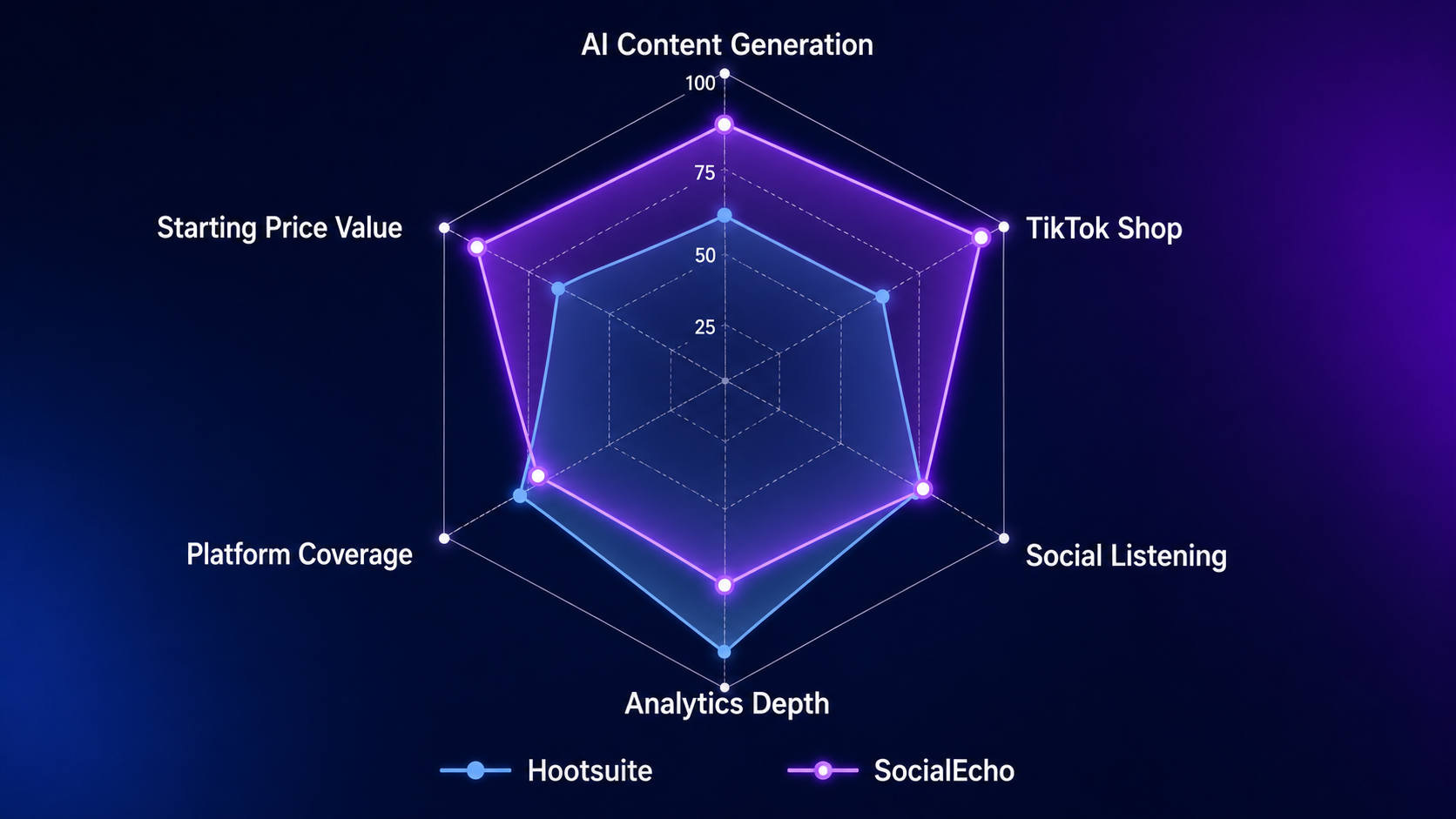
In this list, there aren't many tools that extend beyond the initial posting phase. SocialEcho is a comprehensive social media AI workbench for overseas brand operations teams and e-commerce sellers . It supports unified management across 11 platforms: Facebook, Instagram, X, LinkedIn, TikTok, TikTok Shop, YouTube, Pinterest, Reddit, Telegram, and Threads. It features direct official OAuth connections and doesn't rely on third-party cookies. AI content creation, interaction management, social media monitoring, and data analysis are all built-in. Unlike Hootsuite, which relies on plugins, SocialEcho's capabilities are ready to use out of the box. For teams expanding overseas, it additionally supports TikTok Shop product carting and an AI Agent API—features rarely seen in mainstream social media management tools.
Hootsuite and Sprout Social have more mature enterprise reporting systems, but their pricing is 6–16 times that of SocialEcho; Buffer is more lightweight in terms of content scheduling, but it reaches its functional limits when it comes to AI content production and e-commerce integration; Agorapulse and Sendible are suitable for traditional agency services, but their coverage of overseas e-commerce scenarios is insufficient; Later has a high focus on Instagram visual scheduling, but its multi-platform coverage is insufficient.
This isn't just advertising rhetoric; it's the logic behind product selection : different products have different design starting points. Finding the one that best matches your current needs is more important than finding the one that "seems to have the most features."
How to choose: Quick judgment in 5 scenarios
By now, you should be able to identify which scenario applies to you, but if you're still struggling, here's a direct suggestion for 5 typical scenarios:
For overseas brand operations teams (1-3 people, covering TikTok + Instagram + LinkedIn, with a TikTok Shop) : SocialEcho's feature coverage and bidding strategy are more suitable for this scenario. The overseas brand marketing and e-commerce operations solutions page provides more specific scenario comparisons for reference.
Large enterprises with cross-departmental collaborations need to provide customized reports to their CMOs monthly : Hootsuite or Sprout Social's enterprise-level reports and approval processes are a better fit, although they are more expensive, but both have relatively mature support systems for large clients.
For Instagram visual content creators, individuals or teams of two, primarily creating images and text : Later has a clear focus on visual scheduling and Instagram features; Publer is a more versatile alternative with a lower budget.
For outsourced operations agencies serving multiple brand clients, white-label reports are required : Agorapulse or Sendible are established industry choices; if clients include Chinese brands expanding overseas and running TikTok Shops, SocialEcho's social media outsourcing solutions are additionally applicable.
With a very limited budget, and no more than 3 platforms, when starting to build an overseas social media presence , Buffer (free version) or Publer at $12/month is a reasonable starting point. Upgrades can be considered once the account size and business complexity increase.
Before switching tools, use these free tools to calculate the cost.
Before deciding to switch tools, you can use these free tools to test the efficiency of your current content – sometimes the problem lies with the tool itself, and sometimes it's just that you haven't adjusted the usage method correctly:
- Unsure of the actual posting volume required by each platform, and uncertain whether Hootsuite's feature sets are truly being utilized → Posting frequency planning : First quantify the actual posting volume required by each platform, then determine if the existing tool settings are worth the price.
- Release timing relies on experience, and interaction results vary, making it unclear whether the issue is with the tools or the timing. → Optimal release time : First, use data to calibrate the optimal release window for each platform, eliminating timing variables before evaluating the tools.
- Want to understand the actual difference in AI content adaptation capabilities after switching tools? → Cross-platform AI Rewriting : Test cross-platform automatic content rewriting without registration and experience the difference compared to manual rewriting.
- Before switching tools, if you want to keep baseline data on the performance of each account, use the Engagement Rate Calculator : Record the current engagement rate of each account so you can have comparative data after switching tools.
Frequently Asked Questions
Q: What is the current price of Hootsuite?
Hootsuite currently offers two main plans for small to medium-sized teams: Professional 99/month (1 user, 10 social media accounts) and Team 249/month (3 users, 20 social media accounts). Enterprise plans are priced separately. Both plans include unlimited scheduled publishing and basic analytics features; professional reports and advanced features are only fully available in the Team plan and above.
Q: Why did Hootsuite raise its prices? When will the price increase take effect?
In 2023, Hootsuite adjusted its pricing structure, with the Professional version increasing from approximately 49/month to 99/month, and the Team version seeing an even larger increase. The official reasons for the price hike included: expanding product functionality (integrating more AI and analytics capabilities), increasing the size of the support team, and shifting the business focus towards medium and large enterprises. Following this price increase, many of its original small and medium-sized teams began actively seeking more affordable alternatives.
Q: What are some Hootsuite alternatives worth considering?
This article reviews 12 tools covering different scenarios: Buffer or Publer are the first choice for lightweight scheduling; Metricool is recommended for data analysis-driven applications; Agorapulse or Sendible are suitable for agency operations; Sprout Social is recommended for enterprise-level reporting needs; and SocialEcho is a priority for overseas brands and e-commerce teams, as its AI content generation and TikTok Shop integration are relatively comprehensive in this price range.
Q: How should teams going global choose social media management tools?
The core needs of brands going global typically include: unified management across multiple platforms (at least covering Facebook, Instagram, TikTok , and LinkedIn), AI-generated localization of content, and centralized management of comments and interactions. If also running a TikTok Shop, e-commerce integration capabilities are also required. Considering these dimensions, SocialEcho is a tool specifically designed for overseas scenarios; Hootsuite is suitable for large teams with enterprise approval and reporting needs; Later is suitable for visual creators primarily focused on Instagram; and Agorapulse is suitable for traditional agency management services. Those with limited budgets can start with Buffer or Publer.
Q: What is the difference between Hootsuite and Buffer, and how should I choose between them?
The two tools have significantly different target audiences. Buffer is a lightweight scheduling tool with a clean interface, pay-per-channel pricing, and is easy to learn, making it suitable for small teams' daily content publishing. Hootsuite, on the other hand, is a more complete enterprise-level social media management platform with team approval workflows, deeply customizable reports, and third-party tool integration, but its pricing is much higher than Buffer's. If your primary need is scheduled publishing, Buffer offers better value for money; if you require multi-department collaboration, customized reports, and enterprise support, Hootsuite is more suitable.
Q: What is the difference between SocialEcho and Hootsuite?
The key differences are as follows: In terms of platform coverage, SocialEcho supports 11 platforms, while Hootsuite's free and low-priced plans have limited platform coverage; regarding AI content generation, SocialEcho natively supports image, video, and text generation, while Hootsuite requires plugins or third-party tools; for TikTok Shop integration, SocialEcho natively supports product carting, while Hootsuite's support is limited; in terms of pricing, SocialEcho Basic 5 accounts cost 15/month (annual payment), while Hootsuite Professional 10 accounts cost 99/month. Hootsuite's advantages lie in its enterprise-level reporting system and large customer support team. For a detailed comparison, please see the SocialEcho vs Hootsuite comparison page.
Q: Are there any free alternatives to Hootsuite?
There are a few options. Buffer has a free version that supports 3 channels with a 10-post limit per channel, suitable for personal testing. Metricool's free version supports multiple platforms and includes basic analytics, making it a practical starting point for teams with zero budget. SocialEcho also has a free version that supports basic multi-platform publishing; you can get it running first and then assess whether an upgrade is needed. If you just want to solve a specific pain point, SocialEcho's free tools are worth trying first.
Conclusion
Hootsuite's price increase bill has made you do that math problem again. That's not a bad thing—it makes you really ask yourself: What am I paying for each month, and what percentage of its value am I using?
After solving that math problem, the answer is often not the cheapest option, but the one with the most useful features. The feature list is always longer than the actual needs; expensive doesn't necessarily suit you, and cheap doesn't necessarily save you trouble. Finding the option that best matches your current business size, team size, and overseas platform combination is more important than finding the one that "seems to have the most features."
If you're still in the evaluation phase, SocialEcho has a free version you can start using without a credit card—it's free to begin . If you want to compare specific features, the SocialEcho vs Hootsuite comparison page provides a feature-by-feature breakdown, which can also serve as a reference for your selection.
This article is based on publicly available pricing and feature page information from the official websites of various tools as of July 2026. Prices may be updated at any time, so it is recommended to check the latest pricing on the official websites of each tool. Results vary depending on account strength, content quality, industry, and execution method.
;}.cls-2{fill:%230868f7;}.cls-3{fill:url(%23未命名的渐变_44);}.cls-4{fill:%23333;}%3c/style%3e%3clinearGradient%20id='未命名的渐变_8'%20x1='33.73'%20y1='100.61'%20x2='-0.03'%20y2='-1.06'%20gradientUnits='userSpaceOnUse'%3e%3cstop%20offset='0'%20stop-color='%237ae9fb'/%3e%3cstop%20offset='0.67'%20stop-color='%232b90f8'/%3e%3cstop%20offset='1'%20stop-color='%230868f7'/%3e%3c/linearGradient%3e%3clinearGradient%20id='未命名的渐变_44'%20x1='27.86'%20y1='18.67'%20x2='68.36'%20y2='22.22'%20gradientUnits='userSpaceOnUse'%3e%3cstop%20offset='0'%20stop-color='%235ac7f2'/%3e%3cstop%20offset='1'%20stop-color='%230868f7'/%3e%3c/linearGradient%3e%3c/defs%3e%3cpath%20class='cls-1'%20d='M29,28.74V81.91l-9.51-3.68v0L8.52,74A7.17,7.17,0,0,1,4,67.32V24.54A3.76,3.76,0,0,1,9.08,21Z'/%3e%3cpath%20class='cls-2'%20d='M68.09,78.07a13.15,13.15,0,0,1-17.9,12.06L29,81.91h0V28.74L50.19,37A13.17,13.17,0,0,0,68.08,25.3h0Z'/%3e%3cpath%20class='cls-3'%20d='M68.08,25.3a13.19,13.19,0,0,1-6.73,10.87A13.09,13.09,0,0,1,50.19,37L29,28.74V6A3.76,3.76,0,0,1,34.1,2.52l25.59,9.91A13.22,13.22,0,0,1,68.08,25.3Z'/%3e%3cpath%20class='cls-4'%20d='M129.06,81.76a4.33,4.33,0,0,1-3.19-1.31,4.4,4.4,0,0,1-1.31-3.24V56.86H97.65V77.21a4.36,4.36,0,0,1-1.35,3.2A4.68,4.68,0,0,1,93,81.76a4.32,4.32,0,0,1-3.19-1.31,4.37,4.37,0,0,1-1.32-3.24V27.27A4.58,4.58,0,0,1,89.83,24a4.59,4.59,0,0,1,7.82,3.27V48.15h26.91V27.27A4.58,4.58,0,0,1,125.91,24a4.59,4.59,0,0,1,7.82,3.27V77.21a4.37,4.37,0,0,1-1.36,3.2A4.65,4.65,0,0,1,129.06,81.76Z'/%3e%3cpath%20class='cls-4'%20d='M163.77,81.66c-6.57,0-11.76-1.92-15.44-5.7s-5.54-9.07-5.54-15.74a26.76,26.76,0,0,1,2.09-10.43,17.72,17.72,0,0,1,6.67-8.06,19.15,19.15,0,0,1,10.68-2.95,19,19,0,0,1,10.46,2.8,18.7,18.7,0,0,1,6.55,7.36,22.53,22.53,0,0,1,2.36,10.28A4.51,4.51,0,0,1,177,63.77H152.23a10.8,10.8,0,0,0,3.49,6.65c2,1.68,4.88,2.52,8.66,2.52a22.25,22.25,0,0,0,7.54-1.21c.74-.3,1.55-.67,2.37-1.07a3.75,3.75,0,0,1,1.84-.4,4.09,4.09,0,0,1,3,1.15,4,4,0,0,1,1.12,3,4.38,4.38,0,0,1-2.58,3.82,32.34,32.34,0,0,1-6.36,2.61A28.67,28.67,0,0,1,163.77,81.66ZM172.4,55.9a9.72,9.72,0,0,0-1.63-4.56A9.9,9.9,0,0,0,167,48a10.38,10.38,0,0,0-4.64-1.14,12,12,0,0,0-4.77,1.06,9.54,9.54,0,0,0-4.89,5.66,11.78,11.78,0,0,0-.51,2.3Z'/%3e%3cpath%20class='cls-4'%20d='M193,81.64a4.49,4.49,0,0,1-4.51-4.55V27.28A4.58,4.58,0,0,1,189.84,24a4.48,4.48,0,0,1,3.28-1.36A4.36,4.36,0,0,1,196.35,24a4.46,4.46,0,0,1,1.31,3.31V77.09a4.34,4.34,0,0,1-1.35,3.2A4.67,4.67,0,0,1,193,81.64Z'/%3e%3cpath%20class='cls-4'%20d='M263.79,81.71a5.7,5.7,0,0,1-4.2-1.74,5.76,5.76,0,0,1-1.73-4.19V27.37a4.58,4.58,0,0,1,1.35-3.27A4.59,4.59,0,0,1,267,27.37V72.53h24a4.58,4.58,0,0,1,3.27,7.82A4.66,4.66,0,0,1,291,81.71Z'/%3e%3cpath%20class='cls-4'%20d='M424.48,81.74a4.71,4.71,0,0,1-2.71-.88,5.43,5.43,0,0,1-1-1l-.07-.09-12.41-17-5.41,5v9.44a4.31,4.31,0,0,1-1.36,3.19,4.66,4.66,0,0,1-3.3,1.36A4.29,4.29,0,0,1,395,80.42a4.36,4.36,0,0,1-1.32-3.23V27.37A4.58,4.58,0,0,1,395,24.1a4.52,4.52,0,0,1,6.58.12,4.54,4.54,0,0,1,1.24,3.15V56.31l17.72-16.38.05,0a4.8,4.8,0,0,1,2.94-1.11,4.4,4.4,0,0,1,3.27,1.2,4.57,4.57,0,0,1,1.2,3.27,4.44,4.44,0,0,1-.77,2.33,7.45,7.45,0,0,1-1.43,1.65l-11,9.64,13.34,17.68a5,5,0,0,1,1,2.71,4.12,4.12,0,0,1-1.36,3.24A4.64,4.64,0,0,1,424.48,81.74Z'/%3e%3cpath%20class='cls-4'%20d='M317.93,81.76a21.5,21.5,0,1,1,21.17-21.5A21.37,21.37,0,0,1,317.93,81.76Zm0-34.1a12.61,12.61,0,1,0,12.42,12.6A12.52,12.52,0,0,0,317.93,47.66Z'/%3e%3cpath%20class='cls-4'%20d='M212.18,101.22a4.12,4.12,0,0,1-3.05-1.26,4.17,4.17,0,0,1-1.26-3.1V43.34a4.37,4.37,0,0,1,1.3-3.14,4.26,4.26,0,0,1,3.13-1.3,4.19,4.19,0,0,1,3.1,1.26,4.32,4.32,0,0,1,1.26,3.16,20.77,20.77,0,0,1,13-4.54,21.51,21.51,0,0,1,0,43,20.51,20.51,0,0,1-13-4.57V96.86a4.15,4.15,0,0,1-1.3,3.06A4.5,4.5,0,0,1,212.18,101.22Zm17.43-53.63c-6.23,0-12.93,4.11-12.93,12.72a12.73,12.73,0,0,0,25.46,0A12.71,12.71,0,0,0,229.61,47.59Z'/%3e%3cpath%20class='cls-4'%20d='M365.76,81.76a21.5,21.5,0,1,1,21.18-21.5A21.37,21.37,0,0,1,365.76,81.76Zm0-34.1a12.61,12.61,0,1,0,12.42,12.6A12.52,12.52,0,0,0,365.76,47.66Z'/%3e%3c/svg%3e)